


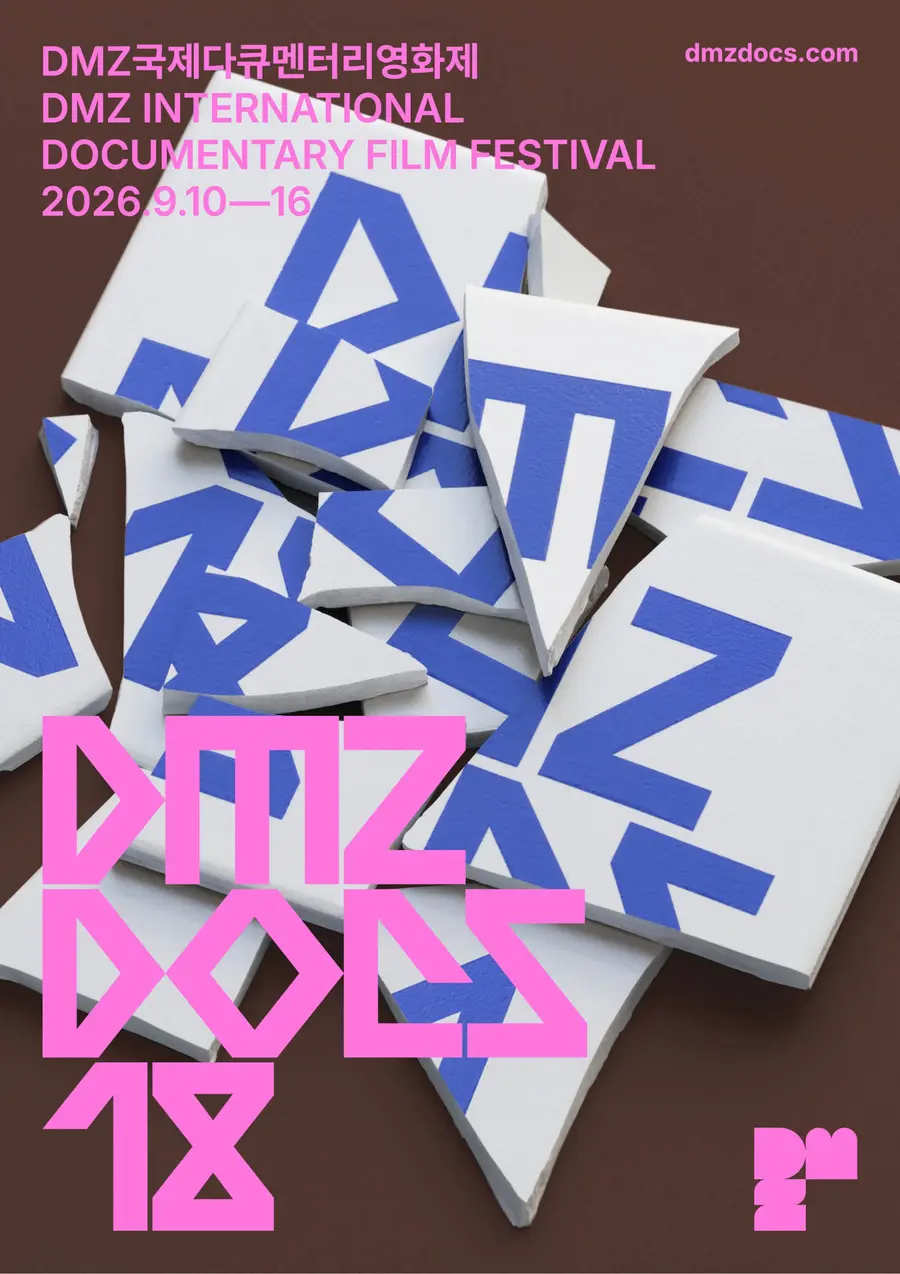
“More than a simple cutback, this threatens the festival’s very survival”—fears grow over collapse of the cultural ecosystem
Gyeonggi Province has slashed next year’s budget for the DMZ International Documentary Film Festival (DMZ Docs) by more than 70% compared with this year, triggering a fierce backlash across the arts and culture sector. In an unprecedented budget cut that wipes out more than two-thirds of the festival’s total funding in a single year, leading film festivals, industry groups and creators across the country have joined together to voice alarm.
Twenty-nine major film festivals in South Korea, including the Busan International Film Festival, Jeonju International Film Festival and Bucheon International Fantastic Film Festival, issued a joint appeal calling for immediate action. In a statement, they said, “With the budget cut to this level, it will be impossible even to hold the event as usual, and a complete halt to core infrastructure programs, including creative-support initiatives, DMZ Docs Industry and international exchanges, will be unavoidable.” They added, “This is not simply a matter of scaling back the event; it means the festival faces a threat to its very existence.”
According to the 2027 budget proposal Gyeonggi Province submitted to the provincial council, funding for the next DMZ Docs has been set at 900 million won. That is a 71% cut, or 2.2 billion won, from the 3.1 billion won allocated in the 2026 main budget. The province said it made the cut because the festival relies heavily on public funding and the province’s own fiscal conditions have worsened. Earlier this year, citing low audience turnout relative to the funding invested, Gyeonggi also cut about 600 million won—roughly 20% of the 3.1 billion won—through a supplementary budget.
The film festival coalition acknowledged the local government’s fiscal rationale, saying, “We do not deny the need to improve the funding structure. Securing national government funding, attracting private sponsorship and diversifying the festival’s own revenue are all directions publicly supported cultural events should pursue.” But it criticized the pace of the cuts: “Structural improvements should be pursued gradually, with the system’s sustainability assured. Cutting more than 70% of the budget all at once in a single year is not structural reform; it is a sentence ordering the forced shutdown of cultural infrastructure.”
The coalition continued: “Once an international film festival’s continuity is broken, it can never be restored to its former state, even if funding is later returned to previous levels. The social cost of rebuilding a disintegrated pool of professionals, global networks and international credibility built over years will far exceed the cost of keeping the festival alive now.” It strongly urged Gyeonggi Province and the provincial council to restore the minimum funding needed to hold the festival as usual during deliberations on next year’s main budget.
Solidarity among film professionals is also gathering pace. Forty-three film-related organizations, including the Directors Guild of Korea (DGK) and the Producers Guild of Korea (PGK), along with 1,843 film professionals, audience members and citizens, signed a joint petition under the name “Film Professionals Supporting the DMZ International Documentary Film Festival.” Prominent independent and documentary filmmakers joined the petition, including Jin Mo-young, director of the documentary My Love, Don’t Cross That River, and Kim Il-ran, director of Eddie Alice: Take.
In their petition, they said, “The proposed budget cut is shaking the diversity of the independent arts ecosystem to its roots.” They warned that if DMZ Docs Industry, which has served as a hub for documentary filmmaking in Asia, is paralyzed, South Korea’s video-content industry as a whole will lose standing internationally. They identified three key priorities: ▲ securing essential public funding to ensure the next festival can proceed as usual; ▲ establishing a diverse support system built on close coordination between local and central governments; and ▲ securing stable funding to ensure continuity for DMZ Docs Industry.
댓글 (0)
댓글 작성
댓글을 작성하려면 로그인이 필요합니다.
로그인하기