


DMZ Film Festival opens with “Haje,” as 147 documentaries from 52 countries issue a warning
Lean Sept. 10 opening highlights peace and climate issues, with “Che Guevara” among the closing films
A weighty record of what is disappearing asks what peace means
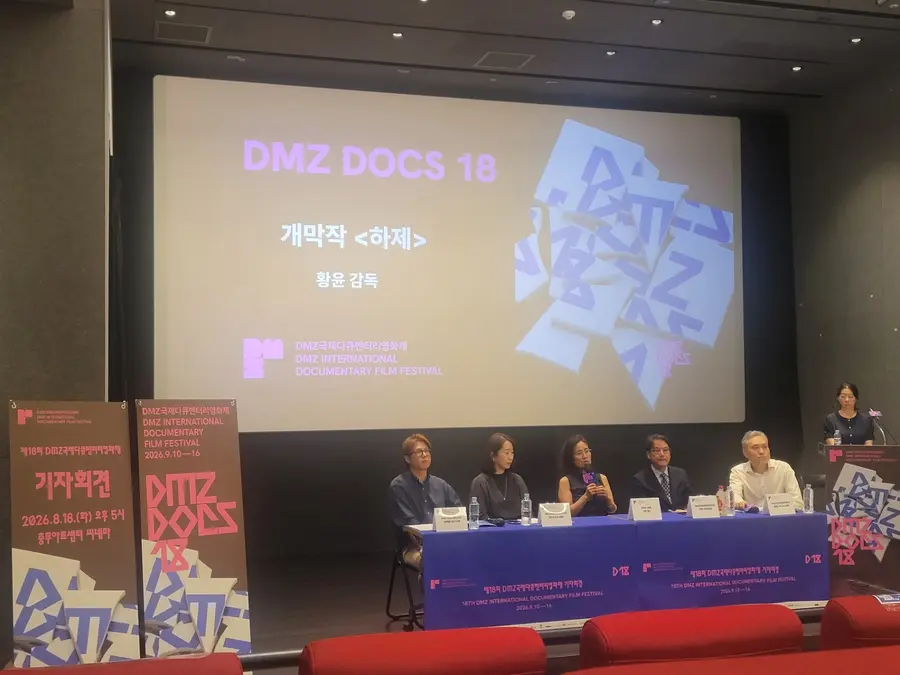
The 18th DMZ International Documentary Film Festival, which probes the truth of its time, will open Sept. 10 and run through Sept. 16 under the pointed slogan “Peace Does Not Keep Silent.” A carefully selected lineup of 147 documentaries from 52 countries will fill screens at Megabox Kintex, Aegibong Peace Ecological Park and other venues, delivering powerful messages to audiences.
This year’s festival will open with “Haje,” directed by Hwang Yun, which examines a small village in Gunsan, North Jeolla Province, being erased from the map by the expansion of a U.S. military base. Chief programmer Jang Byeong-won called the film an accomplished work that deftly captures the village’s last resident, local activists and the ecosystem that embraces the community. Hwang said she had no choice but to document the village’s disappearance into history, describing it as a documentarian’s destiny and clearly explaining the film’s purpose.
The closing film will be “Che Guevara: The Last Comrades,” directed by French filmmaker Christophe Dimitri Reveille. Executive committee chairman Oh Dong-jin cited Che Guevara as a political symbol that should be brought back into the conversation today and stressed that this year’s festival reflects the spirit of the times in a more progressive and incisive way than ever.
This year’s event is also focusing on substance over outward spectacle in response to Gyeonggi Province’s “budget crisis.” Organizers chose a “lean operation” for the opening ceremony, scaling it back in advance to focus on the core value of programs such as the opening-film screening and a guest visit, or GV, with the director. The key programs in the domestic and international competition and noncompetition sections, however, will remain unchanged, preserving the festival’s foundation.
The festival will also present a special program encompassing 13 works by Palestinian visual artist Kamal Aljafari, as well as “Eco Documentary: Disagreeing Together,” a section confronting the climate crisis through works including director Hamaguchi Ryusuke’s “The Sound of Waves.” Together, the programs offer a diverse and in-depth perspective.

댓글 (0)
댓글 작성
댓글을 작성하려면 로그인이 필요합니다.
로그인하기