



Nothing lasts forever. The film industry is no exception. Even companies that once defined Hollywood can eventually be overtaken by rivals and disappear, or make strategic decisions to merge or accept a buyout to survive. The past decade alone has seen numerous mergers and acquisitions, large and small. Here are three that also reshaped the streaming landscape.
Walt Disney's Acquisition of 20th Century Fox →
20th Century Studios, 2019–
Perhaps no film industry acquisition in the past decade surprised people more than The Walt Disney Company's purchase of 20th Century Fox. The initial acquisition agreement was reached in 2017, but sorting out 20th Century Fox's wide-ranging businesses took considerable time, and the deal was not completed until 2019. At the same time, the company dropped the iconic Fox name and renamed itself “20th Century Studios.” The move appears to have been intended to distance it from the image of Fox TV, known in the United States as a conservative channel (Disney did not, in fact, acquire that channel). As recently as the 2000s, 20th Century Fox held a wealth of appealing intellectual property, including 〈Star Wars〉, 〈X-Men〉, 〈Planet of the Apes〉, 〈Alien〉 and 〈Avatar〉. But beginning with George Lucas's 2012 sale of Lucasfilm, the production company behind 〈Star Wars〉, to Disney, events ultimately led to Disney acquiring the entire company.
As a result, most 20th Century Fox titles are now available exclusively on The Walt Disney Company's streaming platform, Disney+. Indeed, the vast pool of intellectual property it could offer exclusively likely helped give The Walt Disney Company the confidence to develop Disney+ even after Netflix had already expanded into the South Korean market.
Amazon Studios' Acquisition of MGM →
Amazon MGM Studios, 2023–
Robert Pattinson recently made headlines when he was chosen as the new 007, James Bond. The 26th Bond film, marking his debut as 007, will be produced by Amazon. Rivalling the acquisition of 20th Century Fox, one of the biggest upheavals of the 2020s was Amazon Studios' acquisition of MGM. MGM, or Metro-Goldwyn-Mayer, is the film company famous for the “lion opening” familiar to anyone who watches movies. Founded in 1924, it was known as one of Hollywood's leading distributors for nearly 100 years. But from the late 20th century onward, hits became scarce, leaving it to survive on a handful of famous properties. It was eventually acquired by its much younger industry peer, Amazon Studios, which entered the film business in 2016. Full control of MGM's flagship James Bond franchise was secured by establishing a joint venture with Barbara Broccoli and Michael G. Wilson, the two producers responsible for the series.
Amazon Studios did not, however, make all MGM titles exclusive to its streaming platform, Prime Video. Exclusivity was limited to titles produced after the acquisition, while classic films and projects whose distribution or release through other channels had been negotiated during production followed their existing contracts. In South Korea in particular, where the service has yet to launch officially (although various Korean-language options are available), titles are being offered primarily through theatrical releases or other streaming platforms rather than Prime Video.
Paramount Skydance's Acquisition of Warner Bros. Discovery →
Skydance, 2026–
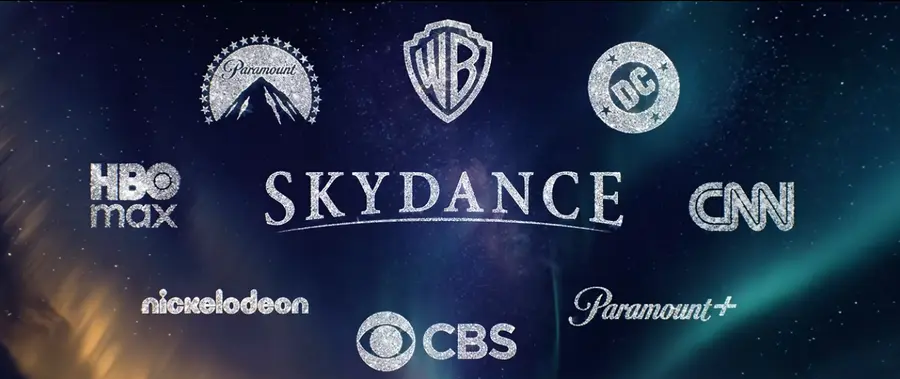
An event with as much potential impact as Amazon Studios' acquisition of MGM, perhaps even more, occurred in 2026: Paramount Skydance acquired and merged with Warner Bros. Discovery. To put it bluntly, MGM was a company whose glory days were behind it, so its acquisition was not particularly surprising. Warner Bros., by contrast, was still producing credible franchise films and held a sizable portfolio of intellectual property, making it look, from the outside, like a major company that remained very much in business. Yet warnings of trouble at Warner Bros. had persisted since the early 2020s, and they did not disappear after Discovery acquired it to form Warner Bros. Discovery. Eventually, in October 2025, Warner Bros. Discovery formally put itself up for sale, with Netflix and Paramount Skydance emerging as strong contenders. Early in the sale process, a Netflix acquisition appeared all but certain, but it ran into antitrust law, concerns about Netflix's identity as a streaming company and opposition from the film industry. When Paramount Skydance also raised its offer, Netflix abandoned its bid. Paramount Skydance ultimately succeeded, and the takeover battle ended in October 2026 with the launch of “Skydance,” formed by the merger of the two companies.
Whether this acquisition will produce positive results remains an open question. Paramount Skydance had to spend at least $80 billion in cash on the acquisition and accept a fairly demanding condition: releasing at least 30 films a year, each with a 45-day theatrical run. Another change brought about by the merger is the consolidation of the companies' own streaming platforms. Warner Bros. Discovery operated HBO Max, while Paramount Skydance operated Paramount+. As concerns about the streaming services grew during the merger process, the companies announced that they would operate both for the time being, with integration planned for 2029. Coincidentally, both platforms chose to reach South Korean viewers through intermediaries rather than launching official services: HBO Max through Coupang Play and Paramount+ through TVING. That could mean little changes there.







댓글 (0)
댓글 작성
댓글을 작성하려면 로그인이 필요합니다.
로그인하기