



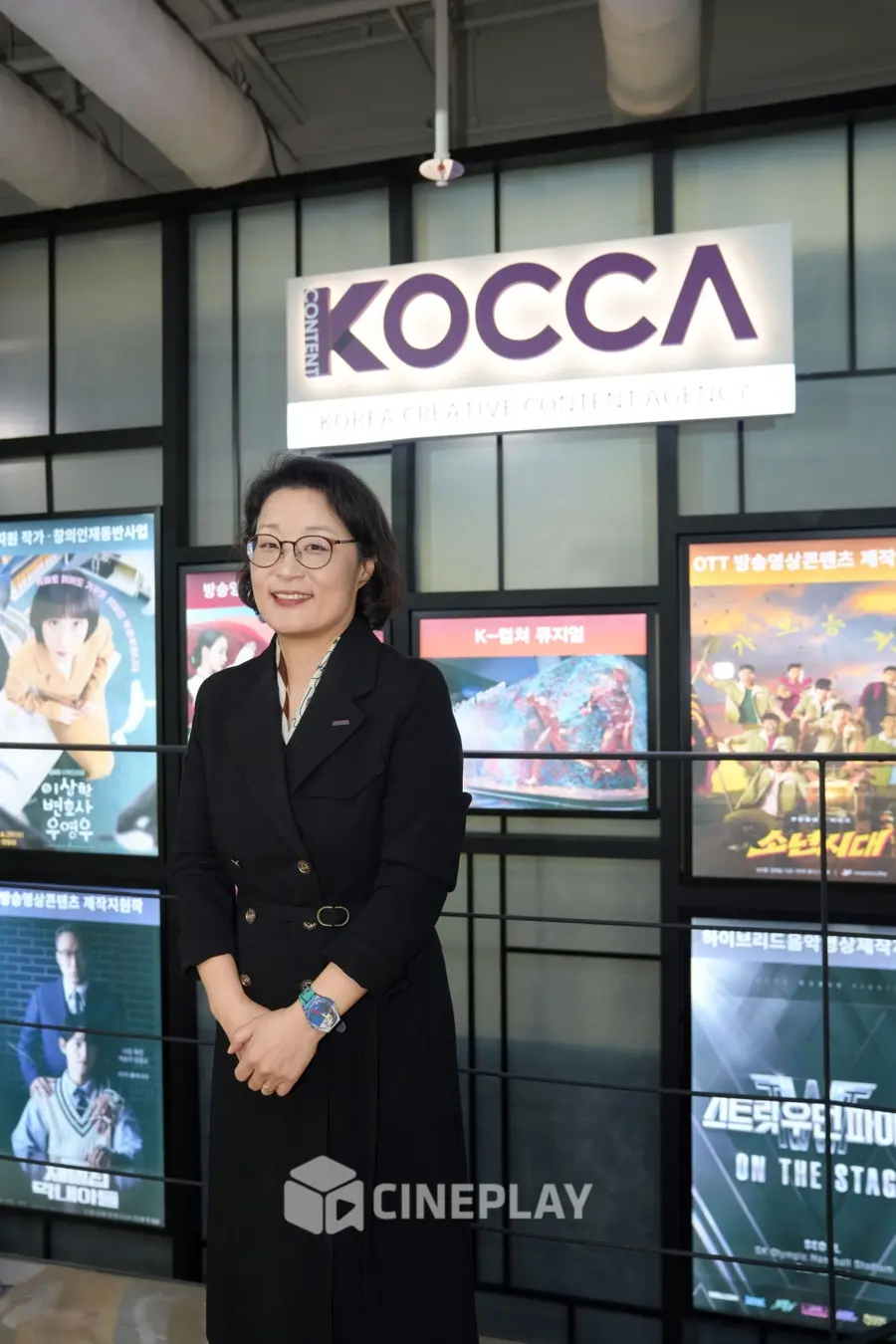
“If the enormous success of 〈Squid Game〉 was not entirely cause for celebration, it was because we were not prepared for that kind of success.” That was how Kim Yoon-ji, who took office as president of the Korea Creative Content Agency (hereafter “KOCCA”) this year, concluded an essay titled “The Economic Impact of 〈Squid Game〉: What the 1 Trillion Won Figure Doesn’t Tell Us.” She wrote it as a co-author of 「Squid Game and the Content Revolution」, back when she was a research fellow at the Export-Import Bank of Korea’s Overseas Economic Research Institute. As content is delivered through OTT subscription services, companies are reaping enormous economic value. She argued that “the 1 trillion won economic impact Netflix estimated for 〈Squid Game〉 in 2021 and the 1 trillion won economic impact of Psy’s 2012 hit song 〈Gangnam Style〉 may look similar as figures, but they are entirely different concepts,” and that “we need to restructure our industry to meet the demands of the OTT era.” She also added, “Even if it takes time, we need to develop the capabilities to handle everything from planning, investment, production and marketing to distribution if we are to grow the industry’s value. It will be difficult, but it is a path we cannot afford to leave behind.”

“Content has grown, but production companies have actually become less profitable.” “We need to consider how much of the 1 trillion won impact from 〈Squid Game〉 actually went to Korean production companies.” “It’s no longer enough to secure content IP; we need a structure that generates diverse revenue from it.” Many of the points Kim Yoon-ji made in her interview with CinePlay were pledges to stay on the “difficult path” she had described. Behind the dazzling global success of K-content lies another reality. The Korean film industry is struggling amid a contraction in investment, while drama producers that have entered overseas markets through global OTT platforms are also facing profitability challenges. Production costs are rising steeply, but the virtuous cycle in which successful content leads to sustainable growth for production companies has yet to take shape.


In response, President Kim presented a new strategy to reshape the industry’s revenue structure around content IP. The plan is to move beyond simply providing production funding, expand individual IP across genres and businesses, and take an active role in connecting every stage, from planning and production to distribution. At the heart of the plan is what she calls a “Korean-style studio system.” When we met her more than 150 days after she took office, President Kim was an expert who had spent years studying and speaking out about the challenges and opportunities facing Korea’s content industry. Her three-year term runs through June 2029. We had a long conversation that moved between the industry and personal tastes, focusing on the present and vision of the “Kim Yoon-ji administration,” now just setting sail.

The presidency of the Korea Creative Content Agency had been vacant for nearly two years. You took office on June 15 and held a press briefing on September 17 to mark your 100th day in the role. Now, as 2026 draws to a close and you are past that 100-day milestone, how do you feel about the experience so far?
Because there had been a gap before I took office, many people had high expectations. I had been researching content industry policy, but I could also see that the industry environment had changed significantly over the past year or two. Above all, the K-Culture industry as a whole has grown enormously, led by K-content. The growth of content itself is important, but its impact on related industries such as food, cosmetics and tourism has also become very significant. As a result, many people have come to view the K-content industry as glamorous and highly profitable. In reality, however, the content industry itself is not that profitable. Film investment is not happening as it should, and while Netflix has opened up more opportunities for television to reach overseas markets, production companies are actually seeing their profitability decline. The game industry is no different. I think the time has come to change the industry’s paradigm. We cannot solve these problems simply by continuing to fund production costs genre by genre as we have in the past; we need to consider new strategies. There are two main directions: one is to improve profitability by centering on content IP, and the other is to use K-content to drive exports in related industries.

At the press briefing marking your 100th day in office, you announced four new strategies and 10 key initiatives to “make a fresh leap forward as a leading agency driving the K-Culture industry beyond K-content.” The plans seemed to put an emphasis on “selectivity and focus.” What would you say are the core elements of those initiatives and strategies?
In the past, there was an expectation that if you could secure funding to produce content, you could somehow turn a profit. But things have changed. For one thing, production costs have risen too much. It is difficult to sustain a model where you make a single piece of content and then wait and hope it will break even on its own. There are two broad approaches: sell content widely around the world, as the United States does, or use a single IP to create multiple revenue streams, as Japan does. At first, I thought we might solve the problem by boosting distribution. But in television, for example, it is difficult to resell a show to another platform after selling it to Netflix. That means there are limits to diversifying distribution alone. In the end, rather than making a film, drama or game and stopping there, we need to connect it to other genres and add ancillary businesses to diversify revenue. If a webtoon is adapted into a drama, it should also be possible to expand it into a game or develop it into other kinds of businesses. We cannot artificially bring down production costs that have already risen, so we need to think about how to generate more revenue from each piece of content.
The phrase “the crisis of movie theaters” continues to dominate discussion of the film industry. How do you view this issue now that we are in the OTT era?
When it comes to movies, I think many consumers now find themselves asking, “Which films do I have to see in a theater?” Since we entered the OTT era, the tendency to distinguish between films to watch in theaters and those that can be watched elsewhere seems to have become more firmly established. Ultimately, the subject matter and themes of content seem to change according to the industry environment and revenue structure. It is hard to find in theaters the kind of “traditional” romance films we loved in the 1990s. They moved to OTT or television dramas because it was difficult to make money from them. There is a natural side to that change, but that does not necessarily make it desirable. If we focus only on profitable genres, content diversity may decline. I think that could also make it harder for the industry as a whole to grow over the long term.
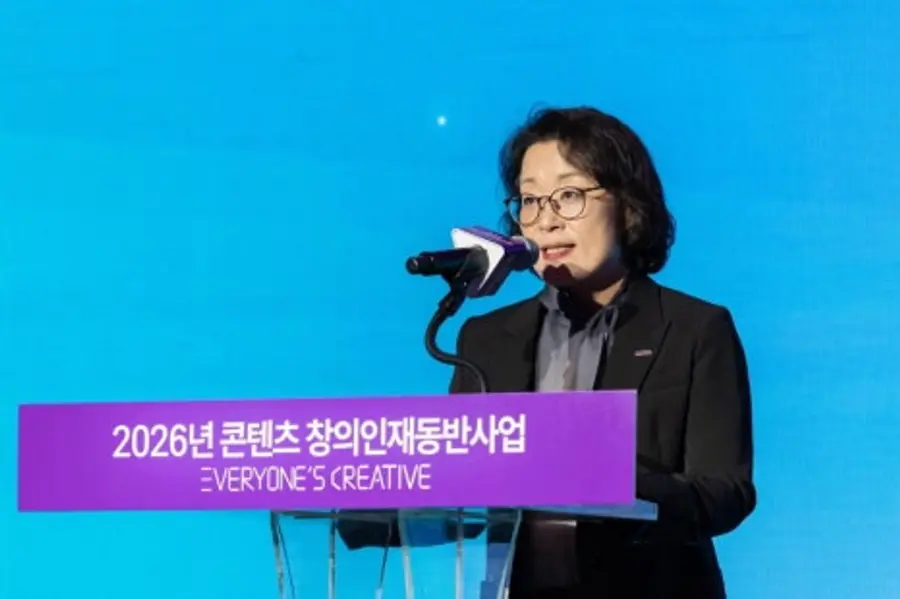
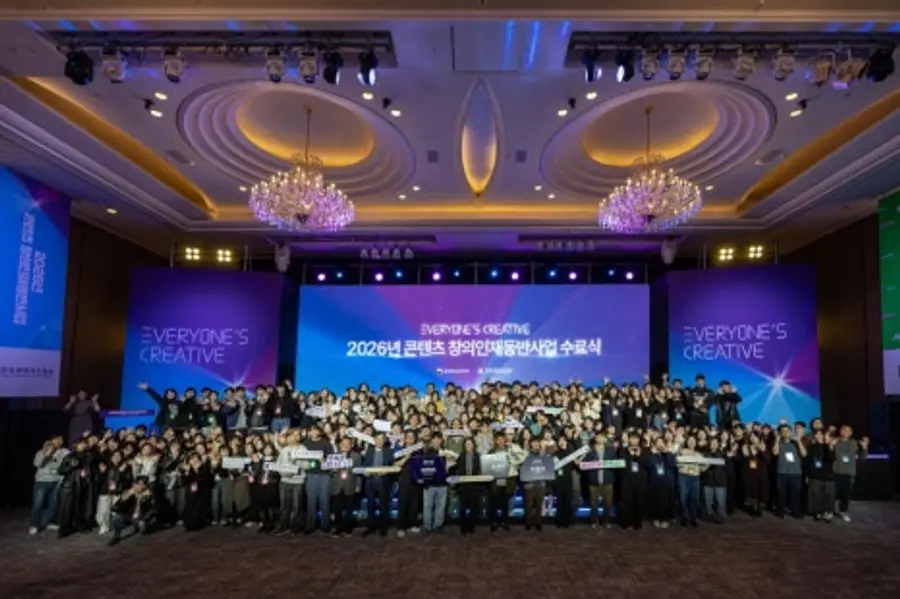
One phrase from the four new strategies that stood out to me was “K-Culture Export Package,” which brings together content, fashion, beauty, food and more. The idea is to center on content IP and combine the K-lifestyle industries into a single export package. In explaining the new strategy, you also used phrases such as “Irreplaceable K-Content.” I felt that the policy direction came through clearly in the names themselves.
The phrase “Irreplaceable K-Content” is also used by the Ministry of Culture, Sports and Tourism, which has adopted “An Irreplaceable Cultural Powerhouse” as its banner. But I believe K-content really does have special qualities that are difficult to replicate. Popular culture has generally spread from so-called developed countries to other nations. K-content is special because it originated in Asia and went on to have a global impact. Even more important is the fact that content grew first, and exports of other consumer goods, such as food and cosmetics, rose alongside it as a result. This phenomenon is quite unusual globally. In that sense, I believe content has now become central to the industry and must continue to lead related industries.
※ The interview with Kim Yoon-ji, president of the Korea Creative Content Agency, continues in Part 2.










댓글 (0)
댓글 작성
댓글을 작성하려면 로그인이 필요합니다.
로그인하기