



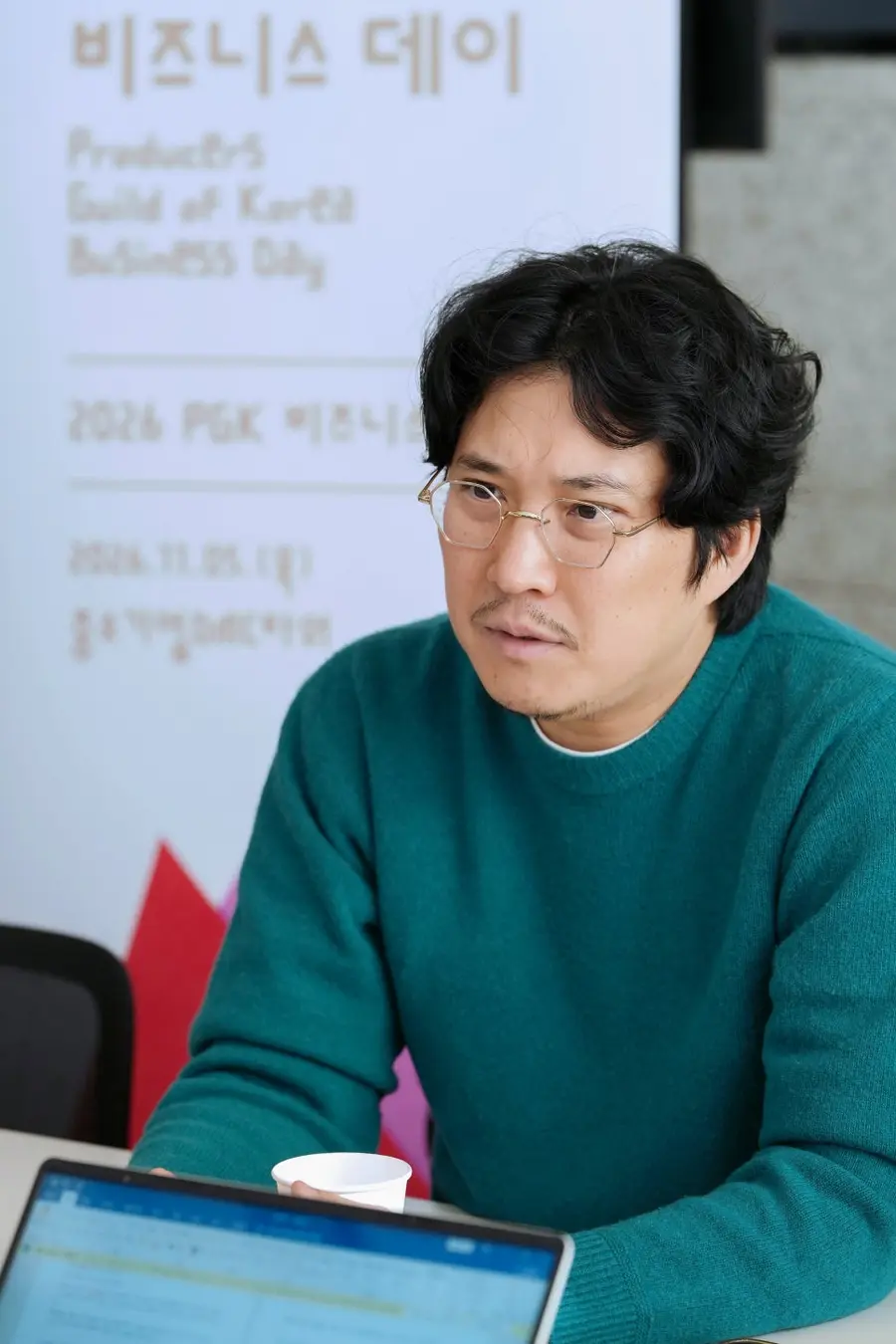
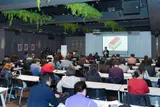
For six and a half months, mentors and mentees met every week and worked to complete screenplays. The Korea Creative Content Agency’s Creative Talent Development Program identifies and nurtures emerging creators through expert mentoring provided by platform organizations and project-based creative support. Founded in 2006, the Producers Guild of Korea (PGK) is an organization of about 270 full members who work as producers. This year, PGK again served as a platform organization for the program. For its 2026 program, eight working producers served as mentors to aspiring creators ages 19–34, each taking on two mentees. From May to mid-November, the mentees received six hours of mentoring per week and a monthly creative grant of 1.5 million won for about 6.5 months. The 15 mentees, selected from a pool of applicants in a competition with roughly 10 applicants per spot, held one-on-one business meetings with industry professionals at the “2026 PGK Business Day,” held Nov. 5 at Small and Medium Business DMC Tower.
At the event, Cineplay met with mentors and mentees to ask about the six and a half months they had spent working together. Mentor Producer Kim Se-hoon heads the production company Semosi Film, which presented 〈The World of Love〉, one of last year’s most talked-about films. Since making his feature-film debut with 〈Daddy You, Daughter Me〉, he has produced 〈The World of Us〉, 〈The House of Us〉, 〈Baby Beside Me〉, 〈Hail to Hell〉, 〈Hong-i〉, and other films, bringing fresh energy to the industry. His mentees were Writer Kim Young-eun, whose project is 〈Mentoring〉, and Writer Lee Jae-hee, whose project is 〈Killing Pigeons〉. Kim Young-eun’s 〈Mentoring〉 is billed as an office death game: game-company intern Yoo Seo-ha must undergo “bloody mentoring” alongside the boss she despises most if she wants to become a full-time employee. 〈Killing Pigeons〉 is a comic romance about a single pastry chef who joins a “Pigeon-Hating Club” to get rid of the pigeons her favorite celebrity hates, only to end up trying to stop a plot to poison them.
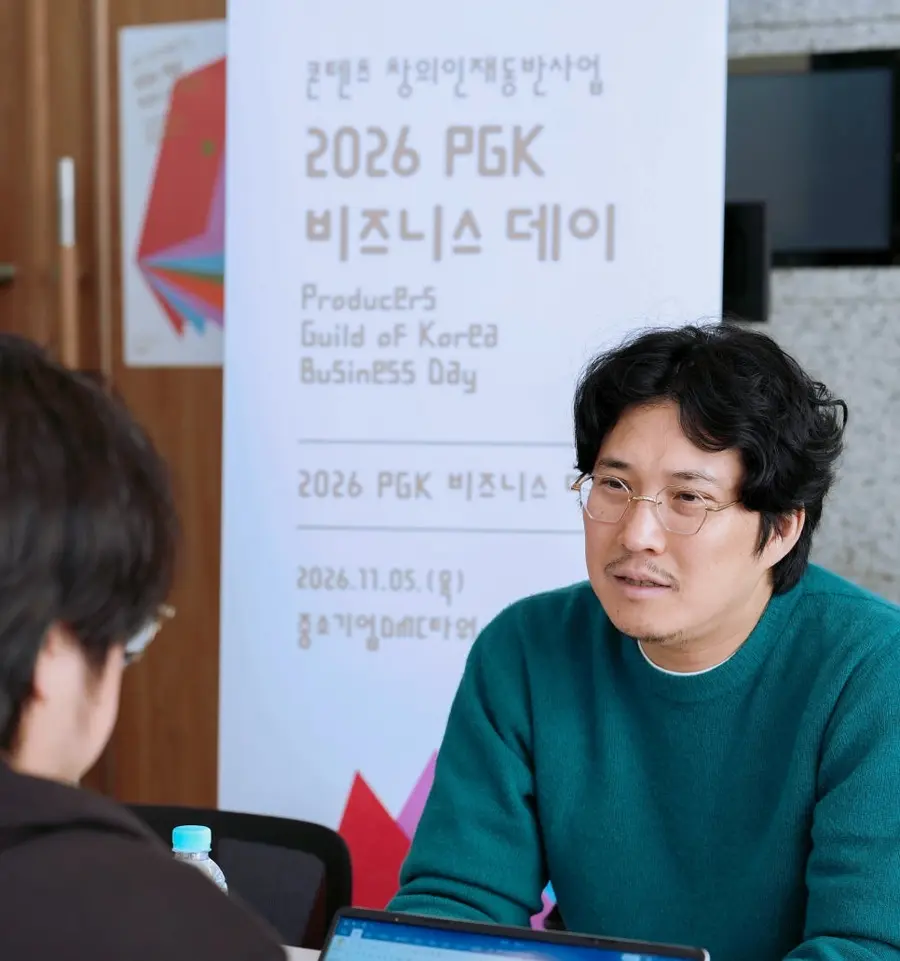
“You can see the potential once it’s finished”: Producer Kim Se-hoon’s clear direction
First, finish a draft and bring it into contact with the industry. Producer Kim Se-hoon, mentor to both writers, had a clear direction. He recalled a time when he “majored in producing at the Korean Academy of Film Arts, but had a lot of questions about how to get started in the film industry afterward.” Later, “when I began to get a little perspective as people around me built their careers, I was offered this chance to mentor people who majored in or hoped to pursue producing. I decided to try mentoring for the first time.”
Kim Se-hoon found that his two mentees, Kim Young-eun and Lee Jae-hee, had very different sensibilities. Writer Kim Young-eun was an aspiring producer with experience working on sets and directing, while Writer Lee Jae-hee had previously worked as a writer. Meeting with his mentees once a week for six hours, Kim Se-hoon focused on finding stories that spoke to them, knowing that “getting a first draft out is the hardest part” and that “they have to tell the stories they want to tell if they’re going to finish them.” He also considered how to shape “the things a first-time producer or development person likes into a genre or logline that might appeal to the industry.” It took three months to establish the foundation of the stories.
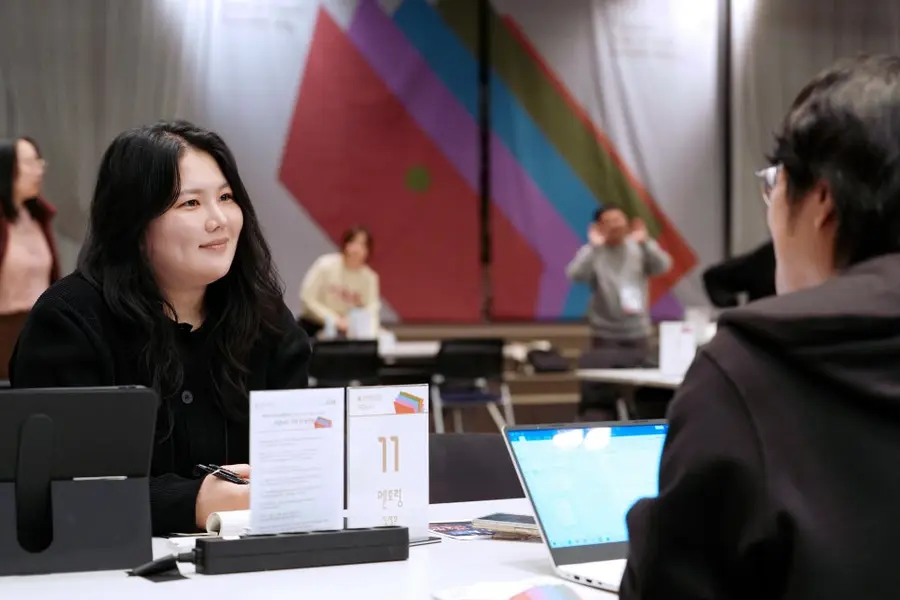
Mentees with distinct sensibilities—and mentoring tailored to each
The mentees, one with a background in production and the other in writing, also had different approaches to developing stories. Writer Kim Young-eun had directed short films and web dramas, but had never written a feature or worked directly with the industry. Kim Se-hoon shared as much as he could about developing compelling pitches and loglines, and “how to bring elements the industry might like into a subject you want to explore.” The story initially centered on suicide—a subject that might suit independent film, but not the industry. He helped her shift the focus to generational conflict and arrive at a more clearly defined genre: an “office death game.” Kim Young-eun recalled that “the more difficult the subject, the more you need to circle around it,” and said, “He helped rein in my sense of urgency.” She described Kim Se-hoon’s mentoring this way: “He helped me take my taste for creative thinking and gore and bring it up to the level of a social issue.”
By contrast, Writer Lee Jae-hee had plenty of stories she wanted to tell, but her pitch had “too many desires within the work.” Kim steered her toward “paring back the characters’ desires and focusing the story so it could be completed.” He also took her interest in a range of cultural references and memes into account, while considering the time it takes to move from development to production. He focused on the need for “the story itself to have universal appeal,” helping her build a stronger pitch.
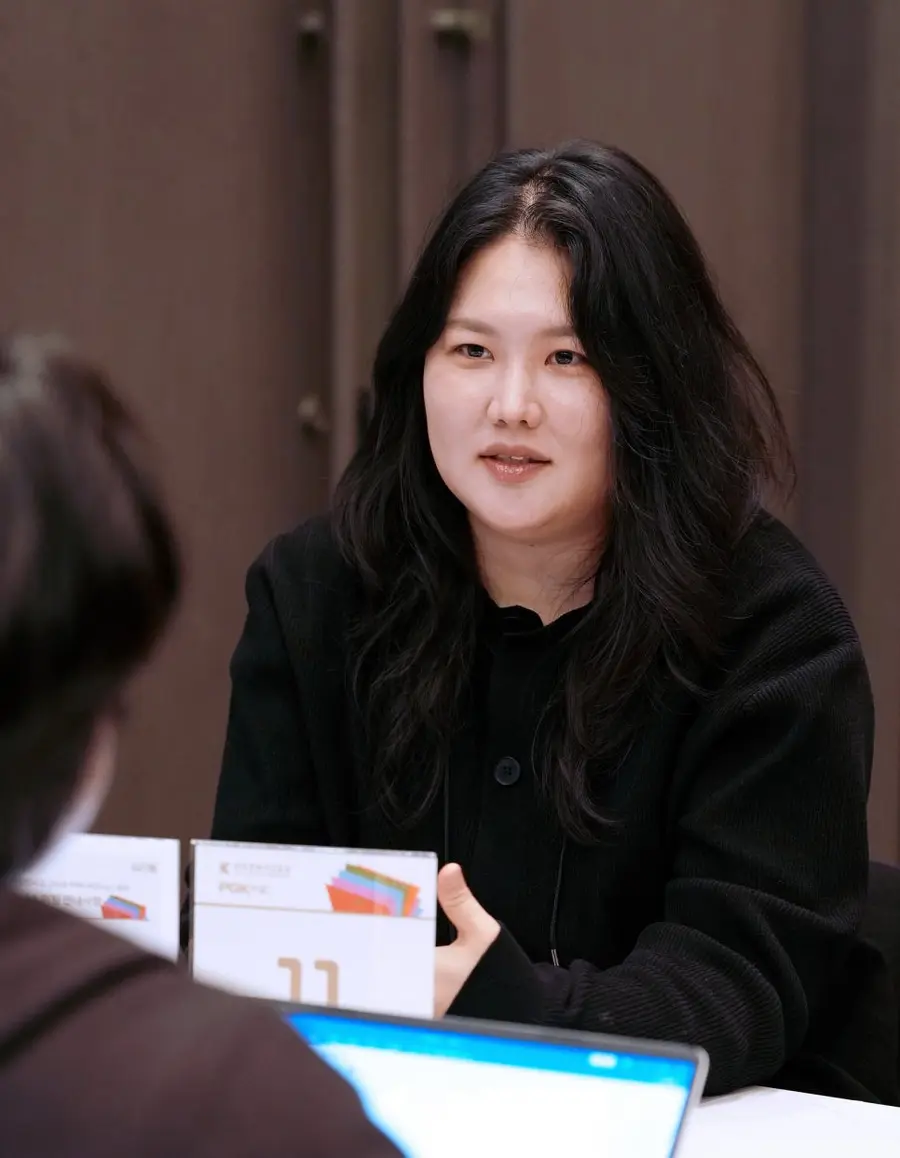
Opening up more paths for mentors and mentees alike
The mentoring process also brought a welcome change for Kim Se-hoon himself. “Now that I’m an established industry veteran, I don’t get many chances to meet young writers or producers,” he said, describing the program’s mentoring as “a great opportunity to meet young industry professionals” and “a chance to take in new perspectives.” Believing that “if you only use the same muscles, you can get stuck in a rut,” Kim took on teaching in addition to mentoring. “As I prepared, I reviewed the work I’d done over the years and was able to organize my past projects. I also gained a clearer sense of the path ahead,” he said, reflecting on how the opportunity helped him take stock of himself. Writer Kim Young-eun showed her notes from the mentoring sessions with Kim Se-hoon and said, “He gave me so many great tips,” adding, “Honestly, I wish other people didn’t know them.” She also recalled that she “was stubborn for a month or two because I really wanted to tackle a social issue,” but “looking back, I’d already been persuaded by Producer Kim Se-hoon, and I wasted time being stubborn for no reason.” Still, she added, “Being persuaded helped me think more deeply about the work, right up to the point of coming up with it.”
We asked Kim Se-hoon who he thinks could benefit from the Creative Talent Development Program. “The process of developing projects as a producer isn’t very accessible from other fields,” he said. “Because it trains writers and producers from the perspective of the people working as producers, it can help them create material suited to attracting investment or moving into production, with an eye toward the industry.” Writer Kim Young-eun, who was new to development and finding projects, offered a tip to those considering the program: “People who’ve tried it know best.” She added, “I think people who know even a little about this field will get twice as much out of the experience. I think my experience on set helped me get in, and this opportunity has made me want to learn more.”
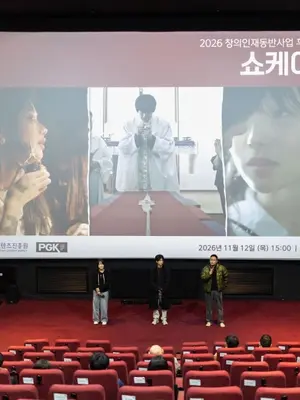
※ Next: An on-site report from the “2026 Creative Talent Development Program Follow-up Support B Showcase,” featuring three projects backed by production support, on Nov. 12.


댓글 (0)
댓글 작성
댓글을 작성하려면 로그인이 필요합니다.
로그인하기