



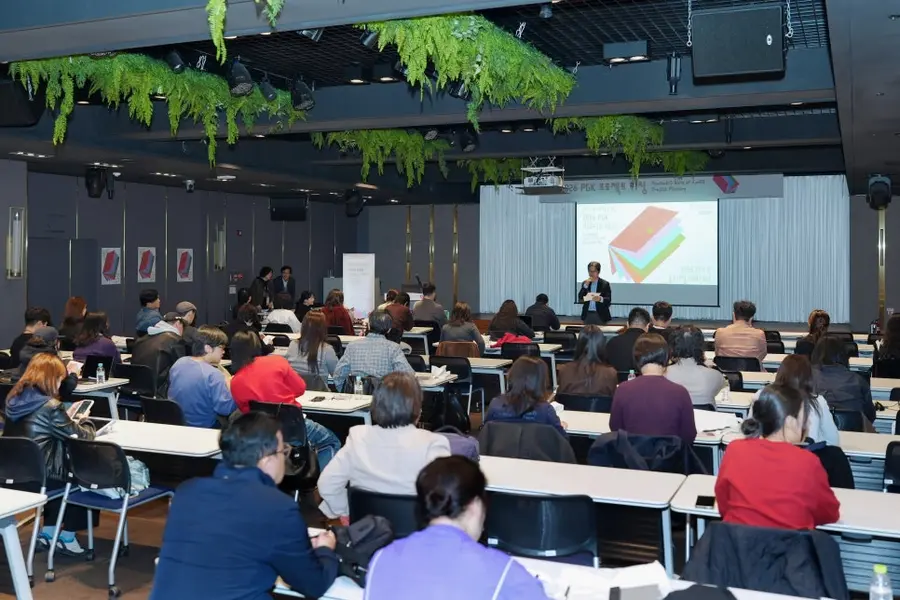
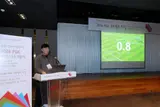
“I hope today marks the first step toward making feature films.” Lee Han-dae, CEO of Sidus and director of the 2026 Creative Talent Companion Project, opened the Business Day on Nov. 5 at the Small and Medium Business DMC Tower. The Korea Creative Content Agency’s Creative Talent Companion Project discovers and develops promising creators who will lead the future of South Korea’s content industry by providing specialized mentoring through platform organizations and project-based creative support. The initiative has expanded beyond “mentoring support,” which focuses on script development, to include “commercialization support” programs covering production and distribution.
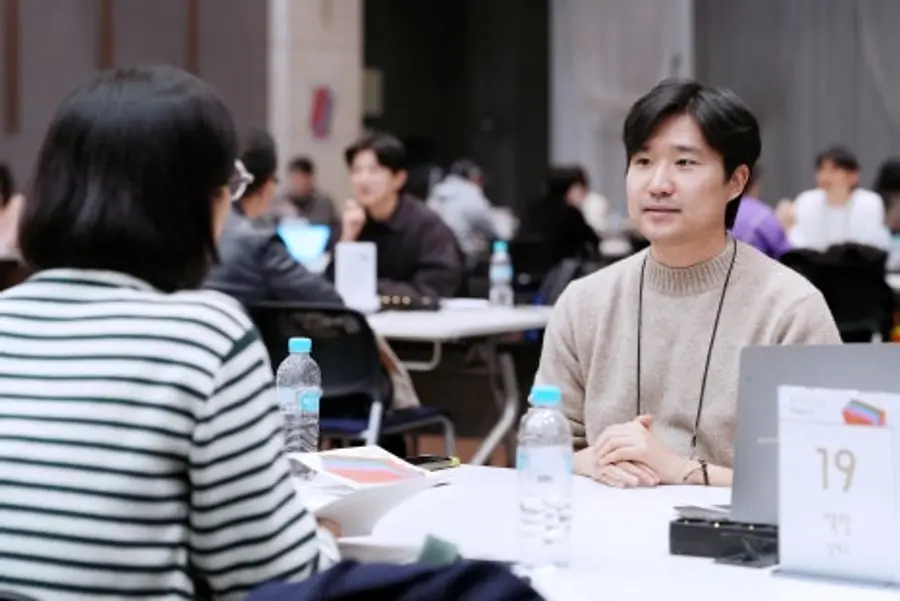
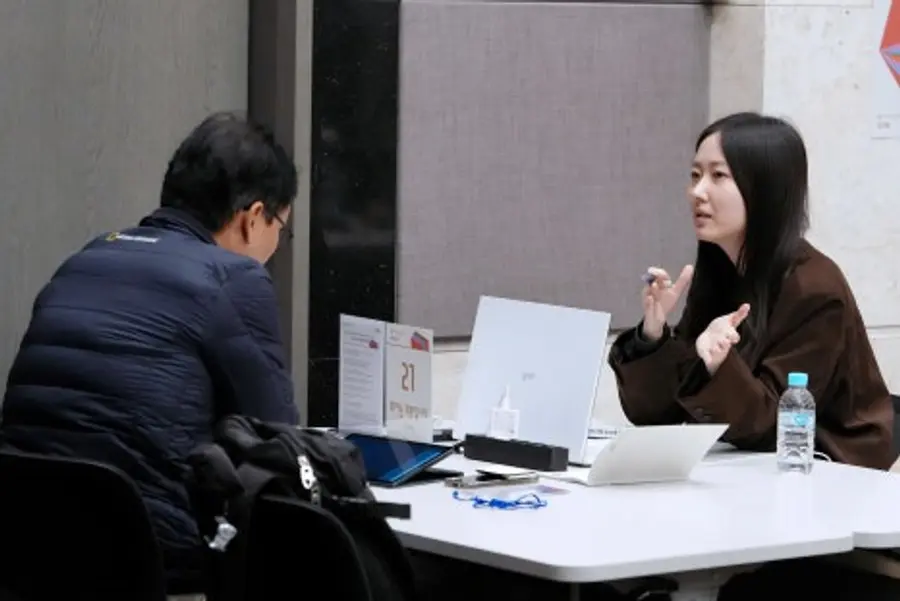
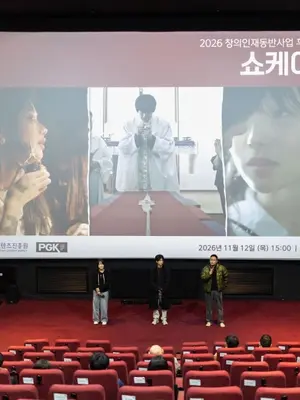
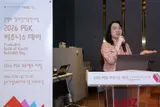
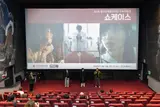
Now in its second year, the Producers Guild of Korea (PGK) Business Day was created to give participating creators the opportunity to meet directly with industry professionals, present projects in development and explore a range of collaboration and commercialization opportunities. After a competition that drew about 10 applicants for each spot and six months of mentoring, 15 mentees held one-on-one business meetings with industry professionals centered on film and drama projects. Eight writers who had completed the program were selected through a review process to pitch projects currently in development for follow-up support.
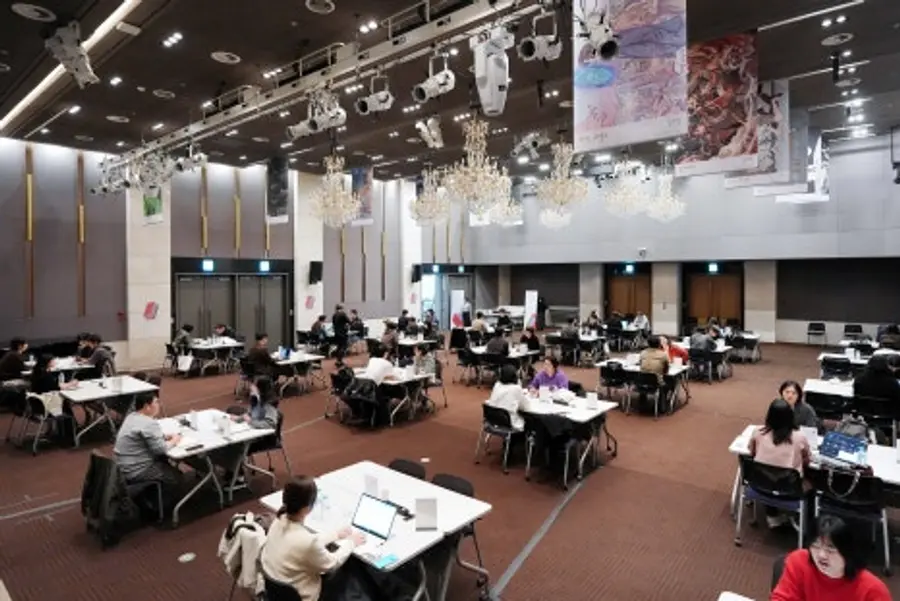
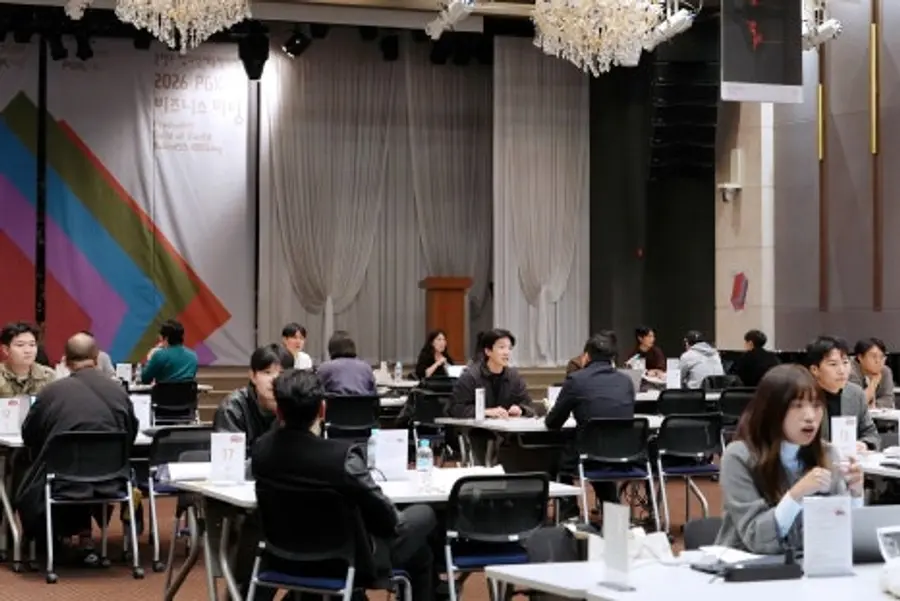
The 2026 PGK Creative Talent Companion Project consists of mentoring and two follow-up programs, A and B. Business Day is part of Follow-up Program A. While mentoring brings industry professionals and emerging creators together to plan and develop projects, Follow-up Program A supports project pitches, business meetings with industry professionals and networking. Follow-up Program B provides production support for outstanding projects: one feature and two short films. This year, some creators took part in both follow-up programs. The PGK Creative Talent Companion Project is already producing meaningful results: projects planned and developed through mentoring have been selected for production support by the Korean Film Council, and one writer signed a contract with Studio Genie. Three participants have also graduated early after securing outside contracts or other professional opportunities.
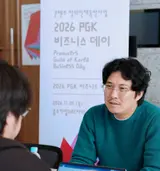
With the Korean film industry facing difficulties, discovering new creators and producers has become more important than ever. PGK’s commercialization support program is exploring new possibilities by expanding beyond short-film production support into feature films. Participants said they could see their projects developing and their opportunities to enter the industry growing through follow-up programs that include planning and development, business meetings and production support. The Business Day is especially significant because it brings 23 emerging creators together one-on-one with professionals from the film and audiovisual content industries, creating opportunities for their ideas to lead to real collaboration and production. Rather than offering support just once, the program connects creators with their next opportunity as they grow. Beginning with an interview with Sidus CEO Lee Han-dae, who oversees the program, we introduce project pitches by eight writers who have completed it, and look back on a packed day through interviews with industry professionals and participating writers who took part in the business meetings.
“What Korean cinema needs now is a success story”
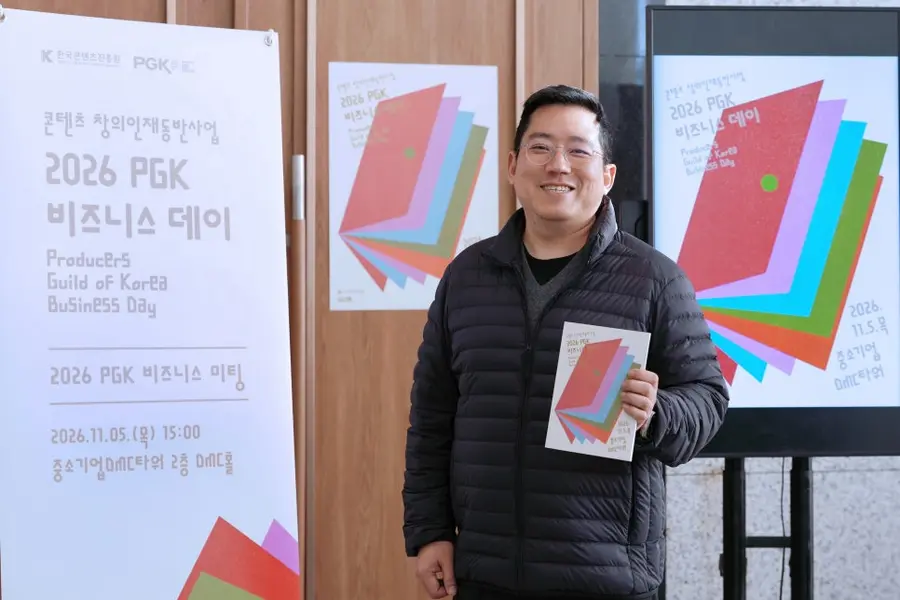
An interview with Lee Han-dae, Sidus CEO and director of the 2026 Creative Talent Companion Project
Lee Han-dae, CEO of Sidus and director of this year’s Creative Talent Companion Project, has worked as a producer since 2012. His credits include 〈Tazza: The Hidden Card〉 (2014), 〈Tazza: One-Eyed Jack〉 (2019), 〈6/45〉 (2022), 〈Because I Hate Korea〉 (2024), 〈The Least of These〉 (2024) and 〈The People Upstairs〉 (2025). More recently, he has continued the “Tazza” IP with 〈Tazza: The Song of Belzebub〉. He was also credited as executive producer on 〈Bugonia〉 (2025), a remake of 〈Save the Green Planet!〉 (2003), an IP jointly owned by Sidus and CJ ENM. Having worked across domestic and international productions and observed the film industry, he emphasized that what Korean cinema needs above all is “new success stories.” We spoke at length about the rise of low-budget horror, the potential of romance and comedy, the importance of nurturing new creators and young producers, and the future of Korea’s film industry.
What are the biggest changes to this year’s Creative Talent Companion Project compared with last year?
This is our second year. Last year, we produced five short films. This year, we changed course and are producing one feature and two short films. During discussions at PGK, I argued strongly that while producing 100 short films would be meaningful, it was time to make feature films. That’s how I ended up taking this on directly. (Laughs) The important thing is to nurture young producers. Until now, efforts to develop creative talent have focused mainly on discovering writers and directors. But if we’re thinking about the future of Korean cinema, developing new producers is extremely important, too. I think this is where PGK can distinguish itself from other organizations in its follow-up support programs. I especially want to emphasize helping young producers grow within the industry, rather than stopping at project development.
Occult and horror projects stood out at this year’s pitch event. How do you view this recent trend?
In the past, thrillers were one of the main genres in Korean cinema where emerging directors, producers and actors could showcase their talents. But since the COVID-19 pandemic, horror seems to have taken that place around the world. Low-budget horror films are attracting a lot of attention, not only in the United States but also across Southeast Asia. It’s also a genre that can compete with blockbusters on a small budget. Most important, its core audience is young people in their teens and 20s—the audiences of the future. Since the pandemic, one of the biggest concerns for the global film industry has been how to bring young audiences back to theaters. In that respect, horror has enormous potential: it’s a genre made by young creators and watched by young audiences.
Which genres and areas do you think Korean cinema should pay more attention to going forward?
Ultimately, the industry needs success stories. The historical genre, which had been sluggish for a while, is drawing renewed attention after 〈The Man Who Lives with the King〉 became a hit this year, just as interest in occult films grew after the success of 〈Exhuma〉. That’s what Korean cinema needs now: success stories. We need successful low-budget films, and more successful low-budget horror films. But horror isn’t the only possibility. There may be new ways to win over young audiences and succeed at the box office through other low-budget experiments. I think that’s exactly what the Creative Talent Companion Project’s Business Day is here to help us find.
At this Business Day, 23 participating writers are holding one-on-one meetings with industry professionals. What results are you hoping for?
I’d compare it to soccer. If the top division is struggling and we neglect the second and third divisions, the sport has no future. It’s the same with the film industry. One of the most entrenched problems in Korean cinema today is a system where the same actors and directors who are already established keep getting opportunities. But audiences now have Hollywood-level expectations, and we’re in an era when even a film featuring a famous director or actor can struggle if it doesn’t meet them. In the end, we have to keep trying new and fresh things. That freshness will come from young creators with a powerful desire to make something new. Business Day isn’t an event to cheer on newcomers. It’s where their inventive, boundless ideas meet the industry in earnest. PGK is an organization of around 300 working producers. I believe we’re in a very good position to connect the industry with creators. Of course, everyone is busy with their own work, (laughs) but we intend to do everything we can to increase the chances that the good ideas coming out of the Creative Talent Companion Project make it into production.

Alongside your career as CEO of Sidus, we’re curious what kinds of films you personally enjoy.
I’ve been in the film business for about 22 years. I started out at CJ ENM, and became CEO of SidusFNH in January 2012, when I began working in earnest as a producer. It’s been about 15 years now. The company changed its name back to Sidus in 2015, and today we make films not only in Korea but also in Vietnam. We have a local subsidiary there, too. We’ve made about three series, but I still think of film as my main line of work. My favorite genre is the increasingly rare “human drama.” (Laughs) I’ve always dreamed of making films that tell deeply human stories, like 〈Life Is Beautiful〉, 〈Good Bye, Lenin!〉 and 〈The Lives of Others〉.
Finally, is there anything you’d like to say to the filmmakers who took part in this year’s Business Day?
People say the film industry is in a very difficult place right now, but when I look back, I don’t think it’s ever been easy. (Laughs) There’s always a crisis, but there’s always an opportunity, too. It may sound obvious, but in the end, we need an abundance of good stories and good people. Through developing new creators, exploring the potential of genre films, connecting the industry with creators and providing follow-up production support, we can’t let film become merely a legacy of the past. It needs to be a sustainable industry where new projects keep getting made and talented creators keep emerging. I hope Business Day will be that valuable beginning for everyone.
※ The next article will be the first in a series on project pitches by eight writers who have completed the PGK Business Day program.






댓글 (0)
댓글 작성
댓글을 작성하려면 로그인이 필요합니다.
로그인하기