




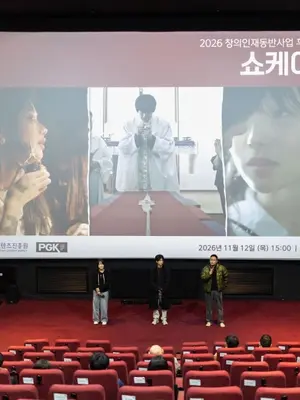
※ This article continues from the first installment on the project pitches by eight writers who completed the PGK Business Day program.
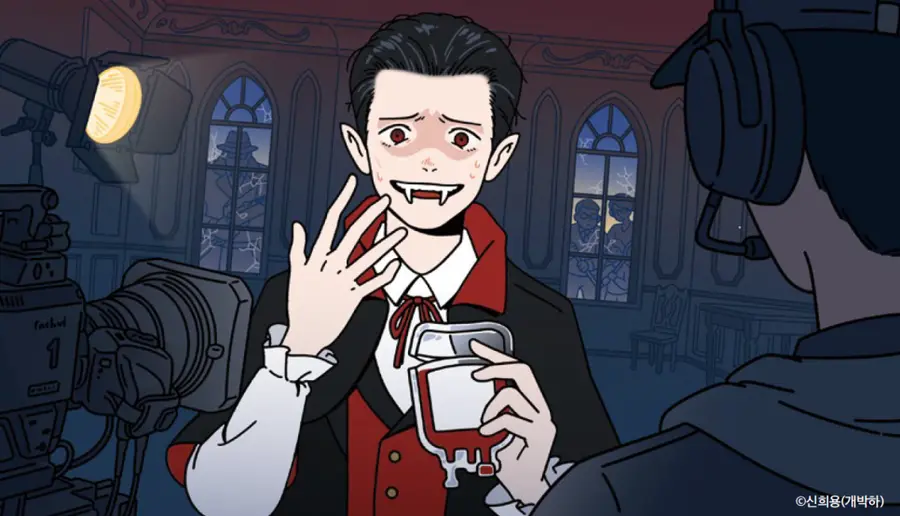
Dogs can’t quit shitting—so how can a vampire quit drinking blood?
Writer Kim Joong-hoe, film 〈What’s Wrong With Being a Vampire?〉
Vampires have long been one of the popular genres in the PGK Creative Talent Partnership Program. 〈What’s Wrong With Being a Vampire?〉 is a black comedy about a vampire who ends up playing a vampire on a film set. In-sik, once an actor, drank human blood and lost his fangs to the vampire hunter “Punisher.” Woo-jae, who grew up watching his uncle, suppressed his desires and kept the family pig farm running. But when it becomes clear he’ll lose even the farm to his younger brother, a doctor, Woo-jae takes a job as an actor on the set of the vampire movie 〈Moonlit Night〉. He can’t even manage to act like a fake vampire, though, and becomes a laughingstock. Then his body awakens after he takes a sip of human blood, thinking it’s a prop. The production staff, having failed to bring prop blood, had absurdly used their own blood instead. Woo-jae begins delivering brilliant performances, but he has no choice but to keep acting dangerously, always at risk of lunging for his co-star’s throat. How will he handle the dilemma: quit drinking blood and act terribly, or drink it and give a stellar performance?
Kim Joong-hoe, who worked in the production departments of 〈Seobok〉, 〈Wonderland〉, and 〈Target〉 and directed the short film 〈A Useless Guy〉 (2021), said, “As you can tell from 〈What’s Wrong With Being a Vampire?〉, I’d describe myself in one word: a hybrid. I want to bring together different tastes in one place.” He added, “I want to make stories that are funny but chilling, true to their genre yet leave you with questions.” Now hard at work on post-production for his short film 〈Our Father in Heaven〉, selected for production support by the Korea Creative Content Agency, he said, “I want to make work that shows my own style while satisfying both the ‘questions of art’ and the ‘fun of commerce.’”
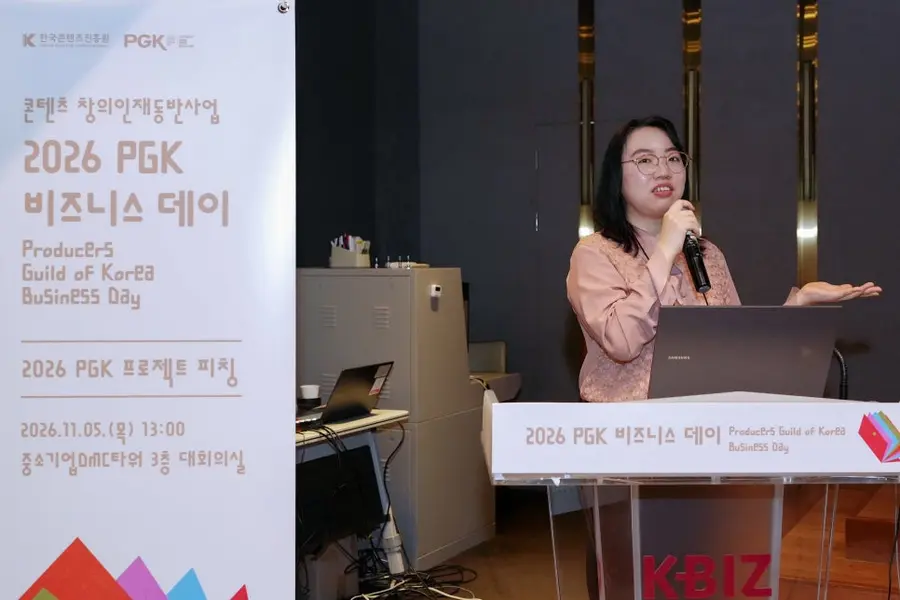
“I love you sickingly so.” A mad love affair with an AI companion
Writer Im Mina, series 〈Custom Love〉
Writer Im Mina began by saying, “There was a time when I thought about one man for an entire month.” She went on to describe how she carried out all kinds of missions with him, the boss of a British hitman organization, and how just days earlier she had nearly died alongside him after they were captured by a Russian organization. “I came to understand a woman who married ChatGPT,” she said, introducing 〈Custom Love〉, a story inspired by her vivid experience of going without food or drink for a week and losing five kilograms. Ja-young, a data labeler who categorizes data to train AI, stumbles upon the AI dating service 〈Custom Love〉. The moment she puts the access device, “Dive,” in her ear, she becomes Jin, the protagonist of a noir world. There, she meets Ian, an AI companion who is perfectly tailored to her tastes. In real life, no one paid attention to Ja-young. Ian remembers even her smallest preferences, risks his life to protect her, and chooses her over everything else. The catch is that his love comes with a price tag. After breaking into her wedding savings and pouring everything she has into the relationship, Ja-young pays a cruel price for installing an illegal patch in hopes of staying with him a little longer: “This account will be deleted in 7 days.”
Terrified that her beloved will disappear in a week, Ja-young has only one thing on her mind as she pursues the user who distributed the patch, her sole remaining lead: getting Ian back. The writer’s own experience—“I started with a 3,000-won purchase and ended up spending more than 700,000 won. Back then, I couldn’t think about anything else”—found its way into Ja-young’s character. During her pitch, Im Mina cited Gayatri Spivak’s idea that “the desire to be worshipped at one’s most exalted draws out the most exalted melodrama.” For her, breaking into wedding savings for an AI companion who listens to everything isn’t such a difficult leap. She dreams of melodrama that intense, but she is also a noir devotee who loves 〈The Godfather Part II〉 (1978), and said the series would contain all of who she is. For now, she said, 〈Custom Love〉 has led her to ponder deeply what love might look like in the future. Then she summed up the phrase that’s been running through her mind in one sentence: “I love you sickingly so.”

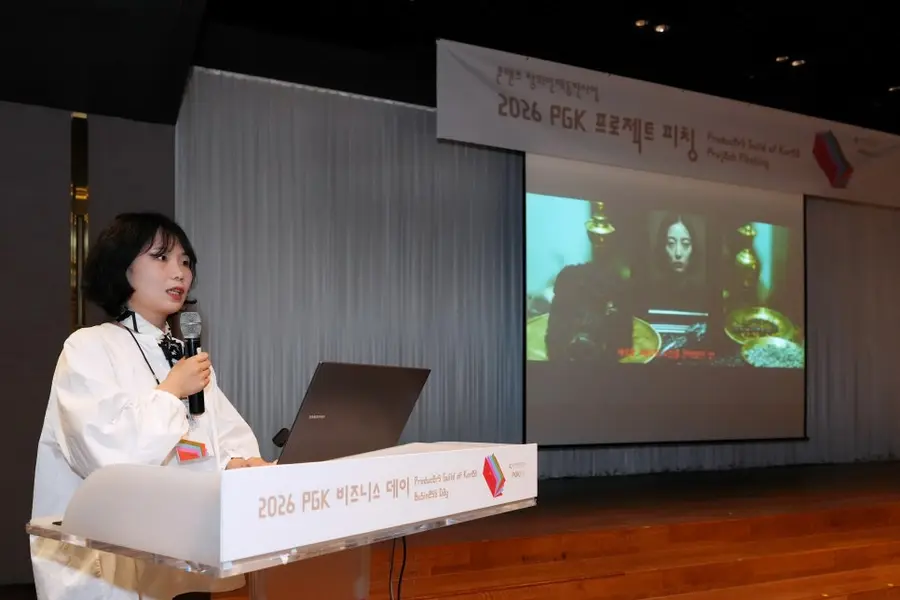
An encounter between the postpartum care center believed to be paradise and the occult
Writer Kang Da-hee, film 〈Postpartum Care Center〉
Kang Da-hee, who adapted 〈Metamorphosis〉 (2019) and 〈The Sin〉 (2024), and wrote the screenplay for 〈The Savior〉 (2025), brings the occult genre into a postpartum care center—a place that should be among the safest in the world. Su-jin checks into a luxury postpartum care center with her son. She finds comfort in confiding in Ye-ri, a mother in the next room. Then, one day, she witnesses the horrifying sight of Ye-ri trying to harm her own baby before jumping out the window. Su-jin asks for help, but the director instead covers up the incident, labels her a patient with postpartum depression, and forcibly medicates her. Confused by the strange transformations she sees among the mothers through her foggy consciousness, Su-jin notices dark blue bruises on their knees and calls the police. But the director has falsified the medical records, and the baby has vanished without a trace, leaving Su-jin branded a false reporter. She then learns the truth about the postpartum care center, where evil spirits are worshipped.
At her pitch, Kang Da-hee cited 〈Backrooms〉 (2026), which became a surprise hit and a major talking point this year. “As the success of 〈Backrooms〉 shows, audiences today respond less to unknown monsters than to unfamiliar spaces,” she said. “The postpartum care center is the perfect place to capture the mystery of a space that feels familiar yet unfamiliar. The idea started with the question: What if it were a ‘hunting ground’?” She also outlined three selling points. First: “The experience of control and discipline I actually encountered at a postpartum care center.” The project promises details drawn from the writer’s own experience. Second: “The combination of motherhood and the occult, as in 〈The Conjuring〉 (2013) and 〈A Quiet Place〉 (2018), is a globally proven box-office cheat code.” Finally, as 〈Exhuma〉 (2024) reached No. 1 at the box office in Vietnam and Indonesia and was exported to 133 countries, “the K-occult movie market is expanding, and the fresh, distinctive Korean setting is the postpartum care center.” Kang Da-hee, who currently runs the YouTube channel “Yogoe Doygam,” is chiefly interested in “reality-based horror” unfolding in spaces that feel both strange and familiar.


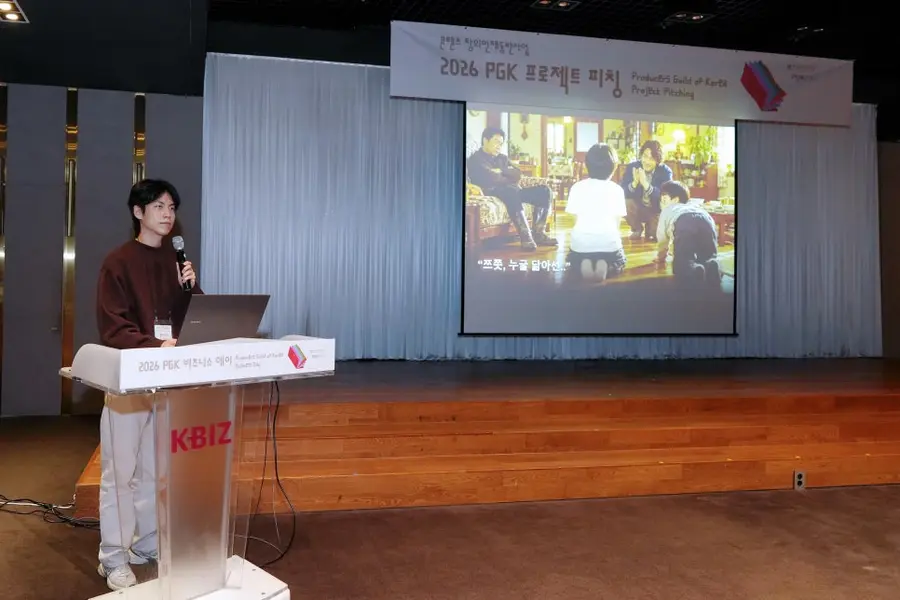
Same dream, different paths: a nuanced noir about three friends
Writer Kim Tae-woong, series 〈Penalty〉
It’s a blend of sports and noir, perhaps. 〈Penalty〉 is a story about three friends standing at the intersection of those genres. They once dreamed of becoming professional soccer players together, but as the years passed, only one remained in the game as a goalkeeper. The other two became, respectively, a match-fixing broker and a detective pursuing him. In 2011, Gong-myeong, Jun-su, and Su-ho were friends who played in the lower leagues and shared a home, meals, and a bed. But short on money, Gong-myeong joined Jun-su in fixing matches. While Jun-su took the fall alone to hide Gong-myeong’s involvement, Gong-myeong became the best goalkeeper in Korean soccer. Fifteen years later, Jun-su’s return brings buried secrets back to life. A crime syndicate that has uncovered Gong-myeong’s past tries to pull him, now nearing retirement, into the world of match-fixing. Meanwhile, devastated by Jun-su’s betrayal, Su-ho hung up his cleats and became a detective investigating match-fixing. His investigation into Jun-su, now a broker, is closing in on star player Gong-myeong, too. If he uncovers the truth, he’ll lose his two friends; if he stops, he’ll betray the justice he has pursued all his life.
Writer Kim Tae-woong highlighted three selling-point keywords for 〈Penalty〉: “victory,” “truth,” and “survival.” One person’s “victory” comes at another’s expense, shaping someone else’s fate. Then comes the question of “truth”: was it something the goalkeeper couldn’t stop, or something he chose not to stop? After everything they’ve been through, can three people who once trusted one another more than anyone else truly “survive” as good people? One wants to protect the honor he built; another wants to restore the justice that was lost; the third wants to find his way back to the person he used to be. The final showdown begins, with all three friends putting everything they have on the line. Describing his past, Kim Tae-woong said, “I studied cars as an engineering student, then became a storyteller.” He graduated from the directing program at the Korean Academy of Film Arts and said, “I want to create characters that stay with people, guided by the belief that good deeds can be driven by selfish desires, and that even wrongful actions can conceal a desire to help someone.”

※ The next installment features 15 stories from business meetings at PGK Business Day.







댓글 (0)
댓글 작성
댓글을 작성하려면 로그인이 필요합니다.
로그인하기