


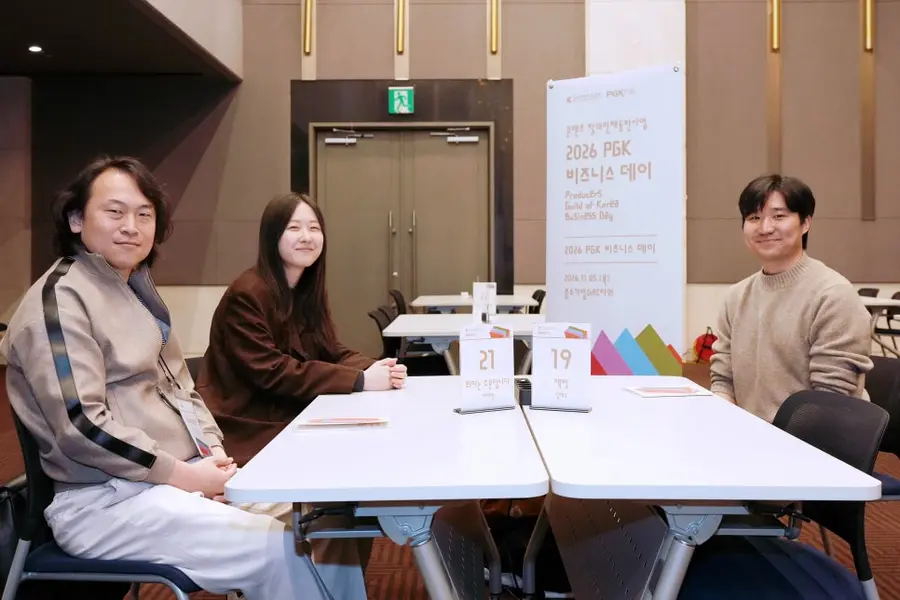
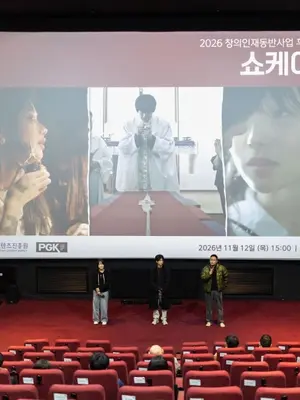
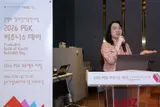
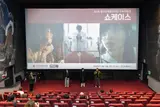
For six and a half months, mentors and mentees met every week to complete screenplays. The Content Creative Talent Partnership Program identifies and develops emerging creators through professional mentoring by platform organizations and project-based creative support. Founded in 2006, the Producers Guild of Korea (PGK) is an organization of about 270 full members who work as producers. This year, PGK again served as a platform organization for the program. In PGK’s 2026 program, eight working producers mentored aspiring creators ages 19 to 34, each taking on two mentees. From May to mid-November, the mentees received six hours of mentoring per week for about 6.5 months, along with a monthly creative stipend of 1.5 million won. The 15 mentees, selected from a pool of applicants at a roughly 10-to-1 ratio, held one-on-one business meetings with industry professionals at the 2026 PGK Business Day, held November 5 at the Small and Medium Business DMC Tower.
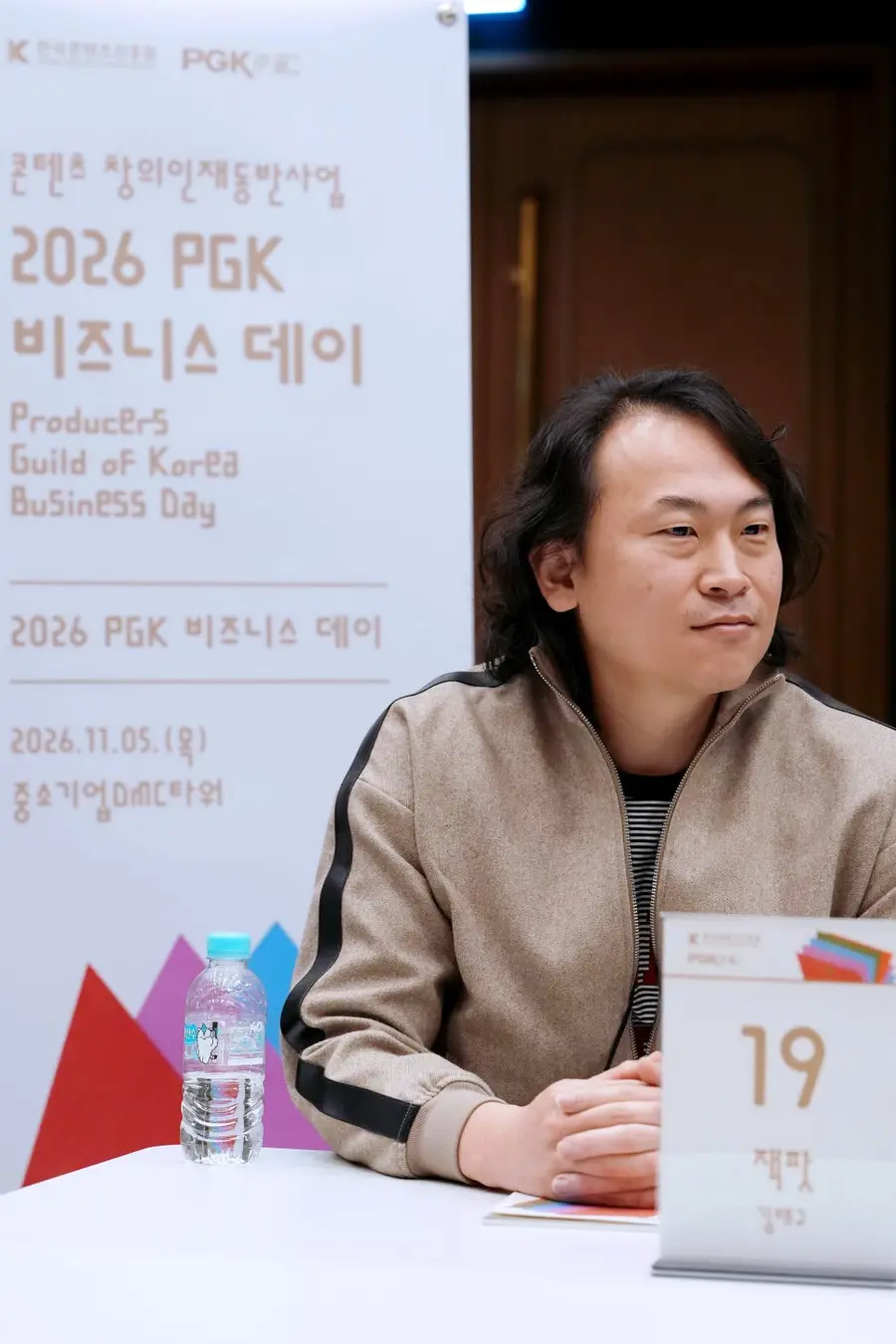
At the event, Cineplay spoke with the mentors and mentees about the six and a half months they spent working together. The first pair featured is producer Do Wi-seok and his two mentees, writers Kim Tae-gyu and Lee Tae-yeon. Do, CEO of Studio Jiteun, wrote and produced the film 〈It’s Okay!〉 and oversaw production of the Wavve series 〈LOVE.exe〉 and the TVING series 〈The Tale of Chunhwa〉. Kim Tae-gyu’s 〈Jackpot〉, developed under Do’s mentorship, is a feature-length crime thriller. A wife hires a hitman to kill her husband for his insurance payout, but when her plan goes awry, she and her lover bury the husband themselves. Then the husband, presumed dead, comes back to life with news that he has won the lottery’s first prize, setting off a fierce battle over the winning ticket. Do’s other mentee, writer Lee Tae-yeon, wrote 〈My Hobby Is Attending Funerals〉, a feature-length black comedy thriller. The story begins when Go Ina, who enjoys attending funerals for people she doesn’t know, is suspected of murdering the husband of a woman who has died.
Mentoring that gives emerging writers a range of creative “ammunition”
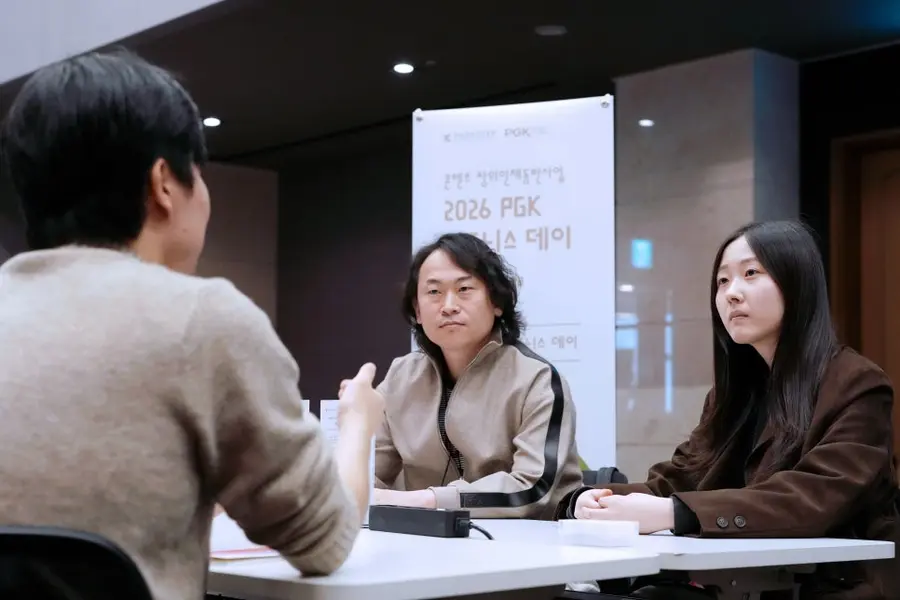
Producer Do Wi-seok’s guiding principle for mentoring was “to try as many different projects as possible.” His top priority was helping writers build a stockpile of pitches—“ammunition” they could draw on later in the industry. “For emerging writers, quality matters, of course, but quantity needs to back it up so it can serve as seed money for what comes next,” Do said. “I told my mentees to try an even wider range of projects, beyond the ones selected.” He added, “I don’t think anyone is good at only one specific thing. People who are good are good at everything.” Of the mentees who were selected, he said, “I felt that with this level of ability, they could develop their other skills plenty, too.”
In particular, Lee Tae-yeon’s final feature screenplay, 〈My Hobby Is Attending Funerals〉, was not the project she originally submitted. Lee was selected for the program with a body-swap pitch titled 〈I’ll Borrow My Sister’s Clothes〉, but ultimately changed projects. “I’d been thinking that I wanted to keep trying genre projects, too. So I thought I should keep my options open and sort through the ideas,” she explained. “Producer Do gave me practical feedback on the different pitches I had, almost like GPT. For example, he said, ‘A horror project has a good chance of getting made, but its audience may be narrow; 〈My Hobby Is Attending Funerals〉 may be less likely to get made, but it could appeal to a broader audience.’ That’s how I ultimately decided on this project.” She shared the story behind completing the screenplay.
Kim Tae-gyu’s final feature screenplay, by contrast, was the same project he had originally submitted. Kim said 〈Jackpot〉 was an idea he had been carrying around since last year. “I really wanted to try a crime thriller or black comedy, so I wanted to stick with it as much as I could. I kept working on it, thinking I should at least finish it.” But he didn’t focus on just one project. While developing 〈Jackpot〉 as his main project, he also worked on five or six others on the side, including a pitch in the horror genre he has always enjoyed.
Practical, firsthand advice from a working producer
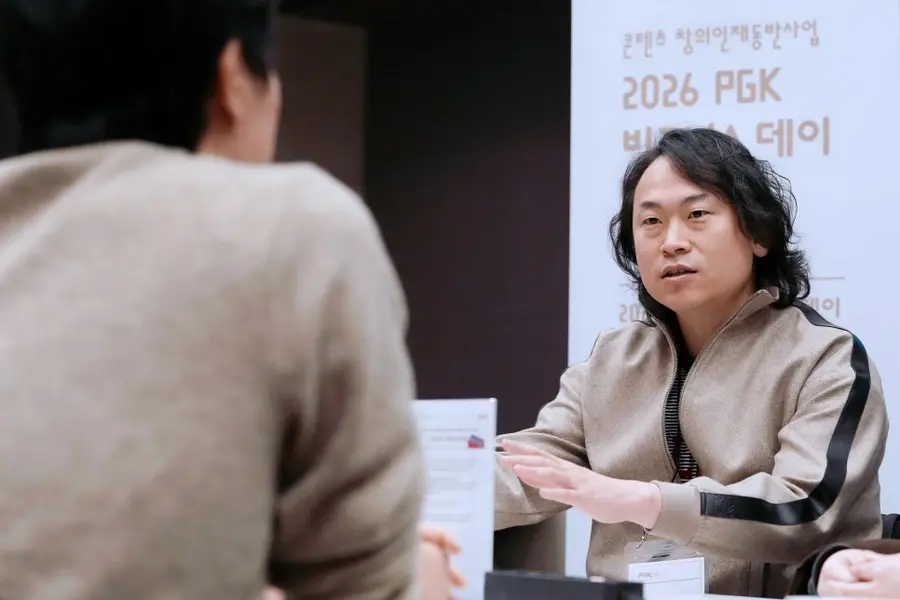
The perspective of a working producer experienced in both dramas and films proved especially valuable during the mentoring. With 〈My Hobby Is Attending Funerals〉, the team initially debated whether it should be a series or a feature. Given market conditions, a drama series seemed the better choice, but when they laid out the episodes, the story felt somewhat slow. Do said he chose the feature format because he thought, “Wouldn’t it be more layered and suspenseful if we put it all into one movie?” He repeatedly urged Kim Tae-gyu to finish the screenplay as quickly as possible. Drawing on Kim’s background in directing and his experience working with generative AI to create video, Do also encouraged him to visualize the story so they could compare how it read on the page with how it looked on screen. As a result, 〈Jackpot〉 was adapted into a storyboard and a one-minute AI trailer. The horror pitch Kim developed during the mentorship was also made into a one-minute trailer.
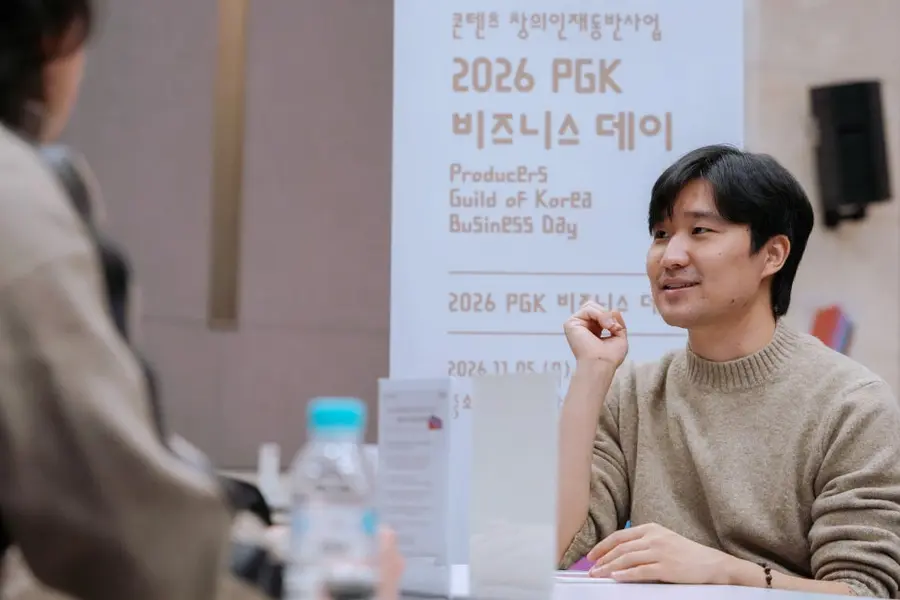
The confidence that comes from being told, “Just give it a try”
Do modestly described his role as “just adding a little something.” Asked what kind of specific feedback he gave, he laughed and said, “If I throw out about 100 random ideas, the writer picks and chooses one or two.” But his mentees remembered it differently. Kim Tae-gyu said he had many doubts when writing a female lead character on his own for the first time, and that he and Do worked together to develop the character’s appeal and build a convincing, logical story. “The producer really encouraged me to just give it a try,” he said. “When you work with someone who supports you, you find the courage to voice ideas you’d been keeping in your head.” Lee Tae-yeon also said her mentor’s ideas “were all gems.” She reflected, “If I were going to do it alone, I could just write a novel. There’s a thrill in working together and getting a result that’s so much better than what I could have done on my own.” Kim said, “Meeting every week and talking helped me get used to the rhythm of writing a feature. I don’t think I could have done it alone.” Lee said that if she could take away just one thing from the program, it would be her mentor: “The best thing was gaining a person.” What emerging writers need is more opportunities to try—and someone who will see them through those attempts.
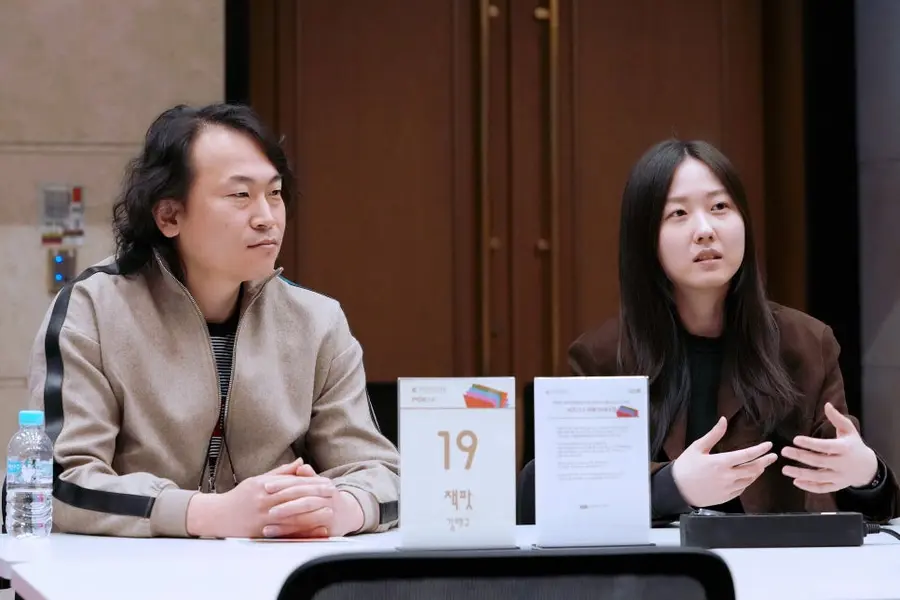
Growing into versatile creators across genres and media
Discussing the Creative Talent Partnership Program, Do said, “Unlike other programs, it focuses less on complete beginners and more on ‘experienced newcomers’ who have written several projects and have some fundamentals in place.” He called it “a really good program that can be genuinely helpful even for people like that,” highlighting its practical, industry-oriented value. At the same time, he encouraged young creators to take on challenges across genres and media. Do himself plans to develop a synopsis that had been sitting in a drawer into a science fiction novel, due out this December. His mentee Lee Tae-yeon also shared welcome news: her original submission, 〈I’ll Borrow My Sister’s Clothes〉, has received an offer from a publisher and is set to be published as a young adult novel next year. “I don’t think you can afford to rule anything out if you want to survive as a writer,” Lee said. Kim Tae-gyu, who studied 3D animation and VFX and directing at the Korea National University of Arts, and has explored AI, writing and drawing, also pledged to work across boundaries. “People say making films is hard, but there’s no need to limit yourself to film. There’s more and more video content on YouTube, in short-form, with AI, and elsewhere.” Do offered some practical advice: “With K-culture becoming such a big topic, I think more people are trying to get into writing for film and drama.” Since there is a big difference in earnings between film screenplays and drama scripts, he also advised, “If you want to make money, write dramas.” Then he added, “Whether it’s a production company or someone offering you a contract, you have to say you can do absolutely everything they want.”
※ Next: An interview with mentor producer Kim Se-hoon and mentee writer Kim Young-eun, who worked on 〈Mentoring〉.
댓글 (0)
댓글 작성
댓글을 작성하려면 로그인이 필요합니다.
로그인하기