



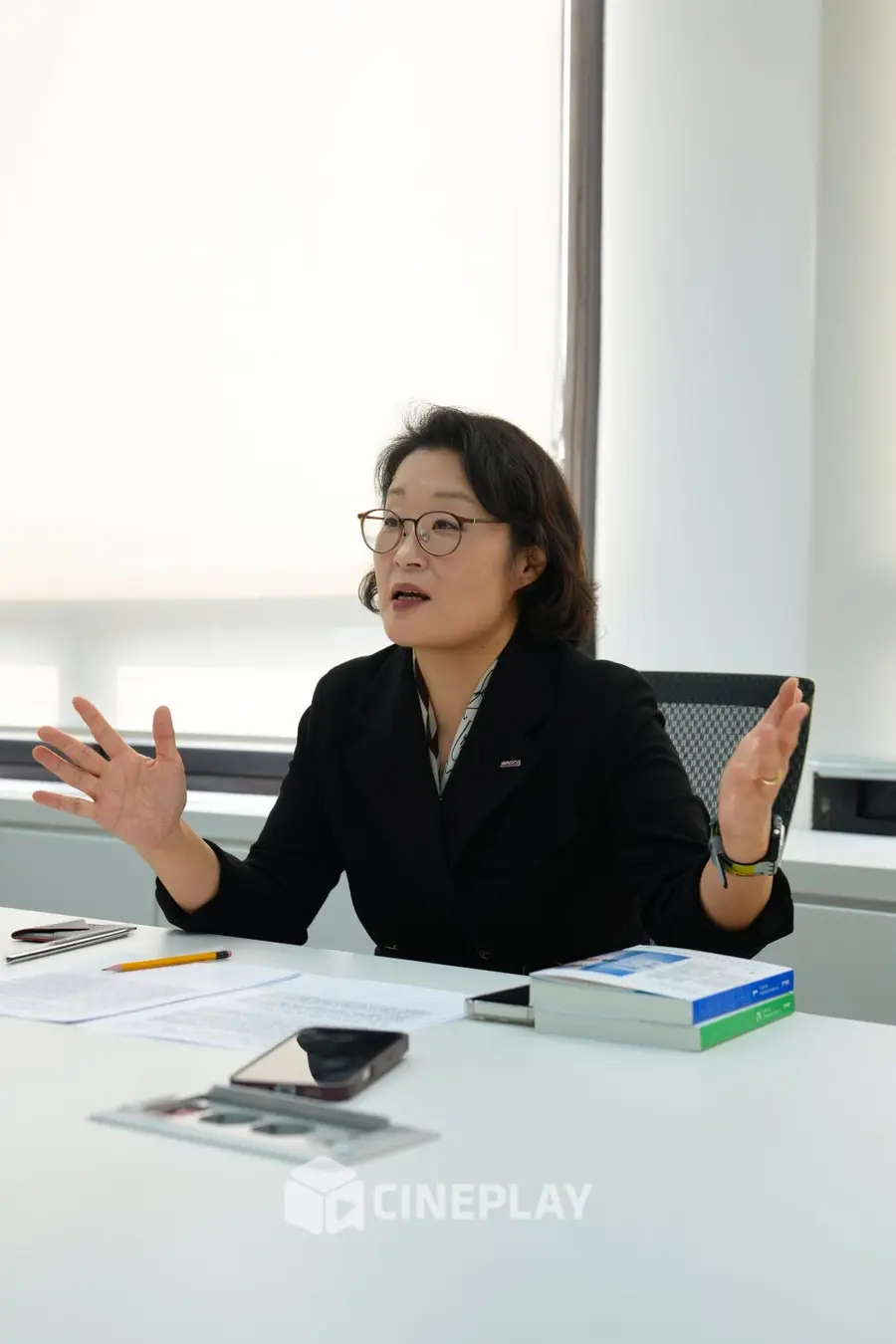
As a content consumer, I’d also like to ask about your personal tastes. What’s the movie of your life, and who’s your favorite actor?
I think both of those take shape around your 20s. Back then, I was completely absorbed in Hong Kong cinema. If I had to pick just one film, it would be Wong Kar-wai’s 〈Chungking Express〉 (1994). (Laughs) I think I’ve watched it more than 10 times. Whenever I feel unsettled, I go back to it. My favorite actor is Tony Leung, too. I’ve seen countless films and actors since then, but I suppose I’m still holding on to the feelings I had back then. They don’t change easily. Thinking about that from KOCCA’s perspective, I think there’s an important lesson in it: Just as I felt that way watching Hong Kong films, do young viewers overseas feel that same kind of powerful fascination when they watch K-content? That’s why it’s also important to diversify export markets so people overseas can access it as widely as possible.
Speaking of Hong Kong cinema, many industry figures and experts who talk about a crisis in the Korean Wave or K-content invariably say, “We must not follow the same path as Hong Kong cinema.” They worry that, after achieving global popularity, it could suddenly decline.
In fact, I was one of the scholars who worried about that. I think a country needs two major conditions for its cultural industries to grow. First, a free and democratic production environment; second, sufficient capital. When Hong Kong cinema was at its peak, it had both. Although Hong Kong was under British rule, its production environment was relatively free compared with the rest of East Asia, and a lot of outside capital flowed in from places such as Taiwan and Malaysia. But around the time Hong Kong was returned to China in 1997, the production environment and financing structure changed, and the film industry went through major changes as well. The same is true of Korea. The freer production environment played a major role in the qualitative growth of Korean dramas after the 1990s. As censorship eased, creators could tell stories freely, and economic growth and the expansion of the advertising market gave broadcasters more capital to invest in production. I think those two conditions came together to create today’s Korean content industry. If they break down, a crisis will inevitably follow. That said, I don’t think Korea’s free production environment will be easily shaken. The issue now is capital. In the past, when I was asked this question, I would say Korea was fine because it had domestic capital and robust foreign investment. Recently, however, production costs have risen so much that I’ve come to think capital could genuinely destabilize the industry. KOCCA’s ultimate challenge going forward will be to sustain those two conditions: a free creative environment and stable capital.
On the other hand, one might ask whether you’re placing too much emphasis on market logic—that is, the commercial profitability of content.
That’s a difficult question for an agency that provides support. For example, pouring a lot of money into the Film Industry Development Fund doesn’t automatically make the film industry grow. What matters is that films actually turn a profit. That’s what brings investors back and keeps the industry moving. I think investors are watching and waiting for good projects to emerge right now. In this situation, simply increasing the size of the funds has its limits. Of course, supporting a grassroots creative environment so that a wide range of works can be made is also extremely important. Making a good profit doesn’t mean making work that simply chases money. Amid the long-standing tension and dilemma between industry and art, I think it’s an important role for the government and KOCCA to create success stories that preserve what makes K-content unique while also generating revenue.
For people in the film industry, the idea of a “content IP powerhouse” may have made the biggest impression. Rather than the existing approach of identifying excellent content IP and supporting each genre separately, the idea is to build a so-called “Korean-style production committee” that brings together production companies, investors, financial institutions, platforms, distributors, overseas partners and others around a single project. Could you explain the concept?
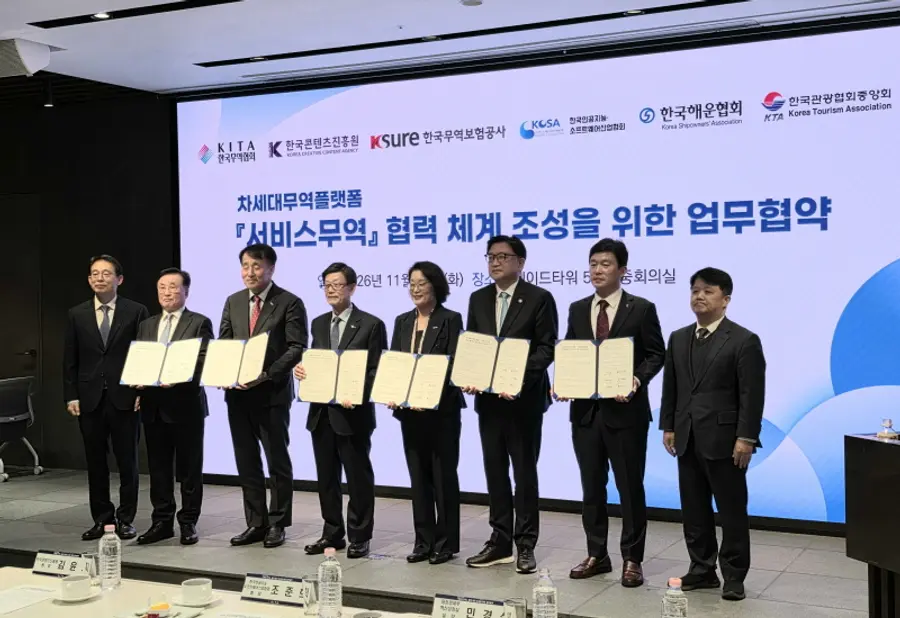
Since I raised the idea of a “Korean-style production committee,” there’s been a lot of discussion in the industry. People are curious about what kind of model we have in mind, whether it’s actually feasible, and how we’ll resolve the various rights issues. I think we’ve had some success in getting a new discussion started, but ultimately, we have to show an actual success story. We need to prove that it’s possible to produce content this way and expand the business around it. Next year, I’d like to create at least one or two good examples. Japan’s production committees, for instance, have a relatively closed structure and are essentially a way to raise investment to produce a single work. The Korean-style production committee we envision is a little different. It’s a structure designed to boost profitability by expanding a single IP into multiple genres or connecting it to a range of ancillary businesses. Its purpose isn’t simply to raise production costs, but to expand the entire business. Of course, the industry has concerns because there aren’t any concrete success stories yet. It’s not that production companies haven’t considered this approach before. The problem was that there wasn’t a clear entity to coordinate rights among multiple companies and actively connect the businesses. I think KOCCA should play that role.
It sounds like the Korea Creative Content Agency intends to go beyond simply providing support and take on an active agency role.
In fact, the Korea Creative Content Agency’s English name is KOCCA (Korea Creative Content Agency). The final “A” stands for “agency.” It’s a word I’d often heard and knew well, but it made me think about its meaning anew. “Support” doesn’t simply mean distributing production funds. Wouldn’t connecting companies, creating new businesses and coordinating necessary rights also be part of a support agency’s role? The Korean content industry has grown so quickly that KOCCA has devoted much of its capacity to running production support programs. I think it’s now time for us to take on the next role.
In the OTT era, where the line between film and drama is disappearing, will KOCCA’s role change as well?
The line between film and drama has definitely blurred. More established film directors are moving into dramas and OTT series, and KOCCA has also become interested in supporting production in the broadcast video field, including variety shows. Accordingly, KOCCA runs a range of production support programs in the broadcast video sector. You’ve probably often seen “Korea Creative Content Agency” in the end credits when watching a drama; those are productions KOCCA supported. After the dominant K-pop sector, dramas and series remain vital to the K-content industry. Netflix’s dominance is significant, but supporting homegrown Korean OTT platforms is also important, as is helping production companies working with OTT platforms secure their IP.
I understand you also plan to expand programs that connect development and overseas distribution, in addition to production support.
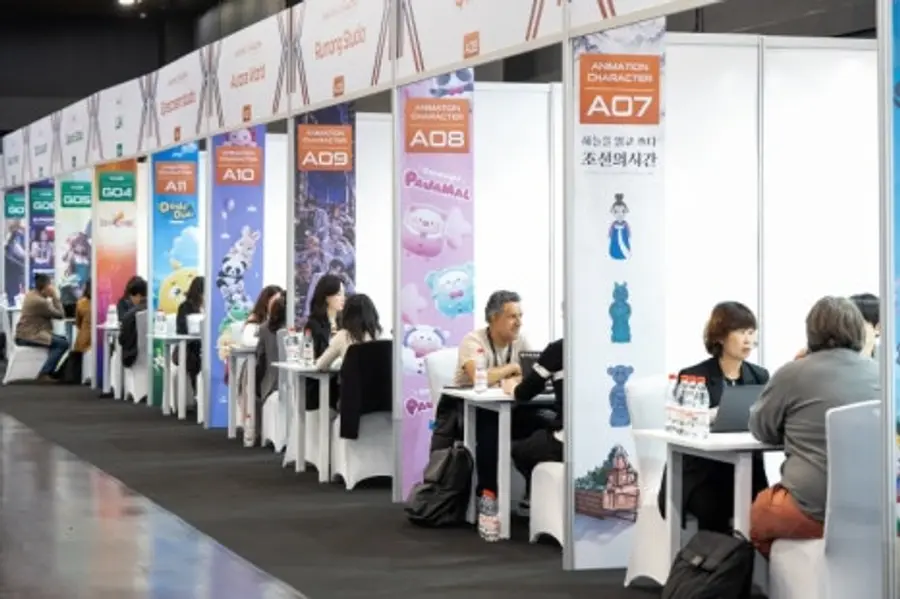
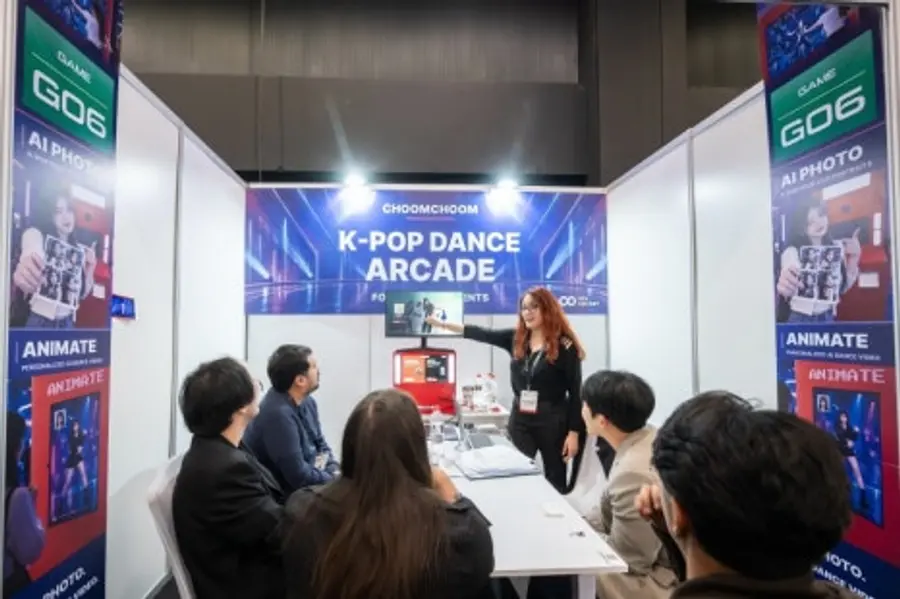
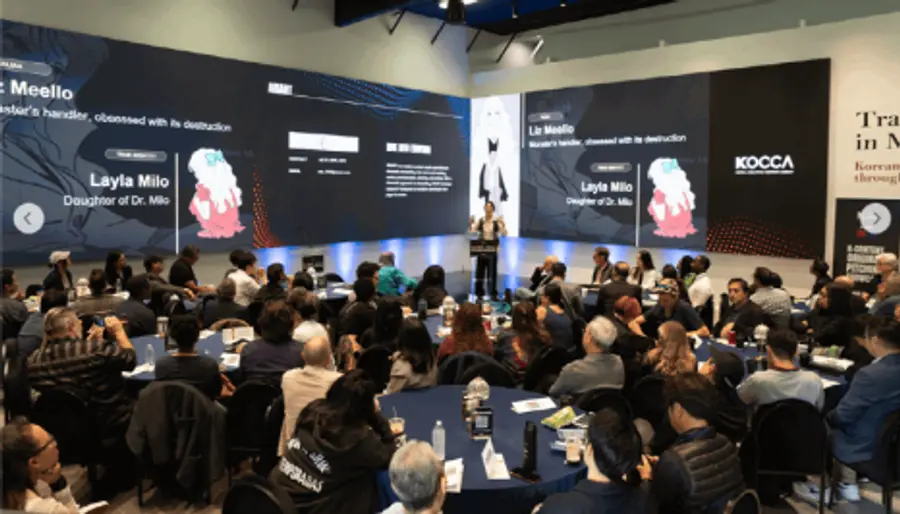
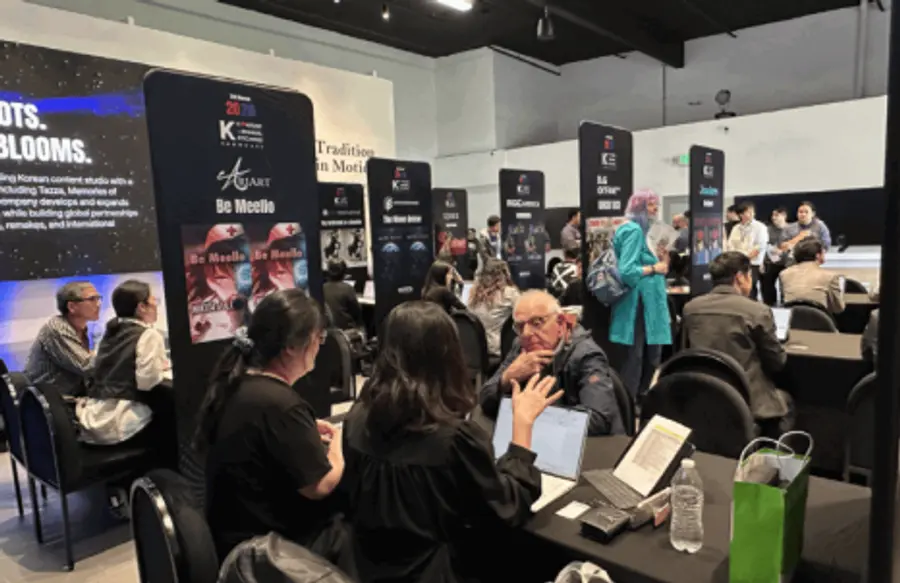
That’s right. In the past, we focused on production funding, but now we’re moving toward supporting the entire process, from development through overseas distribution. Development requires funding, and support is also needed to turn a developed concept into an actual drama production. There’s been a lot of discussion recently about international co-productions in particular. It seems co-productions can run smoothly when overseas investors are involved from the early development stage. That’s why KOCCA also holds B2B events where it invites overseas investors and distribution platform representatives, introduces them to projects from Korean production companies, and connects them for co-productions. The distribution landscape has changed a great deal, too. In the past, it was common to go to overseas markets and sell programs to broadcasters, but broadcasters around the world are struggling now. The growth of global OTT platforms has reduced traditional broadcasters’ purchasing power. So, rather than simply selling content, we need to approach overseas markets in a variety of ways, including co-production, co-investment and joint distribution. I think KOCCA should connect every stage, from development and production to overseas distribution. It’s time for K-content to move on to the next stage. The question of how to turn success into actual revenue remains important. That’s how we can create the next opportunities and stages, isn’t it? The Korea Creative Content Agency is working to play an active role in bringing about that change. Please stay tuned. (Laughs)



댓글 (0)
댓글 작성
댓글을 작성하려면 로그인이 필요합니다.
로그인하기