



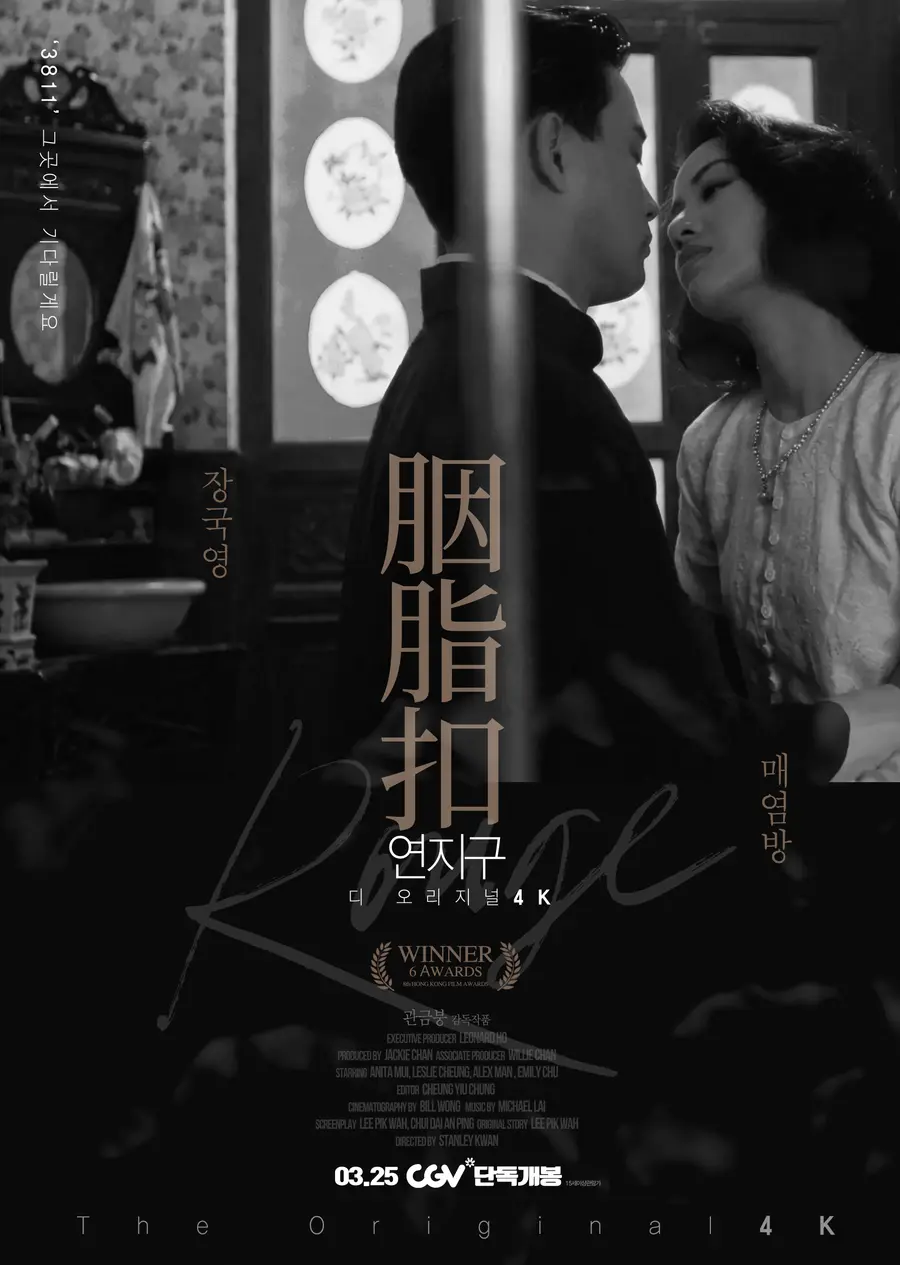
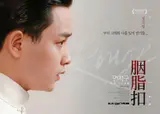
〈Injigu〉(1987) lived in Korea for a long time under the title 〈Injigu〉. This all started when the journalist who first introduced the film mistook the Chinese characters and wrote 〈Injigu〉; afterward, other outlets copied it as well. Even action star Donnie Yen (甄子丹) went through something similar. The same kind of mix-up happened again when the original journalist confused the characters once more, writing “Zhenzhedan.” It’s a regrettable incident from back when reporters were searching through an “old dictionary of Chinese characters” just to figure out how to write someone’s name in Chinese. Because of that, I remember scrambling to piece together what “Injigu” might mean—and even after it was later corrected to “Yeonjigu,” I still found it hard to interpret. In the end, the title was simpler than I expected. “Yeonji” comes from the well-known “Yeonji-gonji,” referring to Rouge, the film’s English title. And Yeonjigu (胭脂扣) is what you call the “Yeonji necklace,” meaning the Rouge itself contained inside it.

In 1934 Hong Kong, Zhen Zhenfang (Tony Leung Chiu-wai) is the son of a wealthy family, and Yeo-hua (Cai Xiaoyi) is a courtesan. Despite their parents’ opposition, they fall in love across the boundaries of their social status. Yeo-hua also introduces Zhenfang to the mentor of a theater troupe—someone Zhenfang dreams of becoming an opera performer himself. But regardless of Zhenfang’s wishes, his parents force him to meet a fiancée, Suxian (On Bikh-ha), and even his training as a moon-opera actor can’t get past the level of minor parts. In the end, the two choose double suicide, making a pact to reunite in the afterlife on March 8, 50 years later at 11:00. Now, in 1987 Hong Kong, Yeo-hua appears as a ghost and places a wanted ad to find Zhenfang, going to the newspaper office and meeting Yuan Qing (Mansiliang). As unbelievable as it sounds, once he learns that Yeo-hua is actually a ghost, he helps arrange the meeting with Zhenfang—along with her, his girlfriend and fellow journalist Chochao (Zhuoye). But while digging through articles from the past, he uncovers shocking facts.
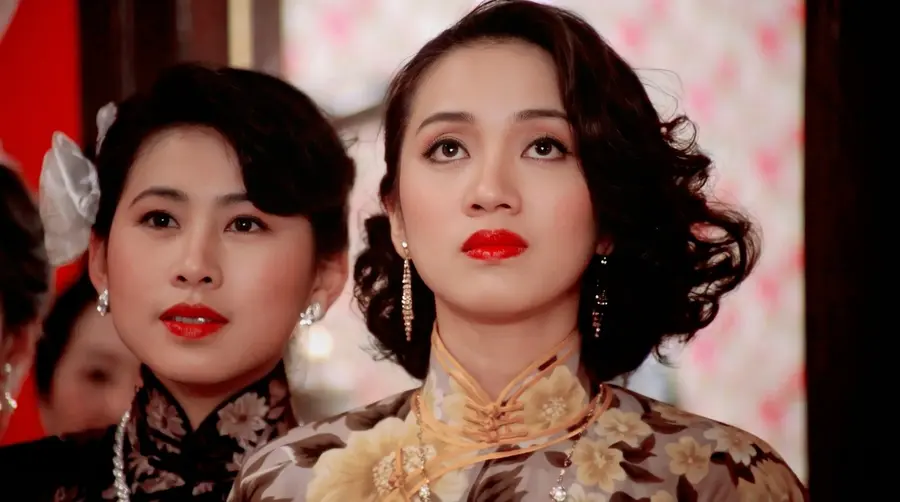
Through 〈Yeonjigu〉, Anita Mui won Best Actress at the 1987 Golden Horse Film Festival in Taiwan, and in 1989 she also won Best Actress at the Asia-Pacific Film Festival. At the time, she was at the height of her career as a singer, but up to then she had mostly appeared in comedy films—so this was the work that firmly established her as an actress. Also, back then Hong Kong’s film industry was locked in an intense rivalry between the traditional powerhouse Golden Harvest and the newer powerhouse Cinemacity. And it was Anita Mui who worked hard to help Tony Leung Chiu-wai—who was enjoying massive popularity thanks to Cinemacity’s 〈A Better Tomorrow〉(1986)—break through that structure and earn the chance to appear in Golden Harvest’s production of 〈Yeonjigu〉. At the time, Hong Kong actors were bound by a kind of “exclusive” arrangement, so it wasn’t easy for them to appear in films produced by other studios. In other words, without Anita Mui, there wouldn’t have been a present-day 〈Yeonjigu〉.
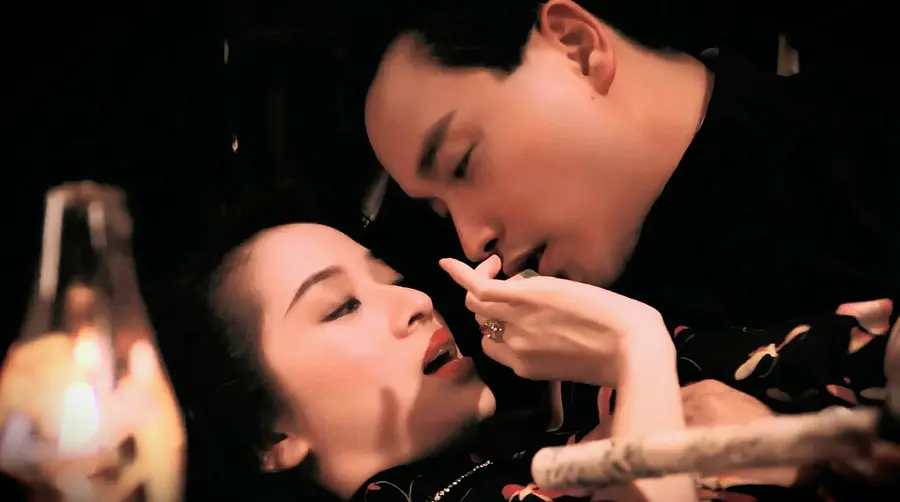
Anita Mui and Tony Leung sing together from the very beginning. But the three songs—or rather, the moon-opera performances—that appear at key moments in 〈Yeonjigu〉 harmonize with Tony Leung Chiu-wai and Anita Mui’s artistic sensibilities, much like how openly gay director Stanley Kwan did, and in the same way those performances deliver a fresh jolt with their genderless vibe. Unlike what you might expect from a work that puts “Yeonji” or “Rouge”—words usually associated with what women use when they apply makeup—at the center of the title, 〈Yeonjigu〉 is a film that transcends gender. The fact that 〈Yeonjigu〉 feels modern whether you watch it in the past or now largely comes down to that quality. Looking back, the press club where Chochao left Yuan Qing’s office behind by herself was actually the club “People Who Were Rejected by Miss Hong Kong Reveal What’s Really Going On.” From “Yeonji” or “Rouge,” all the way to “Miss Hong Kong,” it’s an episode that meaningfully connects to a kind of subversion of the era’s rigid “femininity.”
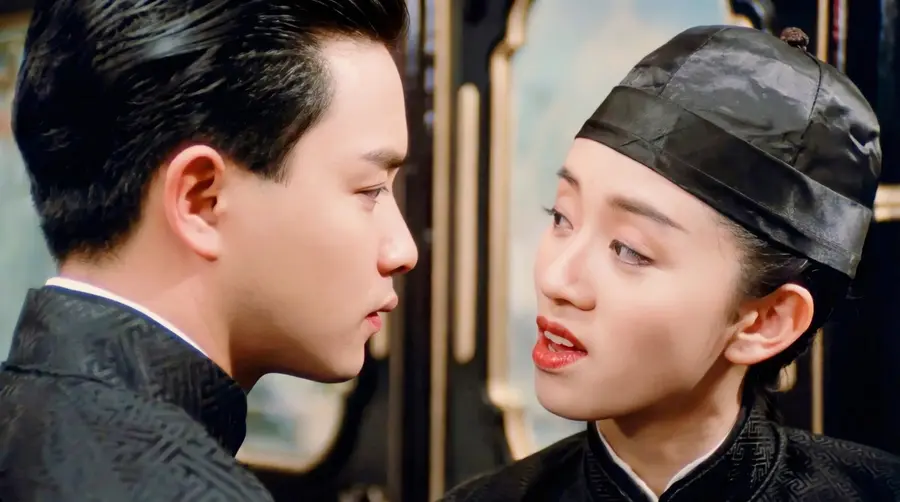
First, in the opening scene, Yeo-hua dresses in menswear and sings “Guest-Trip Autumn Regret” (客途秋恨). Zhenfang, who shows up late to the drinking party, is immediately captivated by the sight. The song “Guest-Trip Autumn Regret,” which includes the line “Worry makes the moon wax,” is sung by a traveler far from home—carrying his longing for his hometown and past love, as well as the lonely regret of an autumn day. It also ties into the situation of two characters from famous moon-opera classics long handed down in the Guangdong region, including Hong Kong. In those works, fate is implied to work like this: “When the time is right, the seasons return—but the person waiting never arrives.”
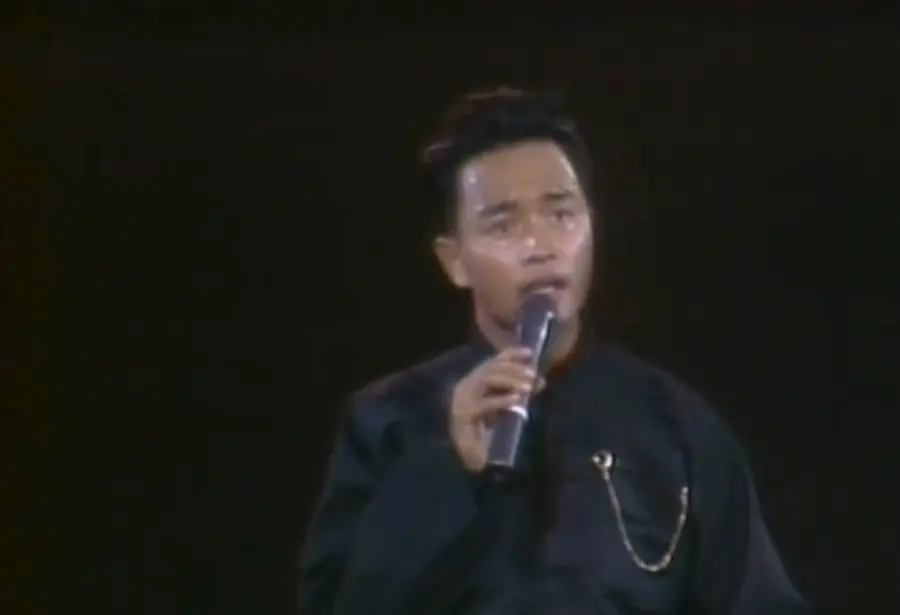
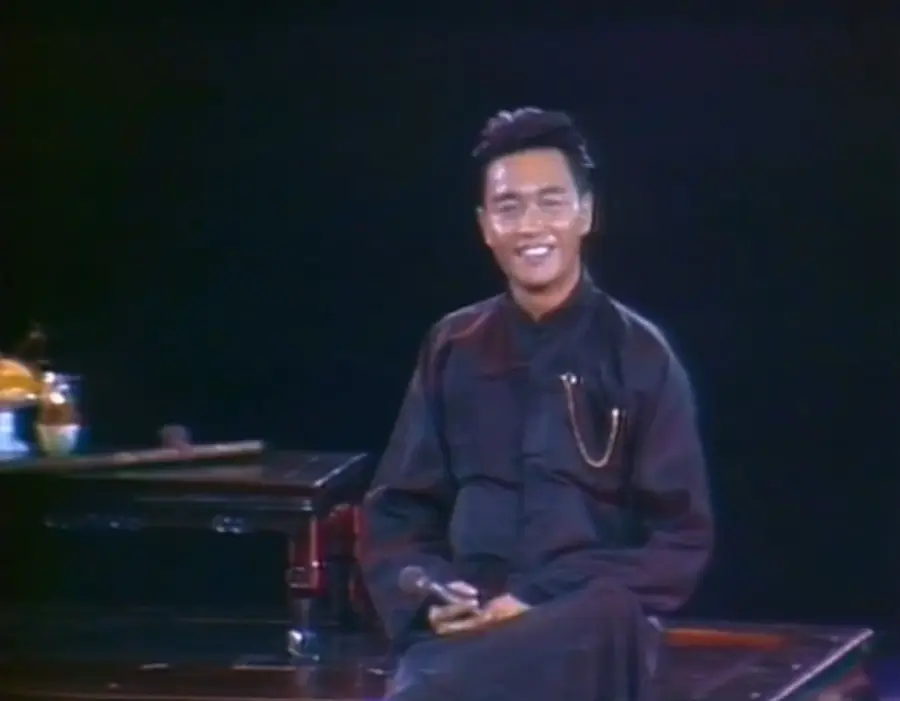
The mood of “Guest-Trip Autumn Regret” also reflects the feelings of Hong Kong people who have left home, and it even inspired director Huan Hanhua to make the 1990 film 〈Guest-Trip Autumn Regret〉. It was also used as the theme song for 〈The Last Dance〉(破·地獄, 2024), which just topped Hong Kong’s all-time box office record for last year. In 〈Yeonjigu〉, Anita Mui sings “Guest-Trip Autumn Regret” in a call-and-response with her co-performer. But Tony Leung also loved this song. So after 〈Yeonjigu〉 became a huge box-office hit, he performed it at his own 1988 concert—stepping onto the stage in the exact same outfit as at the opening of 〈Yeonjigu〉 and singing “Guest-Trip Autumn Regret.” If you search YouTube for “客途秋恨 张國榮,” you can watch that incredible stage performance.
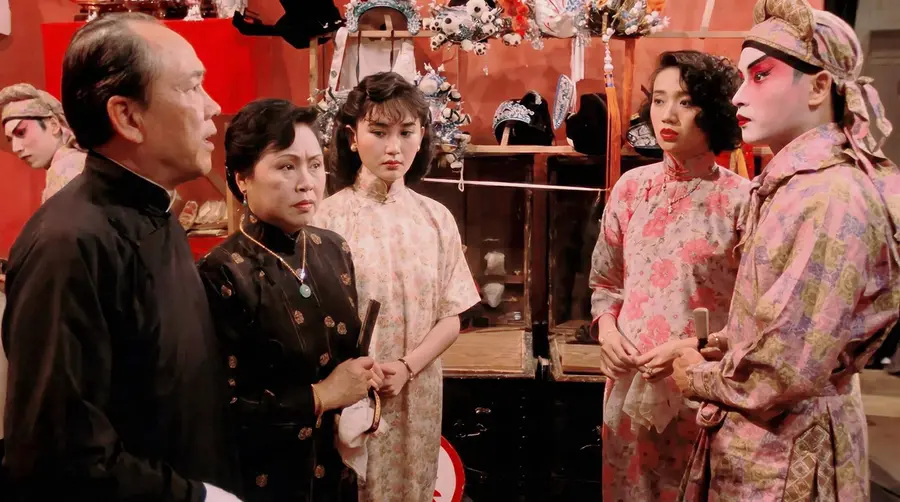
The second stage is a moon-opera based on 〈The Setting Mountain and the Burning Flower〉. In it, Zhen Zhenfang finally wears proper makeup, and although he is still a minor-role performer, he steps in front of an audience for the first time—where Zhenfang and the minor-role characters present “Setting Mountain” and “Burning Flower.” The story depicts the bittersweet love between Setting Mountain—son of the Tang general Xue Rengan, a figure familiar to Korean audiences—and Burning Flower. Burning Flower is also a hidden hero who contributed just as much as Setting Mountain’s. Though she is a woman, she is a courageous commander—just like any husband. She, too, is a character who breaks down the boundaries of gender. In the film, there’s a line: “The commander is humiliated and kneels before the young girl.” In response, Burning Flower tells Setting Mountain, “In our past lives, you and I had a good connection, and we’re not enemies either.” As the work shows, the two trade stories about their “past lives,” which becomes an important clue to the reunion between Yeo-hua and Zhenfang in the film.
※ The in-depth review of 〈Yeonjigu〉 continues in the second article.


댓글 (0)
댓글 작성
댓글을 작성하려면 로그인이 필요합니다.
로그인하기