



![Movie '〈The World of Unrequited Love〉' poster [Provided by Pan Cinema. Resale and DB prohibited]](https://cdn.www.cineplay.co.kr/w900/q75/article-images/2026-06-22/34f408af-8cbb-480f-b7cf-5ce99af19a1e.jpg)
Anyone who follows Japanese pop culture likely knows one writer by name: Sakamoto Yuji. A steady source of acclaimed TV dramas, Sakamoto has in recent years also produced consistently strong film screenplays. He teamed with Koreeda Hirokazu on 〈Monster〉 and with Tsukahara Ayuko on 〈The First Kiss〉. He reunited with director Doi Nobuhiro—known for the TV drama 〈Quartet〉 and the film 〈We Made a Beautiful Bouquet〉—for another collaboration. That project opened on June 24: 〈The World of Unrequited Love〉.
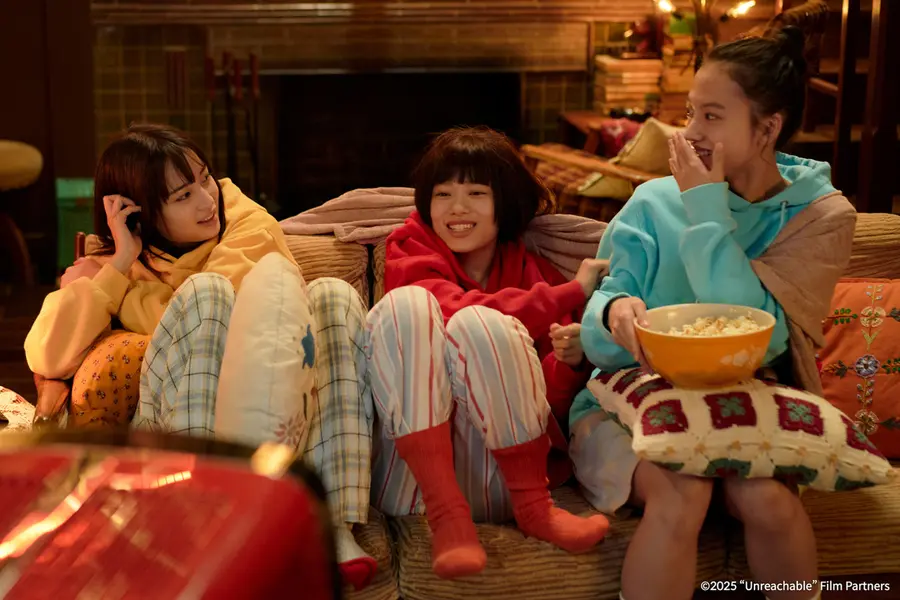
〈The World of Unrequited Love〉 follows the daily lives of three women who share a house: Misaki (Hirose Suzu), Yuka (Sugisaki Hana) and Sakura (Kiyohara Kaya). Misaki commutes to an office job, Yuka takes quantum mechanics classes at university, and Sakura works at an aquarium. Though they spend their days differently, they eat at the same table every night and fall asleep watching movies late into the night. Their routine changes when Misaki shows interest in a man (Yokohama Ryusei) she often notices on her way to work.
Savvy moviegoers will sense something unusual almost immediately after the film's opening. While the film is dressed like a youth drama, it tackles a far deeper theme. That makes 〈The World of Unrequited Love〉 difficult to write about without revealing too much of its central conceit.
※ The following contains spoilers for the core developments of 〈The World of Unrequited Love〉.
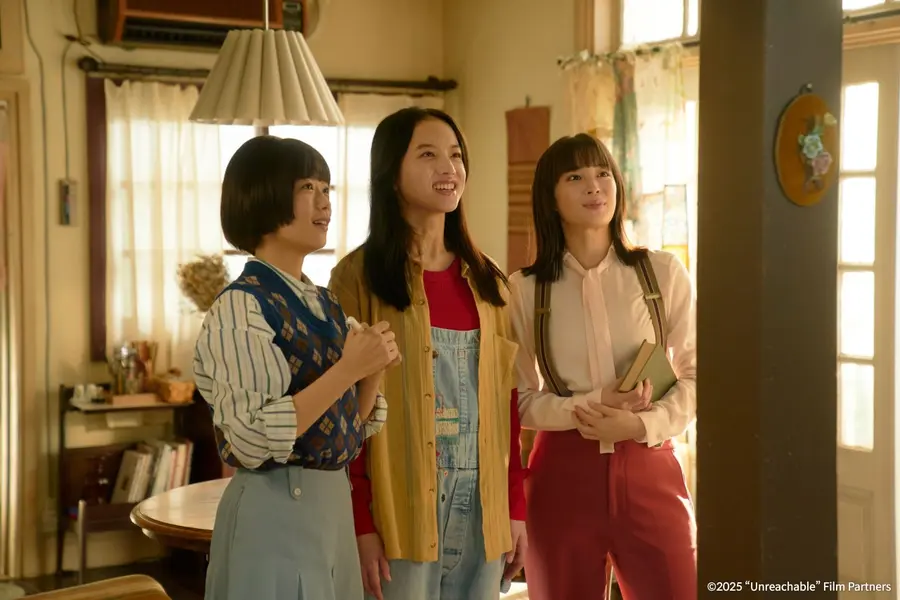
〈The World of Unrequited Love〉 depicts a kind of afterlife. Misaki, Yuka and Sakura—who were involved in an accident on the same day—remain in this world but in a state of nonexistence. Following Yuka's deductions, they surmise they are lingering in a quantum realm: present in the world yet not of it. The film leaves them a small hope but repeatedly reminds viewers of the unambiguous rule of this world: death cannot be undone. Still, the three accept their situation with courage and continue to carry on a form of "daily life."
In this way, 〈The World of Unrequited Love〉 offers consolation to those who met tragic, unforeseen ends and to those of us who remember them. It does so not with the obvious reassurance that "they existed because we remember them," but by imagining them breathing forever somewhere in a microscopic world we cannot see. At the same time, the film does not leave its victims in eternal despair, instead showing them taking another step forward, as people do in ordinary life.
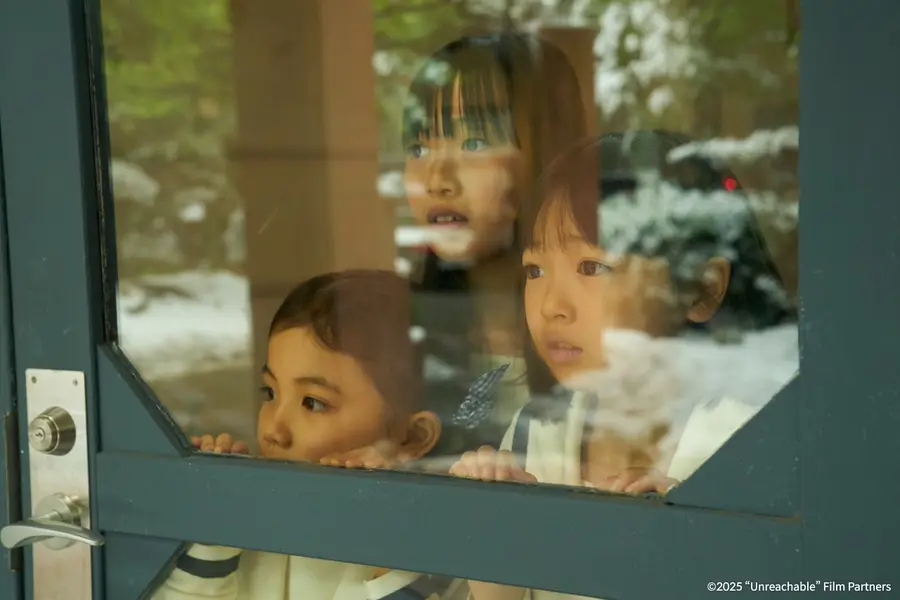
That the story is told from the three distinct perspectives also showcases Sakamoto Yuji's skill. Just as lives differ, Misaki, Yuka and Sakura yearn for their own points of contact with reality. The film sharpens each character's personality while organically revealing their shared past and private histories.
What could have been a very cold story is humanized into something warm by the production design. Their cozy home, distinctive bedrooms and fashion choices—all rendered with a restrained artistic balance—support the film's mood. In scenes where reality and the three characters' nonreality overlap, the movie visualizes its premise in an intuitive way that leaves a strong impression.
The three actresses deliver excellent chemistry and performances. Hirose Suzu, who already has many fans domestically, is joined by Sugisaki Hana—known for the series 〈Blade of the Immortal〉 and the 〈99.9〉 series—and Kiyohara Kaya, who appeared in the drama 〈The Wren That Travels the Universe〉. Together they deepen their characters' emotional arcs and linger in the viewer's mind. Although these women have spent much time together, each reaches a different conclusion before a single proposition—a nuance the actresses embody convincingly. At the climactic points of each character's narrative, the trio's emotional range and focus make it hard not to be moved to tears.
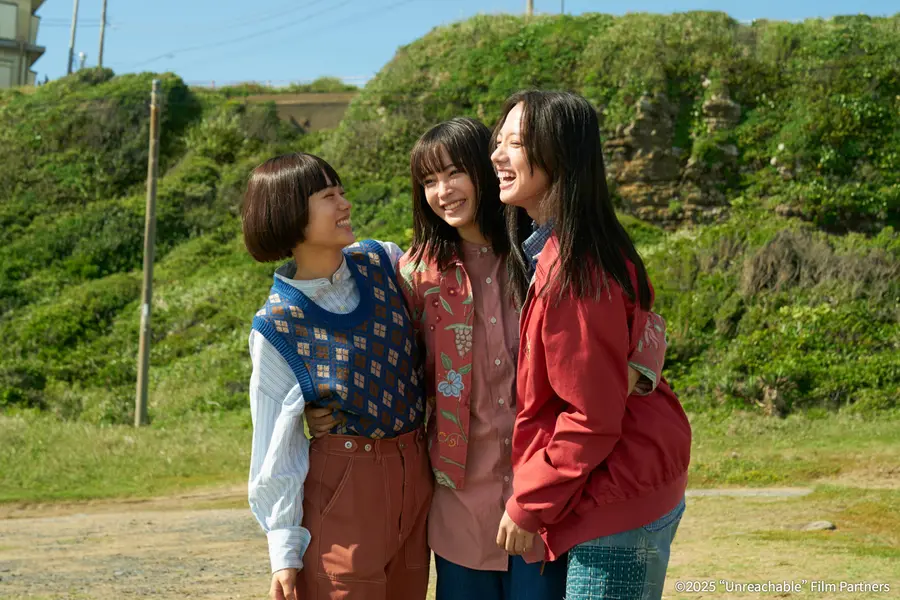
There is the unmistakable voice of an acclaimed screenwriter in Sakamoto Yuji's story, the increasingly mature direction of a veteran like Doi Nobuhiro, and the commanding presence of young actresses who can carry a film. It's a title worth seeing, yet—perhaps because of an exclusive release at certain multiplexes—it has struggled to build momentum at the box office. On a hot summer day, if you're looking for a delicate drama to take the edge off a sweltering summer day, seek out 〈The World of Unrequited Love〉 in a cool theater.

![[New Film] Yuji Sakamoto’s New Work “Kataomoi Sekai” Is a Special Coming-of-Age Story for Three Ghost Girls](https://cdn.www.cineplay.co.kr/w160/q75/article-images/2026-06-22/34f408af-8cbb-480f-b7cf-5ce99af19a1e.jpg)
댓글 (0)
댓글 작성
댓글을 작성하려면 로그인이 필요합니다.
로그인하기