



※ This interview with Koo Kyo-hwan of 〈White Blast〉 continues from Part 1.
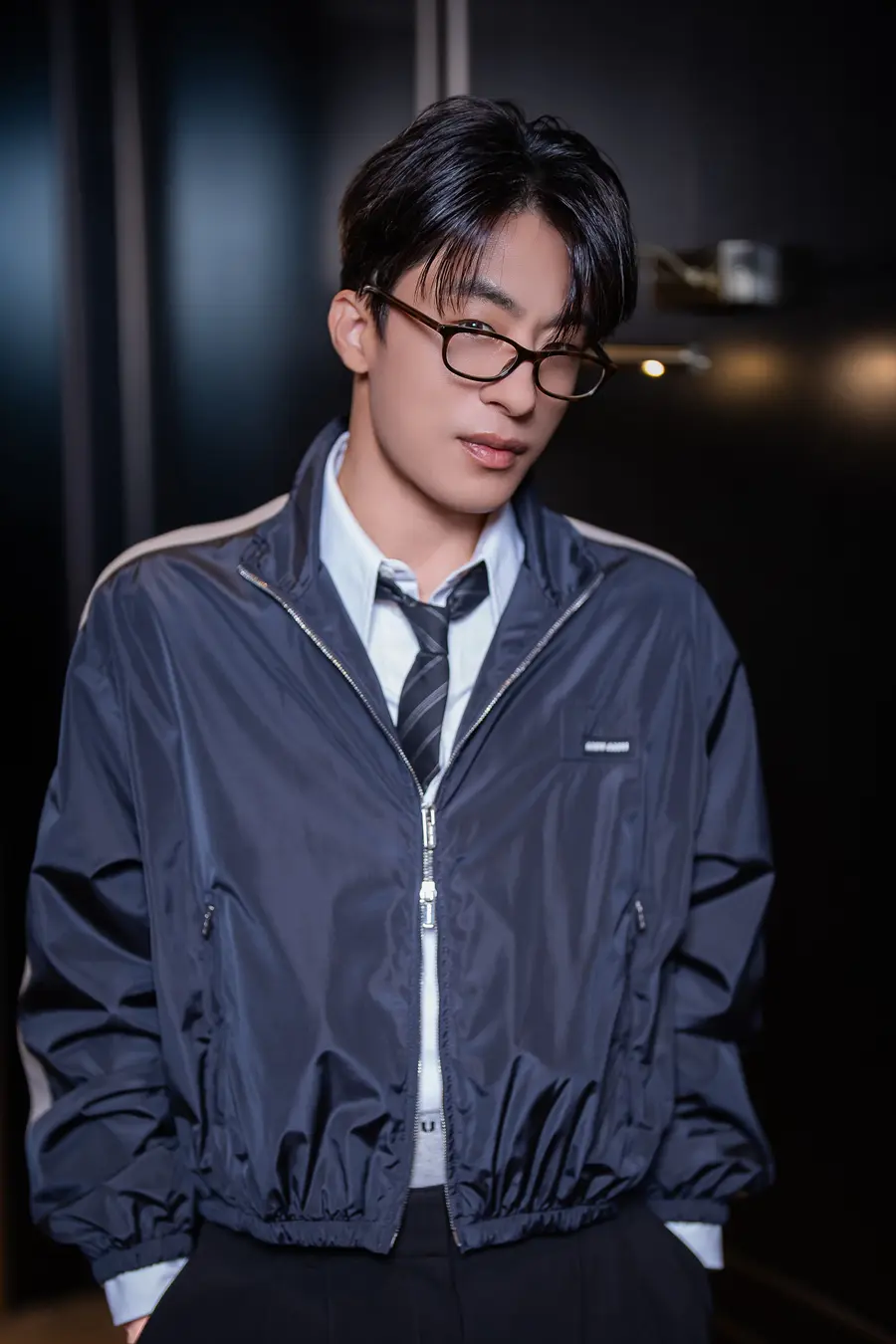
I heard the filming location was remote. Is there anything about it that stands out in your memory?
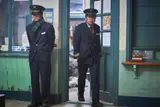
Seol-o Station was a set, so it wasn't physically demanding or cold. The place Yun-seok was talking about was probably the tunnel. Apparently, tunnels are cold. They say disused tunnels are used as wine cellars because they're colder than outside. Maybe I should have brought some ice cream. (Laughs) I had fun. You know how something can be fun even when it's cold? When we make a snowman, it's cold and our hands turn bright red, but it's still fun to make one. I think that's probably what Yun-seok meant, too. Your hands are definitely cold and it's hard work, but you have the satisfaction of having made a beautiful snowman.
Then was all the snow in 〈White Blast〉 real?
Essentially, those insert shots are the product of the cinematographer's and director Hong Hee-jeong's hard work. You don't get scenery like that otherwise. The place where we actually did the action scenes was a snowfield, too. And I'm so grateful to the crew who waited for that snow. They could have scattered salt (instead of snow). But we needed real snow. So, apart from the scenes on sets, we filmed while waiting for snow. That's why I see all that time as the result of hard work. The result of waiting. They may have added a little more snow (in postproduction) to the shots where it's coming down heavily. But the snow on the ground was real. Because the snow is what matters.
What was it like working with director Hong Eui-jeong?
I hope she casts me in her next project. I think that's the most accurate answer. I want to work with her again. When I'm looking at a scene, I don't want to get too serious. I tend to want to find the contradictions within it, and to me, that's comedy. Not really trying to make people laugh by saying, “Laugh!” What I find most interesting is that feeling of “Should I laugh at this or not?” Director Hong Eui-jeong fundamentally brings that attitude to creating those scenes, and as you can see, I love that sort of thing, too. You're crying, but you think, surely there's something funny here. To use a line from 〈We Are All Trying Here〉 as an example, when someone says, “Young-gu's not here,” that “Young-gu's not here” is so sad. I was glad because she seems to always look for those beautiful contradictions. The same goes for Yun-seok. He's a master of that kind of expression. Watching his acting, I think, wow, it feels like I'm peeking into someone's entire life. Gap-su's backstory isn't really spelled out, either, but you can just see it. Seeing how his whole body, even just Yun-seok's face, conveys how intimately this man lives with loneliness in his home made me think, “Ah, I want to become that kind of actor, too.”
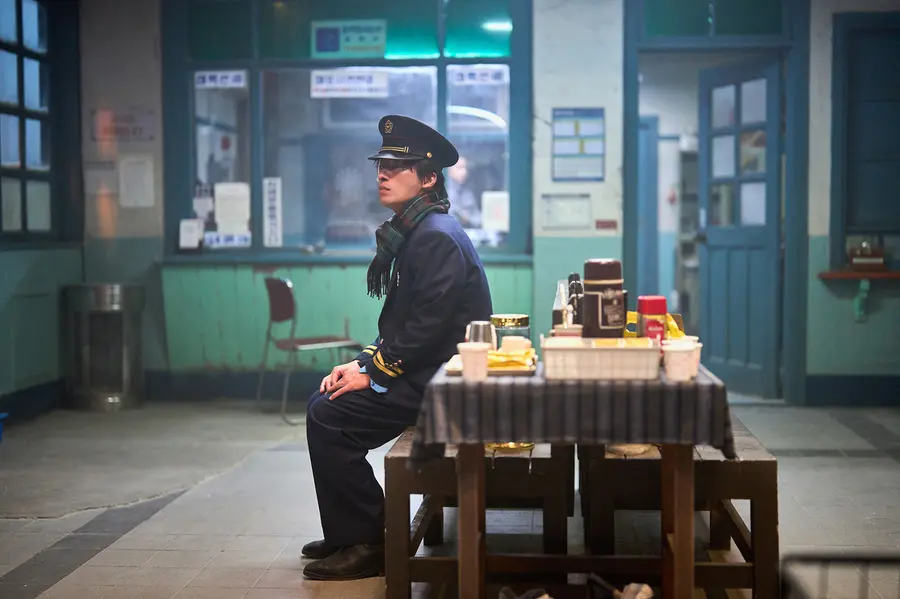
In the scene where Seol-o Station is crowded, Hyun-taek also shows an expression we haven't seen before. What was he feeling?
I tried to love Seol-o Station so I could be there, and I ended up really loving it. I kept believing and believing until I really became an employee of Seol-o Station. So that was fun. I find that feeling interesting, too. Still, for this film, I tried not to understand everyone. That makes acting easier.
I'm sure a lot of people are curious about your everyday life, too. What's on your frequently played playlist these days?
“Happy End” (Happy End) by back number. “Heroine” (Heroine) by back number. Should I name some others? I've been listening to UyU's songs for quite a long time... There are so many, so I'll leave it at that. And Ryuichi Sakamoto's music. What did Hyun-taek listen to again? I think I listened to Kim Dong-ryul's “It's Christmas” while playing Hyun-taek. I don't pick just one song to listen to when preparing a character, but imagine how badly Hyun-taek must have wanted to have a happy Christmas.
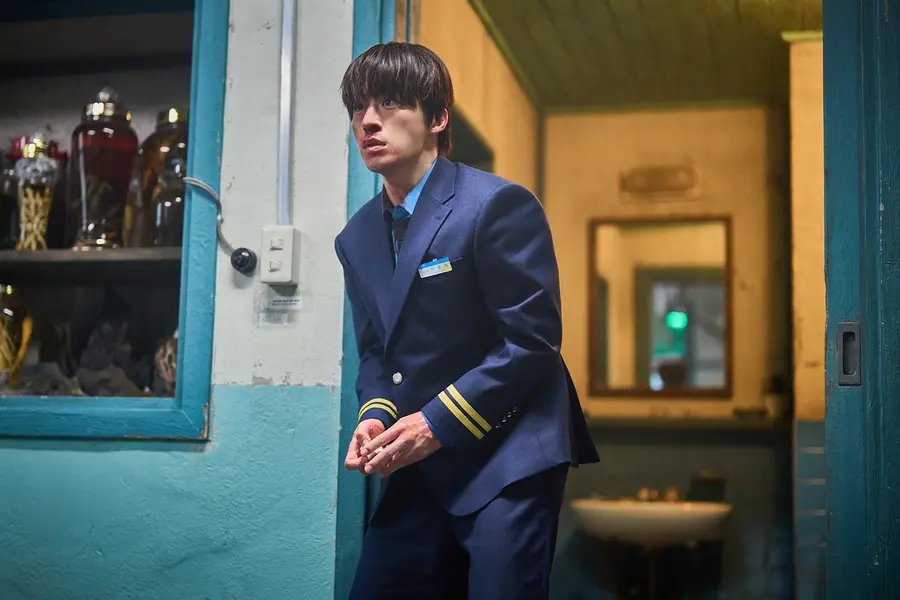
It may not have been intentional, but you've appeared in many projects this year, now including 〈White Blast〉. Do you worry about overexposure as an actor?
Not at all. Because acting is something I love so much, and I think it's something I should keep doing until I die. It's also my job. I'm doing my job, so I can't just take a break. Instead, it makes me think I should develop more new menu items. A new image. If people are getting tired of what I offer, that means I'm not developing the menu. I'm constantly creating recipes.
How are you creating those new recipes?
I'm looking for new directors, people who will see me in an unfamiliar way. There's Hyun-taek, created by director Hong Eui-jeong, and Seo Young-cheol in 〈Colony〉, created by director Yeon Sang-ho. There's also 〈Reawaken Man: The Red〉, made by director Baik. If you look closely, they're all different. But that's not because I change my acting. It's because the directors put the faces of mine they want to see into those scenes. The directors are the ones who transform my acting.
Directors are people, too, so they could see you in similar ways.
That's how directors' perspectives work. But I'm so fortunate that they seem to approach me in such varied ways. In the four projects released this year, of course it's my voice, my face and my hair texture (laughs), but there are at least some differences because the directors all wanted to see different sides of me. There's no need to force myself to be different, either. How different can I really be? So I'm more excited about new stories, new directors' perspectives and how they'll use me within them. In 〈Typhoon〉, which I'm filming now, the new faces of mine that director Lee Jung-ho wants to see include that of a husband who has been married for N years, as well as various other faces.
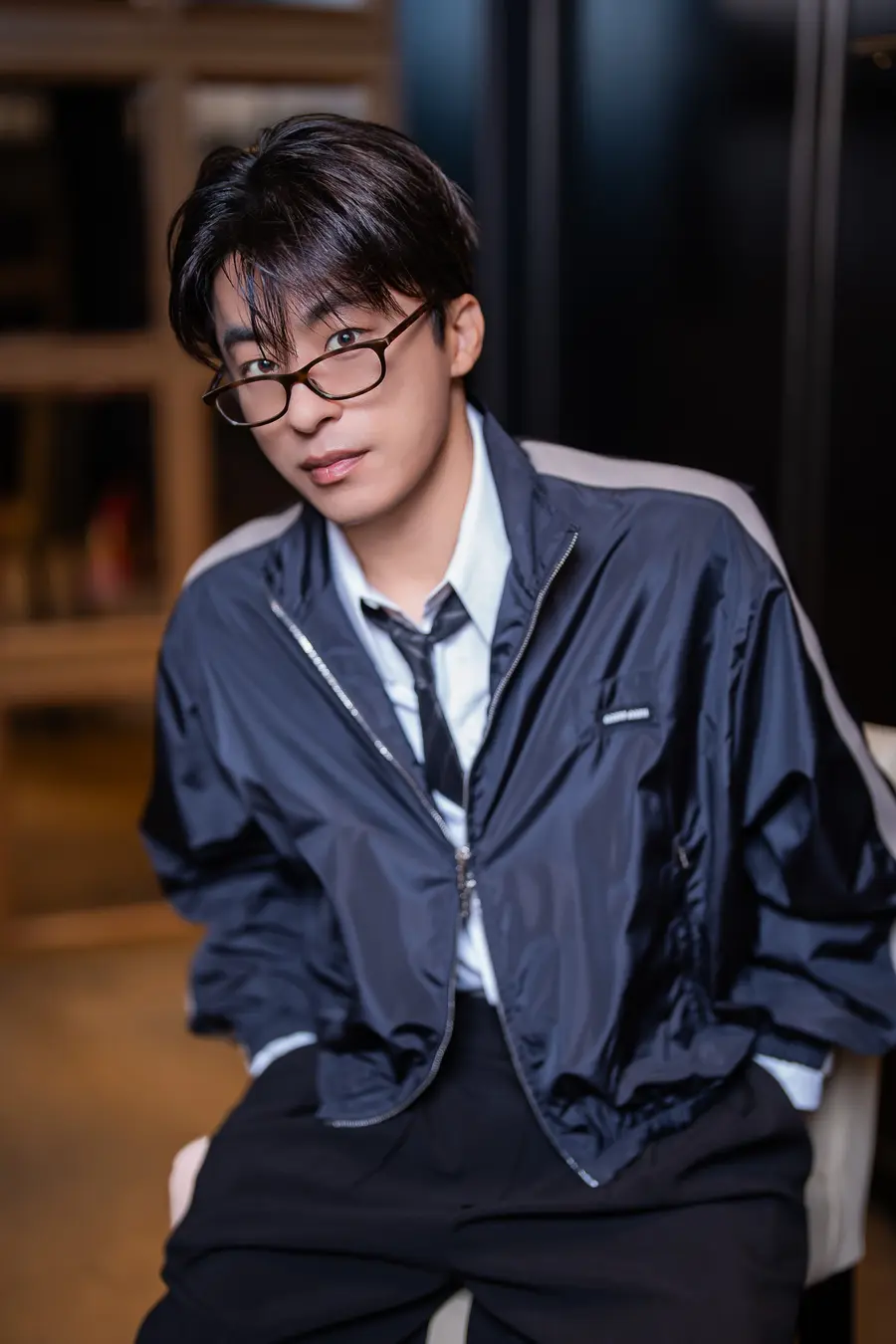
Is there a side of yourself that audiences haven't seen yet that you'd like to show?
That's not something I show people myself. I'm looking for directors who will say, “Koo Kyo-hwan still has this face left,” or “He has this side to him.” (Everyone laughs) It doesn't have to be new. I don't think a new expression or a new costume necessarily changes an actor's aura. There are all sorts of ways. The genre could change, or the soundtrack could be different. Because it comes in so many forms, I hope I'm put to good use as an actor.
You often mention a director's perspective, and you've directed films yourself. It makes me wonder whether that's why you think about that perspective.
I think that could be it. I think that's how I see it. It could be a director's point of view. But it's not necessarily just a director's point of view. A film isn't made by one person alone. Acting isn't something that works just because I do a good job. Every field matters: the music director's music, the editing is so important, and the cinematography is so important. A face filmed this way looks different from one filmed that way. Your face looks different with every camera lens size. So I think I do have that sense that it's never something you create alone. I think that's probably something I felt while making films.
댓글 (0)
댓글 작성
댓글을 작성하려면 로그인이 필요합니다.
로그인하기