


※This interview with 〈The Blue Road〉 actor Son Suk-ku continues from Part 1.
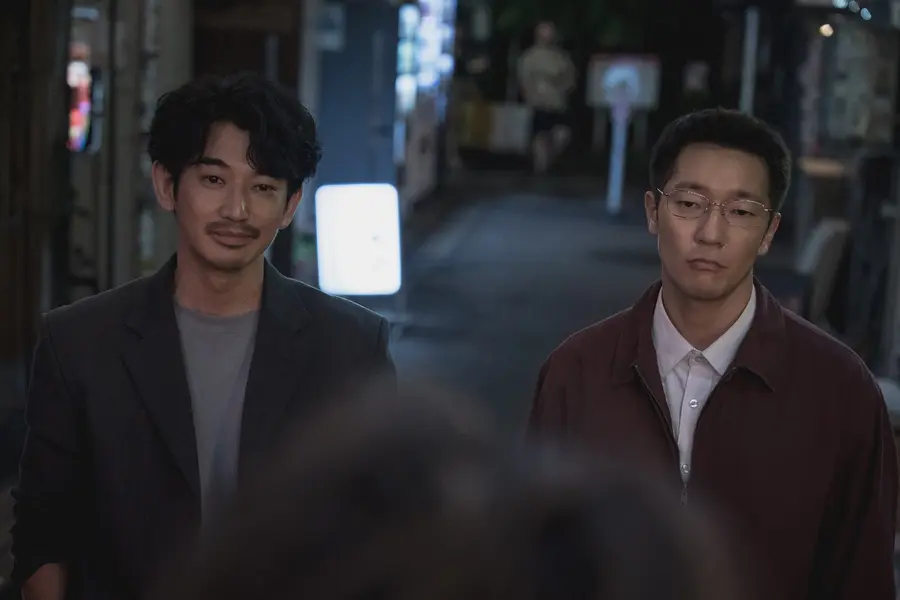
What exactly did Inose (Eita Nagayama) mean to Kim Seok? With its frequent shifts between Korean and Japanese and its layers of history, this isn't an easy drama to follow. Yet throughout all eight episodes, you and Eita Nagayama, who plays Inose, have a natural, brotherly chemistry. How did you develop that rapport?
To Kim Seok, Inose is a guide who keeps him from going down a negative path, and he's also a friend. Eita and I have a lot in common, including our personalities. So we became very close. We inspire each other a lot, and we have tremendous respect for each other as actors. I think that's where that chemistry came from. When you get down to it, I don't think our drama is the kind of genre show that's easy to follow and delivers instant thrills. So Eita and I shared a goal. This isn't a story that's simply an easy watch for a mass audience, but if we could make it resonate with a lot of people through a platform as huge as Netflix, that would be worth the effort. And at a time when genre shows are getting increasingly intense, we thought it would be good to leave behind at least one strand of this kind of DNA. On the surface, it might look like chases, action and mystery, but I think it's a good story with its own deeply felt drama underneath. I think Eita and I talked a lot about that sense of purpose, too. And I did anticipate this: I was fully aware that people might see it as a showdown between an actor representing Japan and an actor representing Korea. That's another thing that gets us excited.
Eita said at the press conference that he was a fan of yours. Which of each other's projects were you familiar with before working together?
I'd seen a lot of Eita's work. I was even in the remake of 〈Matrimonial Chaos〉, the drama he starred in. Eita told me he'd really enjoyed 〈My Liberation Notes〉, so we were already very familiar with each other's work. I've watched a lot of Japanese dramas and movies since I was young, and these days, we live in an age when you can find content from anywhere.
Kim Seok has a tremendous amount of Japanese dialogue, but it hardly ever feels out of place. Did you work out a detailed backstory for his Japanese proficiency and how he acquired it?
I thought Kim Seok would understand the weight of language. So much so that I thought that was why he speaks so precisely, like a news anchor. He probably taught himself Japanese, too. But rather than thinking, 'That's good enough for a foreigner,' I imagined someone who had spent quite a long time practicing meticulously, because he needs it to conduct an investigation, and because the case also unfolded in Japan. Eita helped me a lot with pronunciation, and our interpreter was incredibly passionate. Even during additional dialogue recording, they kept going over every single thing they felt wasn't quite there. Japanese might seem like it doesn't have tones, but it does. We worked on those things, too. The most important thing is that, one way or another, you have to actually speak in Japanese. It's not about performing a foreign language; you have to be able to express yourself in it. And honestly, I think practice is the only way.
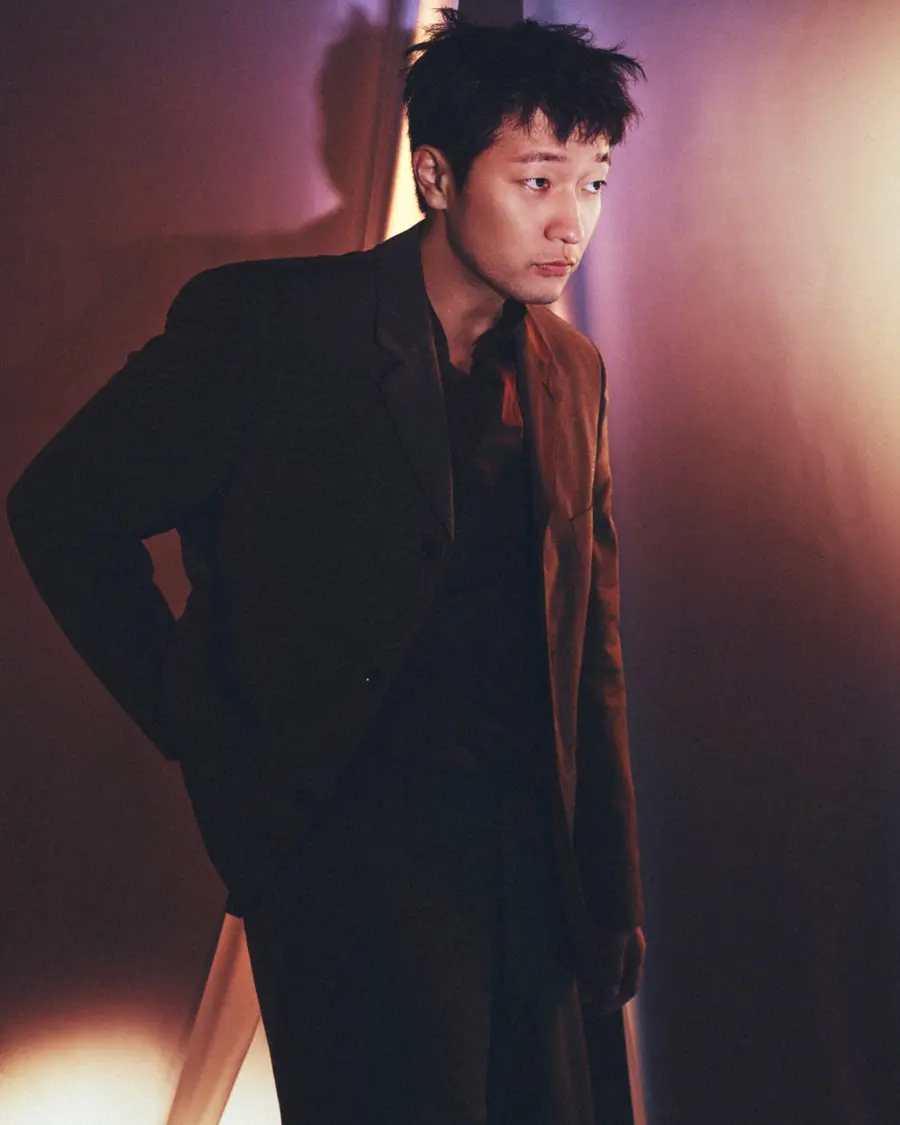
You have a substantial amount of Japanese dialogue in this project, and you also acted in English in 〈Bedford Park〉. I remember hearing that you used to take Chinese classes, too. Acting in a foreign language introduces a lot of variables, both technically and emotionally. But your experience performing in two foreign languages could become an important asset.
I don't feel confident about it. Honestly, unless I put in several times the hours I normally spend preparing a character, it really doesn't work. So when I was filming 〈The Blue Road〉, my routine on days off was almost entirely running lines with my Japanese teacher. That's what it took to make it even somewhat convincing. If I have to speak Japanese in the show, then that's what I have to do. I do think it's not easy to step outside the language I use in everyday life.
After all that preparation, how would you rate the difficulty of acting in Japanese in 〈The Blue Road〉?
It depends on where you set your expectations. As I said, I saw Kim Seok as someone who speaks Japanese quite accurately, but the director didn't ask that much of me. Still, I felt I had to reach that level for the character to make sense, and I thought it would give viewers another thing to enjoy. So the difficulty was extremely high.
A lot of viewers said Kang Hae-sang from 〈The Roundup〉 had returned when they saw Kim Seok's solo action scene in Episode 5. It was a striking sequence. How did you prepare for it and shoot it?
It was a very brief stage direction in the script, and I had no idea it would end up being that long. It was originally even longer. There was about another minute of fighting before that. But I think what matters is why that action is there. From that moment on, Inose and Kim Seok are separated. When they're apart, dramatically speaking, they need to face that much hardship. That action sequence symbolizes those hardships. So I thought it needed to feel desperate, and I think 'desperation' was the theme of that action.
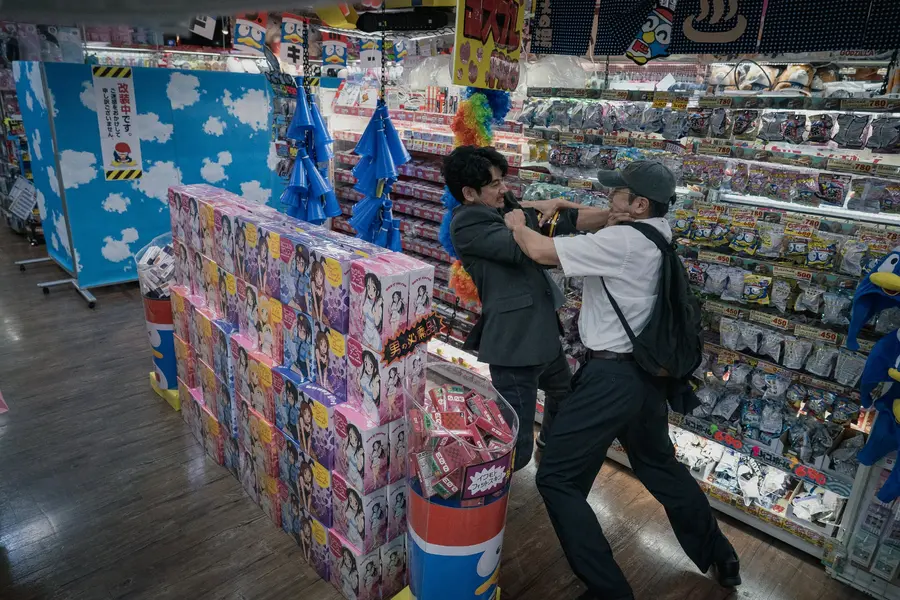
As you mentioned, 〈The Blue Road〉 has action sequences with distinct themes in each episode, such as the elevator fight and the rain-soaked fight at the police station. Is there one you particularly remember or like best?
The one we shot at Don Quijote was fun. So was fighting in the rain. In a way, that's the kind of thing where the two of them have to fight once before they can become friends. (Laughs) There's something like that in 〈Ford v Ferrari〉, too. It's an essential moment in a buddy story, and with scenes like that, I enjoyed thinking about how we could put our own stamp on it. That led to a bit more improvisation than usual. Scenes like that are a great opportunity to show sides of both Kim Seok and Inose that you haven't seen earlier. You can show them being a little more childish, a little more emotional. I enjoyed those aspects. When you understand the theme of an action sequence, it becomes a great opportunity to reveal something you haven't shown before, something that hasn't appeared earlier. Overall, I really enjoyed thinking about those things.
The Don Quijote scene was memorable: The two detectives first meet not through conversation, but through a chase and hand-to-hand combat. At one point during the chase, Kim Seok looks at Inose and grins.
That action sequence itself is about sizing each other up. The most important thing in that scene is physically expressing the process of realizing, 'You're just as weird as I am.' No one else kept chasing him. Only Inose did. Seeing that, wasn't he expressing, 'You might be someone I could work with'? It's an expression of delight at meeting him, a moment of, 'Well, look at this guy.'



댓글 (0)
댓글 작성
댓글을 작성하려면 로그인이 필요합니다.
로그인하기