


※This interview with 〈The Blue Road〉 actor Son Suk-ku continues from Part 1 and Part 2.
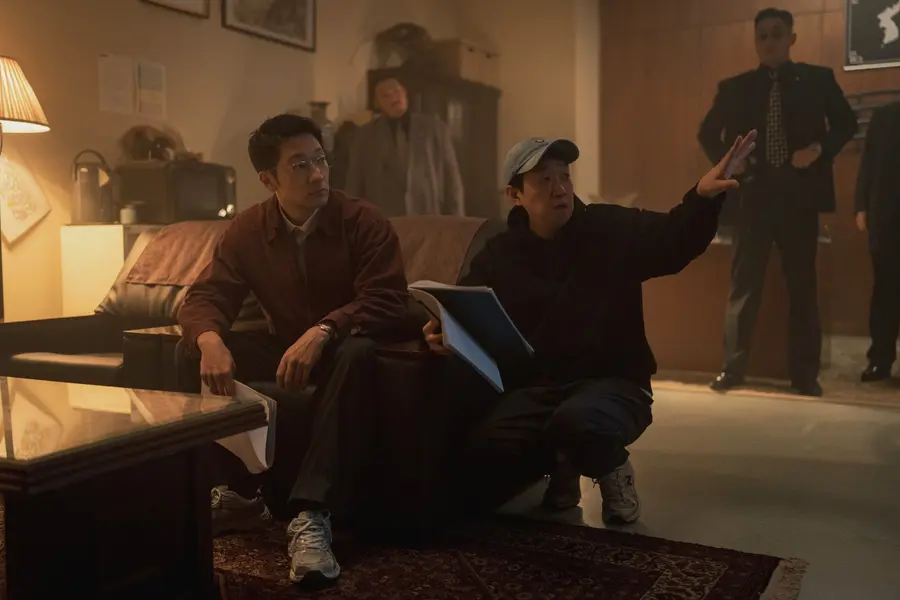
I understand director Han Jun-hee starts with difficult scenes on the first day of filming. How did you feel about that approach as an actor? I also heard he asked you not to move your neck and shoulders too much when delivering your lines as Kim Seok. I'd like to hear about that, too.
Personally, I prefer to ease into the first day with something simple, something less demanding, but he always shoots the difficult stuff first. I'd prepared on my own, thinking a certain way of speaking would suit this character. I worked hard on it by myself for about four months, and the first day of filming was the day I had to turn in that homework for inspection. Ideally, I'd deliver a few short lines on the first day, slip in an “Oh, boy,” and ease into it so subtly that you'd wonder, “Have I always talked like that?” But here, I had to dive straight in, so I was a little nervous. On the other hand, it can usually take as many as four or five shooting days before you get comfortable playing a character and think, “OK, now I'm starting to get it.” When you do it this way from day one, there aren't any wasted shooting days. If you only start to understand the character around the fourth or fifth day, you have regrets about those first three or four days. You want to do them over. But that doesn't happen this way, so I think having a tough first day leaves you with fewer regrets, which is another good thing about it. And no matter how thoroughly I prepare a character, I always need to arrive on set in a somewhat pliable state so I can respond to direction. Having Kim Seok move so little was somewhat different from what I'd envisioned. At times, I wanted him to feel more like a loose, laid-back middle-aged guy, but the director gave me that direction, and there was a period of adjusting to it, thinking, “So this is where his vision differs from mine.” We must have ended up with several versions that way. In the editing room, he probably chose the moments he ultimately thought suited Kim Seok best.
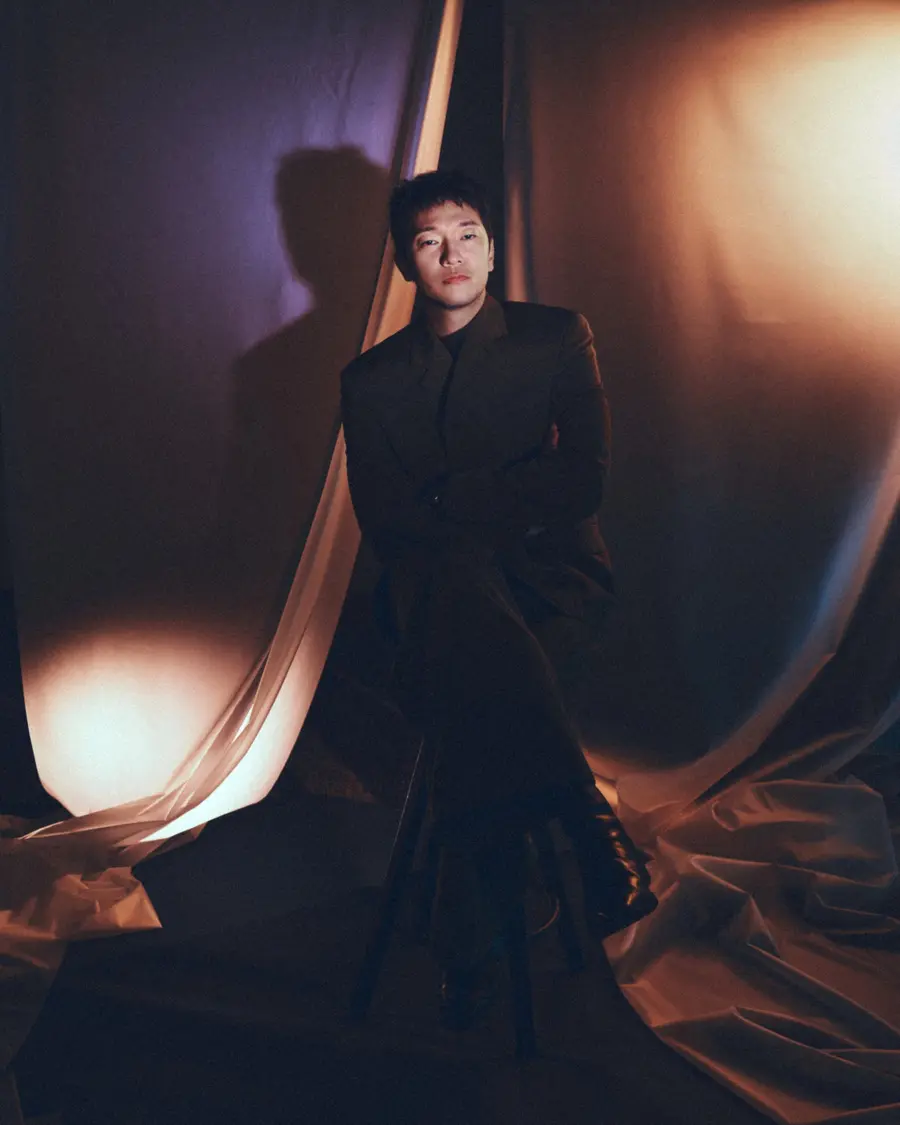
Some actors stick with their original conception of a character all the way through, while others adapt flexibly to what happens on set. Which are you closer to?
You can pretty much assume I never play a character on set exactly as I'd conceived him. The reason so many actors can't sleep before their first day of filming is that, before the shoot, you usually trim things away and refine them until you have your own design and think, “I could sustain this character comfortably all the way through.” But most of the time, the possibilities don't narrow down to just one. And once you get on set, you often end up doing neither the A nor the B you prepared, but C. The reason I can sleep now is that I know, “It's not going to be A or B anyway. It'll be something else.”
Han Jun-hee described you as being like a surfer, saying he likes your courage and spontaneity. At the same time, he said you're an actor who prepares an extraordinary amount. There must be times when you have to overturn all that painstaking preparation on set. Doesn't that cause you stress?
Not really. I prepare so I can overturn it, not so I can insist on it. And the director himself is a surfer. He's incredibly spontaneous. From what I can see, he gets almost intoxicated by the moment and makes all these instinctive choices. You're on set for eight hours a day, sometimes as long as 12, but it's actually almost like dancing in a trance. Memorizing choreography isn't enough to make dancing fun, right? I think that's exactly why I enjoy working with Han Jun-hee. He really wants to play.
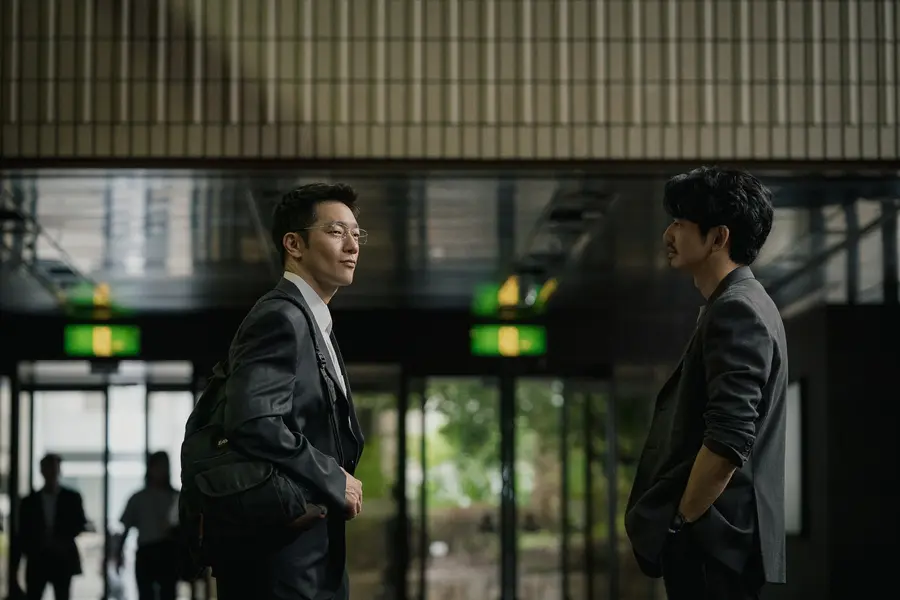
At the press conference, you said 〈The Blue Road〉 came along when you personally felt you'd hit a wall. What exactly did you mean by that “wall”?
When I said I'd hit a wall, part of it might have been looking at my past work and thinking, “I'm not good at this; I need to overcome that.” But really, more than that, to put it in broader terms, I was wondering whether we'd reached a point when creators across our industry in Korea needed to break out of their existing habits and move on to the next act. I think that movement is coming, and that this is a time when we need to pursue new things more actively. I wanted to keep pace with it—and, beyond keeping pace, try standing at the forefront of that forward movement. That's the goal I set for the second act of my acting career. Rather than wanting to improve because I was personally dissatisfied with my past work, I'd been thinking a lot about whether our overall attitude toward the work we do going forward needed to take another step ahead.
Then what was the goal you set for the first act of your acting career?
Back then, I was more focused on my individual career. I don't have all that much experience for my age, and if that earlier period was about introducing myself to the industry and the public and proving, “I might be someone who can carry a story, too,” I think I've now moved beyond that stage. That's probably why someone like Han Jun-hee, one of the hottest directors in Korea right now, chose me. Given that, I thought it was only right that I change now. So rather than giving performances that say, “Please look at me,” maybe I have this personal drive to be at the center of a change that shows our country's screen culture can produce something like this, too. It feels like the natural next step.
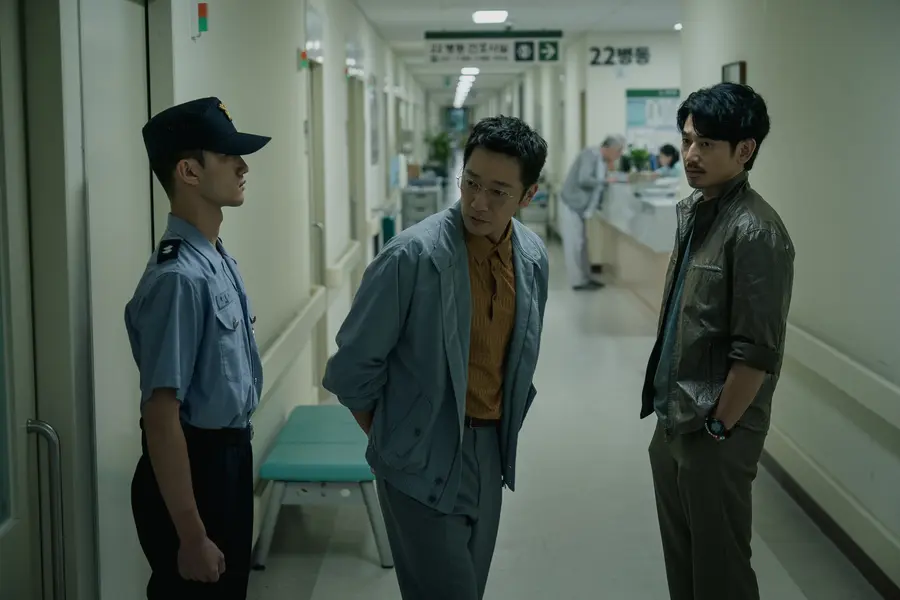
You've played detectives several times, and Kim Seok is another detective. I imagine you give a lot of thought to taking on these roles. If Han Jun-hee offers you another detective role next time, will you just say yes?
My only concern is that audiences might feel tired of seeing me as a detective before they've even watched the performance. It's just that it could be a slight disadvantage strategically. I have no problem doing it again. Think how many police officers there are in Korea. I've only played four or five of them, and I don't think that's a big problem.
I was struck by what you said at the press conference, comparing it to your time in the 100-meter dash: You hadn't been able to break the “elusive 13-second barrier,” and you wanted to do it with this project. Do you feel you've broken that 13-second barrier with 〈The Blue Road〉, or that you've brought your time down to around 15 or 14 seconds? What's your own sense of it?
I don't think that's for me to judge. What I can do is set a goal and give it a try. As for evaluating it... (Laughs) I'm not an athlete competing for a score. I'm simply an artist working for the public, so my job ends with making the work, and the people watching it do the evaluating. They might say, “Oh, he set his sights too high,” or they might say, “Still, I'd like to give him another chance.” We'll have to wait a little longer to know.
You also served as a producer on 〈Bedford Park〉. Earlier, you said you wanted to be at the forefront of creators. Is your involvement in producing connected to that goal?
Rather than having a particular intention, I think I'm just naturally moving in that direction. Circumstances played a part, too: My oldest friend introduced me to the project, and as I somehow became more involved, that naturally led to producing and getting involved in the investment side. It just happened as I went along. Since these creative activities have been practically all I've done for the past few years, I suppose, in a way, I'm naturally heading in that direction. And I came to think, if this is what my future is going to look like—at least throughout my 40s—then I might as well stop being shy about it, step out front and give it a go. That thought came afterward. It wasn't that I started out thinking, “I need to be at the forefront.”
※The following questions and answers contain spoilers for the ending of 〈The Blue Road〉.
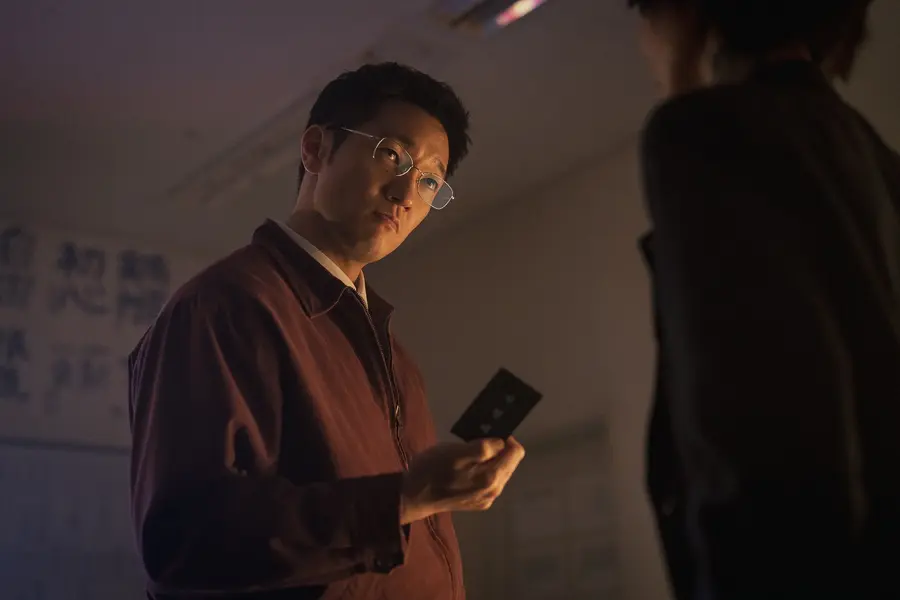
The tone of episodes 1–3 is completely different from what follows. Seo Hyun-tae, played by Jung Jae-young, is the character who sets the tone of the latter half. Having worked with him, what did you think of Jung's performance, and how did you interpret that character from Kim Seok's perspective?
Seo Hyun-tae is a character who starts as a victim and ends as a perpetrator. As those who've watched the series will know, that's a cycle of history that has repeated itself without end since the Japanese invasions of Korea. Like Kim Seok, Seo Hyun-tae embodies that tragedy in a single person. I thought the director and the writer had written the story that way to convey that tragic cycle, so I tried to express that aspect. But first of all, having Jung Jae-young play him makes him cool. Even his voice is so cool. Something that really surprised me when I watched the finished edit was how he expressed all those emotions without raising his voice once. I thought that was incredibly cool.
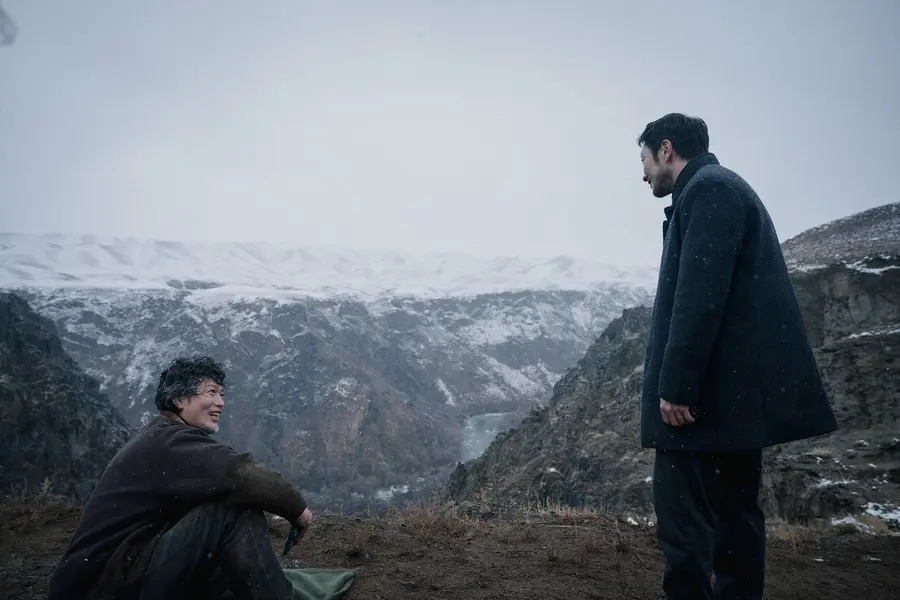
I wanted to keep watching Kim Seok and Inose's chemistry, but Kim Seok died. You'd think there might be talk of a second season, but the ending even shows his grave, really making it definitive. (Laughs) When you first received the scripts, did you go in knowing he would die in the final episode?
I'd read all eight episodes before we started, but the character didn't die in the first draft. The director keeps changing the scripts on set as he watches the actors' performances. I almost worried because it wasn't the kind of ending audiences generally prefer, but the reason for his death was clear, so I accepted it. That's how Kim Seok's spirit passes to the next generation. It passes to Inose and to Anastasia. If the story the director wants to tell isn't about one person's survival, but about the spirit that person comes to understand through his experiences being passed on to the next generation, I thought, what better ending could there be? And I never thought of this as a multiseason series in the first place, nor do I want it to be one. I'm very attached to this project. Of course, that's true of other projects, too, but what I mean is that there are characters you form such a human attachment to that you think, “This character feels like someone who could be living somewhere.” You don't see them as just a character in a movie or a drama; you feel, “This person really feels like a person.” That's how Kim Seok was for me. And that makes you feel tenderly toward him. He overcame the fear he wanted to conquer before he passed on, so I think that was his path. The moment we forced him to stay alive to keep the seasons going, I think it would shatter that sense I had of him as someone truly human.
I heard you filmed the final scene last. Since you actually shot the story's final scene at the very end, with so much emotion built up, it must have felt especially meaningful.
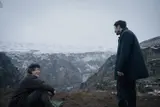
That's right. I'm an F, but people often tell me I seem like a T, and my T tendencies are so strong that even I don't know why I'm an F. But I empathize a lot with Kim Seok. At the very end, he dies in front of his friend, saying, “Still, because of you, I made the right choice in the end, and I'm grateful to you.” How many people in this world get to die such a wonderful death? And I said, “Director, I don't want to be shot dead, but if I do die, I'd like to die somewhere with a beautiful view like this.” It made me think that, if you had to die, this wouldn't be so bad. That's how much I feel Kim Seok lived well before he went.
댓글 (0)
댓글 작성
댓글을 작성하려면 로그인이 필요합니다.
로그인하기