


A couple watches a movie together. They reminisce about their dating days while watching a romance film and worry about the future while watching a parenting film. Horror movies provide a good excuse for some long-awaited physical intimacy, and action films serve as excellent learning materials for conflict resolution in marriage. Even when watching the same movie, husbands and wives think differently. Since they have different favorite genres, it seems unlikely that they would have a bias towards certain films. -Editor’s Note-
“At this rate, the baby will grab a smartphone during the first birthday celebration.”
This was a story that came up while chatting with my friends from the maternity ward. When a baby reaches the age where they can pick things up on their own, they become interested in their mother's smartphone. Whether it’s a smartphone or a remote control. They say that children are a reflection of their parents. Watching their parents use smartphones and watch TV, babies are likely to develop an interest in these things. And this is a common interest among babies in South Korea, or rather, around the world. Our baby also shows great interest in these two items, and each time, my heart feels heavy with guilt.
Of course, I don’t intentionally show them my smartphone. I don’t keep the TV on every day either. Limiting media exposure has been considered a parental responsibility for some time now. The World Health Organization (WHO) and the American Academy of Pediatrics provide clear guidelines regarding media exposure for infants and toddlers. These organizations recommend completely avoiding media exposure for children under the age of two. We also restrict media for our baby… and each time, guilt washes over me again.
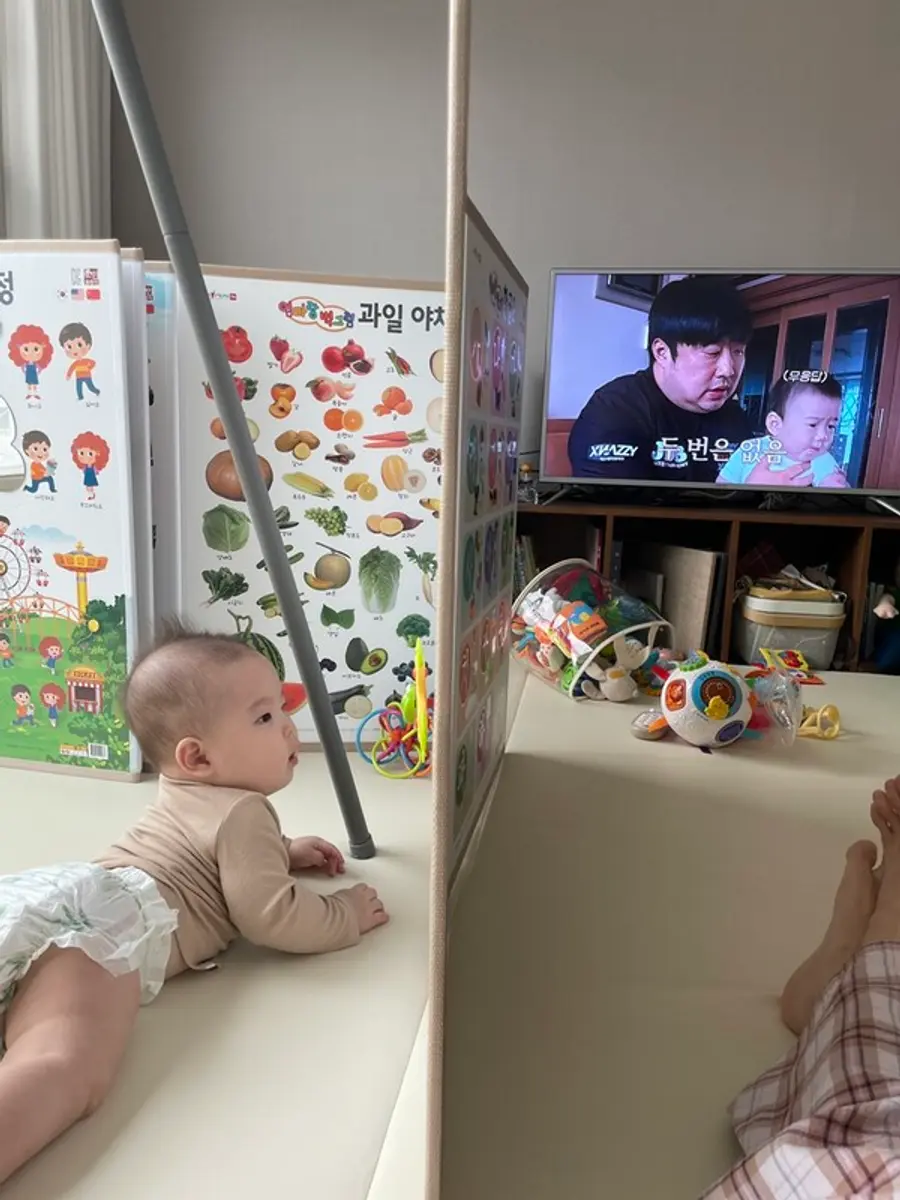
Mom and Dad are already addicted to media..
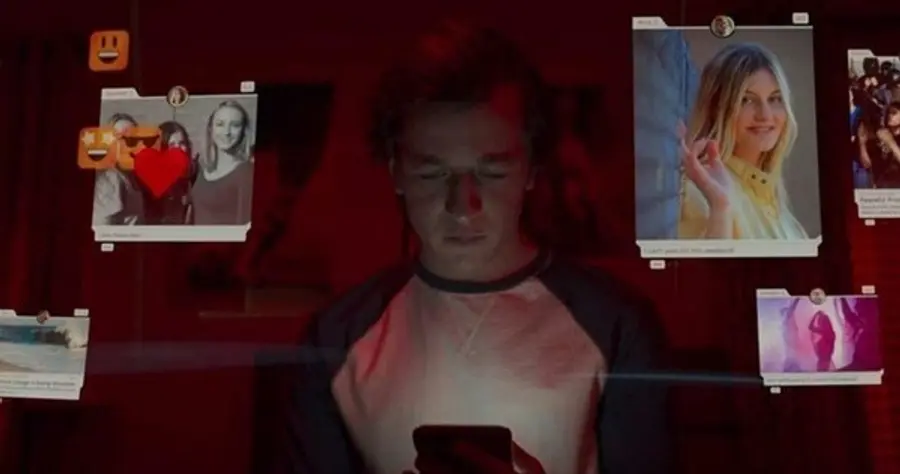
How can we force our child to quit media when Mom and Dad can’t? It was only after having a baby that I started to think about the dangers of smartphones. That led me to watch <Social Dilemma>. It’s a documentary film directed by Jeff Orlowski, produced in the United States in 2020.
We start and end our days holding our smartphones. But this familiar technology tells us how it can manipulate our choices and shake the very structure of society.
The film begins with interviews from former employees of companies like Google, Twitter, Facebook, and Instagram. Even the person who created the Facebook ‘Like’ button and the former president of Pinterest participated. And they say, “We thought it was for the greater good…”. “We only saw the front side of the coin.” “No one intended for these results to happen.”
Their revelations can be somewhat dangerous. The crux is that the technologies developed by IT companies are harmful to humans. They claim that their former companies are building a massive market where humans are traded as commodities. Humans being traded? Wasn’t it just about developing their apps to sell well on smartphones?
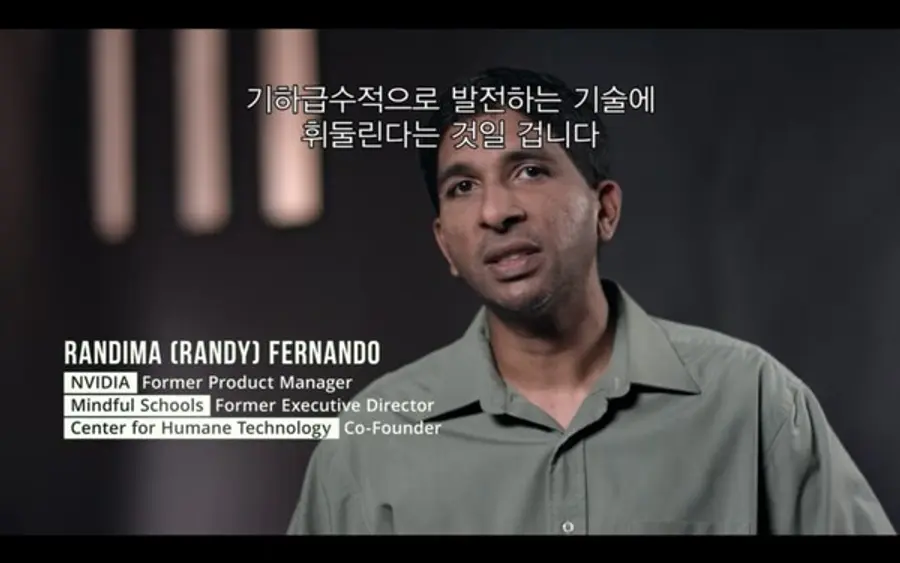
They say that all our online activities are monitored, tracked, and accumulated. Even how long we look at certain images when we open an app is recorded. Based on this, they can even infer our personalities. Whether we are introverted or extroverted, how lonely we feel. They have more information about us than we can imagine.
Come to think of it, my husband and I’s Instagram feed is flooded with ‘baby’ content. At first, it was fascinating. Since we were raising a baby, I had seen baby feeds a few times, but why does it keep showing up? I remember the excitement of clicking on it, and it gives me chills. The same goes for search engines. Perhaps because we buy a lot of baby products, baby-related pop-ups keep appearing everywhere. My husband and I just found it interesting. But this film says it’s a ‘pretty’ scary thing.
These IT companies monitor our online activities and accumulate data. And based on that accumulated data, they predict our behavior. They are creating increasingly accurate models. And in between, they insert advertisements. Perhaps this is their ultimate goal.
The film shows an example of a man who is so interested in his girlfriend that he doesn’t look at his phone. For such a man, IT companies show apps designed to entice him to click. “Your friend Tyler has signed up for the app, welcome him.” An alert pops up, and the man immediately touches his phone. Then, the IT company displays posts from the woman he likes and shouts, “Ready to see some ads? Let’s show you a wax advertisement!”
Come to think of it.. baby product ads are popping up too much..
If we apply this to our couple, surprisingly, it was something I experienced just a few days ago. While I was watching the baby and not looking at my phone, an alert popped up. “Someone you might know ___ is using Instagram.” When I saw the profile picture, it was OO Mom, with whom I exchanged contact information at the cultural center not long ago. I immediately touched my phone and accessed it to browse the feed. And the baby cooling bag that I had only searched for but refrained from buying popped up in an ad. What is this? 80% off? It’s going to sell out soon? Seeing myself ordering as if I was under a spell, the IT company must have shouted, “Yay! Gotcha!”
In this way, smartphones are designed to change our behavior drastically. They make it so that users cannot stop scrolling. Just like pulling a slot machine. Why doesn’t the photo that a friend tagged you in show up? It touches the deep parts of human psychology. ‘Ah.. I want to click.’
When someone is typing in a messenger, it shows in real-time with ellipses like ‘...’. This prevents the user from leaving the app. If you’re curious about what they’re saying, how can you leave the app? Thus, we have become lab rats. And they have managed to elicit users’ actual behaviors and emotions without anyone knowing. They have exploited the vulnerable aspects of human psychology.
What about our child?
While watching the movie, I kept thinking. If immature children experience what we adults go through, wouldn’t it have an even greater negative impact? And as if the movie read my thoughts, the next story shows the lives of teenagers.

The film shows a family’s mealtime scene. The mother says, “Let’s put our phones in a locked box for an hour and eat. Let’s talk while we’re at it.” The children reluctantly hand over their phones. But the phone rings with alerts. The children glance at their phones while trying to have a conversation. Then, bang! The daughter breaks the box and takes her phone upstairs.
Of course, the children say this is no big deal. They claim that phones are just machines and won’t change their lives. But the child waiting for ‘likes’ looks anxious.
Social media has penetrated deep into the brain, taking control of children’s self-esteem and identity. They decorate themselves with filtered cameras but lack the mental maturity to handle criticism from those around them. Of course, we have evolved to care about the opinions of those around us. But have we evolved to recognize the criticism of 10,000 people? We have not evolved to seek social validation every five minutes. Teenagers are even less able to handle that.
The film also presents this seriousness in numbers. It states that depression and anxiety among American teenagers have increased dramatically. This began between 2011 and 2013, during which 100,000 teenage girls self-harmed and were hospitalized each year. The suicide rate also increased during this period. This was when the use of social media began to rise.
Is this really okay?
While writing this, I looked at my phone dozens of times. I scrolled through it dozens of times, just as they revealed. Can I really teach my child to refrain from using smartphones?
And ding! dong! The phone alert rings. Unknowingly, I grab my phone again. I sigh once more after seeing the reel sent by my husband. If we are like this… what can we teach our child! Phew!
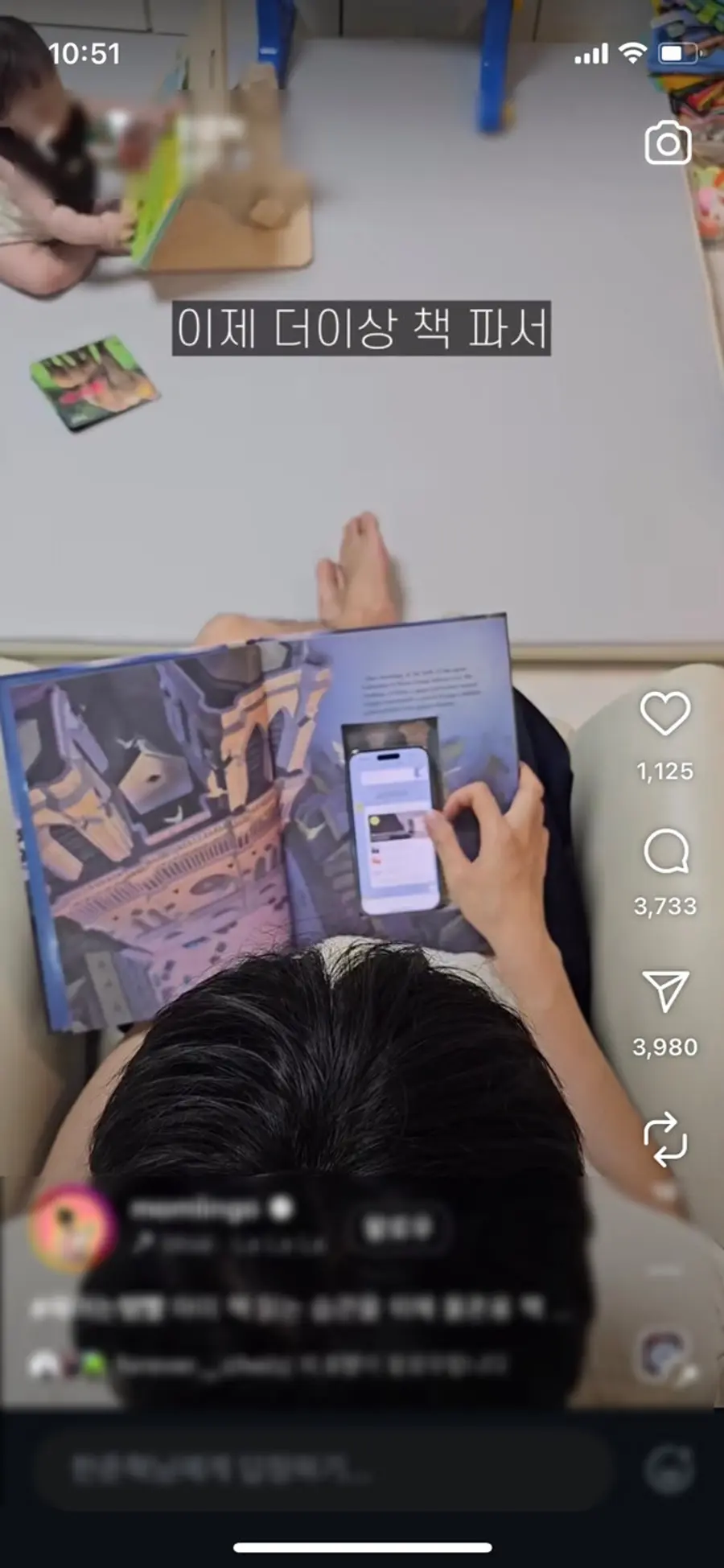
It’s a restless night.



댓글 (0)
댓글 작성
댓글을 작성하려면 로그인이 필요합니다.
로그인하기