



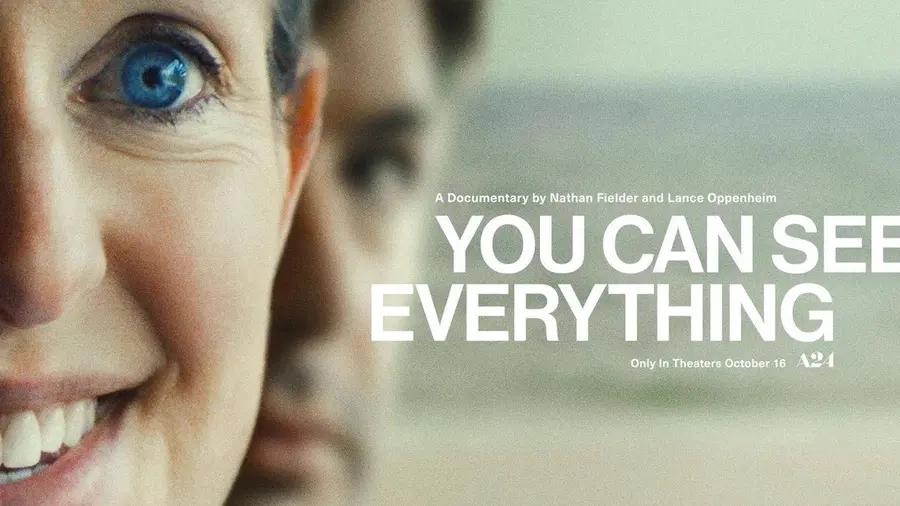
There is no word yet of a release in South Korea, but one documentary’s success in North America has captured the attention of Korean cinephiles. It’s a documentary that runs three hours, yet its poster or trailer is enough to make it unforgettable. The film is 〈You Can See Everything〉. Released in North America on October 16, it has held on to the No. 2 spot at the box office for a second week, outpacing commercial films such as 〈Street Fighter〉, which opened the same day, and 〈Clayface〉, which opened a week later. It even reached No. 1 on October 26, proving itself the hottest film in North American theaters right now. What kind of documentary could draw so much interest from the general public? Let’s take an early look at 〈You Can See Everything〉.

〈You Can See Everything〉 focuses on Elizabeth Holmes, who is now known as a fraudster. In 2004, she founded the startup Theranos, and in 2014, the company unveiled a new medical testing device. Called “Edison,” it was said to be capable of diagnosing some 250 diseases from a small amount of blood. After the announcement, Theranos was hailed as one of the most innovative companies and began attracting support from prominent business leaders and figures in politics and finance.
But a year later, in 2015, an investigative report by The Wall Street Journal revealed that Edison could diagnose only 16 conditions. Theranos and its leader, Elizabeth Holmes, were swiftly branded fraudsters. Holmes went on trial on 11 criminal charges, including financial fraud. After delaying the trial through marriage and childbirth, she was found guilty in January 2022. The curious thing is that production on 〈You Can See Everything〉 began at that point—at Holmes’s own request.
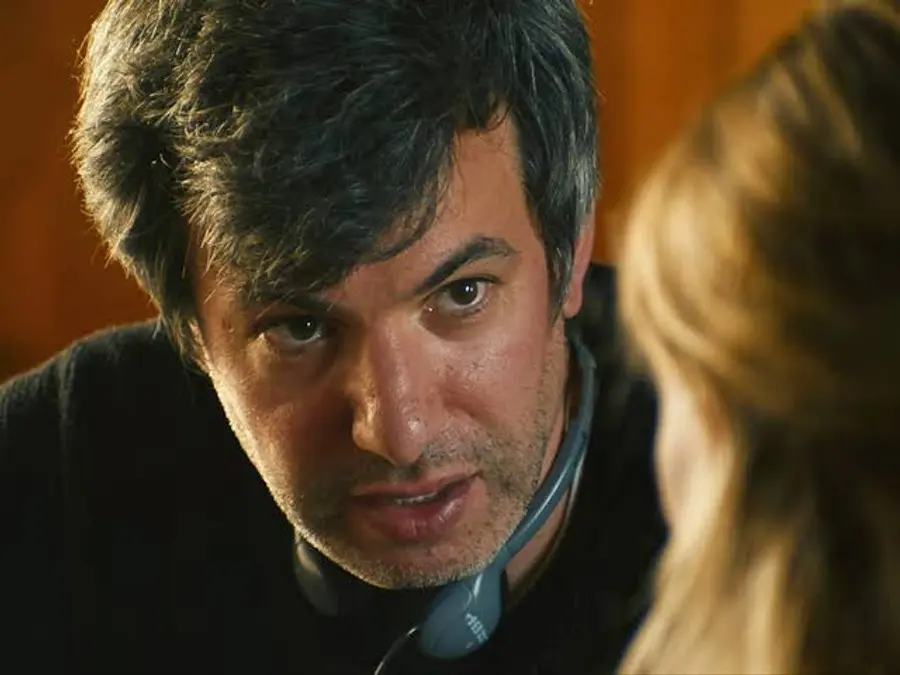
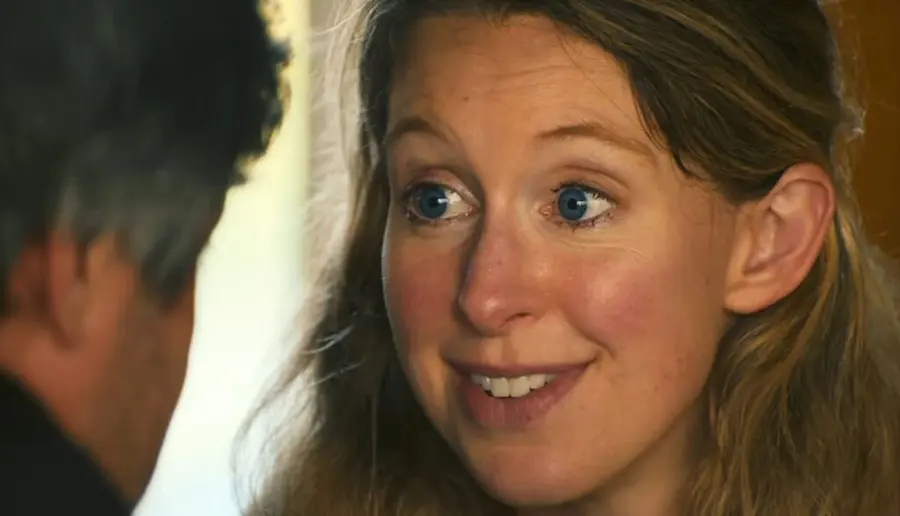
That’s right: 〈You Can See Everything〉 is not the kind of film that investigates a fraudster or financial criminal. Holmes herself asked for it to be made. When she sought filmmakers to document her daily life, Nathan Fielder and Lance Oppenheim came aboard. Oppenheim, a documentary filmmaker, chose Fielder as his co-director. An actor and director known for 〈The Rehearsal〉 and 〈The Curse〉, Fielder has favored work that blurs the line between art and reality. Together, the two gained an up-close view of Holmes’s daily life.
How the film ultimately took shape, however, was beyond the two directors’ control. Holmes and her common-law partner, Billy Evans, kept talking to the crew—to people behind the camera—even though they had asked for her daily life to be documented. As a result, Fielder eventually appears on camera as someone interacting with them, even though the film is a documentary. And the longer Fielder’s on-camera conversations with Holmes went on, the more the film began to shift from a straightforward record of her life into a documentary portrait of an elusive figure.
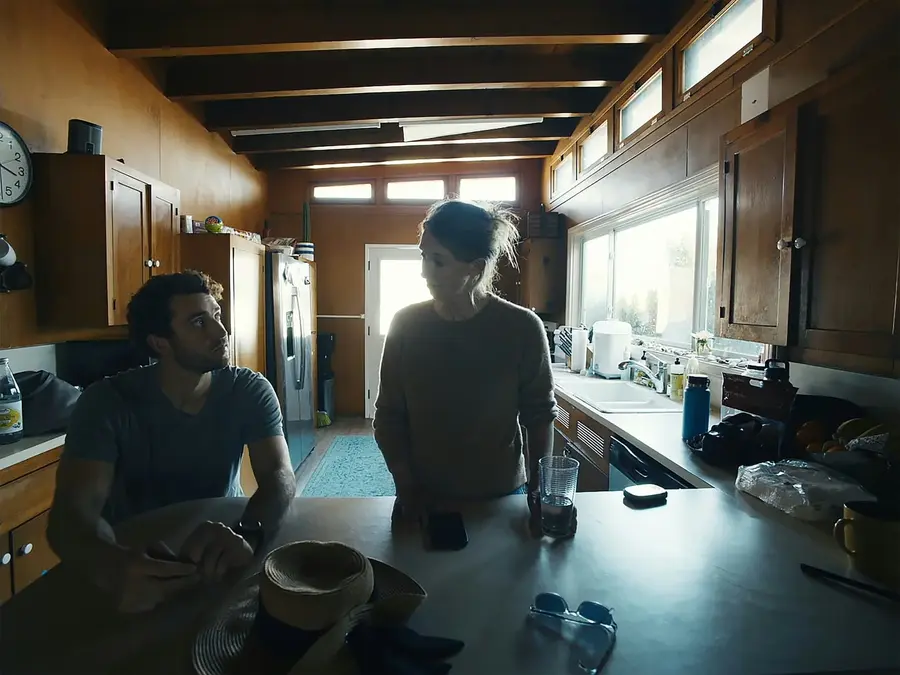
In fact, the film becomes especially compelling as that observation continues. But what happens at that point cannot be discussed here. Though it is a documentary, 〈You Can See Everything〉 moves so far beyond simple observation that the two directors themselves have asked audiences to “please avoid spoilers.” In doing so, it reaches a boundary where reality and what the film observes become difficult to distinguish, much like an extension of Fielder’s previous work. Many audience reactions describe it as a film that, “contrary to its title, makes you question everything,” and one in which “you can’t even trust what the filmmakers show you.”

In North America, there is even speculation that 〈You Can See Everything〉 could become the first documentary nominated for the Academy Award for Best Picture. Those curious about the film may still face a long wait before it reaches South Korea. Still, given that it is an A24 film—a company beloved by Korean audiences—that Sony Pictures holds the distribution rights, and that films typically arrive in South Korea bearing the Academy Awards label if they receive a nomination, perhaps audiences here will get to see it before long.





댓글 (0)
댓글 작성
댓글을 작성하려면 로그인이 필요합니다.
로그인하기