


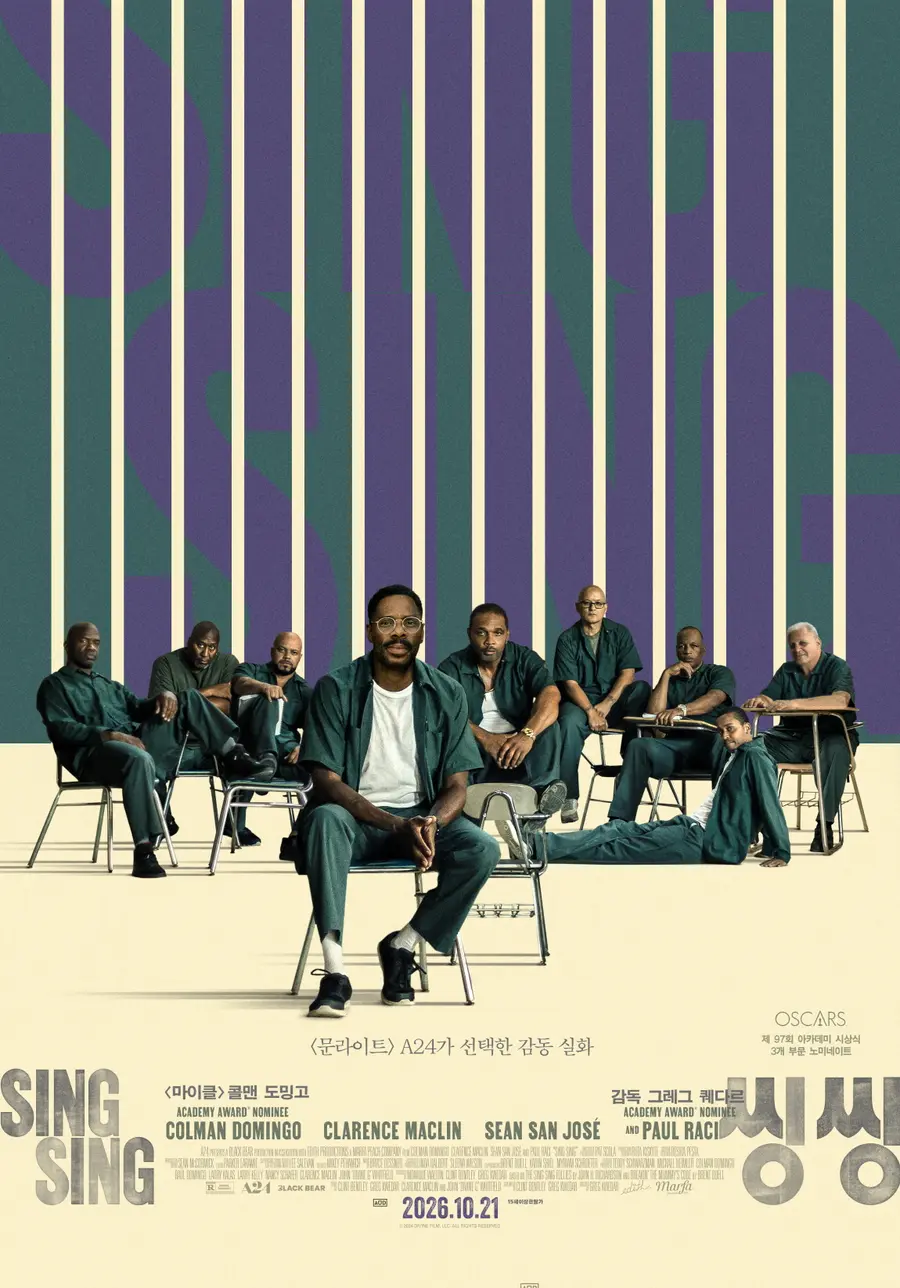
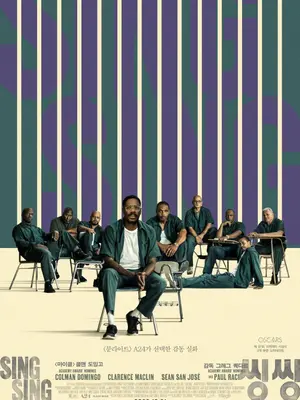
A24’s film 〈Sing Sing〉 has been playing for Korean audiences since October 21. It tells the story of Divine G (Colman Domingo), a man imprisoned for a crime he did not commit at a New York prison, who finds a new purpose in life through a theater program for incarcerated people. The film received 202 nominations and won 70 awards at major film festivals around the world. At the 97th Academy Awards, it earned three nominations: Best Actor, Best Adapted Screenplay and Best Original Song. Prison films often bring rough, violent scenes to mind, but 〈Sing Sing〉 tells a story of humanity and hope blossoming behind bars. To mark its Korean release, here are five stories behind the film.

# From 60% to 3%: The story began with RTA
〈Sing Sing〉 began when director Greg Kwedar and screenwriter Clint Bentley learned about Rehabilitation Through the Arts (RTA). Founded in 1996 as a single theater workshop at Sing Sing Correctional Facility, RTA is an arts program for incarcerated people that has since expanded to several New York State prisons. According to RTA, fewer than 3% of its participants return to prison. Compared with an overall U.S. recidivism rate of 60%, it is a remarkable figure.
Kwedar first learned about RTA participants at Sing Sing staging the time-travel musical comedy “Breakin’ the Mummy’s Code” through a 2005 Esquire article, “The Sing Sing Follies.” He later met playwright Brent Buell, who had volunteered with RTA for more than a decade, and was introduced to program alumni. Kwedar also volunteered at Green Haven, a maximum-security prison, to experience their world firsthand. He even held a class in which incarcerated participants used prison ID cards to frame shots as if they were cameras and a participant’s cane as a boom microphone to film a scene together. Those experiences became the foundation of 〈Sing Sing〉.
# More than 85% of the cast are RTA alumni, playing themselves
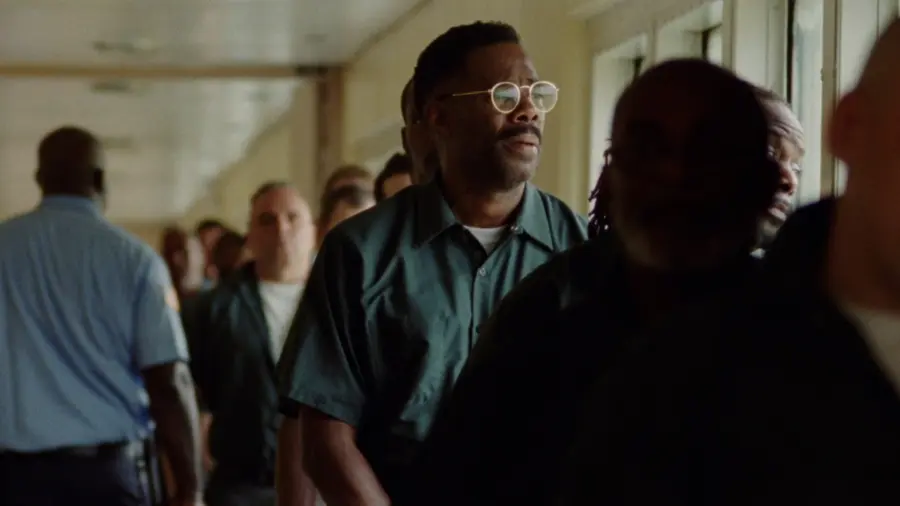
The most distinctive feature of 〈Sing Sing〉 is that more than 85% of its cast are RTA alumni who have been incarcerated. Most of the theater troupe members on screen are not professional actors but people who actually performed on a prison stage. They play characters drawn from their own experiences. RTA alumni including Sean “Dino” Johnson and Jon-Adrian “JJ” Velazquez also appear as characters modeled on themselves. That is why the stories they share in the film’s audition scene feel so vivid.
The film’s protagonist, Divine G, is based on the real John “Divine G” Whitfield. He helped develop the story and makes a cameo appearance. Clarence Maclin, who plays Divine G’s friend Divine Eye, spent 15 years incarcerated at Sing Sing. He began acting after happening upon an RTA production of “Slam” while walking to the prison yard. Appearing under his own name, he portrays his own story in the film. His admission—“In prison, you couldn’t show weakness, so you had to hide your emotions. But onstage, you were allowed to have emotions”—also captures the feeling at the heart of the film.
That is why this is a film worth watching through the end credits. When “as himself” appears beside the actors’ names, it brings home that the scenes we have watched were both performances and parts of their lives.

# Hollywood veterans and RTA alumni form an ensemble
The RTA alumni are joined by Hollywood veterans. Colman Domingo, who plays Divine G, won an Emmy for HBO’s 〈Euphoria〉 and received back-to-back Academy Award nominations for Best Actor for 〈Rustin〉 and 〈Sing Sing〉. He began his acting career in educational theater, performing for high school students on subjects including HIV, AIDS and conflict resolution. To prepare for this film, he watched films and documentaries about the prison system and interviewed Whitfield himself. His performance won him Best Actor at the 59th National Society of Film Critics Awards.
Domingo’s friend of 32 years, Sean San José, who has led theater workshops in Bay Area prisons, plays Divine G’s longtime friend Mike Mike, bringing their real-life friendship to their scenes. Paul Raci, an Academy Award nominee for Best Supporting Actor for 〈Sound of Metal〉, plays director Brent Buell, grounding the story as a mentor who respects the incarcerated men. When they sit in a circle with the RTA alumni, it is hard to tell who is a professional actor and who is not, making the scenes all the more moving.
# A screenplay developed with the real men, and improvisation fostered by equal pay
The screenplay was developed with the men whose lives inspired the story. Through Brent Buell, Kwedar and Bentley met John “Divine G” Whitfield and Clarence “Divine Eye” Maclin and invited them into the script development process.
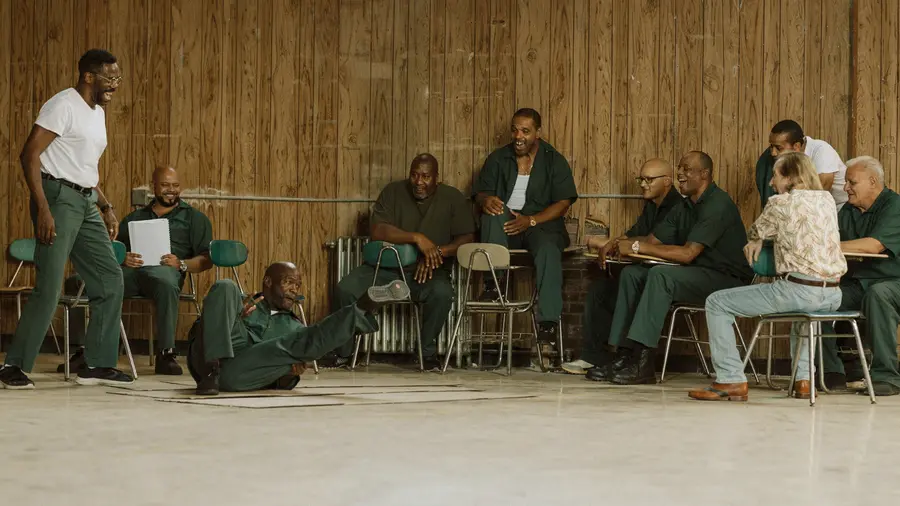
The same approach carried over to the set. Guided by the principle “trust the process,” Kwedar gave the actors freedom in their performances. The production also adopted a community-based profit-sharing model under which every actor and crew member received the same pay and share of the profits. As Domingo put it, “We weren’t making a lot of money right away, but there was a sense that we shared the same goal.” That egalitarian set gave rise to raw, memorable scenes. The dance battle grew out of actors spontaneously dancing while they waited; the audition scene came from participants sharing their own stories on the spot, without prior rehearsal. At the end of the long journey, asked what he would make if he could make just one more film, Kwedar answered, “Without question, it was 〈Sing Sing〉.”

# The prison play reaches an Off-Broadway stage 20 years later
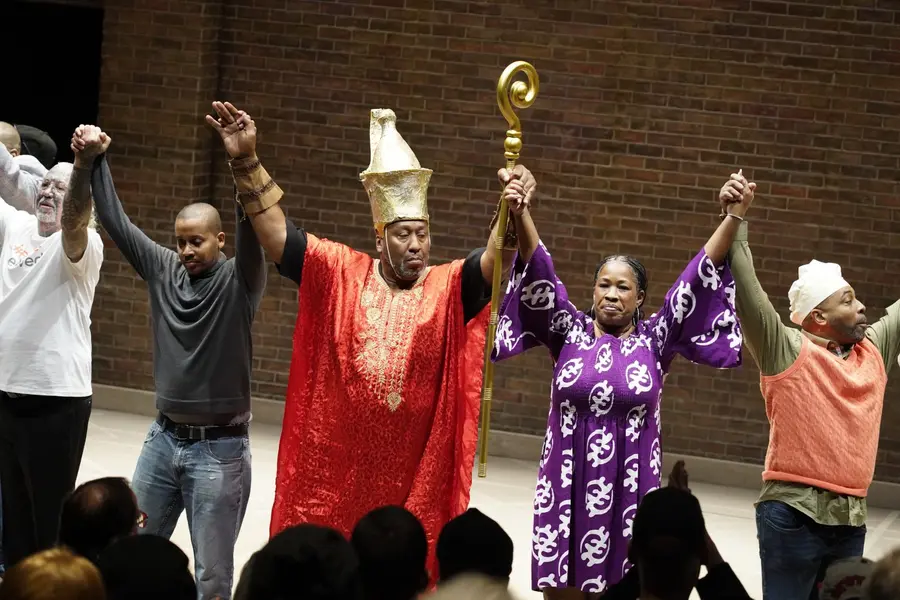
“Breakin’ the Mummy’s Code,” the 2005 play that inspired the film, returned to the stage 20 years later on February 3, 2025, at the Off-Broadway venue New York Theatre Workshop (NYTW), with support from distributor A24 and the criminal justice reform organization The Just Trust. It was the play’s first performance outside prison. Brent Buell again directed the one-day production, and original cast members, including Clarence Maclin and John Whitfield, returned to the stage.
The film also returned to the place where its story began. A special screening was held at Sing Sing Correctional Facility, the film’s setting, on June 20, 2024. On January 17, 2025, A24 partnered with RTA and the educational nonprofit Edovo to screen the film at some 1,100 correctional facilities across the United States. It was the first time a theatrical release had been made available simultaneously at correctional facilities nationwide, and nearly 1 million incarcerated people watched it.





댓글 (0)
댓글 작성
댓글을 작성하려면 로그인이 필요합니다.
로그인하기