



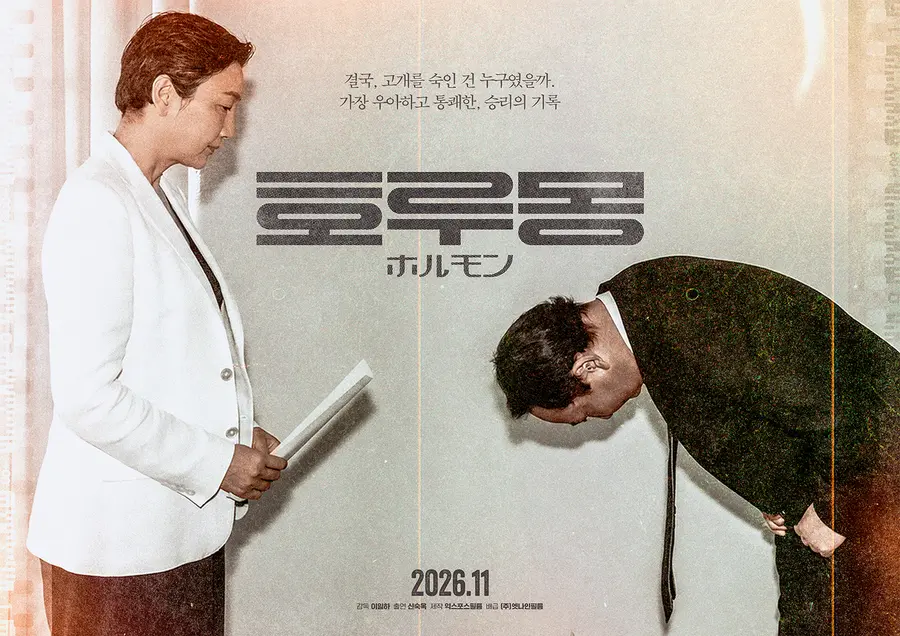
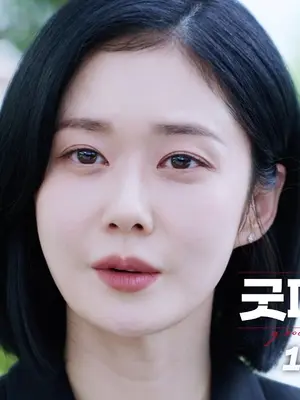
In November 2026, moviegoers will have a chance to encounter a remarkable figure on the big screen. That opportunity comes with 〈Horoomon〉, which reached Korean audiences at the 26th JEONJU International Film Festival in 2025. The documentary portrays Shin Sugok, a third-generation Korean in Japan and a human rights activist. Despite prejudice against Koreans in Japan, Shin made her mark as both an entrepreneur and a human rights activist, making waves in Japanese society at the time. Ahead of the release of 〈Horoomon〉, let’s take a brief look at the path she has taken.
It helps to begin with the meaning of the title, 〈Horoomon〉. Horoomon means “offal dishes” in Japanese, and the origins of horumon are generally traced to Zainichi Koreans. Offal dishes existed before then, but horumon—grilled intestines and other offal—became widely known after Koreans who had come to Japan bought inexpensive pig offal at black markets, where it was cheap because few people ate it, and sold it as a menu item at yakiniku restaurants. The title “Horoomon,” then, suggests that this is more than a biography of Shin Sugok: Her story begins with the Zainichi, long marginalized by prejudice.
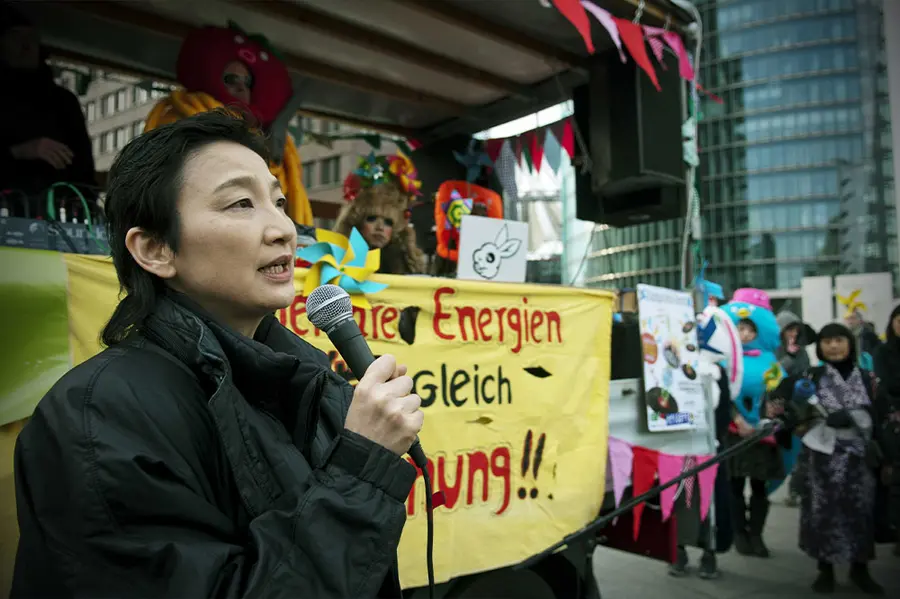
Born into that environment in 1959, Shin proved her abilities even before she began speaking out as a human rights activist in the 1990s. At a time when social prejudice left Zainichi Koreans with few opportunities, she worked at an advertising agency before establishing herself as a talent-development consultant and a businesswoman running a corporate training company. Beginning in the 1990s, she became a figure of public attention in Japan as she spoke out on the issue of the Japanese military’s “comfort women,” as well as the rights of Koreans in Japan, women, and other marginalized and socially vulnerable groups, including people in Okinawa, the Ainu people, people with disabilities and refugees.
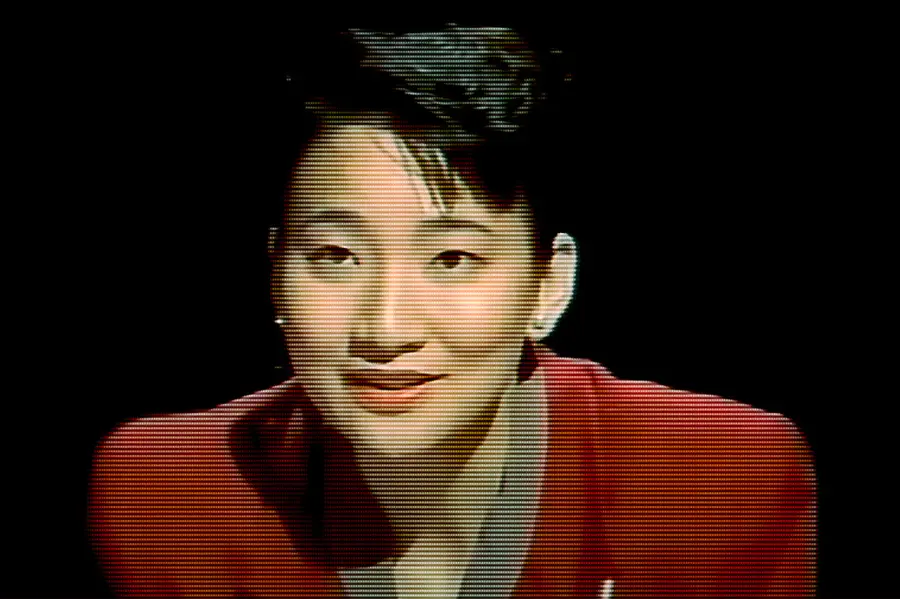
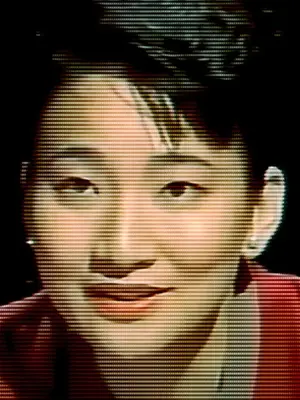
Perhaps the biggest reason she is still discussed today is a televised debate in which she appeared as a commentator. In the segment, broadcast in the 1990s, Shin responded to a Japanese far-right commentator who suggested that the comfort women issue was a demand to “settle it with money.” “Human beings have dignity,” she said, calling for a sincere apology from Japan. “It looks hypocritical because you’re trying to apologize when you don’t want to.” Throughout the exchange, she neither raised her voice nor became agitated, instead rebutting the far-right commentator’s position point by point. Videos of the debate continue to circulate on various platforms in Korea and Japan.

Recognition and threats have both followed Shin throughout her civic and human rights activism. She received Japan’s Local Autonomy Research Grand Prize in 2000 for her work on multicultural and multiethnic issues, the Tada Yoko Anti-Authority Human Rights Award in 2003, and the Avon Woman of the Year Award in 2013, which honors women who have contributed to society. In 2026, she also received the Kim Bok-dong Award, named for a survivor of the Japanese military’s “comfort women” system, in recognition of her solidarity with marginalized groups and minorities. Shin supported Song Shindo, a survivor who sued the Japanese government, and helped bring her case into the public conversation. Shin said the award was one she received “together with the many people who have supported me and stood by Song Shindo,” reaffirming her commitment to solidarity.
Shin was also targeted by a one-sided account of the Okinawa peace movement aired in Japan on 〈News Joshi〉. In the aftermath, she faced threats against her family and stalking. For her safety, she eventually had to leave Japan temporarily and stay in Germany. She also won a lawsuit against the program’s producer, DHC Television, and was awarded 5.5 million yen in damages for defamation.
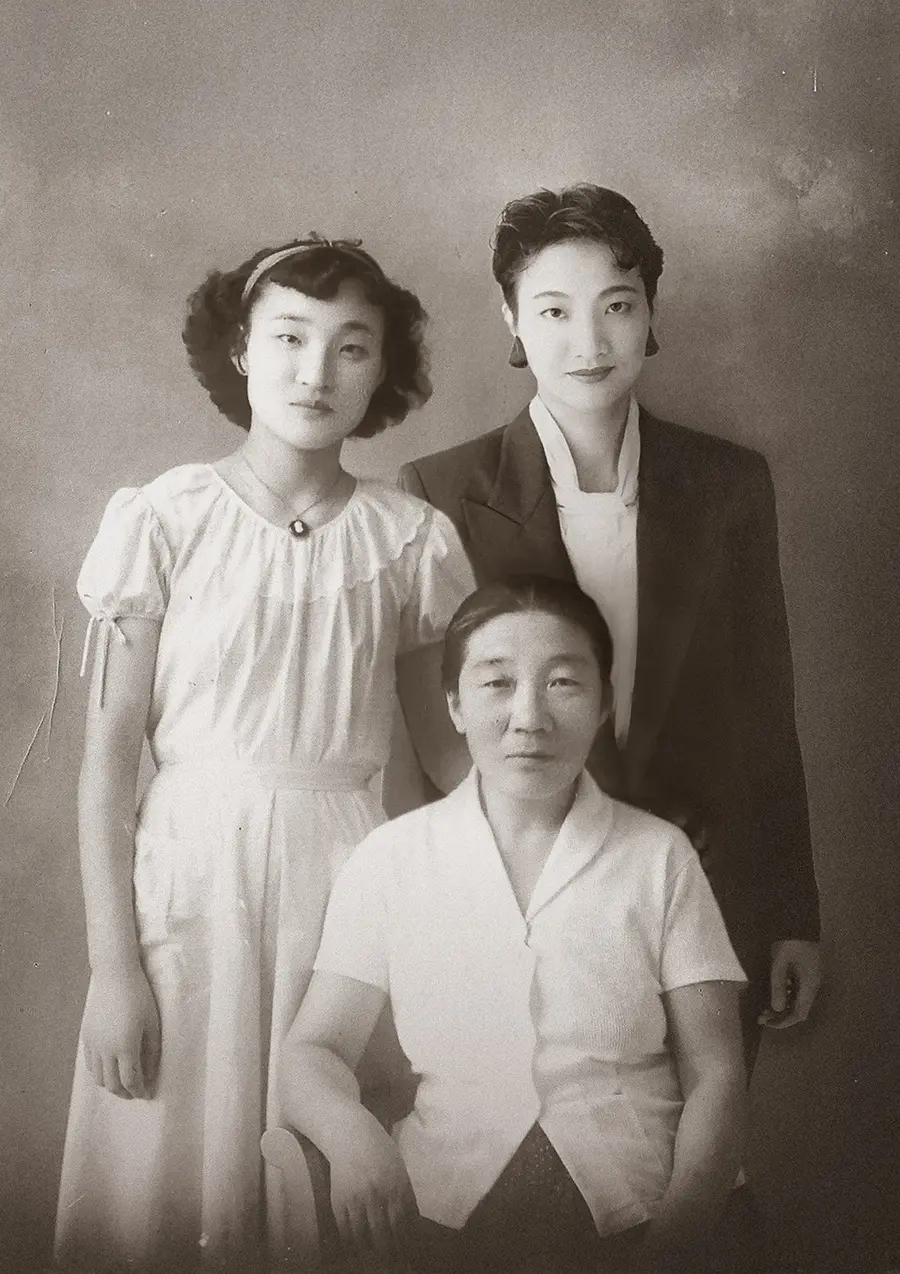
As 〈Horoomon〉 makes clear, Shin’s struggle is not hers alone. Across three generations of women—her maternal grandmother Lee Baek-ran, her mother Keiko and Shin herself—the history of discrimination and exclusion has persisted. That is why Shin often says, “The real fight starts now.” For her, the fight is necessary to protect the right to live as herself and to build a society where people facing discrimination are no longer excluded. She has also published several books drawing on her experiences in social movements. Unfortunately, all are out of print in Korea. They include 「A Woman’s Life Really Begins at Forty」, 「In Praise of Villains」, 「Zainichi: On Being Asked Which Side You’re On」 and 「How to Get Angry」. “If I don’t fight, no one will secure my rights for me.”

댓글 (0)
댓글 작성
댓글을 작성하려면 로그인이 필요합니다.
로그인하기