



I must ask for your understanding again. I changed the last series to 'Joo Seong-cheol's Character Locker' and wrote a tribute to actor Lee Soon-jae, and this time I want to change it to 'Joo Seong-cheol's Building Locker' to talk about 'Jongmyo'. There has been much discussion about development and reconstruction around Jongmyo, and the legal issues surrounding it must be clarified. Above all, I want to introduce the films that feature Jongmyo. This is about Hong Kong films that could not shoot martial arts movies in mainland China in the past.
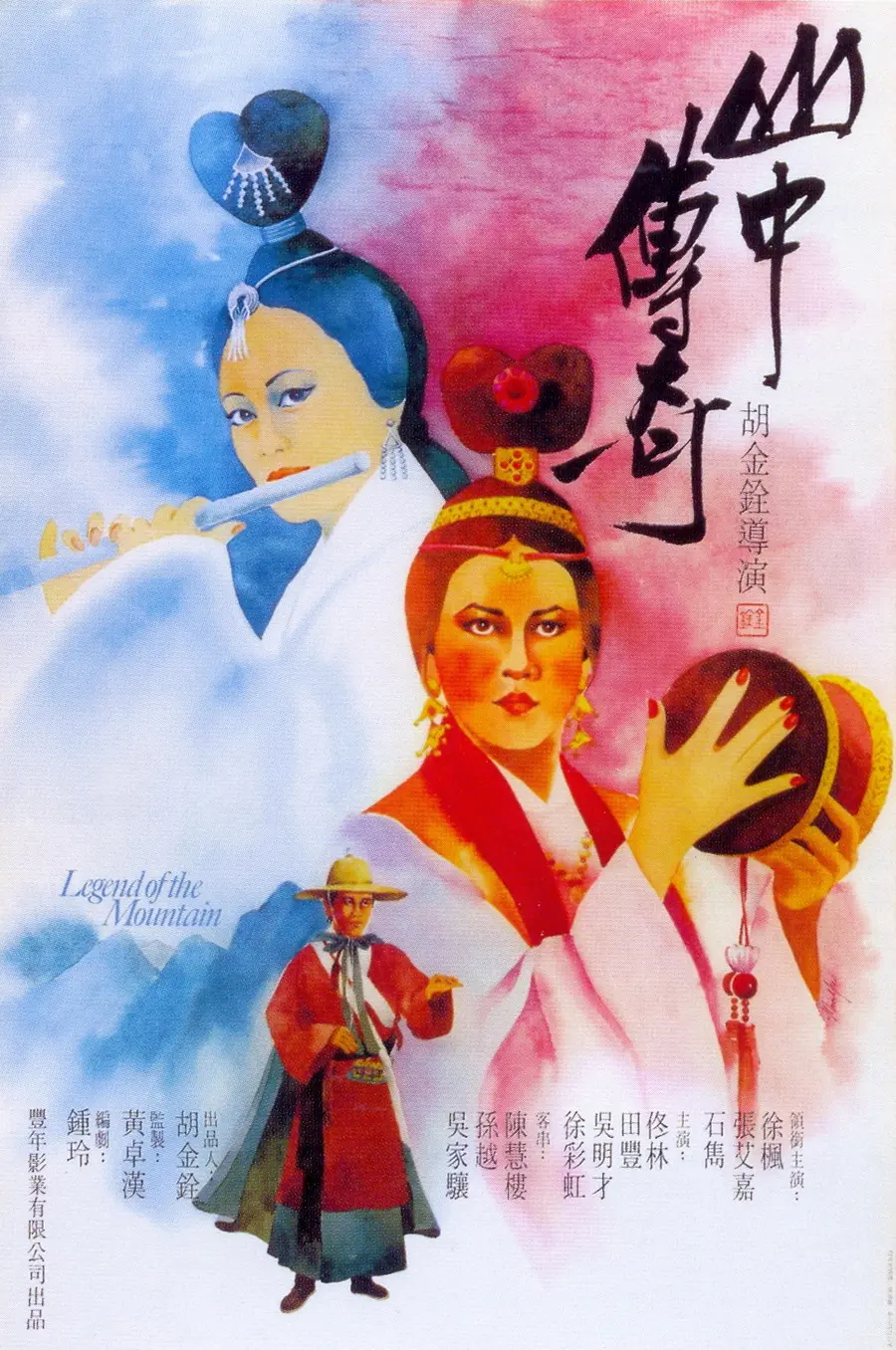
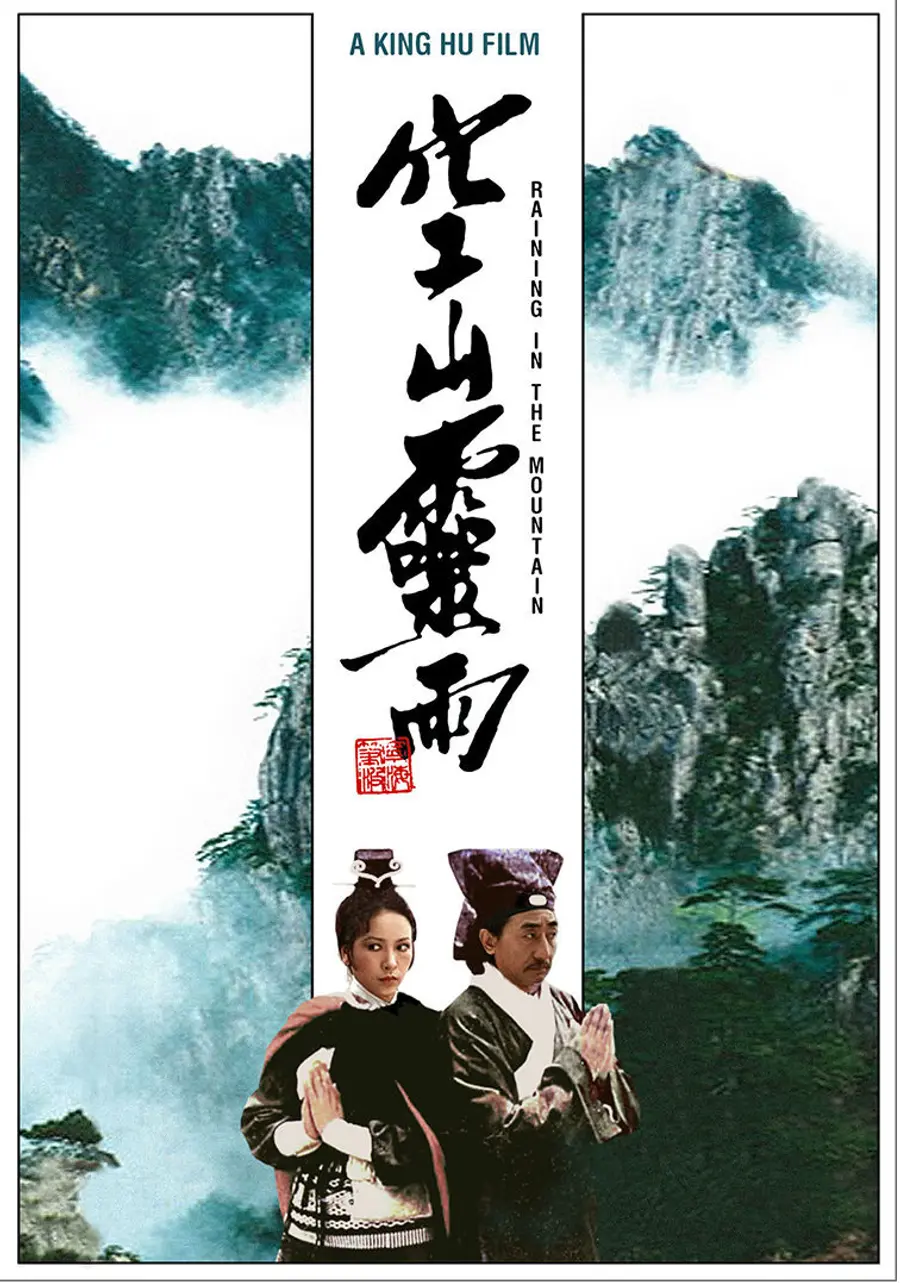
The director who loved Jongmyo the most is none other than the master of Hong Kong martial arts films, Ho Kim-jun. Starting with 〈The Lady Assassin〉 (1971), which won a technical award at the Cannes Film Festival, 〈The Invincible Ones〉 (1975), 〈The Legend of the Mountain〉 (1979), and 〈The Heroic Ones〉 (1979) are known as Ho Kim-jun's 'Landscape Tetralogy', showcasing overwhelming rhythms and aesthetics of scenery. He particularly loved Haeinsa, Bulguksa, which are UNESCO World Heritage sites, and Jongmyo, appearing in both 〈The Legend of the Mountain〉 and 〈The Heroic Ones〉. These two films were shot simultaneously across the country, from Busan's Taejongdae to Seoraksan in Gangwon-do, and released in the same year. Haeinsa (海印寺), where the Tripitaka Koreana is stored, has a name that means 'the true form reflected in the sea where rough waves have calmed', combining 'sea' and 'seal', and it appears in 〈The Legend of the Mountain〉, which has the most metaphysical and supernatural atmosphere among Ho Kim-jun's works, with the name 'Haeinsa' itself.
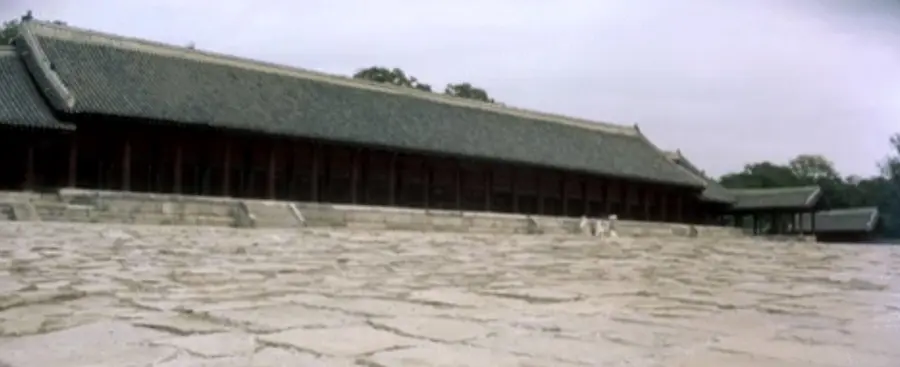
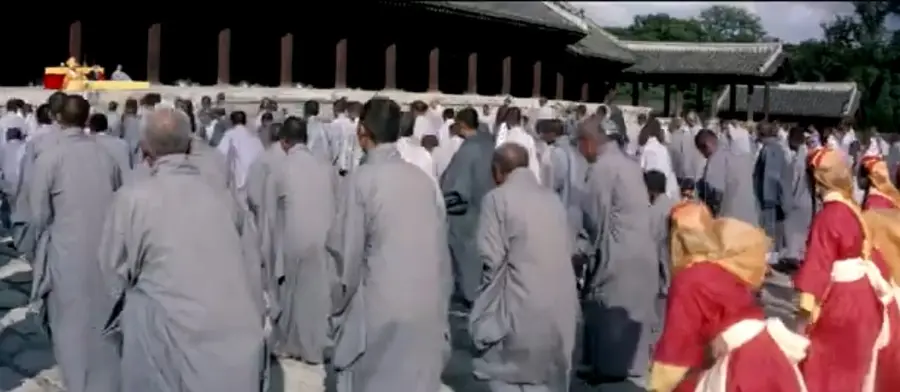
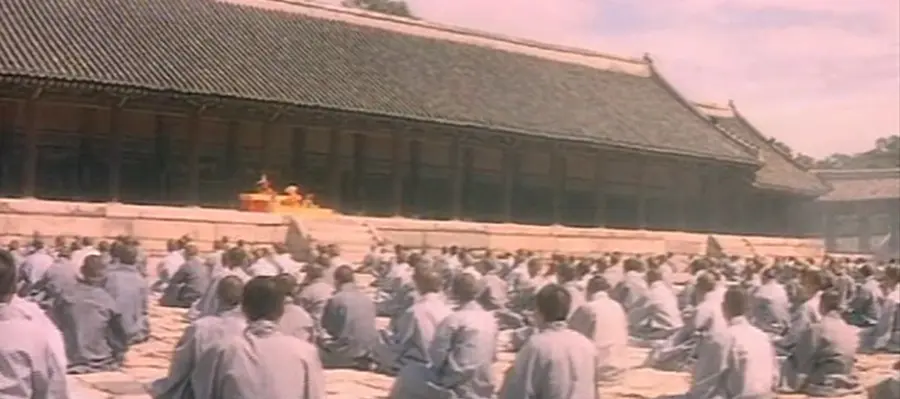
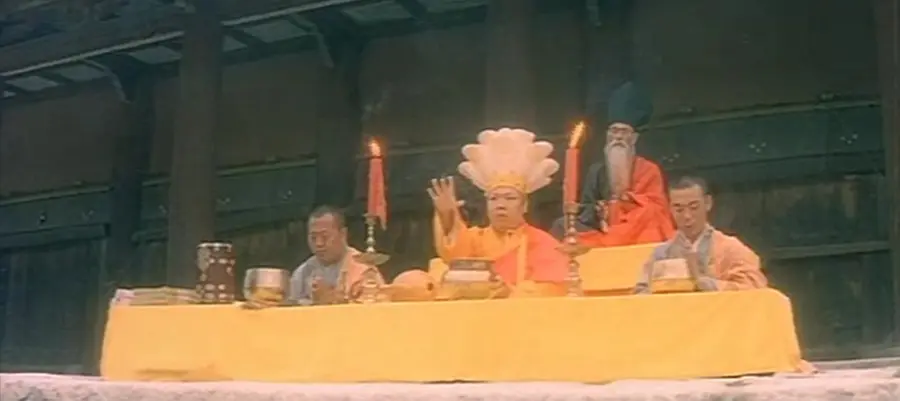
Jongmyo appears as the most important place where the 'ritual' is performed in both films. Ho Kim-jun was captivated by the long horizon of 101 meters of Jongmyo's main hall, which is so long that the end is not visible, and the vast courtyard. Throughout the film, the diverse movements and rhythms of the characters reveal the collision of desires, and by the end, the overwhelming horizontal sense of space in Jongmyo filled with monks reaches a state where the climax's confusion is resolved. In his interview book, he stated about Jongmyo, "It is the largest architectural structure I found in Korea," and the long horizontal line of symmetry fits perfectly into the order of space he pursued. He also mentioned that he liked how such cultural heritage was "gathered in Seoul." He spoke about the charm of that compactness, where you can see this from there and that from here. This compactness can also be confirmed in 〈K-Pop Demon Hunters〉 (2025), but it will describe the scenery heading towards Namsan Tower without particularly blocking anything, centered around Jonggak, Jongno, Gwanghwamun, Myeongdong, and Chungmuro. The overwhelming horizontal order that Jongmyo shows is completed when the gaze moves to Namsan without discomfort. It is not created alone but is a sense of space created in harmony with the surroundings, and in this aspect, Ho Kim-jun is likely the director who captured the geographical and aesthetic fascination of Jongmyo in Seoul with the most sincere gaze.
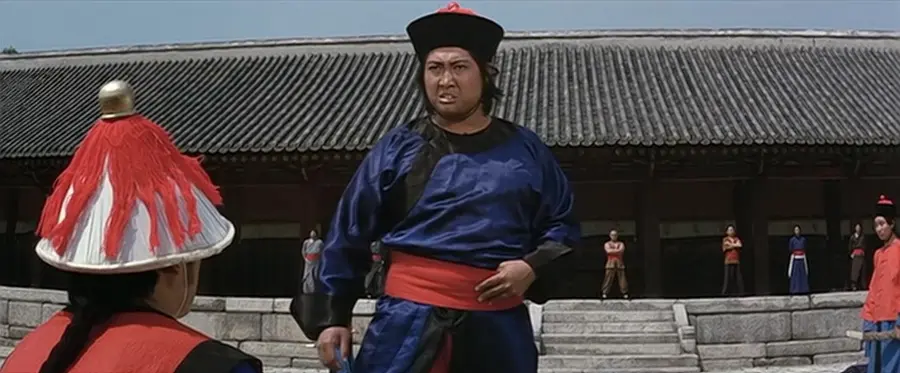
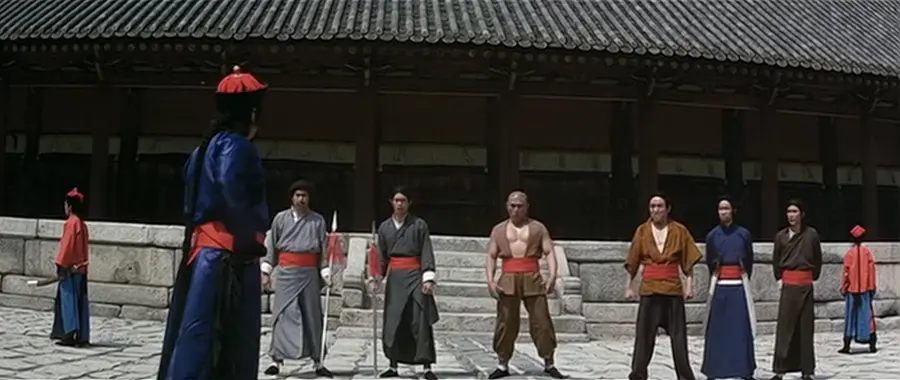
Jongmyo also appears in the martial arts film 〈Shaolin Temple〉 (1976) made by director John Woo, who is famous for 〈A Better Tomorrow〉 (1986) and 〈The Killer〉 (1989) in the early stages of his career. Released in Korea under the title 〈The Shaolin Temple〉, it tells the story of people who gathered to eliminate the traitor Shek So-bong (played by Jeon Jun) who came from Shaolin Temple and gained an official position in the Qing Dynasty. The protagonist is played by the then-famous martial artist Donnie Yen, and Jackie Chan appears as the brother who lost his brother to So-bong and dreams of revenge. This film is also notable for being one of the most significant works featuring Jackie Chan before his double eyelid surgery, and Sammo Hung also appears as So-bong's henchman, while the actor Yuen Biao, who cannot be separated from them, appears in a minor role as someone who gets shot by an arrow. To put it bluntly, in this film, Jongmyo can be seen as a substitute for the Forbidden City in Beijing. The overwhelming sense of space of Jongmyo mentioned earlier appears as the residence of the highest authority. Here, Sammo Hung gathers all the masters of the martial arts world to eliminate dangerous individuals.
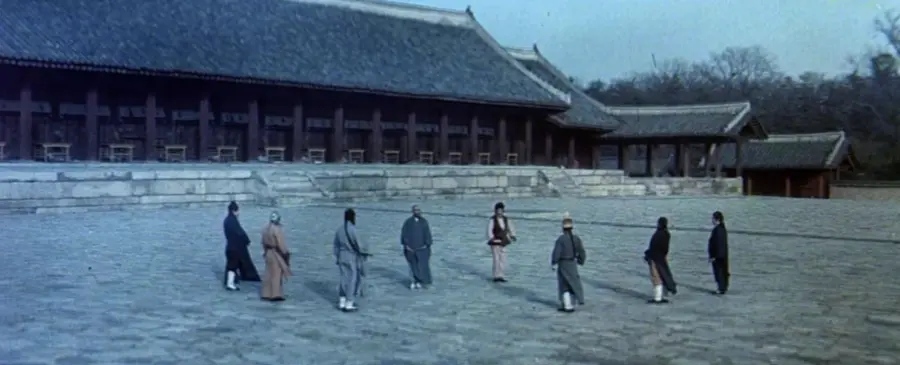
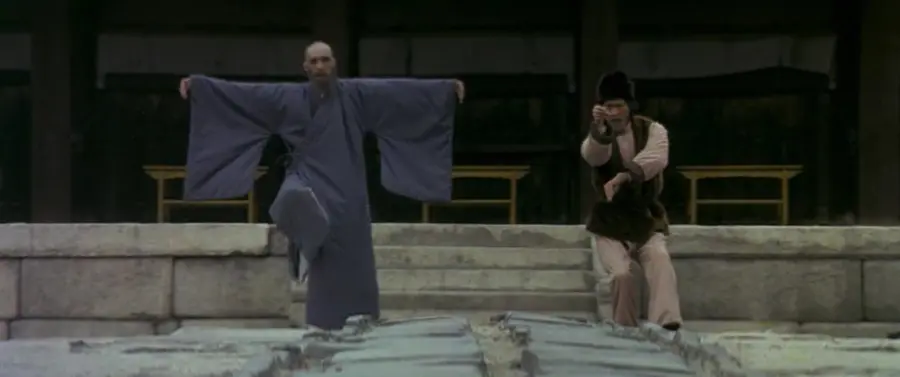
Jackie Chan, who appeared in countless Hong Kong co-productions at the time, also played the lead role in 〈The Eight Diagram Pole Fighter〉 (1978), which also features Jongmyo. Released in Korea as 〈The Eight Diagram Pole Fighter〉 and introduced on TV as 〈The Secret of the Shaolin Temple〉, 〈The Eight Diagram Pole Fighter〉 is one of the most entertaining films among Jackie Chan's martial arts films released in the same year as 〈Drunken Master〉 and 〈The Fearless Hyena〉. In the introduction of 〈The Eight Diagram Pole Fighter〉, where the final villain appears, Jongmyo serves as the place where the leaders of the Eight Great Schools of Chinese martial arts gather to hold a meeting and compete in harmony. It is indeed a scene that showcases the dignity brought by the space of Jongmyo well.
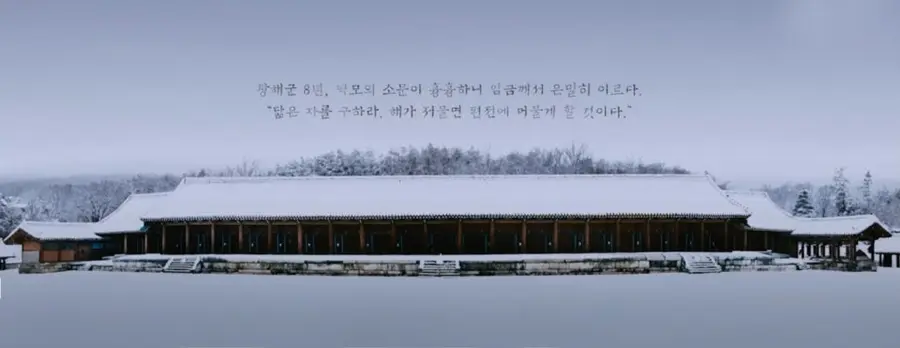
Of course, all of this is about the past when cultural heritage management was not properly conducted. In our film 〈Masquerade〉 (2012), the snowy Jongmyo appears in the introduction, but now filming cannot be conducted at Jongmyo, so we purchased and used the works of a photographer. From the perspective of cultural heritage management, filming movies at Jongmyo, like the aforementioned Hong Kong films, is no longer possible. Nevertheless, what can be gained from films made in such an era is that the value of the sense of space that Jongmyo possesses is not maintained by Jongmyo itself but is achieved in harmony with the surroundings. This can be seen in 〈Shaolin Temple〉, where a soldier runs from the entrance to Jongmyo to deliver news to Sammo Hung. Since modern buildings outside are also visible, it was filmed moderately from the entrance, capturing the vast courtyard and the horizontal walls as they are.
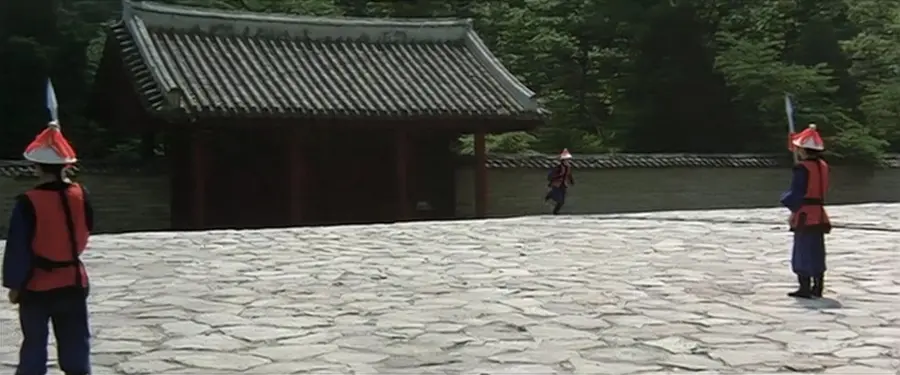
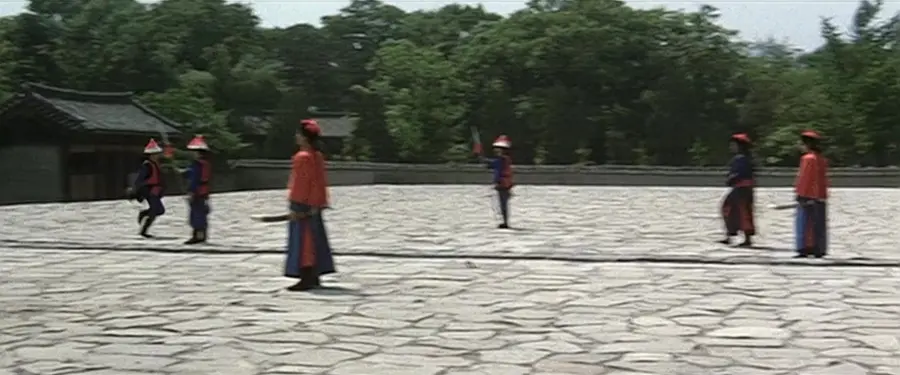
As a historical drama, it is natural that it cannot capture the modern landscape in front, but if we assume that there are towering high-rise buildings in front of it, that overwhelming horizontal aesthetics would become a bubble. The reason why Ho Kim-jun and John Woo did not capture the outside scenery from Jongmyo is that they could not erase some modern buildings, including Namsan Tower, with CG. If only Namsan were visible, they would have naturally shown the opposite side as well. This thirst can be felt in the running scene of the soldier in 〈Shaolin Temple〉 mentioned earlier. We must understand why Ho Kim-jun referred to Jongmyo, which is merely one floor high, as an 'immensely gigantic architectural structure'. It is not just about looking at 'there', but also about looking from 'there', which together completes the 'view'.
![[Joo Seong-cheol's Locker] The Black Speaker of 'Sirat' and the Monolith of '2001: A Space Odyssey'](https://cdn.www.cineplay.co.kr/w400/q75/article-images/2026-02-23/01816f3a-b433-4072-887b-e760357e6cc7.jpg)
![[Joo Seong-cheol's Locker] The 'Canned Cart Camera' that Changed the History of World Cinema with 'Nouvelle Vague'](https://cdn.www.cineplay.co.kr/w400/q75/article-images/2026-01-27/563f1a4c-20b8-460b-8523-f31511911bd5.jpg)
![[Joo Sung-cheol's Locker] Ahn Sung-ki is Born, I am Ahn Sung-ki](https://cdn.www.cineplay.co.kr/w400/q75/article-images/2026-01-13/362be897-34af-4524-9a57-6b9935666a0a.jpg)
![[Jusungcheol’s Locker] Odyssey’s one-eyed giant Cyclops and Ray Harryhausen’s “The Seventh Voyage of Sinbad”](https://cdn.www.cineplay.co.kr/w400/q75/article-images/2026-08-10/5faf400e-cf0b-466c-a3d7-31a8bbb38075.jpg)
![[Joo Seong-cheol’s Locker] See ‘Hope’ Again Through the Driver-Grade Cap Joo Seong-cheol Wears While Racing Across Seong-gi Bridge in ‘The Yellow Sea’ and ‘Goksung’](https://cdn.www.cineplay.co.kr/w400/q75/article-images/2026-07-28/7bf74e36-337d-4fd0-8cec-b890f5604345.jpg)
![[Joo Sung-cheol’s Locker] Watching “Marty Supreme,” Recalling Yoon Nam-gyu’s Penholder Table Tennis Racket](https://cdn.www.cineplay.co.kr/w400/q75/article-images/2026-06-29/0dc02383-0dc9-4ea1-9de5-f1eaffbeb9b9.jpg)
![[Joo Seong-cheol's Locker] The King Lear of Korea and Japan, Lee Soon-jae and Nakadai Tatsuya, Two Masters Rest](https://cdn.www.cineplay.co.kr/w400/q75/article-images/2025-12-01/3e753af3-e8d5-41df-83cf-00e9ddfdaae7.jpg)
![[Joo Seong-cheol's Locker] When Trees Comfort Trees, the Cello of 'The Moment the Bell Rings' and 'Can't Help It'](https://cdn.www.cineplay.co.kr/w400/q75/article-images/2025-11-18/52034c54-93dc-4b4c-ac9f-5f9b7946fb23.jpg)
![[Joo Seong-cheol's Locker] What Beer Did Sergio (Benicio Del Toro) Always Carry in 'One Battle After Another'?](https://cdn.www.cineplay.co.kr/w400/q75/article-images/2025-11-04/0794fe08-e847-46a1-ba4c-445f814803a8.jpg)
![[Chu Sung-cheol’s Lockers] Who Spat on Leslie Cheung in “Farewell My Concubine”?](https://cdn.www.cineplay.co.kr/w400/q75/article-images/2026-04-06/7b608cd9-af6c-4c1d-8e87-38c2d2619d55.jpg)
![[Joo Seong-cheol’s Locker] Do You Know the Origin of Woody in “Toy Story”?](https://cdn.www.cineplay.co.kr/w400/q75/article-images/2026-06-16/eb2c5055-d2de-4464-b9e2-eceeca8c7759.jpg)
![[Joo Seong-cheol’s Lockers] Lee Cronin’s The Mummy and Murderous People Season 2 — and a Scorpion Jacket That Feels Like the Rise of Drive](https://cdn.www.cineplay.co.kr/w400/q75/article-images/2026-04-20/1df79cf4-44ef-48e4-a6b4-46f6e35c4eb5.jpg)
![[Joo Seong-cheol's Locker] Tony Leung Sometimes Wants to Hold an Ashtray.](https://cdn.www.cineplay.co.kr/w400/q75/article-images/2026-02-09/8b9ac9f0-6899-4ce2-a562-5594a5b06d61.jpg)
![[Joo Sung-chul's Locker] What Are the Improvised Explosive Devices (IEDs) in 'Warfare' and 'The Hurt Locker'?](https://cdn.www.cineplay.co.kr/w400/q75/article-images/2026-08-24/ae200e60-2be9-478e-8ab4-72a860903979.jpg)
![[Joo Seong-cheol’s Locker] Zombie Things That Don’t Flinch Even When Shot: Korea’s First Zombie Film, “Kwe-si” (1981)](https://cdn.www.cineplay.co.kr/w400/q75/article-images/2026-06-01/26c56ce7-1ddb-46bd-ae67-f71a1ba9e276.jpg)
![[Joo Seong-cheol’s Locker] David’s Stone That Took Down Goliath, “David” All the Way Through](https://cdn.www.cineplay.co.kr/w400/q75/article-images/2026-07-13/524bb041-0e4e-4f59-824b-21d2f7df60a9.jpg)
![[Joo Sung-chul's Locker] If it's hard to visit Cheongnyeongpo of Deposed King Danjong, head to Geumseongdang of Prince Geumseong!](https://cdn.www.cineplay.co.kr/w400/q75/article-images/2026-03-10/7ddd3634-6a13-4eef-870c-e4e6dbcdac04.jpg)
![[Joo Seong-cheol’s Lockers] The Great Dancer Turned Film Director Summoned by “Michael”: Bob Fosse’s “All That Jazz”](https://cdn.www.cineplay.co.kr/w400/q75/article-images/2026-05-18/922af142-be9f-4f1c-98d1-4a7a6667943c.jpg)


![[Chua-young's Music Box] The Meta Representation of Subculture 'Cosmic Princess Kaguya!' with 'World Is Mine' and 'Reply'](https://cdn.www.cineplay.co.kr/w160/q75/article-images/2026-02-12/9f0aef62-9c40-4e9c-807b-b7fdecafd50a.jpg)
댓글 (0)
댓글 작성
댓글을 작성하려면 로그인이 필요합니다.
로그인하기