


Director Park Gun-ho of 〈Honor〉 revealed the reason for casting Lee Na-young.
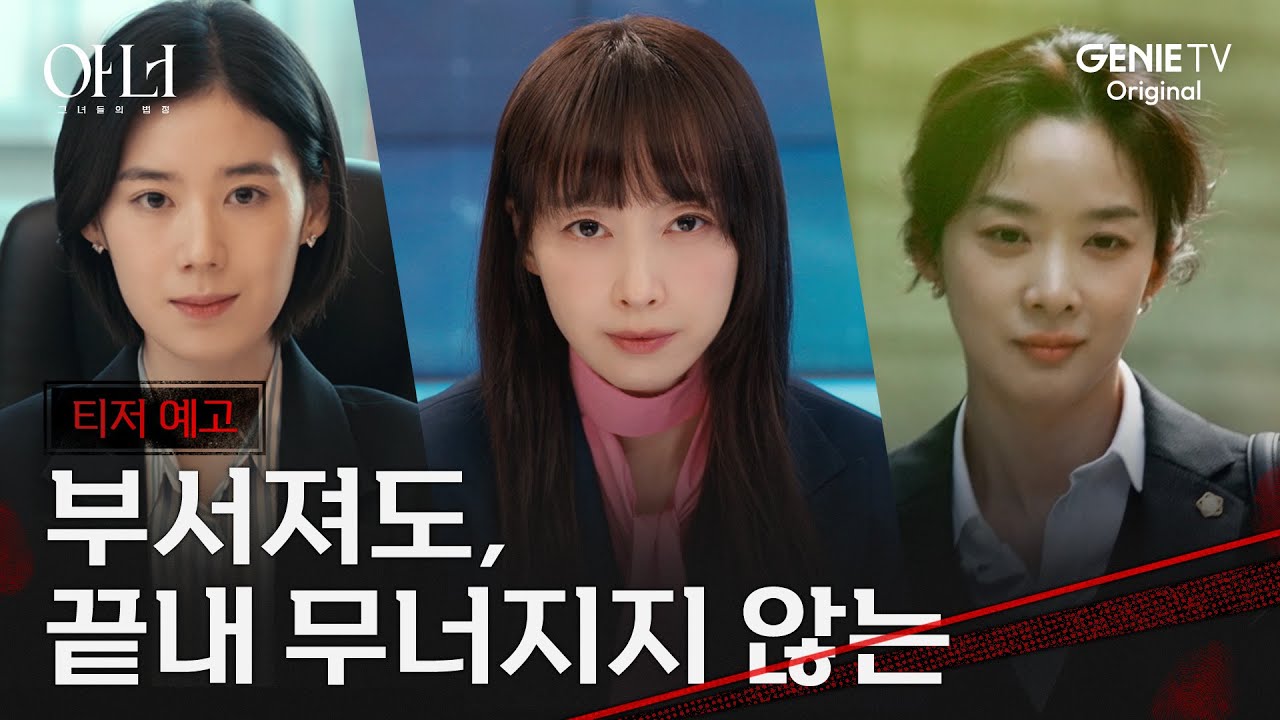
As ENA's new Monday-Tuesday drama 〈Honor: Their Court〉 (hereafter 〈Honor〉) is set to premiere on February 2, Director Park Gun-ho addressed viewers' curiosity. 〈Honor〉 is a mystery drama about three female lawyers confronting a massive scandal from the past head-on.
Director Park Gun-ho shared his thoughts on working with Lee Na-young, Jung Eun-chae, and Lee Cheong-ah, stating, "Each of the three actors has a different energy, but when together, they naturally form a combination that feels like colleagues who have worked together for 20 years," and added, "Casting these three actors as friends was an excellent choice."
Below is Director Park Gun-ho's Q&A.
Q1. What kind of drama is 〈Honor〉? As a director, what charm did you feel?
I believe 〈Honor〉, while cloaked in mystery, fundamentally questions what honor is and how far one should go to uphold their beliefs. As the characters pursue the truth, they encounter moments where the values they have believed in are shaken, and I wanted to capture that fracture delicately through direction. Above all, I found it appealing that this story could be pushed forward from the perspective of three women. I felt that the tension and energy that arise when three lawyers with different temperatures and textures face a shared past could pose dramatic questions that are essential at this moment.
Q2. Compared to existing courtroom dramas, what differentiates 〈Honor〉?
It differs from existing courtroom dramas in that it leaves questions even after legal judgments. In 〈Honor〉, the courtroom is less a stage for determining right and wrong, and more a space where characters must prove their own pasts and beliefs. It is crucial to consider whose honor one's choices are protecting. Therefore, I focused on the uncomfortable aftertaste that comes after the case is resolved. Another differentiating factor is that it discusses responsibility and attitude. Thus, it does not simplify the relationships of the characters into a mere good vs. evil framework, but rather follows the burdens each must bear and their subsequent choices.
Q3. What are your thoughts on working with Lee Na-young, Jung Eun-chae, and Lee Cheong-ah? What was the reason for their casting?
I thought 〈Honor〉 was a work where the 'density of relationships' is important. Each of the three actors has a different energy, but together they form a combination that naturally persuades as if they have been colleagues for 20 years, and above all, the synergy of the three images was excellent. I had wanted to work with Lee Na-young for a long time, and I particularly felt that the emotional depth and inner conflict required by the character aligned well with her filmography. Jung Eun-chae has the ability to capture the delicate flow of emotions and can express the leader role that guides the three friends better than anyone. Lee Cheong-ah possesses a unique strength that can carry both the weight and charm of the character, making her a perfect fit for the role. I believe casting these three actors as friends was an excellent choice.
Q4. 〈Honor〉 is based on a Swedish drama of the same name. What are the viewing points and enhancements in the Korean version?
First, the density of relationships. While the original is a mystery with a strong focus on events and structure, the Korean version delves much deeper into the layers of time and emotions shared by the three characters. It does not consume the pasts of the three lawyers as mere plot devices but focuses on emotionally following how this relationship has changed and distorted over the 20 years.
A key enhancement is the social context. I believe the way scandals operate in Korean society, especially the gaze and stigma imposed on women, has a different texture than the original. Therefore, I aimed to portray the pressure of reputation and silence that characters must bear after the incident more three-dimensionally than the incident itself.
Finally, the aspect I was most conscious of as a director was the attitude of not presenting answers. While respecting the structural completeness of the original, the Korean version of 〈Honor〉 does not easily judge whether the characters' choices are right or wrong. I believe leaving space for each to reach different conclusions based on their experiences and standards is the most important viewing point.
Q5. What is the true meaning of the drama's title 〈Honor〉? What message do you want to convey through the work?
The three protagonists struggle to uphold their honor in different ways, but in the process, they sometimes compromise, turn away, and deceive themselves. Rather than judging their choices, 〈Honor〉 aims to shed light on the process by which humans reduce honor from a 'value to uphold' to a 'burden to bear.' And I wanted to convey that the moment of putting down that heavy burden requires the greatest courage. Thus, I aimed to deliver the ultimate message of redefining the concept of 'recovery.' Recovery does not mean complete healing or forgiveness. It is closer to choosing to live again despite the past. I believe the point the three characters reach after passing through a long tunnel is not a peaceful state where all problems are resolved, but a mental position where they no longer need to run away.




댓글 (0)
댓글 작성
댓글을 작성하려면 로그인이 필요합니다.
로그인하기