


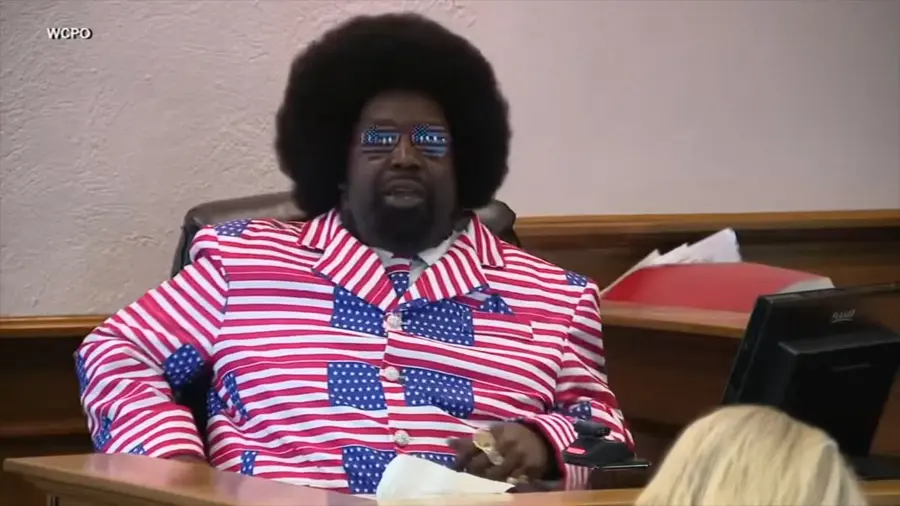
American rapper Afroman (real name: Joseph Foreman), who was sued for mocking sheriffs who raided his home with his songs and merchandise, received overwhelming support from a jury in a civil trial, resulting in a decisive victory. This ruling is interpreted as prioritizing citizens' 'freedom of expression' over the right of public figures exposed during law enforcement actions, causing a significant stir in American society.
$3.9 Million Lawsuit… Jury Dismisses All Claims
On the 18th (local time), a jury at the Adams County Court in Ohio found in favor of Afroman, ruling against the defamation and right of publicity lawsuit filed by 7 representatives from the sheriff's office.
The plaintiffs claimed that Afroman used their faces and names without permission in his hit music video 'Lemon Pound Cake' and merchandise like t-shirts, causing them mental anguish, and demanded a total of $3.9 million (about 5.2 billion KRW) in damages. However, the jury rejected all of their claims.
"The Raid Itself Was Wrong"… Afroman's Logical Counterattack
The incident began in the summer of 2022 with a police raid on Afroman's home over drug and kidnapping allegations. Afroman was exonerated from any wrongdoing, but he claimed that the raid resulted in damage to his front door and some missing cash that had been seized.
Afroman testified, "If they hadn't wrongly searched my house, I wouldn't have known their names, and the song wouldn't have existed." He explained that he created satirical content featuring the sheriffs captured on security cameras to generate revenue for repairing the damaged door and surveillance equipment.
Freedom of Expression vs. Protection of Personality Rights… Intense Debate in Court
The trial involved heated discussions on the line between artistic satire and actual defamation. The female representative for the plaintiffs tearfully recounted her suffering due to a parody video that sexually demeaned her, while the defense lawyer criticized Afroman's actions as "cold indifference to the consequences."
On the other hand, Afroman's attorney clarified that this trial was not about judging personal preference regarding lyrics. He emphasized that Afroman's performance falls under artistic exaggeration and satire, and the public does not interpret it as literal truth. The jury also determined that Afroman's actions were within the scope of legitimate criticism protected by the First Amendment.
Sharing Victory Video on Social Media… "Victory for Artistic Critique"
Immediately after the ruling, Afroman celebrated his victory by posting a video of the verdict announcement on his social media. This ruling is seen as an important precedent regarding the extent to which a public official's image can be used as material for artistic criticism while still being protected.
However, there are voices pointing out that this victory does not grant Afroman a moral alibi for all his provocative expressions. The balance between freedom of expression and personal rights is expected to remain a hot topic in American pop culture and the legal arena in the future.








![[Culture&] BTS Gwanghwamun Concert Approaching… 'ARMY Bomb' Scarcity Fetching Up to 300,000 Won](https://cdn.www.cineplay.co.kr/w160/q75/article-images/2026-03-18/14f55d95-4c95-48bf-973b-4e57c9b7554e.jpg)


![[Photo &] Val Kilmer Resurrected by AI… Meeting Audiences in the Independent Film 'As Deep As The Grave'](https://cdn.www.cineplay.co.kr/w160/q75/article-images/2026-03-19/f888f2ce-5da9-4ab1-80b0-9abf582f74ab.jpg)
![[Culture&] BTS Complete Group Comeback D-1, Grand Return in 'Arirang' (ARIRANG) Title Track 'Swim' (SWIM) Teaser](https://cdn.www.cineplay.co.kr/w160/q75/article-images/2026-03-19/d9ce271b-0322-438d-9e8e-cb7505802c19.jpg)
댓글 (0)
댓글 작성
댓글을 작성하려면 로그인이 필요합니다.
로그인하기