



Han Ji-min should have just gone to a rotation-style speed dating event instead. In other words, if 〈Efficient Dating for Single Men and Women〉 were truly going to show “efficient dating” between unmarried men and women—exactly as that title promises—then this would have made sense.
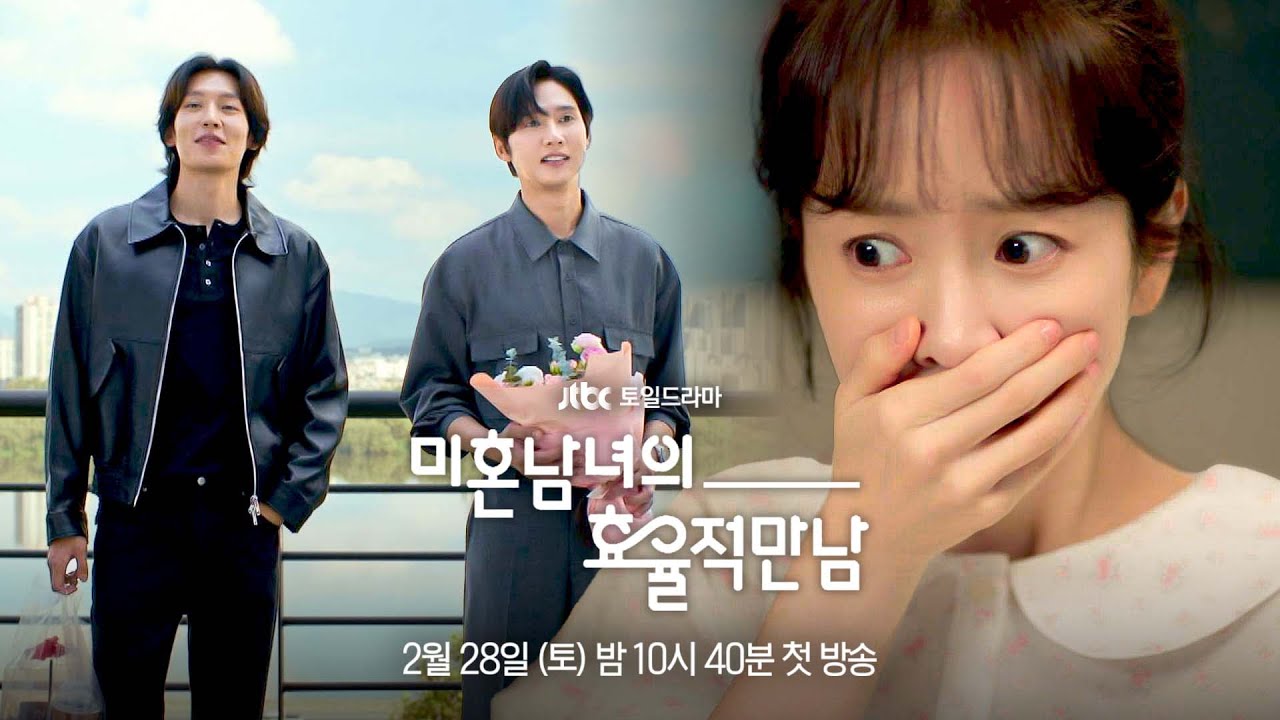
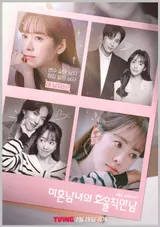
In the JTBC drama 〈Efficient Dating for Single Men and Women〉(hereinafter 〈unmarried men and women〉), it once again returns to safe, well-worn clichés disguised by a title that sounds radical. The kind of “unmarried men and women” K-dramas have long portrayed: people who never planned for love to happen, only for it to arrive by accident, like a traffic accident, then get flustered, deny it, doubt it—before finally accepting it. Yet at first glance, 〈unmarried men and women〉 looks like it escaped those clichés. It doesn’t portray love as something that happens “by accident.” Instead, the drama insists that love—above all else—requires something deliberate, an “efficient” approach. But here’s my question about the most important premise: Why do the protagonists suddenly feel they need love and marriage?
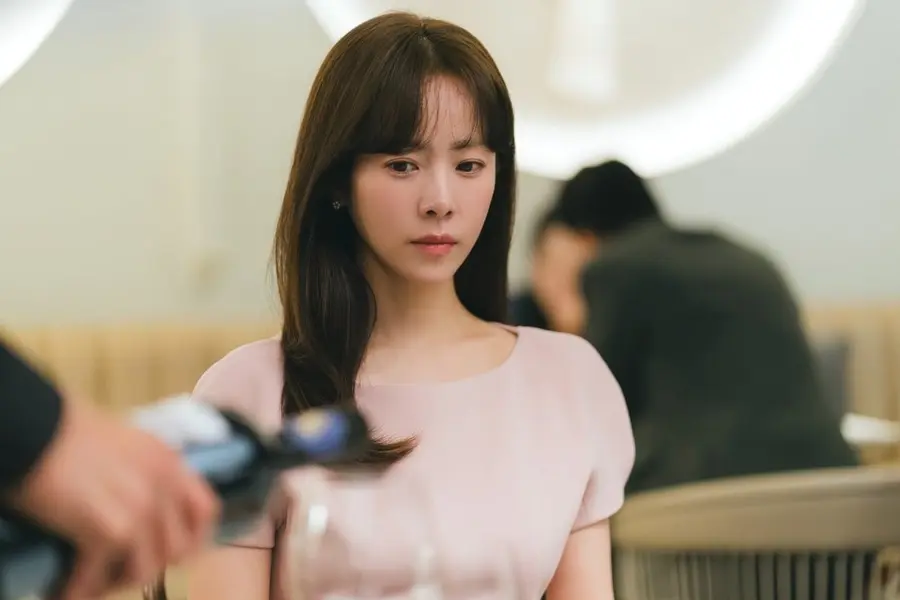
Love and marriage aren’t necessarily the same thing. You might want to fall in love but have no desire to get married, and you might want marriage but prefer stability over some blazing, passionate romance. So what about Uiyeong (Han Ji-min) in 〈Efficient Dating for Single Men and Women〉—does she want love, or does she want marriage? Of course, she might want both, but first, even that isn’t clear.
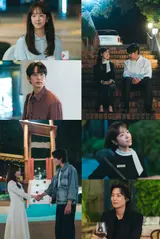
Back in college, Uiyeong runs into her junior, Do-hyeon (Shin Jae-ha), again at work after he confesses. They begin a “situationship” (she thinks they’re “dating,” only to realize she’s wrong) while she waits for him to confess again. In college, the reason Uiyeong turned down Do-hyeon was simple: “I was too overwhelmed just trying to live.” Then once she realizes Do-hyeon doesn’t like her, the situationship fizzles—when the connection suddenly snaps—and she throws herself into the matchmaking market.
Jeong-im (Kim Jeong-yeong), Uiyeong’s mother who works in insurance sales, tells her clients, “Wedding gifts? If you’re not planning to get married, you shouldn’t be doing pume-ae arrangements either. I’m not going to weddings these days, either. It’s because I don’t think I’ll be able to ‘get it back’ if my daughter can’t get married. That’s the whole point—overcoverage. It’s like an insurance policy you can’t afford to lose.” Hearing this, Uiyeong gets furious and tells her mother, “No—that’s not the same as raising children and simply waiting for the day you can harvest the result. That’s not what ‘dreams’ are for mothers, is it?”
So does she really get married just to collect wedding gifts? The passage above clearly shows that 〈unmarried men and women〉 compresses and reveals the older generation’s “othering” gaze toward the younger one. How about the episode one scene at a business trip location? Once Uiyeong realizes Do-hyeon doesn’t like her, she breaks down in tears at Cha Myung-in’s (Gil Hae-yeon) line: “You might think that anything old—whether it’s a car or something else—loses its value over time.” Then Uiyeong compares herself, too, to tea leaves she once believed had been “refined,” only to realize they were too old and had to be thrown away.
That mindset makes it seem like Uiyeong has decided she should go find love and get married because it’s the next logical step—and because she’s already past the “marriageable age” society keeps talking about. But within that decision, the real core of why Uiyeong wants love and why she wants marriage is missing. Why, in her twenties, did Uiyeong think even dating was a luxury—and then, in her mid-thirties, suddenly decide she wants to get married? As Uiyeong says, she’s “neither an anti-dating person nor someone who refuses marriage.” Someone like that likely has her own reasons for wanting both love and marriage. Yet the drama treats Uiyeong’s shift as “only natural” and moves on without digging any deeper.
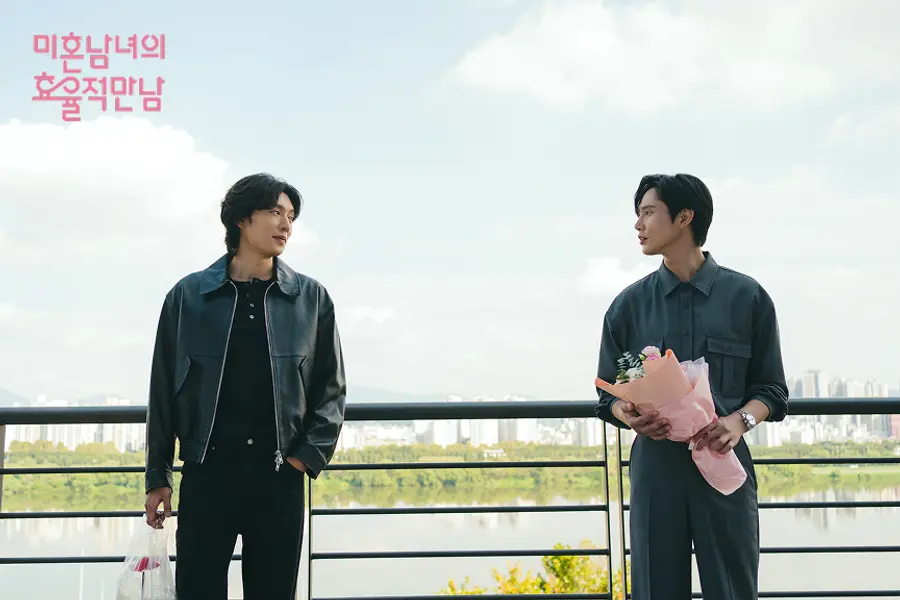
A wedding ceremony matters more than marriage. Love matters less than marriage. So, naturally, collecting wedding gifts matters more than love. It’s an obvious proposition, but even that “obvious” idea used to be tolerated as part of “social life.” Now we’re in an era where an individual’s “choice” is respected. Being at a marriageable age doesn’t necessarily mean you’re thinking about getting married. Today’s generation: the ones who want to marry marry, and the ones who don’t don’t. The outdated way of thinking—once dismissed as “deviating from so-called normality”—is gradually shifting toward respecting diverse lifestyles. It’s a generation that questions “the natural next steps.” Even if you follow the route the older generation labels “normality,” it’s still a generation that moves only after understanding for themselves why that path is needed.
“Efficient dating” is also part of how today’s unmarried men and women choose. Whether to marry or date, whether to go on a matchmaking date set up by an acquaintance, whether to meet completely unfamiliar people through an app, or whether to try rotation matchmaking (a format where singles gather and talk one-on-one in a rotation). Whether to join a marriage agency, whether to go to a “solo party” (a large-scale meetup), or whether to do a “solo run” (a marathon event where single men and women participate together), or a solo camp-style event like “I’m automatically single.” Today’s unmarried men and women actively create opportunities based on the kind of love and relationship they want. Of course, even if we set aside arguments about whether you can truly find love using quantitative standards like “specs”—that’s still the most inefficient approach of all: trying to do the most inefficient thing (falling in love) with specs and numbers.
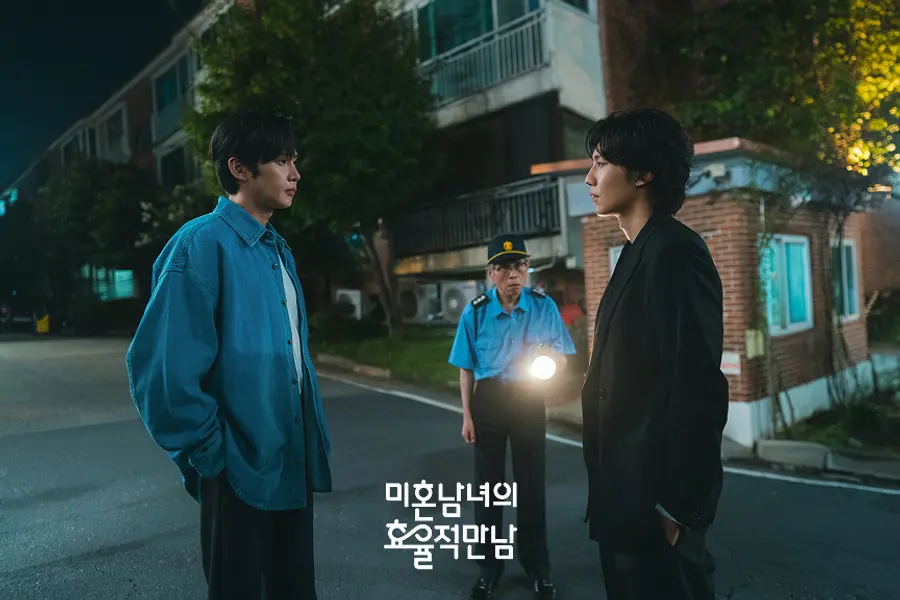
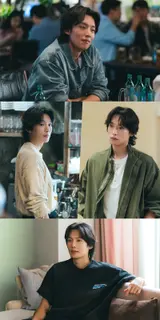
The “unmarried men and women” portrayed in the drama are thoroughly othered. Characters like Jeong Hyeon-min (Jeong Hye-seong), who’s open to dating and sex; Song Tae-seop (Park Seong-hoon), who asks on the first meeting, “Do you agree to a relationship with marriage as the premise?”; intern Sa-byeok (Kim So-hye), who works hard for a full-time position; and the romantic type Shin Ji-su (Lee Gi-taek), who works at cafes and bars while also acting in theater—these characters hover right around stereotypes that either typecast or romanticize “today’s young generation.” It’s as if the term “MZ generation” was invented to lock an entire generation into a single box, but the act of naming and defining young people—or “unmarried men and women”—was never truly something done by them. In the end, the drama falls back into a typical romance fantasy: two men fight over one woman, alternating between the “man who drives an expensive car” and the “man who drives a motorcycle.” In other words, 〈Efficient Dating for Single Men and Women〉 becomes a 〈Boys Over Flowers〉-style shell wearing the wrapper of a “MZ generation” label (an othering term). Ultimately, 〈unmarried men and women〉 feels closer to an older generation’s fantasy—one that imitates “the love rules of today’s youth”—aimed at the main viewing audience.
Meanwhile, the “efficiency” angle this drama pushes—even if it’s been flattened a bit—wasn’t wrong. Dating among today’s unmarried men and women really does resemble the job market. You act as each other’s interviewer and applicant, evaluating each other’s “specs.” Not only education level, workplace, salary, and whether you own property—but now even MBTI is part of the filtering criteria. The person arranging the matchmaking date, turned into a kind of headhunter, implicitly introduces graduates from Seoul’s four-year universities to other graduates from Seoul’s four-year universities. Having “the company you’ve heard the name of” is, by itself, a weight placed on a person, and the matchmaker—like a manager at a marriage agency—sorts out the “rank” of one’s occupation in a rough way and matches people who look “somewhat compatible” on paper. Otherwise it turns into “upward marriage” or “downward marriage” (a ridiculous coined phrase)—which is how people end up labeling it. After sifting through those conditions and specs, the decision right after the first date—whether to go on a second date or whether to pursue a third—reads like a pass/fail verdict.
So 〈unmarried men and women〉 should have delivered a paradox: trying to find love—an inefficient act—through the most efficient route, and exploring what “love” really is. Maybe the plot could have matched that original intent like this: Uiyeong uses “efficient dating” to “review” the people she meets by re-checking them “efficiently.” Who is this person—and what’s good about her? And what about that person—what’s good about him? Specs, conditions, emotional stability. After endlessly drafting Excel-like tables in her head, she would eventually realize that love can’t be measured by any single yardstick—and then she would begin to shape what kind of “love” she truly wants. Even though it sets up such a strong premise—“the paradox of unmarried men and women taking the most efficient route to carry out the most inefficient act”—the drama retreats into a safe fantasy, tangled in K-drama clichés and othering viewpoints, leaving a lingering sense of disappointment in how it handles that promise.
![[A Pinch by Kim Ji-yeon] Why “21st-Century Daegun’s Wife” (21st-Century Grand Prince Consort) Turned Out More Bland Than Expected](https://cdn.www.cineplay.co.kr/w400/q75/article-images/2026-05-06/1bf4aa40-57a5-4db8-b7f3-e3d3789b2f3b.jpg)

![[Photo &] Lee Gi-taek of “Never Married, Never Single” captivates Han Ji-min as a younger man, rising as a breakout romance lead](https://cdn.www.cineplay.co.kr/w160/q75/article-images/2026-04-06/a456b819-1958-44c8-a023-4c804fdaaed0.jpg)
댓글 (0)
댓글 작성
댓글을 작성하려면 로그인이 필요합니다.
로그인하기