



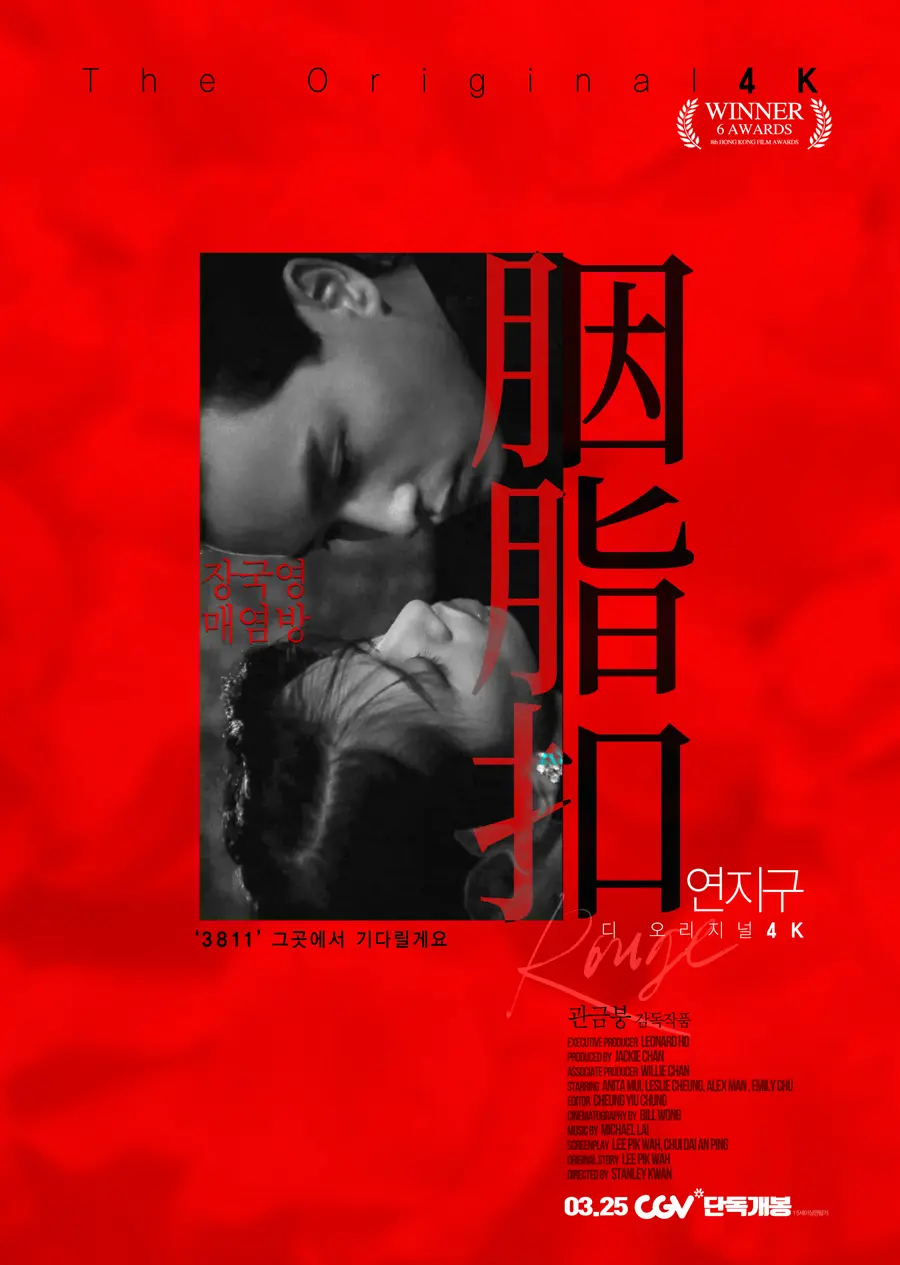
※ 〈Yeon-jigu〉 In-Depth Review continues from the first article.
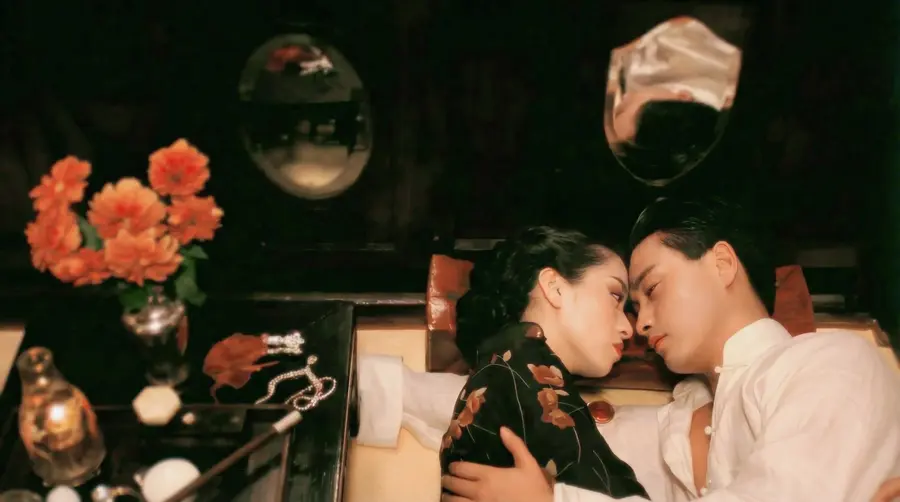
The final third act is 〈Liang Shanbo and Zhu Yingtai〉, a Yue Opera performance that Huayeh watches on the street. Director Yihanxang made a film adaptation of this story in 1962, and it became a huge hit. The story originally came from a Chinese folk legend, and Director Xuejing also remade it—casting Qiliuhng and Yang Caini to turn it into 〈The Lovers (Yangxiu)〉 (1994). 〈Liang Shanbo and Zhu Yingtai〉 is often called the “Chinese version of 〈Romeo and Juliet〉” in terms of unfulfilled love. It can also be regarded as the underlying inspiration for 〈Forbidden Love〉 (1994), which starred Tony Leung Chiu-wai and Yu Wen-yi.
The story goes like this. In a time when girls were not allowed to go to school to study, the young girl Zhu Yingtai disguises herself as a man and enters the academy. There, she meets Liang Shanbo, and the two study together, forging a deep friendship. Zhu Yingtai develops romantic feelings for Liang Shanbo, but Liang Shanbo, who doesn’t realize Zhu Yingtai is a woman, treats her only as a friend. Then, urged by her father, who wants to see his daughter, Zhu Yingtai suddenly has to return home. Only after Zhu Yingtai leaves does Liang Shanbo realize she is a woman. Liang Shanbo learns just how deeply he loved her—but by then it’s already too late, because her father plans to marry her off elsewhere. So the two are destined to part ways.
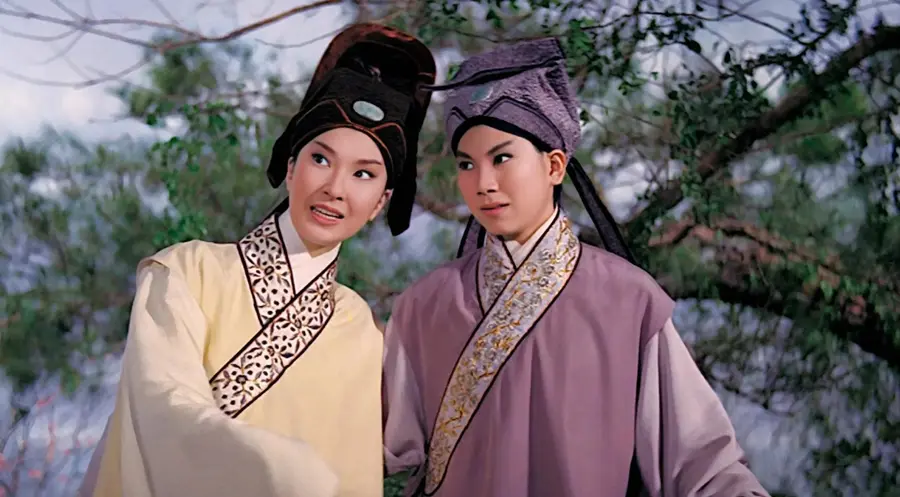
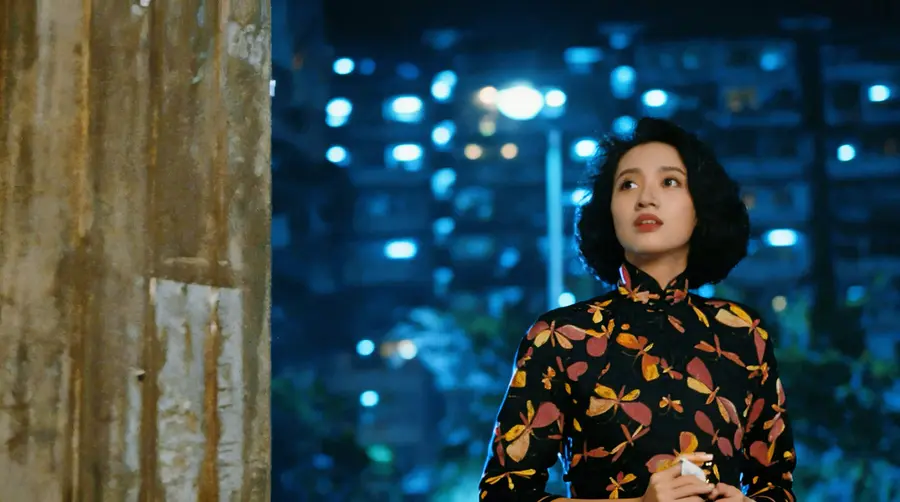
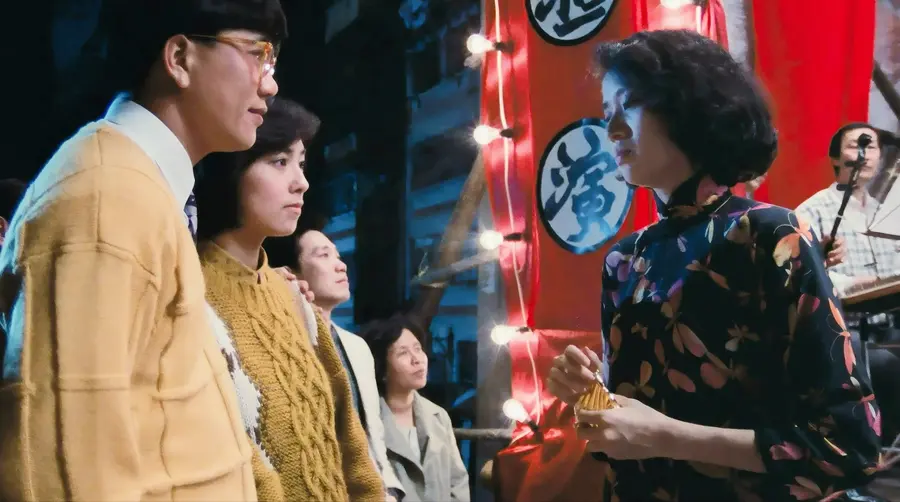
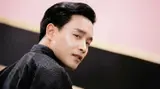
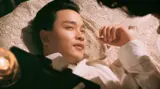
In 〈Yeon-jigu〉, the Yue Opera actor onstage sings while playing Liang Shanbo: “I grow old with no destined fate. The two of us separated on the lookout tower swallowed our tears. The tears falling like rain never stop until daybreak. In this empty room, like an icy prison, Sangbai is left alone, lonely. I suffered for love until my health was broken, and an irreparable longing took root.” He sings the feelings of an irreversible, sorrowful farewell. Then the cut changes: Jin Fang, playing Liang Shanbo, turns toward Huayeh and says, “Zhu Yingtai—no matter what, don’t answer the summons.” It probably means something like “Let’s start over again,” the same sentiment as what Tony Leung Chiu-wai said in 〈Happy Together〉 (1997). Maybe if Jin Fang of the past had continued growing as a Yue Opera performer, he could have, someday, ended up playing Liang Shanbo too. In the moment when he calls Huayeh “Zhu Yingtai” to her outside the stage, Tony Leung becomes Liang Shanbo, and Maggie Cheung becomes Zhu Yingtai. After that, he even became the protagonist of 〈Farewell My Concubine〉 (1993), but Tony Leung had always loved Yue Opera. Especially 〈Liang Shanbo and Zhu Yingtai〉—the two leading roles are often taken by women. In Director Yihanxang’s 〈Liang Shanbo and Zhu Yingtai〉 as well, two female actors—Napa and Naxi—played Liang Shanbo and Zhu Yingtai, respectively. So how could Tony Leung not feel glad—almost as if he’d become a great star, at least for a moment? In other words, 〈Yeon-jigu〉 shows a different side of the classic 〈Liang Shanbo and Zhu Yingtai〉 as portrayed by Tony Leung and Maggie Cheung. That deep meaning is hidden right here.
There’s one more person who helped bring Tony Leung Chiu-wai to mind through 〈Yeon-jigu〉. In the latter half of 〈Yeon-jigu〉, during a scene from the movie shoot, there was also the friendship-cameo presence of Director Yuyingying. Alongside her, action star Huiyinghong was very active in countless Shaw Brothers martial-arts films of the time, including 〈The Story of the Dragon King〉 (1981) and 〈A Chinese Ghost Story: The Movie〉 (1983). Back then, historical dramas that featured real ghosts—or even merely ghosts that looked like ghosts—were a way of symbolizing the reality that such things were rampant in the Hong Kong film industry. The contrast between the image of a real ghost Huayeh walking weakly and the scene of a fake ghost Huiyinghong soaring through the air while her robe sleeves flutter are like a postmodern masterpiece that 〈Yeon-jigu〉 shows between film and reality, between this world and the next.
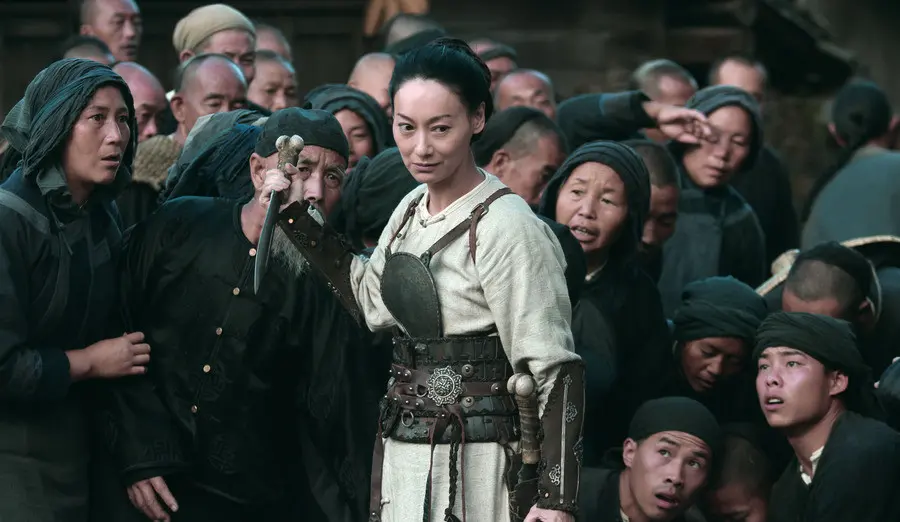
Ironically, even though Tony Leung Chiu-wai and Maggie Cheung no longer appear in new projects together, among the actors who appeared in 〈Yeon-jigu〉, it’s Huiyinghong who is still thriving. She spent a long period in stagnation as martial-arts films declined, but then in the 2010s, entering her 50s, she kept going into a new golden era. In 〈The Fate of the Mortal: The Chinese Ghost Bride〉 (2011), remade by Director Xiaowinxin, she played a tree demon. And in Director Jing Jiacheng’s 〈Martial Arts〉 (2011), starring Donnie Yen and Tang Wei, she ran after Donnie Yen and delivered an action performance once again. Then, long ago after 〈The Story of the Dragon King〉 (1982), she followed with 〈The End of Dawn〉 (2009) and 〈Sing Luck〉 (2016)—receiving Best Actress at Hong Kong’s most representative awards, the Hong Kong Film Awards, no fewer than three times. In the meantime, she also won Best Supporting Actress for 〈Jiangshi〉 (2013) and 〈Tracey〉 (2018). So it’s hard to argue she isn’t one of Hong Kong’s leading actresses today.
Long ago, when I went to the Busan International Film Festival with 〈The End of Dawn〉, I interviewed Huiyinghong and asked her about Tony Leung. She recalled, “Back then, Hong Kong cinema was in its golden age. Inside a huge set, it was common to split production into one set and two sets and shoot multiple different films. When shooting overlapped, it also happened a lot that we’d step out in the middle and eat together. Since so many movies were being made, I would see him all the time even if he didn’t appear in the same film. Every time she saw me, my brother would greet me warmly, calling me ‘older sister,’ and only show me his bright, cheerful side. That younger brother was Tony Leung Chiu-wai. His early death still hurts my heart so much.” That’s how April 1 of this year marks Tony Leung’s 23rd death anniversary. In other words, it’s the year that would have been his 70th birthday. Yes—if he had lived, he would have been in his seventies by now. Time really flies. That’s why 〈Yeon-jigu〉 feels even more poignant. Tony Leung passed away at 47, and in 〈Yeon-jigu〉, that age of his old-self role—he ultimately never reached it. He left us instead. What kind of feeling was he carrying at that time?

댓글 (0)
댓글 작성
댓글을 작성하려면 로그인이 필요합니다.
로그인하기