



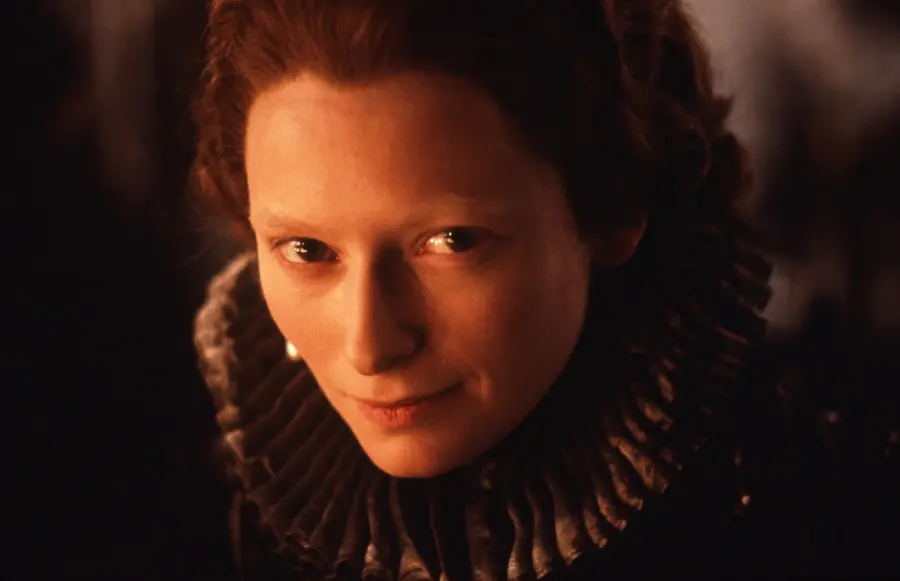
Tilda Swinton is an actress who seems like she just stepped out of a Renaissance painting. Usually, people describe actors with the phrase “untouchable,” but if I’m allowed to use that expression for only one person, I’d want it to be her. Is there anyone who could truly read what she’s feeling just by looking at Tilda Swinton’s expressions? Her face feels as if the sense of time and space has vanished; it’s artificial, like a wax doll. In other words, it’s a face with no shimmer or vitality—no trace of realism, not even the shine you’d expect from a living person.
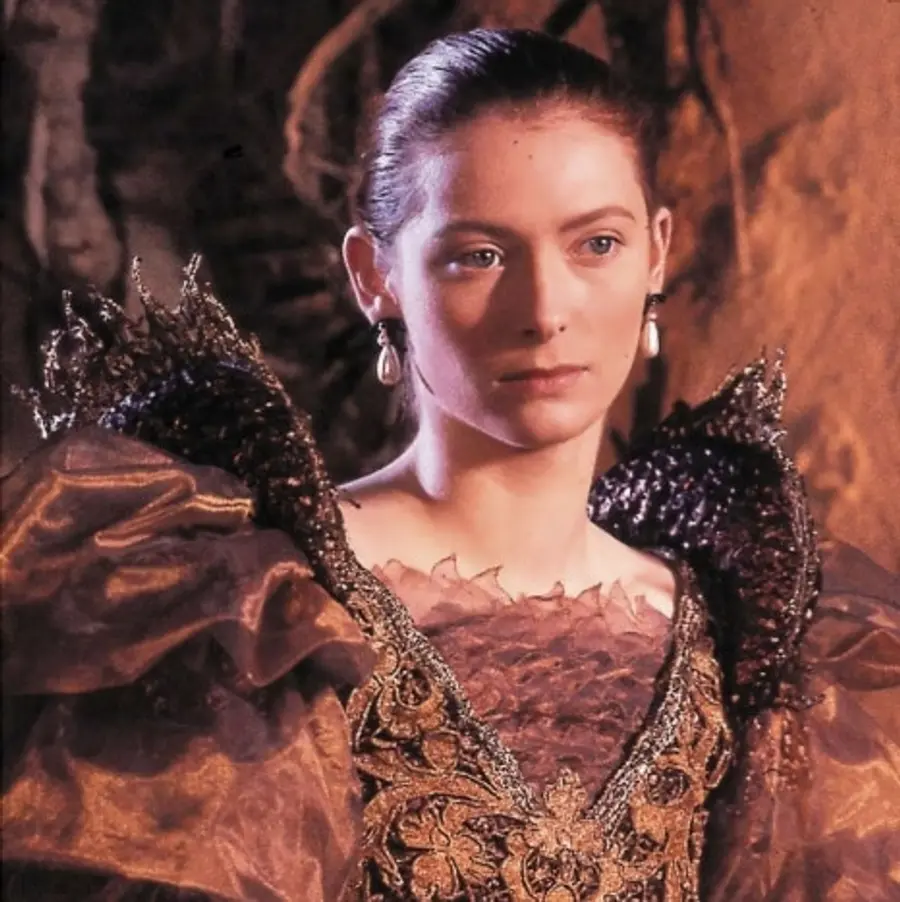
It’s also extremely symbolic that Derek Jarman’s film 〈Caravaggio〉 (1986), which reconstructs the life of the genius painter from the 16th century, is Tilda Swinton’s debut. A film that reimagines the life of Caravaggio, a genius painter of the 16th century. Old painter Caravaggio (Nigel Terry) recalls the past from his deathbed. Despite his heretical and disrespectful attitude, Caravaggio—who received patronage from nobles and a bishop thanks to his distinctive painting style—gets pulled into a love triangle between model Ranuccio (Sean Bean) and his lover Lena (Tilda Swinton). In an experimental form that stretches across the modern era and the Renaissance, the film brilliantly recreates Caravaggio’s representative paintings—defined by intense chiaroscuro contrasts and light—at their finest. It’s the moment Derek Jarman’s cinematic sensibility reaches its peak. And starting with 〈Caravaggio〉, and continuing with 〈The Fall of the British Empire〉 (1987), 〈Garden〉 (1990), 〈Edward II〉 (1991), and more—Derek Jarman is always right there. In a sense, Tilda Swinton’s fate is already decided. As soon as he appears on screen, exactly as Derek Jarman intended, in that world where aesthetic desire and sexual desire aren’t actually that far apart, lust evaporates in an instant.
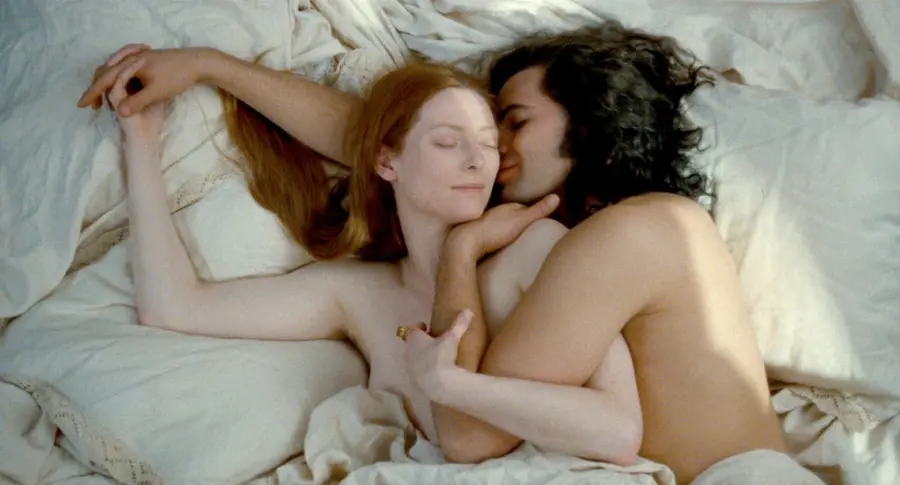
In 〈Orlando〉 (1992), he’s even a human being who moves between man and woman, living for 400 years. In 16th-century England, during the reign of Elizabeth I, the queen—who’s fallen for the beauty of Orlando (Tilda Swinton), a noble boy—orders: “Don’t ever grow old, and don’t ever die.” After that, through love, politics, war, and then love again, for a full 400 years, Orlando becomes a complete human who is neither man nor woman, and finally begins to write his own story. Always a true man and also a true woman, Orlando was a genderless character that represented the film culture of the 1990s, when concerns about gender were starting to take shape.
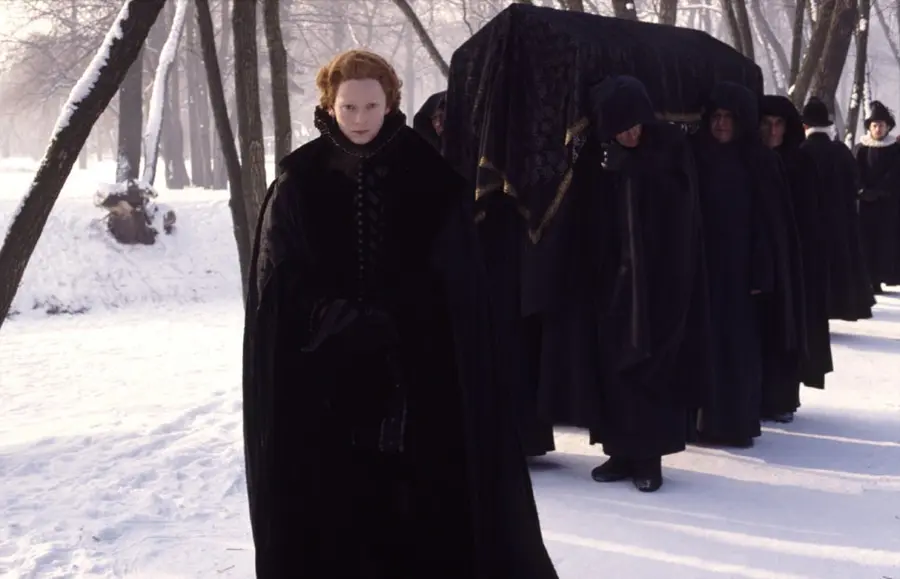
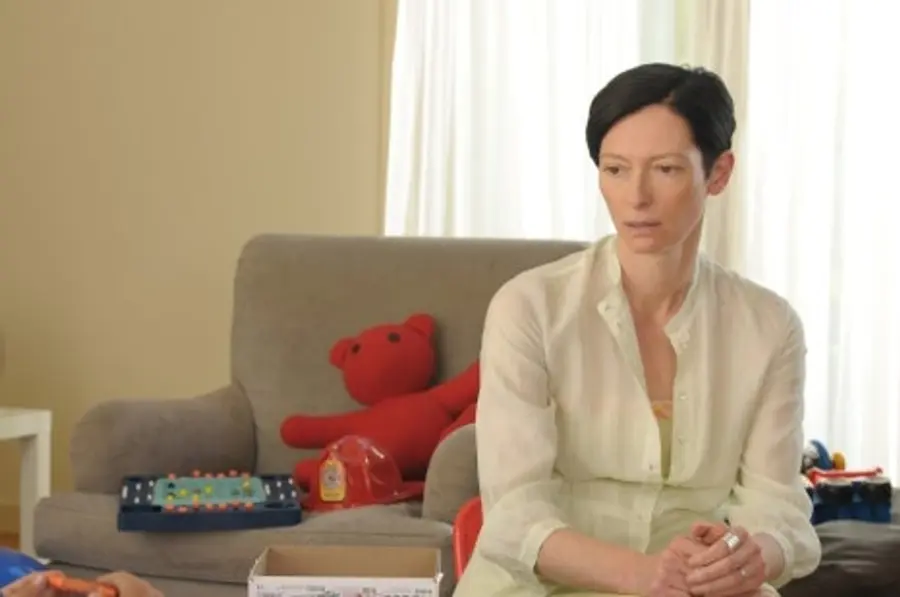
But what about 〈We Need to Talk About Kevin〉 (2011), after so much time has passed? When Eva (Tilda Swinton), a traveler who enjoys a free life, has a son, Kevin (Ezra Miller), her life flips 180 degrees. Eva’s life, which requires her to handle both work and parenting at the same time, gradually becomes more and more difficult with Kevin’s baffling rebellion. Eva tries to get closer to Kevin, who only opens up emotionally to her among the family members, but the more she tries, the more cunningly Kevin causes her pain. Years later, when Kevin has become a teenager, he commits the horrific act that will force Eva to carry alone for the rest of her life. As an actress worried about a strange maternal dilemma within her impossible relationship with her son, no other face besides Tilda Swinton easily comes to mind. Director Lynne Ramsay wanted Eva’s face to show no resentment toward her son—no, and not even any outcry about her own situation. That face, with pale skin that feels almost as if perspective can’t quite reach it, her eyes, and a mixture of silence and madness, isn’t so much “androgynous” as it is “a-sexual”—in a sense, beyond gender.
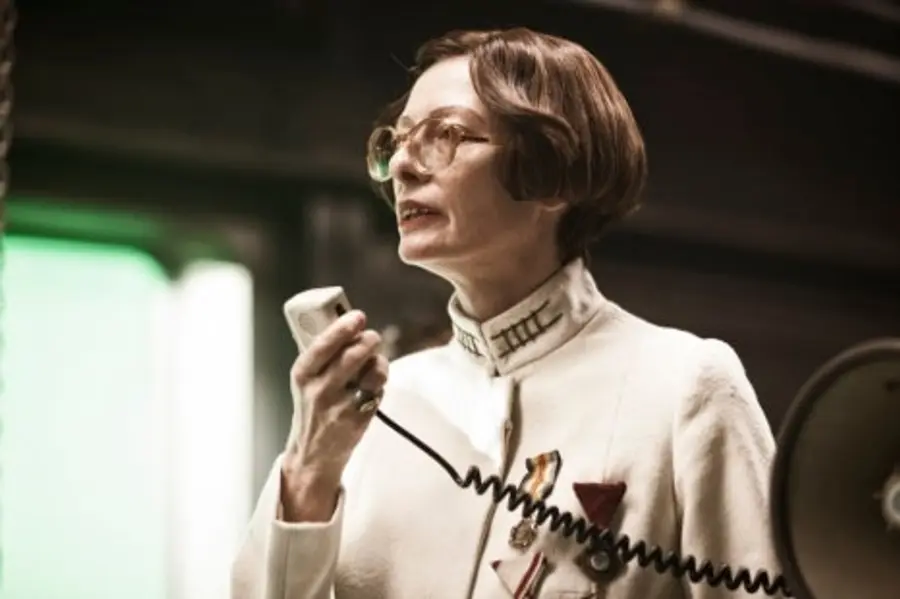
In 〈Snowpiercer〉 (2013), aside from the astonishing transformation into Prime Minister Mason (Tilda Swinton), wearing thick horn-rimmed glasses and dentures for buck teeth, Tilda Swinton is an actress who exudes an unmistakably dignified, aristocratic aura—yet the twist is that she’s actually from the aristocracy. She’s a member of the Swinton family, one of the oldest families in Scotland. Her father, a general in the army, received a knighthood, served as governor, and was an honoree of an order from the British Empire. Even her mother is also of aristocratic origin, having been granted the title “Lady.” It’s also well known that her close friend was the real-life friend of Princess Diana, the Queen of Wales. What’s more, the two were “best friends.” As instructed by the strict educational rules of her family, Tilda attended West Heath boarding school, far from home—and it was right there that she met Diana Spencer and became friends. Still, even though she must have been academically strong enough to earn “all As,” she didn’t seem satisfied with boarding school life. Later, after watching the 〈Harry Potter〉 series, she expressed discomfort, saying that watching those stories made her believe she could be happy with the way Hogwarts boarding students live—and that she might be planting fantasies about boarding school in young children. So, having received such strict aristocratic training, she eventually turned her life by volunteering in South Africa and Kenya. As a confined boarding student, she had finally seen the real “world” up to that point she couldn’t grasp. Filled with a strong desire for social change, she later joined the Communist Party when she entered Cambridge University—and afterward, she also joined the Scottish Socialists.
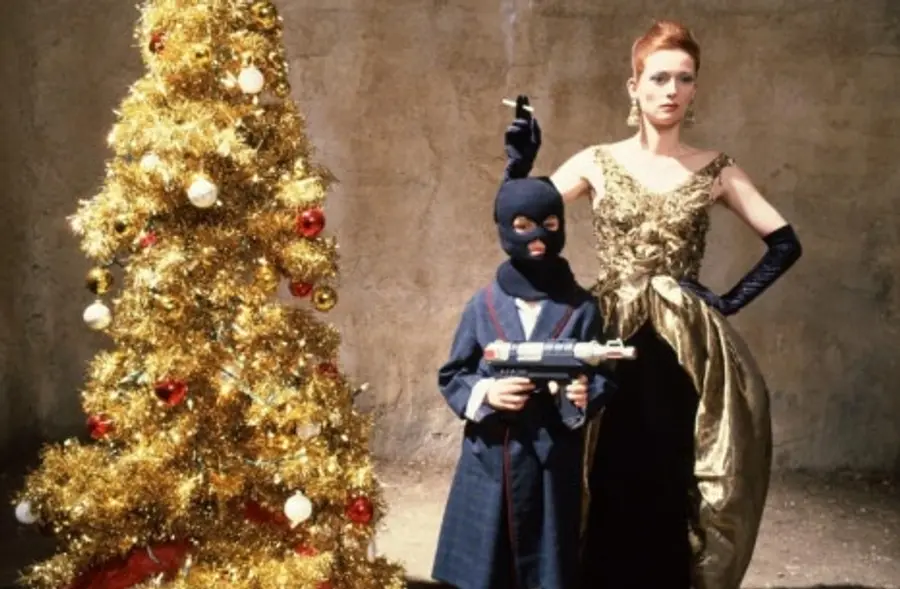
It’s also well known that Tilda Swinton is an actress who came from prestigious Cambridge. After finishing the earlier-mentioned charitable volunteer work in Africa, she returned and entered Cambridge University, where she dreamed of becoming a writer. But her passion for acting was so intense that her dream of writing shifted into a dream of acting, and she joined a drama troupe. For reference, some famous actors who also hail from Cambridge include Ian McKellen, who played “Gandalf” in the 〈The Lord of the Rings〉 series, Rachel Weisz, and Tom Hiddleston—famous for playing “Loki,” the brother of the superhero “Thor.” As for rivals from Oxford, there’s Hugh Grant and Kate Beckinsale, along with Rowan Atkinson, who played “Mr. Bean.” After graduating, she joined the “Royal Shakespeare Company,” which has produced some of the best actors in the UK. However, among prominent male actors—such as Kenneth Branagh, Gary Oldman, and Daniel Day-Lewis—she didn’t really stand out. The strong, distinctive formal style of theater just didn’t match her personality.
▶ The article about 〈Orlando〉 Tilda Swinton continues as the second installment.



댓글 (0)
댓글 작성
댓글을 작성하려면 로그인이 필요합니다.
로그인하기