



▶ The article about the re-release of〈〉Orlando〈〉 and Tilda Swinton continues from the first installment.
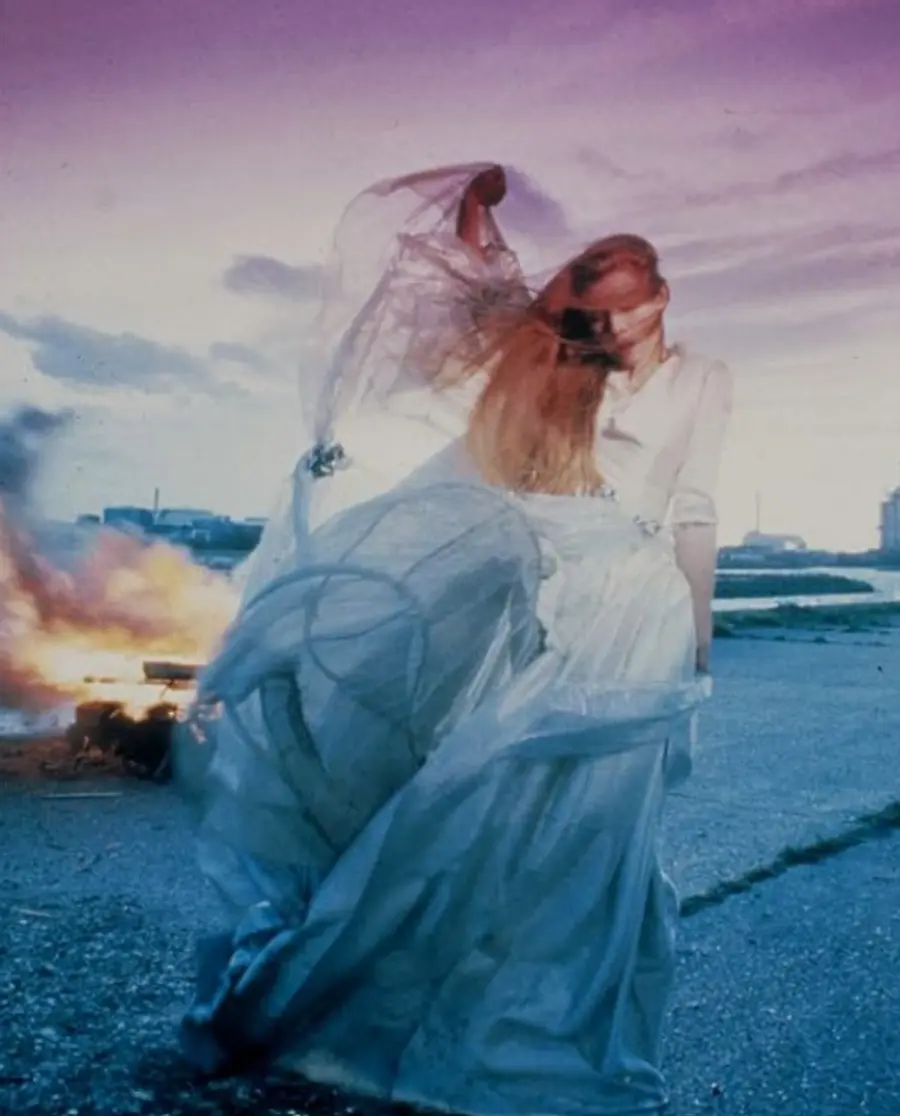

Meeting Derek Jarman, the maverick of British film, is surprisingly meaningful. Ever since Derek Jarman debuted with〈〉Caravaggio〈〉, he appeared in eight consecutive films. The main reason Derek Jarman was drawn to Tilda Swinton, from the outset, was her aristocratic look—she was, in effect, the “made-to-order” actress for conveying the British class society he wanted to criticize. In〈〉Caravaggio〈〉, she gradually gained weight from a small role; by the time〈〉The Fall of the British Empire〈〉, her scene of wearing a white dress and screaming is intensely powerful. After that, through〈〉Edward II〈〉, she even won Best Actress at the Venice Film Festival. After Derek Jarman—who, at the time, was not only a close colleague but also a mentor who helped expand Tilda Swinton’s artistic possibilities—passed away from AIDS in 1994, she went through more than a year of artistic wandering with no work. From then on, she also developed her standard for choosing directors: she works only with people she can “connect with” on a personal level. In her words, “It’s a habit I formed from working with only the director who I felt connected to the moment I debuted, and staying with them continuously.”

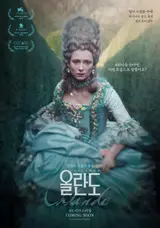
The film that first introduced Korean audiences to Tilda Swinton’s uniquely distinctive characters and image was, of course,〈〉Orlando〈〉, in which she appeared after〈〉Edward II〈〉—the film that put her presence on the world map through a Venice International Film Festival win. With her tall 180-centimeter frame, striking blonde hair, and pale face—along with her prominent cheekbones and intense gaze—it would be hard to argue that her image wasn’t built for a single role. Many outlets likened her to a “cross-dressing woman” or a “cyborg.” But in Peter Wollen’s〈〉Friendships of Death〈〉(1987), she plays a robot character who comes from outer space, and in〈〉Men to Men〈〉(1987), she plays a woman who survives the Nazi Germany era by living as a man using her late husband’s identity documents. At the 75th Berlin International Film Festival in 2025,〈〉Friendships of Death〈〉—selected by Tilda Swinton herself, which won the Honorary Golden Bear—was screened in the Special Gala section.


It was only natural, and it was precisely that distinctive, one-of-a-kind charm that later propelled her into Hollywood. Danny Boyle’s〈〉The Beach〈〉(2000), starring alongside Leonardo DiCaprio, was probably her first Hollywood studio film. DiCaprio plays the leader of a hippie community he stumbles upon by chance while traveling in Thailand—without Tilda Swinton’s uniquely specific image, that secretive, enclosed feeling of the community simply wouldn’t have come through. In〈〉Vanilla Sky〈〉(2001), she plays a mysterious woman who works for a company that manufactures life; in〈〉Adaptation〈〉(2002), she plays an alluring studio executive who asks Nicholas Cage to adapt a novel—both are small roles, but once you’ve seen them, you can’t forget. Meanwhile,〈〉Young Adam〈〉(2004) became a talking point for Ewan McGregor’s nude performance, yet many people actually discovered a new side of Tilda Swinton there. If she had often taken roles defined by attention-grabbing imagery, she’s different here—an entirely grounded, realistic woman. Ewan McGregor tempts her—she’s married—and the two share a secret affair. They aren’t just lovers: she’s also the owner of the boat they live on, and she’s a woman unafraid to want what she wants. In the end, she reveals her true nature.


The reason she later became widely known to the public was, naturally,〈〉The Chronicles of Narnia—The Lion, the Witch and the Wardrobe〈〉(2005), the first film that signaled the start of the〈〉The Chronicles of Narnia〈〉 series. It’s a movie that adds a “witch” image to a strong sense of individuality. The scene in which the all-white witch arrives riding a sled pulled by polar bears is unforgettable. And her definitive “witch” image is likely〈〉Constantine〈〉(2006), starring Keanu Reeves. Gabriel’s presence stands out as she naturally spreads her wings while speaking with Keanu Reeves in a quiet, intimate conversation—then, at the end, she shows what she really is. It must be CG, yet those wings never feel like special effects. You could say she’s an extraordinary actress who can pull off both “witch” and “angel” across her filmography. And in Jim Jarmusch’s〈〉Only Lovers Left Alive〈〉(2013), which was invited to the Cannes Film Festival, she appears as a vampire alongside Tom Hiddleston. From witches and angels to vampires—there’s no other actor in the history of world cinema who has played all three.

Since we’re talking about the history of world cinema, there’s also—somehow—an especially meaningful connection Tilda Swinton has with Asian film history. She has often served as a jury member for international film festivals for a long time, and what’s interesting is that, at every festival she attended, Asian films went on to win major honors. The moment people usually describe as the “rediscovery of Asian cinema” was at the 1988 Berlin Film Festival, which marked the emergence of the so-called “Chinese Fifth Generation,” when Zhang Yimou’s〈〉Raise the Red Lantern〈〉(1988) won the Golden Bear Award—and at that time, one of the jury members was none other than Tilda Swinton. And the turning point that put contemporary Korean cinema into international headlines likely came after Park Chan-wook’s〈〉Oldboy〈〉 won the jury grand prize at the 2004 Cannes Film Festival—though most people will remember only the jury president, Quentin Tarantino. That’s because he’s been expressing his love for Korean cinema for an unusually long time. However, at the time, Tilda Swinton was also one of the jury members, alongside Hong Kong director Teddy Chan and French actor Emmanuelle Béart. And she also appeared in Bong Joon-ho’s〈〉Snowpiercer〈〉—a film Park Chan-wook produced and one Bong Joon-ho has said he personally loves a great deal—so the connection is truly fascinating.

Long ago, after Derek Jarman passed away, Tilda Swinton—who was wandering—once held a performance exhibition titled〈〉The Maybe〈〉(The Maybe) at London’s Serpentine Gallery in 1995. She stayed inside a glass coffin for eight hours a day, for a full week. She also staged a performance in 2013 at the Museum of Modern Art (MoMA) in New York. Watching it made her feel—at once—that the fact that Tilda Swinton herself is a living work of art is something you can’t miss. Not an actress who portrays someone else’s life on screen—her very existence is a single masterpiece, like a painting and a sculpture. The very first actress that came to mind when I encountered the phrase “a celestial creature” was Tilda Swinton.

댓글 (0)
댓글 작성
댓글을 작성하려면 로그인이 필요합니다.
로그인하기