



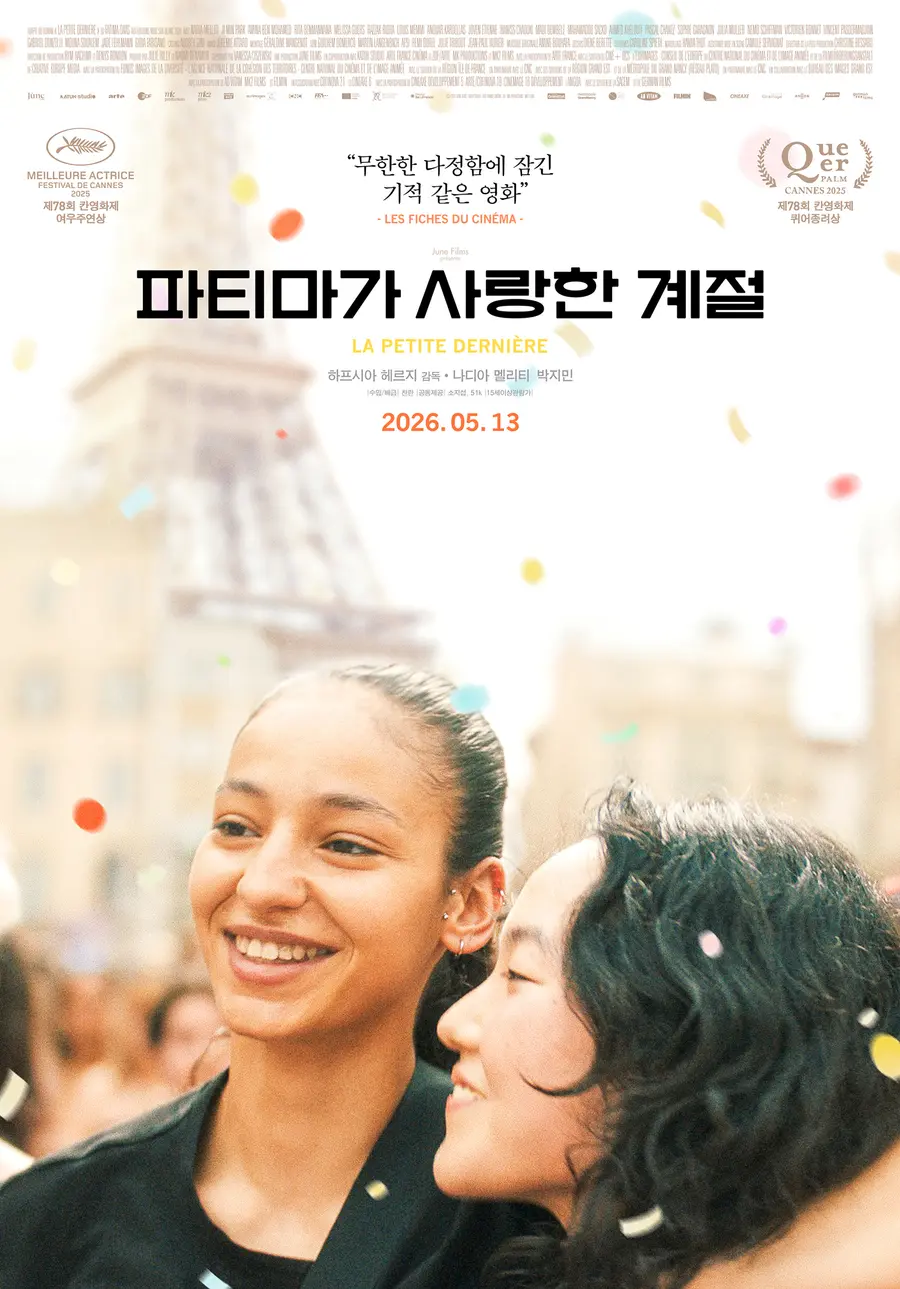
The Queer Palm Award is an LGBTQIA+ film prize that has been independently run during the Cannes Film Festival since 2010. It honors the best LGBTQIA+ film among the official selections and the competing films shown in the parallel sections, awarding one feature-length and one short each year. The award has brought broad attention not only to narratives of sexual minorities but also to works that challenge gender norms or reveal feminist perspectives. Along with the Teddy Award at the Berlin International Film Festival and the Queer Lion at the Venice International Film Festival, it is regarded as one of the leading LGBTQIA+ film awards across the world’s major festivals.

The first-winning film was 〈Kabo[?]m〉 by director Gregg Araki. Since then, major contemporary LGBTQIA+ films have repeatedly made their mark—〈Laurence Anyways〉 (2012) by director Xavier Dolan, 〈Stranger by the Lake〉 (2013) by director Alain Guiraudie, and 〈Carol〉 (2015) by director Todd Haynes—building the award’s prestige step by step. In 2019, director Céline Sciamma’s 〈Portrait of a Burning Woman〉 won, becoming the first-ever winning work by a woman director in the history of the Queer Palm Award. Then in 2022, 〈Joyland〉 by director Saim Sadiq, and in 2023, 〈Monster〉 by director Hirokazu Kore-eda, won one after another, further cementing the presence of Asian cinema. In this way, the Queer Palm Award annually shines a spotlight on works that capture, with the most contemporary sensibility, the intertwined issues of love and identity, desire and liberation—making it another important indicator for the Cannes Film Festival.

As 〈Fatima, the Season She Loved〉 has newly joined this lineage of Queer Palm honorees—after passing through so many major works—it makes the meaning of the film even more special. 〈Fatima, the Season She Loved〉 is a work that depicts the first season of 17-year-old Fatima, who is not anyone’s daughter or anyone’s lover, but instead is becoming herself for the very first time. Based on the eponymous novel by French-Algerian writer Fatima Daas, it is the third feature-length directorial work by French director and actor Hafsia Herzi. As for the lead role of Fatima, Nadia Meliti—an emerging actress selected through casting from the streets of Paris—participates, delicately portraying the inner life of a young girl who is shaken between love and faith, family and desire. The role of Inès, a figure who upends Fatima’s life, is played by Park Ji-min, a Korean-heritage actor who became known through 〈Return to Seoul〉, completing a striking performance.

At the 78th Cannes Film Festival, the film debuted to praise for being “A masterpiece that combines deeply human emotion with sensual allure, destined to become a classic of the genre overnight”(The Hollywood Reporter), “a rare narrative that depicts the sexual identity of Muslim women in a wholly distinct way”(Folha De São Paulo), “an important milestone in contemporary French queer cinema”(Culturopoing.com), “the courage to address religion and homosexuality so honestly”(Le Point), and “a new kind of woman—not a victim, and not a radical character”(EER), earning enthusiastic acclaim while winning both the Queer Palm Award and Best Actress (Nadia Meliti), proving the film’s artistry and contemporary significance together. It also won the director award at the 30th Queer Cinema Day, establishing itself as the most talked-about queer coming-of-age film of the year.

Winning the Queer Palm Award and drawing attention as a new milestone in contemporary queer cinema, 〈Fatima, the Season She Loved〉 opens in theaters nationwide on May 13.



댓글 (0)
댓글 작성
댓글을 작성하려면 로그인이 필요합니다.
로그인하기