


Cineplay guest reporter Kim Myung-jae
A director who knows the sensibilities of girls well, Shunji Iwai. From the classic of first love that comes to mind in spring, 〈Love Letter〉 (1995), famous for "How are you?", to 〈April Story〉 (1998), and 〈Hana and Alice〉 (2004), which deals with the friendship, growth, and love of girls, director Shunji Iwai has many fans in Korea with his outstanding visual beauty shot in natural light and a simple yet delicate romantic narrative. Wait a minute, if you thought, 'Isn't it Shunji Iwai?' you might be a fan of 'Black Iwai'. His debut work, 〈Undo〉 (1994), which deals with the syndrome of being bound, 〈All About Lily Chou-Chou〉 (2001) dealing with bullying, and the grotesque 〈Swallowtail Butterfly〉 (1996) showcase such opposite charms that you might wonder if they are by the same director. Therefore, fans of Shunji Iwai refer to his bright films as White Iwai and dark films as Black Iwai, combining them to call it 'Iwai World'. White Iwai works tend to be more popular, and in Korea, White Iwai works are quite famous. This time, the representative work of Black Iwai, 〈Swallowtail Butterfly〉, was re-released on July 16. To commemorate this, we will take a moment to look back at his representative works. If your favorite work is not on the list, please share it in the comments.
〈Love Letter〉
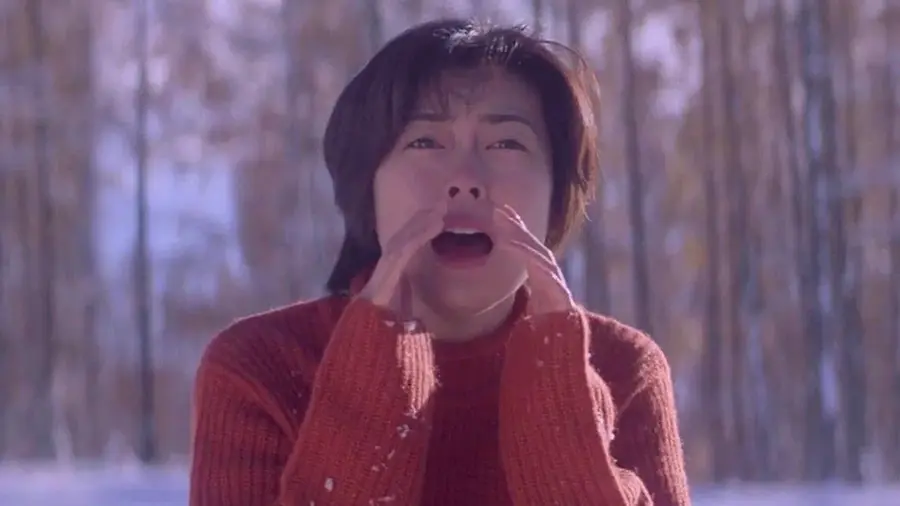
There may be people who haven't seen this movie, but there are probably none who don't know the above scene of "How are you?". 〈Love Letter〉, which has been parodied in numerous media in Korea and remains a legend of Japanese cinema in Korea, is a romance film set against the snowy landscape of Otaru City, Hokkaido, and is a rare work that secures visual beauty, popular sensibility, and artistry. In Korea, it caused a syndrome by attracting an unprecedented 1.4 million viewers in 1999, when Japanese films were just beginning to be imported due to the Japanese cultural opening policy. The film deals with attitudes towards death and mourning using the romantic devices of 'letters arriving from the deceased' and 'first love'.
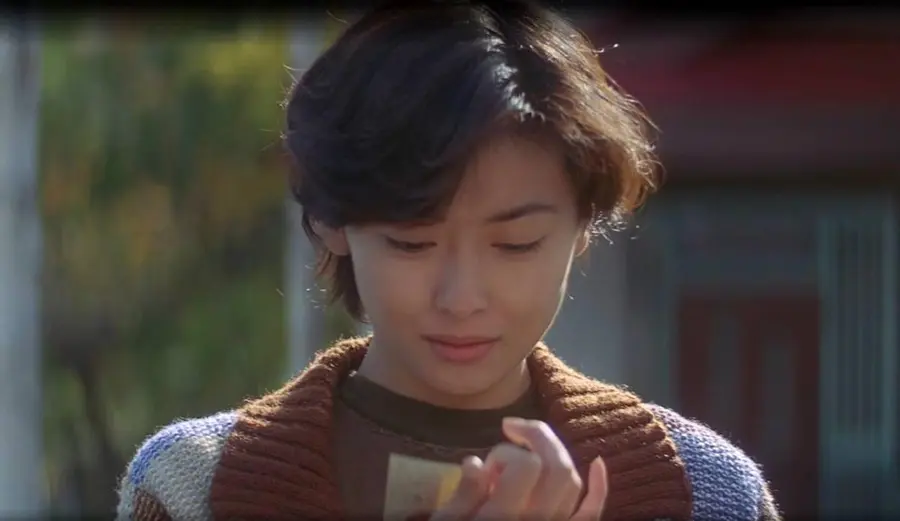
The film begins with Hiroko (Miho Nakayama) sending a letter to her fiancé Fujii Itsuki (Takashi Kashiwabara) after losing him. However, the letter is delivered to a girl with the same name, Fujii Itsuki (Miho Nakayama - playing two roles), who is a classmate of Itsuki, and she receives a reply to a letter that was never meant to be answered. The two exchange letters and indirectly confront the deceased Itsuki. Here, instead of amplifying melodramatic emotions, the film follows the intersecting time of the two women who share memories of the deceased, showing how one person's existence is reconstructed in the memories of others. Hiroko learns about her fiancé's past that she did not know through Itsuki's letters, and Itsuki revisits feelings from the past that she was unaware of. In the process, both recall their experiences of death and loss. Hiroko remembers her fiancé's death, while Itsuki recalls her father's death, showing how they go about their daily lives as if nothing happened, yet they can instantly return to that moment with just a small trigger, depicting the unprocessed loss within. Even if you haven't seen the movie, Hiroko's line "How are you?" on the snowy field sounds like a greeting to someone you can't let go. The director chose to express emotions through actions rather than maximizing them through close-ups, particularly depicting the clumsiness of adolescent love in the scenes where female Itsuki interacts with male Itsuki. Whether teasingly introducing someone else to Itsuki or playfully complaining to him, the camera captures the discomfort of adolescence, not knowing what emotion this is. The way emotions are hidden behind actions and loss is portrayed in the margins is impressive.
〈Swallowtail Butterfly〉
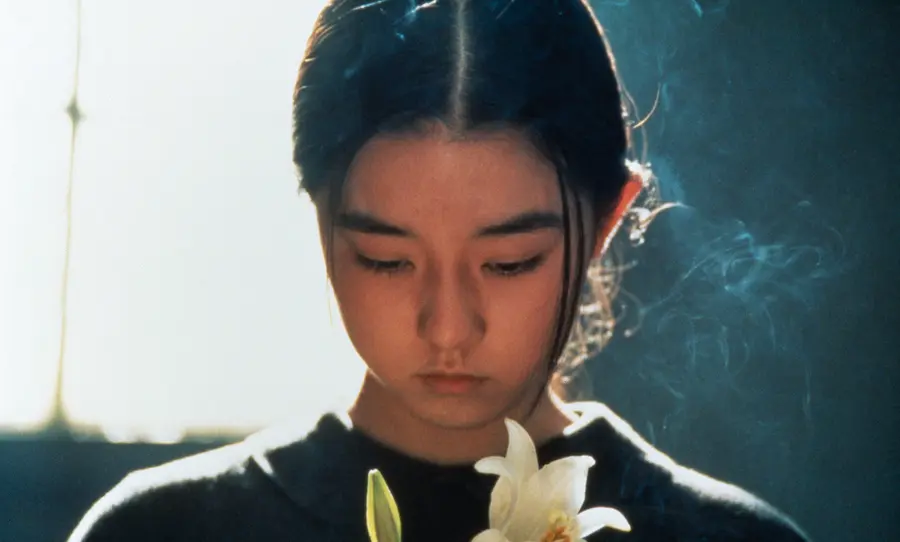
〈Swallowtail Butterfly〉 is the second feature film released by director Shunji Iwai after 〈Love Letter〉, and despite being Black Iwai, it was re-released on July 16 this year. While the previous work delicately handled mourning and memory, this one chooses a style and theme that is almost the opposite, dealing with the hybrid nature of identity, language, and capital against the rough texture of 16mm film from the pre-digital era and the chaotic energy of the city.
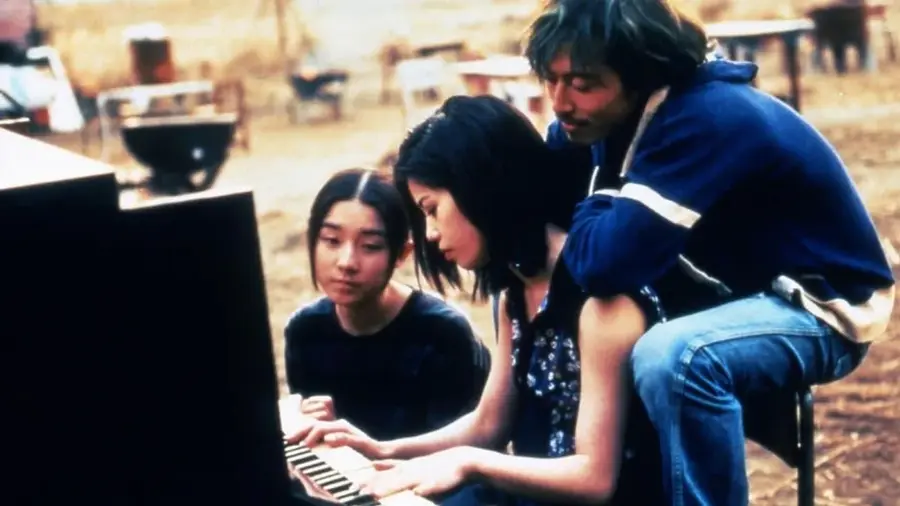
The background is a fictional Japan where 'yen' has become the world's strongest currency. In the impoverished area of Entown on the outskirts of the city, where immigrants gather, various nationalities, languages, and classes mix and live together. The film unfolds around characters who have no real nationality, such as immigrant women engaged in sex work, street youths, con artists, and gangs, following their process of forming a community. The protagonist Ageha (Ayumi Ito) meets a Chinese prostitute named Glico (CHARA) while wandering after losing her mother, and she forms relationships with him and those around him. Like Ageha, who lost her mother, Glico also came to Entown with her older brother Rankui and younger brother Rankai to earn money, but they were not given jobs as they could not speak a word of Japanese, and during a pickpocketing incident, Rankai dies in a traffic accident. As people gather at the accident scene, they have no way to prove their identity or communicate, and they ultimately lose their family and part ways. Glico gives Ageha the name 'Ageha (swallowtail butterfly)' and takes her in, and Ageha becomes entangled with immigrants who have flowed into Entown in pursuit of money. 〈Swallowtail Butterfly〉 is more focused on space and atmosphere than on specific characters. Rather than a single story, it is closer to a collective narrative created by the collision of various fragments of identity. It collectively depicts survival on the streets, the disconnection of language, and repressed desires, shedding light on the hierarchical structures created by capitalism and the lives of those on the social periphery. A notable point is that most characters in the film speak a third language. Entown is a boundary space where no clear subject exists, and within it, characters constantly lose and regain their names, floating in and out of the illusion of community. The protagonists end up making counterfeit money, and the appearance of counterfeit bills that try to slip into society but ultimately get caught and discarded reflects the fleeting life of immigrants.
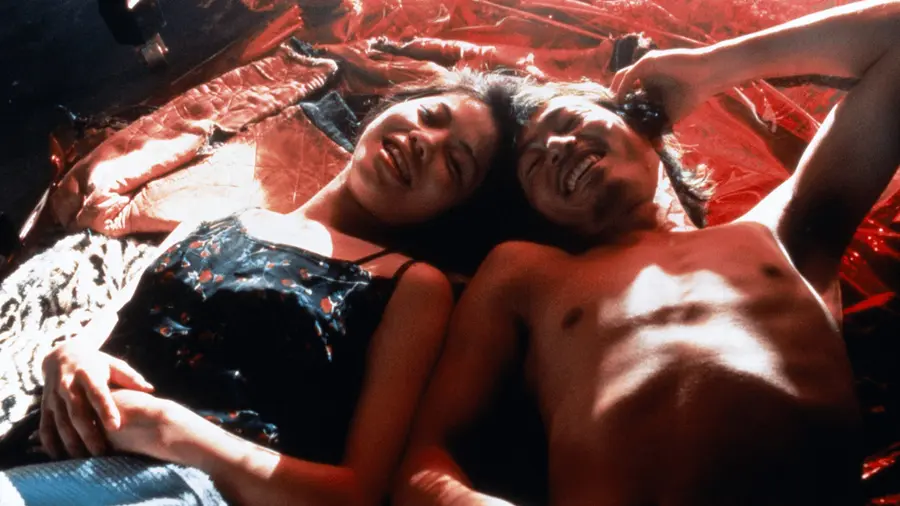
The film, true to Black Iwai, is dominated by a dark and rough tone. It features handheld camera work, distinct grain, and spontaneous cut divisions, with a raw rhythm instead of refined mise-en-scène. If you haven't encountered Black Iwai yet, this is undoubtedly the first work I would recommend. The music reflecting the flow of Japanese alternative rock and Glico's addictive voice are also attractive points.
〈April Story〉
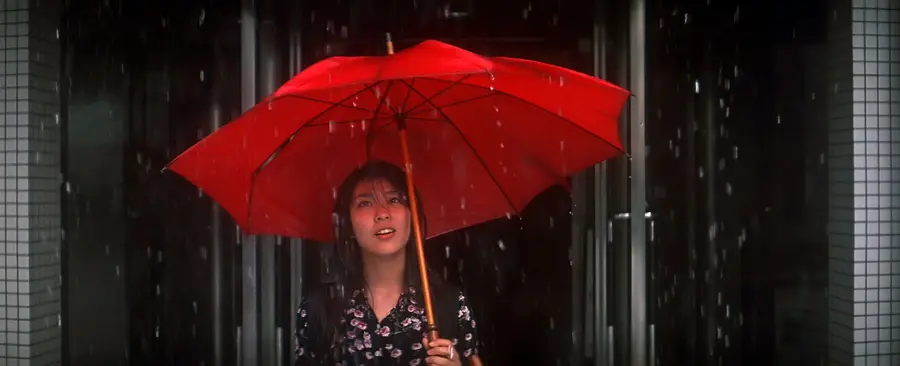
〈April Story〉 is a regular on the list of recommended films for spring, dealing with the tension and excitement of the protagonist Uzuki (Takako Matsushita) in a strange environment after moving to Tokyo. With a running time of only 67 minutes, it does not reach the length of a typical commercial film, but through an extremely condensed narrative structure, it focuses on the individual's sensory experience. It is the optimal running time that densely captures a single emotion.
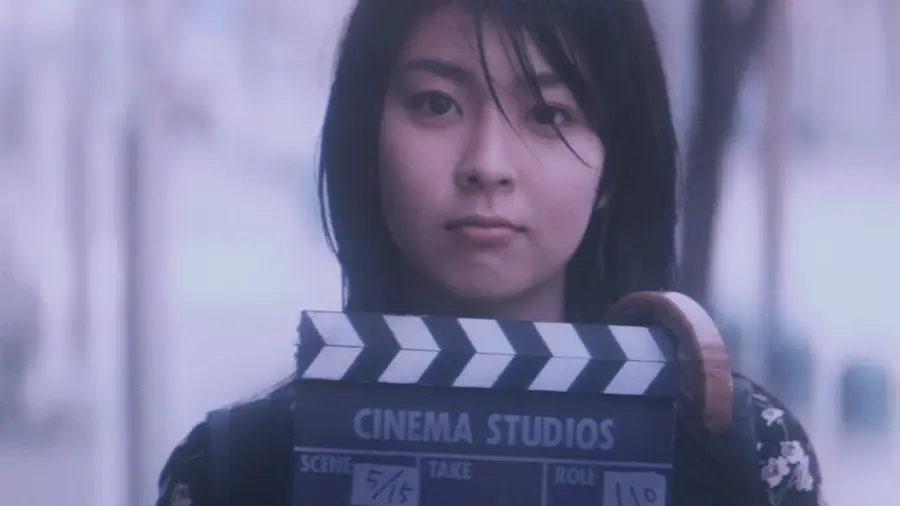
Uzuki, a college freshman who moved from Hokkaido to Tokyo, has a crush on a senior who is in Tokyo. The film follows Uzuki's daily life as he adapts to his new environment through moving, attending classes, joining clubs, and visiting bookstores, without any typical narrative structure, conflict, or twist. The camera captures Uzuki's expressions, the scenery outside the window, the details of objects, and the sensory experiences of the season, such as spring rain and cherry blossoms, rather than focusing on the plot. The dialogue in the film is minimal, and many scenes are composed of static long takes. Rather than explaining the characters' inner selves, it guides the audience to follow the texture of emotions. You might wonder, 'What about the romance with the senior he had a crush on?' but this is where 〈April Story〉 is special. The film deals not with love but with 'the starting point of love'. Uzuki wanders in the 'space where that person might be', and the encounter with the long-awaited senior flows without any narrative. And when a very small connection arises between the two, the film comes to an end. The new semester, new beginnings, and the beginning of love are thoroughly captured in the film, focusing on the strangeness and excitement that 'beginnings' bring, while the ripening of love is stripped away as excess. In Japan, the new semester begins in April. This work depicts the lively April in Japan through slow framing, gentle music, and breathing.
〈All About Lily Chou-Chou〉
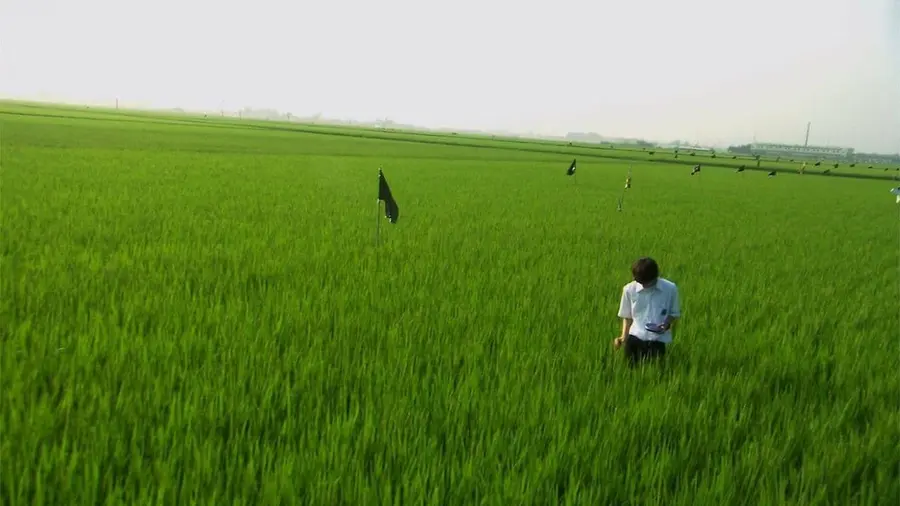
〈All About Lily Chou-Chou〉 deals with isolation, violence, and disintegration during adolescence. The film originally started as an internet serialized novel. The director operated a bulletin board for the fictional singer 'Lily Chou-Chou' from 1999, filling parts of the play with readers, and based on that experiment, he adapted 〈All About Lily Chou-Chou〉 into a film. The reason the film could capture the sentiments of Japanese society in the early 2000s is also due to the narrative experiment based on the actual early digital age. It is considered the best work among fans, and the director himself said, "If I had to choose a final work, I would want it to be this one."
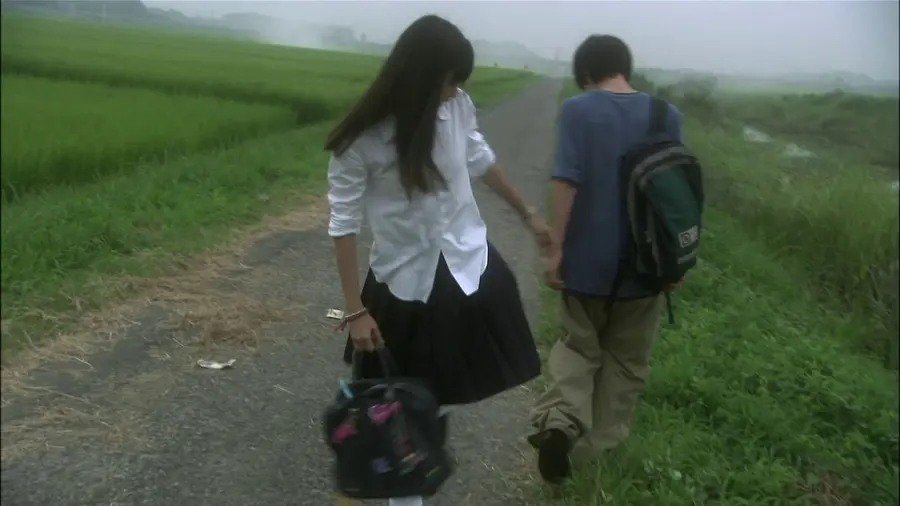
At the center of the story are two middle school students, Yuichi (Hayato Ichihara) and Hoshino (Shunichi Oshinari). They were friends, but after an incident, Hoshino becomes the leader of the class and leads bullying, while Yuichi becomes the victim, creating a class divide between them. Yuichi immerses himself in Lily Chou-Chou's music and online fan community activities to forget reality, and he feels a special bond with Aoneko, who always takes care of him and comforts him. The film visually implements the emotional divide that exists between the online communication space and the violent reality of the classroom by cross-editing the two worlds. The person who warmly comforts him online can also wield a fist in reality. In that sense, 〈All About Lily Chou-Chou〉 is not a coming-of-age film. The transformation of Hoshino from a good friend to a perpetrator suggests that violence is not just an action but an extension of identity distortion. It is not an easy film to watch. The narrative and direction relentlessly push the isolation and pain of adolescence, making it uncomfortable and distressing throughout. Nevertheless, the reason this film draws attention is that it intricately depicts the destructive trajectory of adolescence that everyone has experienced, albeit to varying degrees, and expresses it through 'music'. From dreamy electronic music to Debussy's classical pieces, it conveys the emotional spectrum of the protagonist Yuichi.
〈The Bride of Rip Van Winkle〉
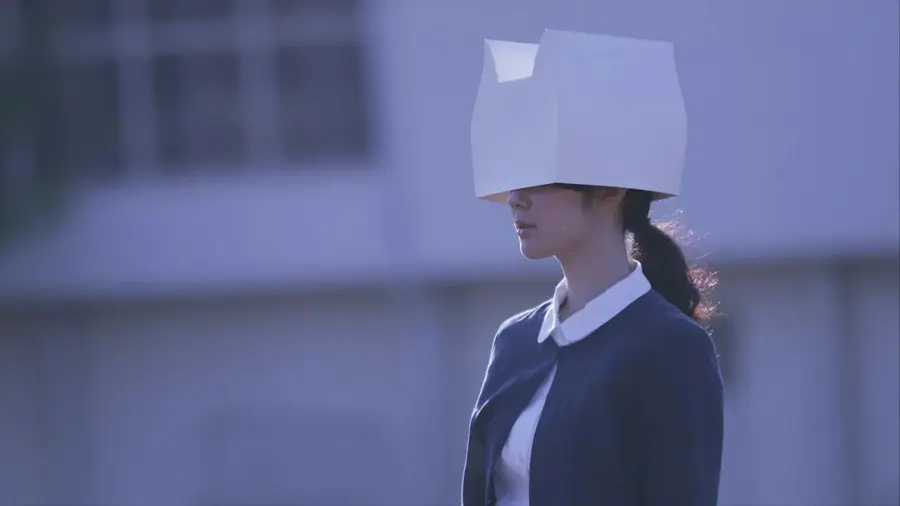
Based on the director's novel of the same name, 〈The Bride of Rip Van Winkle〉 is a new Iwai World that does not belong to either the existing White Iwai or Black Iwai. It is a live-action feature film presented 12 years after 〈Hana and Alice〉 (2004), dealing with the changes in human relationships and isolation in the digital age. The protagonist Nanami (Haru Kuroki) is a part-time teacher with an introverted and timid personality who is bullied at school. The only place where she can voice herself is on SNS Planet. She is about to marry a man she met there. However, unlike her husband, Nanami has no family to invite to the wedding, so she meets Amuro (Go Ayano) through Planet and uses a guest service for her wedding. To maintain a marriage that is a lie from the start, she continues to tell lies and eventually divorces her husband. Left alone with nowhere to turn, Nanami starts working as a housekeeper in a large mansion through Amuro's introduction, and in the process, she gradually escapes from a life where she is not even sure who she is. The film follows Nanami as she experiences genuine emotions that can withstand the cracks in her life through the borrowed relationships she has formed.
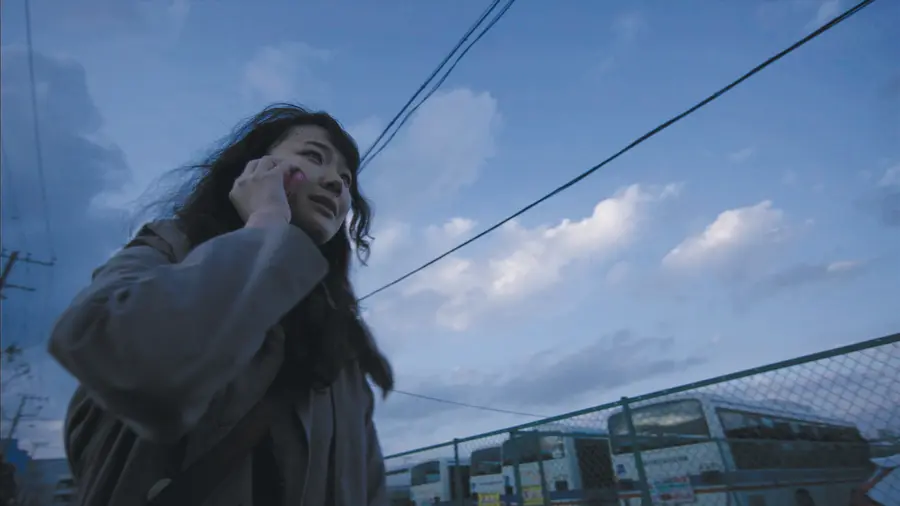
With this work, Shunji Iwai addresses the phenomenon of people no longer being able to form natural relationships in an era where they borrow 'fakes' to connect with others. In a society where everything from friends to weddings and funerals can be outsourced to others, the director shows the emotions and bonds that bloom within those fake relationships. Although the time Nanami spends with Mashiro is short, she experiences real emotions that can endure the cracks in life. The film embodies the isolated emotions through the insertion of SNS message screens, extremely restrained music, long takes, and static shot compositions, allowing the audience to experience those emotions. In particular, the repeated silence and static gaze throughout the running time reveal the state of a character who cannot connect with others. The kick of this calm film is also the presence of Amuro. Amuro is a being who pretends to help people like Nanami, who rely on SNS, while actually using them for his own gain, blending good and evil in a cunning way. And Amuro's unpredictable actions add tension to what could have been a boring narrative. This is a recommended work for those who want to see a new Iwai.

![[OTT Ratings] Cineplay reporter ratings for Netflix series 'Scandal'](https://cdn.www.cineplay.co.kr/w300/q75/article-images/2026-09-21/b3a9b606-46e0-40e8-9d5c-c054a0f03ba4.jpg)
댓글 (0)
댓글 작성
댓글을 작성하려면 로그인이 필요합니다.
로그인하기