



Recently, to celebrate the KOSPI breaking 7000, we highlighted memorable lines and iconic scenes from the Korean film 〈The Scam〉. Since there are few Korean films that deal with stocks, we inevitably had to mention 〈The Scam〉, but Hollywood long ago produced a variety of films about stocks and markets that delivered a visceral thrill and inspired self-reflection around the world. Today we introduce notable lines and scenes from Hollywood films themed around stocks and finance. This is based on selections made by users of Reddit, arguably the largest community in the United States.
“Ladies and gentlemen, the important thing is this greed is, for lack of a better word, good.”
〈Wall Street〉's Gordon Gekko (Michael Douglas)
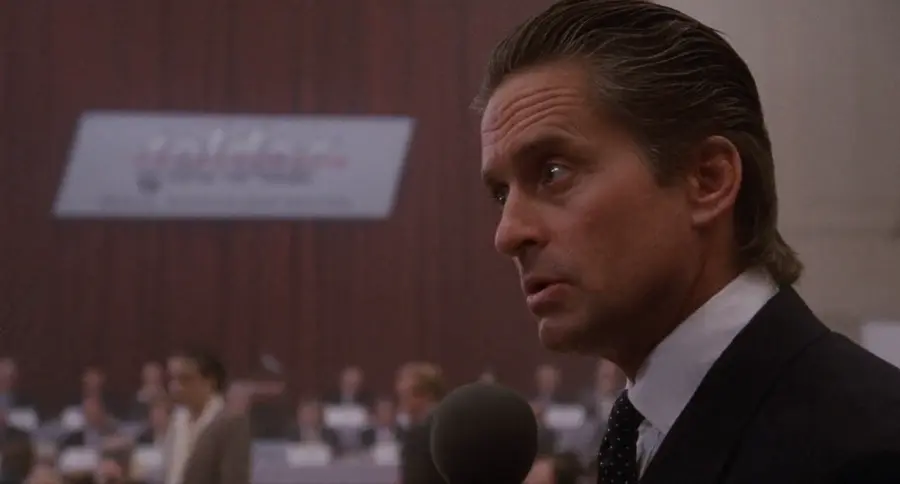
In the 1987 film 〈Wall Street〉, Gordon Gekko's line caused a significant reaction. Taken on its own, the sentence isn't extraordinary—because anyone could understand why greed is seen as beneficial in financial markets. But it was a statement no one could easily make. In a society like the United States, where many value restraint and where Christian morals are influential, it was even more provocative. Yet Gordon Gekko utters the line at a shareholder meeting that is trying to remove him. He bluntly declares that the engine of capitalism is the greed to own more. By stating it so plainly, he sways shareholder sentiment in the room to push the company toward the 'right' course. In doing so he deflects blame onto the executives rather than himself and escapes the crisis. This cunning remark encapsulates how the character Gekko justifies and pursues his greed. Combined with Michael Douglas's charismatic performance, the blunt line still circulates as an iconic line associated with the financial world.
“Do you know what you just did? You bet money on the collapse of the U.S. economy. That means if we're right, people will lose their homes, lose their jobs, lose their retirement savings. They'll lose their pensions. I hate the banking industry for being inhumane. Do you know that if unemployment rises by one percent, 40,000 people die?”
〈The Big Short〉's Ben Rickert (Brad Pitt)
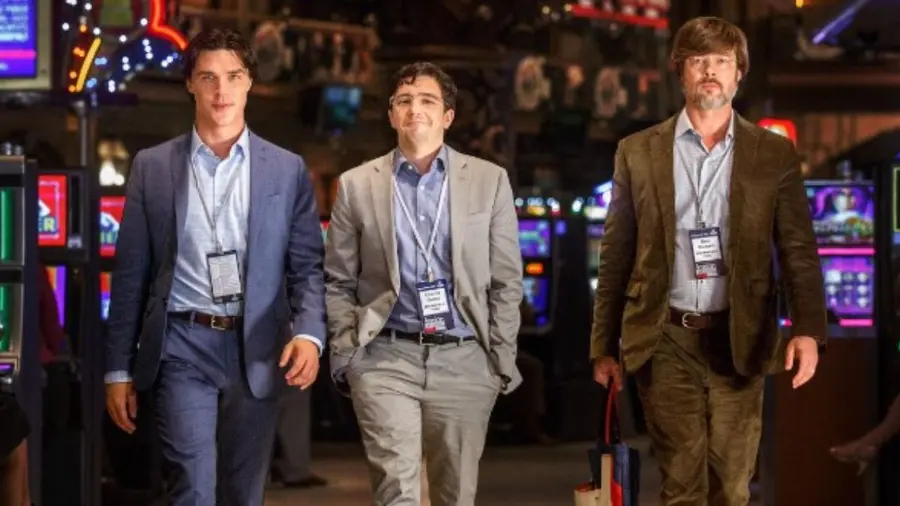
That line is spoken by Ben Rickert in 〈The Big Short〉. The Big Short reconstructs the series of events centered on the people who foresaw the 2007 subprime mortgage crisis, and Ben Rickert is a former trader who had left the financial world early. He helps Charlie and Jamie, who come to him. Thanks to Ben's help, the two are able to bet on the 'big crash' and, caught up in the excitement, dance in the middle of Las Vegas. Watching that, Ben Rickert lashes out with this line as if scolding those who dream of striking it rich on short selling like Michael Burry (played by Christian Bale in the film). Some viewers found the scene suddenly didactic and off-putting, but including a moment that prompts audience awareness is exactly the kind of choice that suits 〈The Big Short〉's distinctive style, a style the film consistently employs.
“A lot of people feel the system is broken. The idea of the stock market is that it's a level playing field where if you have smarts and luck you should be able to make money. But now smarts and luck don't work. Big corporations are far ahead in technology and information and push through with their financial power, so individuals have no hope. No, they didn't used to. Now they might. Personally, I like that stock. I have no plans to sell anytime soon.”
〈Dumb Money〉's Keith Gill (Paul Dano)
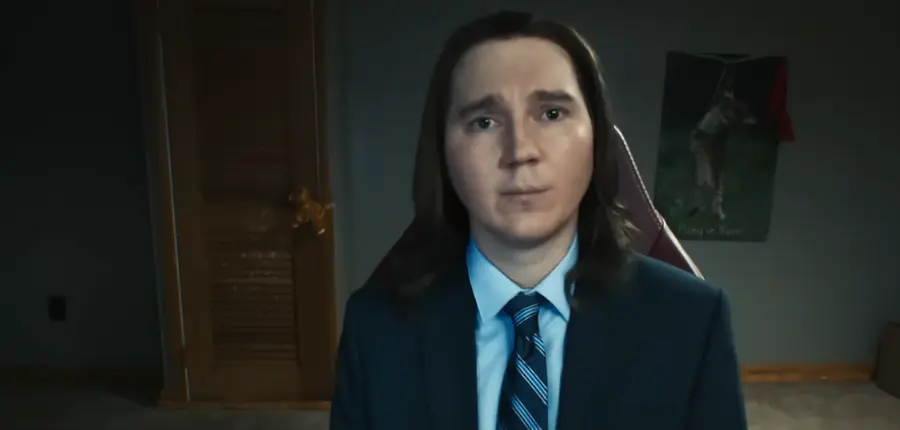
〈Dumb Money〉 tells the story of Keith Gill, who was at the center of the event known as the GameStop saga. The GameStop saga refers to the series of events in which individual investors, centered on Keith Gill, banded together to prevent Melvin Capital from profiting off shorting GameStop stock. 'Roaring Kitty' Keith Gill (Paul Dano), who had consistently recommended buying GameStop through online communities and YouTube, saw the high short interest and turned it into an opportunity to invest in the stock's rise. Individual investors who followed his steady posts bought the stock, and the firms that had shorted the stock were stunned by the stock's massive surge. This process exposed many problems in the American financial system, notably when retail trading platforms like Robinhood blocked GameStop trades. Individual investors, rebelling against collusion among capital holders, responded with buying and class-action lawsuits. Keith Gill was later called to testify at hearings, a scene depicted in the film as well. In fact, if Keith Gill had sold during GameStop's surge, he could easily have become a millionaire. But to protect the stock's value and the retail investors who stood with him against capital holders, he said, “I have no plans to sell,” continued buying and created a notable example in history of retail investors defeating capital.


댓글 (0)
댓글 작성
댓글을 작성하려면 로그인이 필요합니다.
로그인하기