



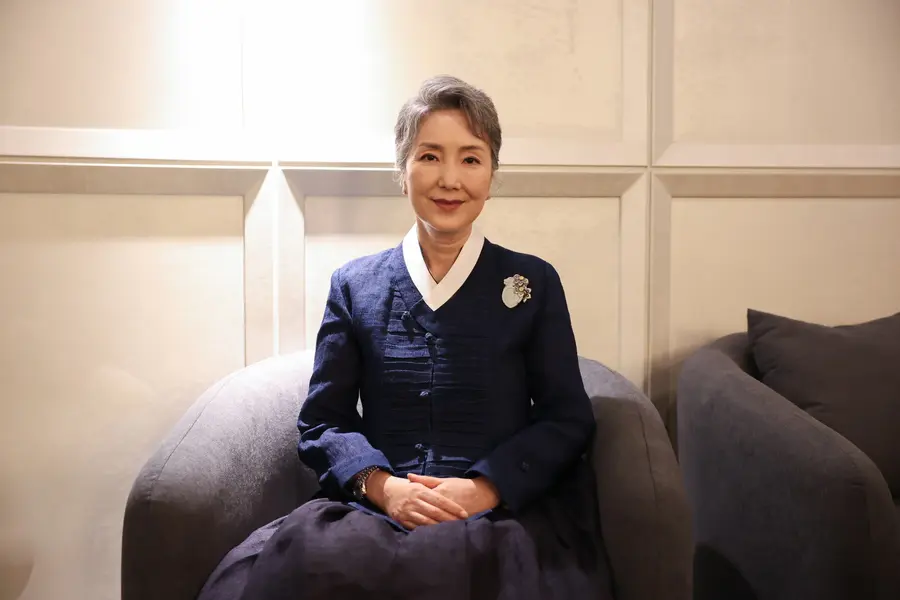
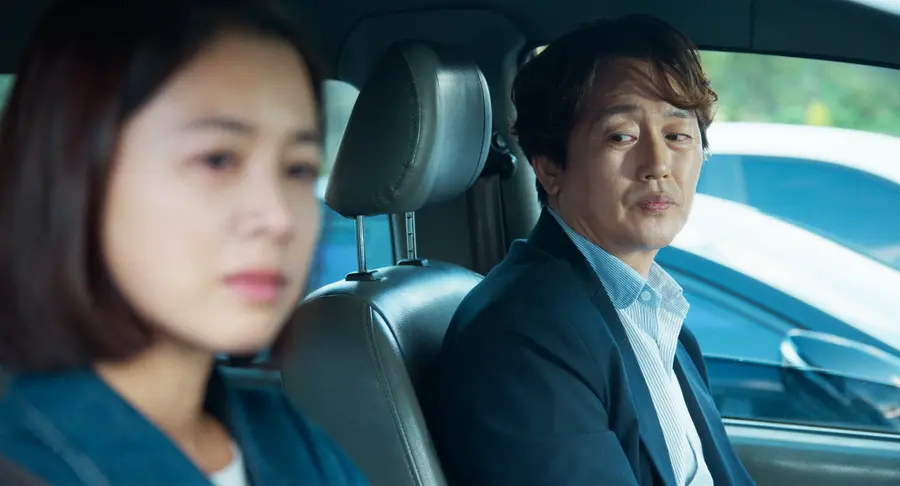
In 〈Family Trip〉, the story opens when a granddaughter who has never had full-fledged work experience asks her grandmother, who is nearing the end of her life, a blunt question: "Grandma, how long do people have to suffer?" The family sets off on a trip with the grandmother, and for the first time they have deep conversations with her. Chang-uk (Kim Jeong-tae), a director in title only who is effectively unemployed; daughter Yun-jin (Hong Jeong-min), who sincerely believes she is a vampire and is committed to cosplay; father-in-law Man-cheol (Nam Gyeong-eup), a Vietnam War veteran; and mother-in-law Sun-im (Lee Hwi-hyang), who has dementia. Yeong-ju (Seo Young-hee), the daughter-in-law who has supported the household and cared for everyone, receives notice from the care center that it can no longer care for Sun-im. The family impulsively decides to celebrate Sun-im’s birthday with a trip to Busan. As the old, hastily rented van barrels down the highway, the trip’s real purpose and hidden secrets begin to surface one by one.
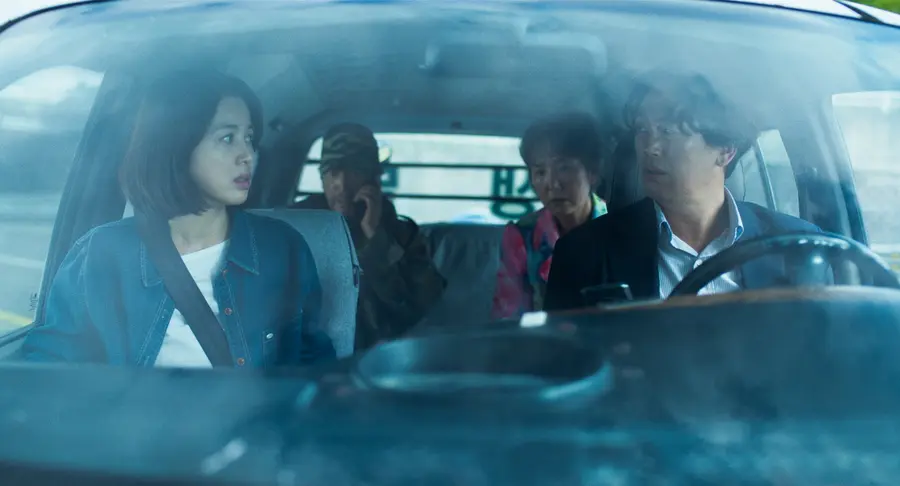
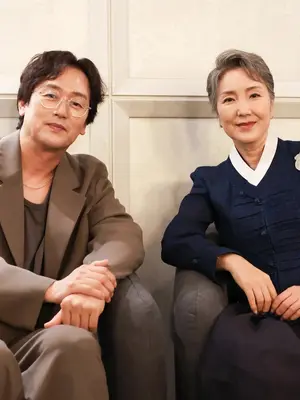
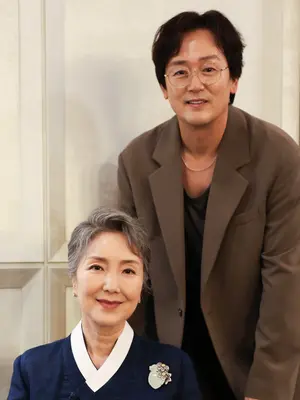
〈Family Trip〉 is the first time Lee Hwi-hyang—long known as the so-called "queen of the home drama," often described as having an urbane, Western image—has taken a leading film role in her 44-year acting career. Best known for her commanding presence as a strong woman or for sharp villainous turns, she plays an elderly woman with dementia. It was a new experience as well for actor-director Kim Jeong-tae, who is credited as a co-director alongside Jeong Jong-seop. Chang-uk is a good-for-nothing son who never seems to accomplish much, but as he cradles his parents’ painful memories he quietly carries the family through the trip. At the heart of the film is family. Rather than emphasizing dementia as a disease or forcing sorrow, the film aims to observe a single family living with each other’s wounds. We spoke with Lee Hwi-hyang—who took on a dementia role for the first time in her career and said she "rediscovered the joy of acting"—and Kim Jeong-tae, who wanted to avoid the usual clichés of dementia films and bring something fresh to the subject.
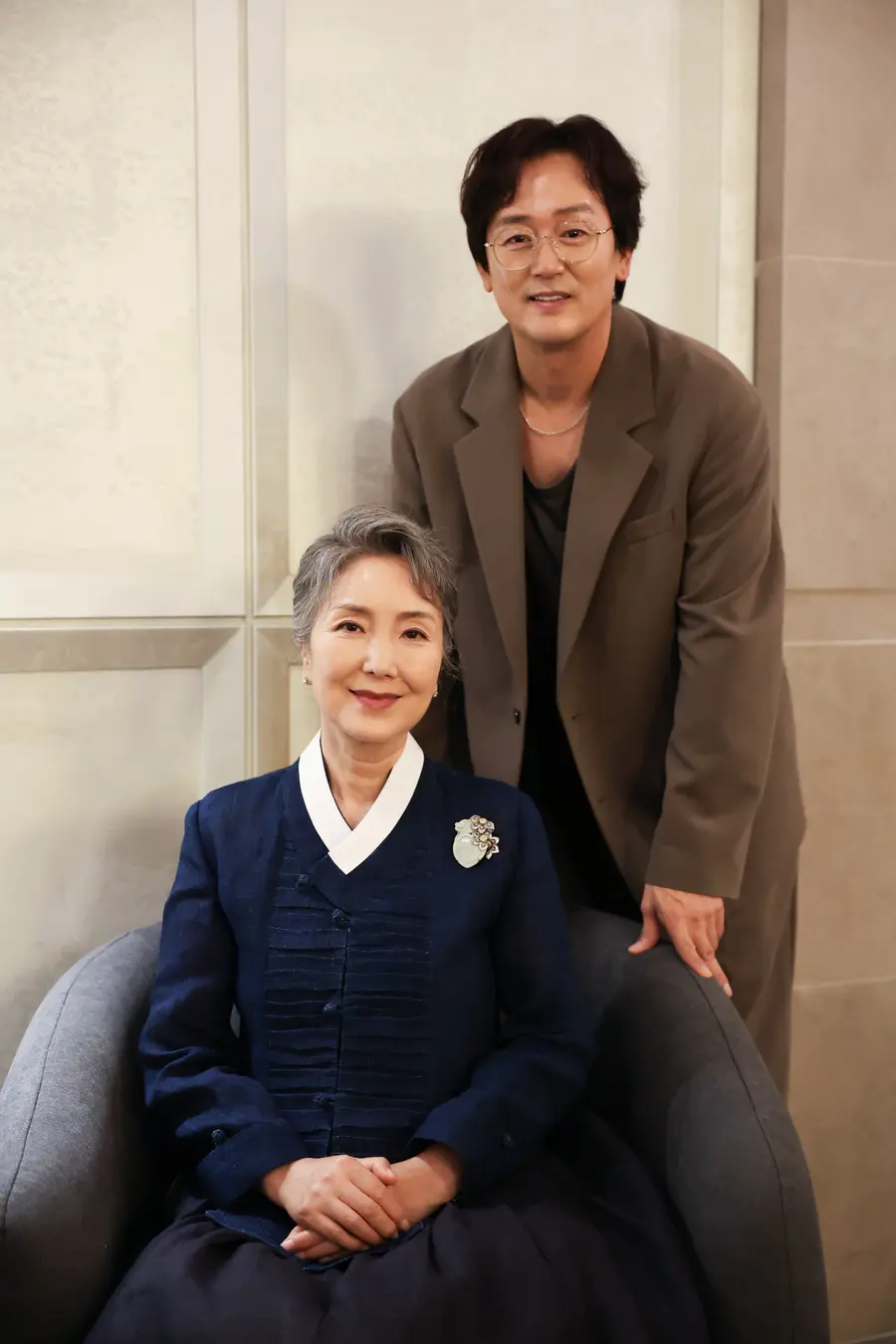
Lee Hwi-hyang, this is your first leading film role in 44 years. Above all, your part is very different from roles you have played before. What was the main reason you decided to take this role?
Lee Hwi-hyang It's so embarrassing every time people say this is my first film lead in 44 years. (laughs) Over the course of my career I’ve played so many parts. Compared with other actors, I consider myself lucky. But at some point I found myself playing villains over and over. One success led to more villainous roles being asked of me. Television doesn’t move on the strength of a single work alone; there are interpersonal relationships, and there are many cases where you accept roles because you can’t say no. As I kept using that villainous energy to shape characters, I stopped feeling happy. If someone asked me when I was happiest, I'd always say, "when I act!" But sometime along the way my energy ran out and I fell into a rut. I even thought maybe I should stop acting. I wondered whether continuing to show the same kind of acting was really good for audiences. Then the role of the "mother" in 〈Family Trip〉 came along. It was a character I’d never tried before, and the fact that she was a mother with dementia sparked my curiosity. I said yes without much hesitation. From then on I started studying dementia, and I finished the shoot very happily.
Kim Jeong-tae On casting it was almost unanimous. Someone suggested we ask Ms. Lee Hwi-hyang, and we wondered whether an actor long associated with an urbane, Western image in the public mind would take on a role like this. But when she happily agreed, everyone cheered.
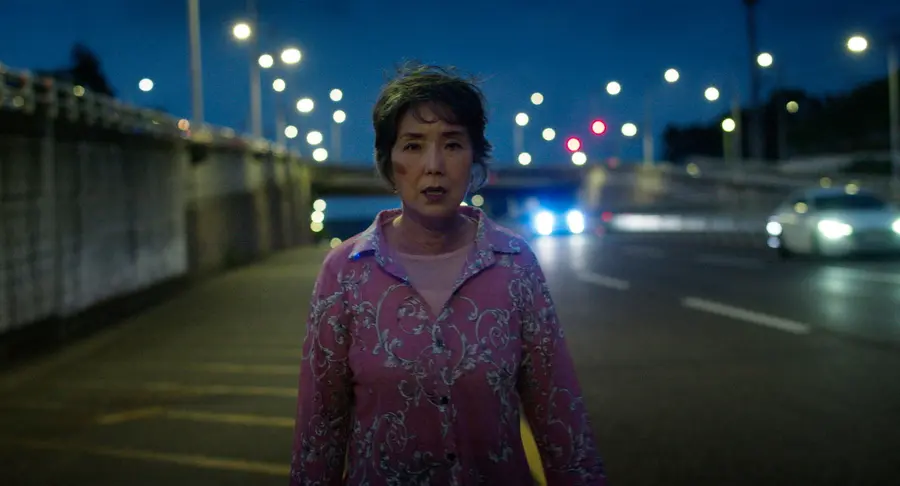
Playing a character with dementia must have raised questions about how realistically to portray the symptoms. How did you approach that?
Kim Jeong-tae Before deciding how much of the dementia symptoms to show, it was more important to regard Sun-im (Lee Hwi-hyang) as an ordinary neighbor among us. Dementia is just one of the things a mother, grandmother or wife might experience as she approaches the end of her life. If we follow that life, the behaviors that arise from dementia will naturally follow and be acceptable. Portrayals of dementia can easily slip into cliché, but I thought Ms. Lee could bring something new to the role.
I heard Lee Hwi-hyang studied dementia extensively.
Lee Hwi-hyang I really researched it intensely. I visited the nursing home in Busan where most of the filming would take place and attended singing classes and similar gatherings visited by people with dementia. I learned that dementia symptoms vary greatly depending on which part of the brain is affected. If we showed just one symptom repeatedly in the film, the portrayal would feel one-dimensional. I wanted to show a range of symptoms appropriately so audiences might take more interest in dementia. So without consulting the two directors for every instance, I applied different symptoms to different scenes. In one scene this will appear, in another that. I learned that in severe cases multiple symptoms can appear together. I tried to find the most suitable symptom for each scene. Language issues were also important, so I lived with local women in Yeongdo, Busan, for almost a month and learned the Busan dialect.
Kim Jeong-tae participated as a co-director with Jeong Jong-seop this time. Would you say you 'took on directing'?
Kim Jeong-tae To be honest, I never thought of it as a "challenge." It was more about taking on a slightly different role on set beyond acting. The important thing was to help the film in any way I could. If there were ten dishes to wash, I washed one or two extra. When shooting younger actors, I stepped forward a bit to direct them; if the time we had for a location was tight, my impatient nature meant I would step in and speed things up. I didn't run the set like a seasoned director; I just tried to do a bit more of whatever the set needed.
One striking aspect of the film is how the people around the dementia patient behave. When the mother stops in the middle of the road on a motorcycle, the driver is angry at first but, upon learning her condition, asks "What's wrong?" with concern. The scene where she meets children who are smoking is similar. Overall the people around her are portrayed very warmly. I think that warmth is a key part of the film's character.
Kim Jeong-tae Exactly. That aspect was important. I also intentionally wanted to make parts of it funny, and, as you said, I wanted to sidestep the clichés of previous films about dementia. In other movies, when a character with dementia appears there are always scenes where people react with "What is this?" or "Get away," showing anger or avoidance. We went the opposite way. If audiences find those scenes funny and affecting, I'm glad.
Lee Hwi-hyang I like those scenes too. We live in an AI era when people often pass each other without really seeing one another and sometimes don’t even know their neighbors. I hope the warmth in our film comes across to viewers. What I felt during filming is that dementia is a disease that is hard to detect and even harder to overcome without a family's love. That’s why I wanted to include family and, more broadly, the warmth and compassion of the people around them in the film.

![[First Reaction] ‘Family Trip’ Cineplay Reporter Star Rating](https://cdn.www.cineplay.co.kr/w160/q75/article-images/2026-09-16/0b1fe56f-a547-4c0e-9038-4f3e00693c2d.jpg)
댓글 (0)
댓글 작성
댓글을 작성하려면 로그인이 필요합니다.
로그인하기