



※ The interview with 〈Dear Evan Hansen〉 and 〈How to Love in a Big City〉 actor Na Hyun-woo continues in Part 1.
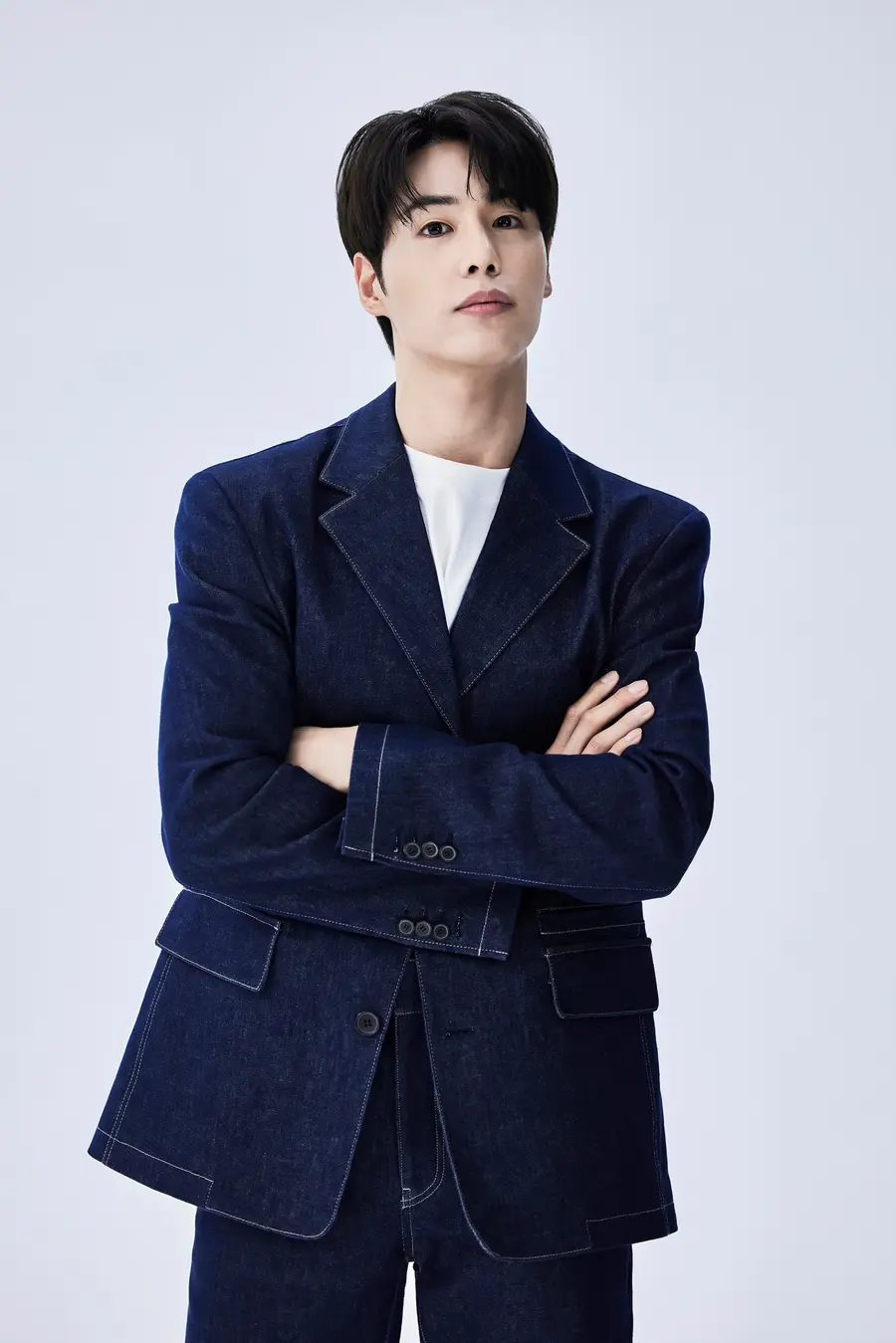
Turning to film: you have said you long dreamed of becoming a screen actor, and you called recent projects meaningful challenges. Two that stand out are 〈Pilot〉 (2024) and 〈1 Seung〉 (2024). In 〈Pilot〉 you played the "club guy" who tells Han Jung-woo (Jo Jung-suk), who is dressed as a woman at the club, to stay and party a bit longer; in 〈1 Seung〉 you played the younger husband of the basketball team captain Bang Su-ji (Jang Yoon-ju). How did those roles come about?
My filmography also includes works like 〈Giant〉 (2014), which was a case where many Sejong University students appeared as extras in a film by director Kim Tae-yong, who was a senior at my school. In terms of winning a role by audition, my first real film role was in 〈1 Seung〉. Director Shin Yeon-sik told me there was a part that would suit me, and gave me that role. He asked whether I was good at comedy acting, and as a newcomer I naturally said, "I can do everything!"—though several of my scenes were later cut. Above all, just getting to work with Song Kang-ho, who is something of an icon to me as an actor, was a special experience. Director Shin was considerate and often let me sit next to the monitor so I could keep watching Song Kang-ho's performance. Watching Director Shin say, "This time I'll try it this way," and then seeing Song Kang-ho execute it exactly in front of the camera felt unreal. After that, I also appeared in the Disney+ series 〈Uncle Samsik〉 (2024), which gave me another chance to watch and learn a great deal from Song Kang-ho.
How was 〈Pilot〉? You worked opposite Jo Jung-suk, whom many musical actors cite as a role model.
That's right. Jo Jung-suk is like a role model to me. He's one of the very few actors who successfully balance musicals, film and television and have reached the top in each. Of course, seeing an almost unreachable senior like Jo Seung-woo also makes anyone think, "I want to be like that." In the club scene in 〈Pilot〉, because I was a bit stiff in the comedy, Jo really taught me a lot. He would say, "Hyun-woo, I'm going to play the rhythm this way, so try it like this and let's see how it fits," and he guided me through it. That's how the impromptu arm-wrestling bit between the two characters was born. Like with Song Kang-ho, I learned that comedy requires a lot of ideas, and I learned a great deal from watching a director prepare several versions so they could choose the best one.
You must feel a deep attachment to Yeong-su in 〈How to Love in a Big City〉, since it's your longest stretch leading on screen.
Exactly. Episodes 3 and 4 of 〈How to Love in a Big City〉, "〈A Piece of Rockfish, the Taste of the Universe〉," is something I will never forget. I had worked with Director Heo Jin-ho before on the drama 〈No Longer Human〉 (2021), which is how we connected. Apparently I auditioned so well then that he offered me a far larger role than the one I eventually took. But as a complete rookie who didn't know much, I said, "I am not confident I can take that role," and turned it down. Looking back, that was really foolish. I ended up playing the smaller role of Jeong-woo, who dies early in the story. I even shot a scene where I appear as a corpse in the morgue; when Director Heo saw me he said, "Why are you so well-built?" I replied, "I've always been in good shape." (laughs) He remembered that and cast me in 〈How to Love in a Big City〉 because the story required a scene where my body would be shown. I was very grateful he remembered me that way.
In "A Piece of Rockfish, the Taste of the Universe," Yeong-su is emotionally volatile and inwardly complex—the textbook bad-boy character. How did you approach the character?
Yeong-su is someone who, even while he loves, makes his partner feel lonely. Director Heo compared him to Eun-su (Lee Young-ae) from his own film 〈One Fine Spring Day〉 (2001). He said Yeong-su isn't someone who gives sincere love; he only wants what he desires, and is essentially selfish, though others may find him romantic. That explanation made everything click for me. Director Heo's direction was very specific. He would ask, "Are the lines you're saying really what you would say?" and if the emotion wasn't genuine he would have me keep changing the lines until they became my own words. It was the first time someone had listened to my ideas so much, and having the freedom to try what I thought took away my nerves. I don't like to say this myself, but I like my performance in 〈How to Love in a Big City〉 because I acted very honestly. As a result I gained many fans and began receiving new offers. Many of the people who come to see 〈Dear Evan Hansen〉 are fans of that Yeong-su. I'm happy just to have a filmography that includes "Na Hyun-woo of 〈How to Love in a Big City〉" across both film and television.
As an actor, what do you want most right now? And as a former Taekwondo athlete, you must still dream of action roles.
Of course—I really want to do action. Strange as it may be, opportunities in that direction haven't come my way. My dream to be like Jo Seung-woo or Jo Jung-suk hasn't disappeared, but for now I want to increase the number of films and dramas I'm in. I also want to keep performing and continue the life of an actor. Like other actors, when work doesn't go well it can be very hard. I pushed myself mercilessly and took a lot of hits. But watching small results appear over time makes me think those earlier failures might have been necessary to create the good things I have now. For me, 〈Dear Evan Hansen〉 is a work that fulfilled a long-held dream. I failed the first audition for the premiere, and because of my age I may never get another chance. I feel like this season may be my last time playing Evan, so I'm desperate to do it well.
Suddenly I'm curious: what would you call the film of your life?
It's hard to pick just one, but the film that has stayed with me most deeply is Lee Sang-il's 〈Gukbo〉 (2025). Seeing the kabuki world in the film reminded me of the musical stage, and the film's relentless pursuit of art and the artist's permanent sense of lack resonated strongly. It's a film that anyone who calls themselves an artist should see; I have a large poster of it at home and I'm always thinking about it. On top of that, the actor who plays the lead Kikuo, Ryo Yoshizawa, is the Japanese Evan in the Japanese version of 〈Dear Evan Hansen〉, so that made it even more striking and surprising.
I've heard you're a cinephile who watches almost every film released. Any recent Korean films that stayed with you?
Without question, 〈Ganeunghan Sarang〉. I like all of Lee Chang-dong's films, but I was especially struck by the black-comedy elements in the second half. One scene I've dubbed "tragic taekwondo" left a big impression on me. Hoseok (Seol Kyung-gu) may not have as much as Sang-woo (Jo In-sung), but having trained his whole life he has pride that he can use his body and win fights—yet the kicks he shows are so pathetic that it actually hurts to watch. It wasn't the body or movement of the fighter he had been in his youth. Also, I know Jo In-sung trained in taekwondo for a long time, and in the film when he taunts, "Why are you doing taekwondo?" as he slides away with a side step, that gesture was exactly a taekwondo practitioner's move. It was so precise I was surprised. I think it may have been a move that was created when Jo In-sung said on set, "I'll try it this way." In any case, I was so struck by Lee Chang-dong's accomplishment that I couldn't sleep.
With 〈Dear Evan Hansen〉 closing on November 1, we'd like to hear your final message as you prepare to say goodbye to the run.
When I left the audition for 〈Dear Evan Hansen〉 I said this: "The moment in my life when I can play Evan will be this audition, and if I pass, this season may be my last time to do it. I love this piece and I can do it. Please believe in me just once." I still go on stage with that same feeling, and I pour my whole soul into the performance. Being able to do the work you want is a kind of miracle. That's why I'm so happy right now.



댓글 (0)
댓글 작성
댓글을 작성하려면 로그인이 필요합니다.
로그인하기