



[Film Festival] 16th Seoul International PRIDE Film Festival Wraps Seven-Day Rainbow Celebration with Closing Film 〈An Unusual Family〉

Cineplay ・ 2 minutes ago
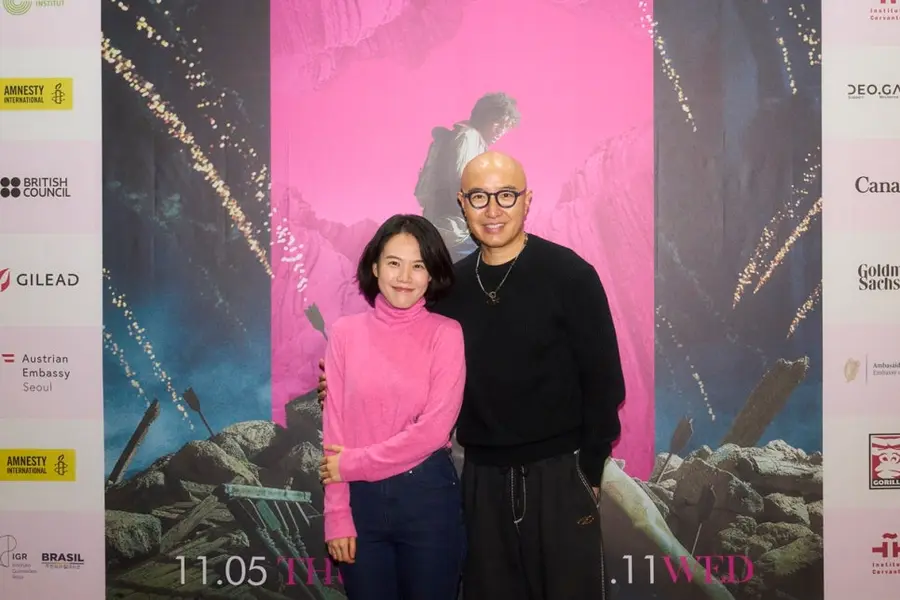
Actress Kim In-kyung and actor Hong Seok-cheon ©SIPFF
The 16th Seoul International PRIDE Film Festival (SIPFF), led by Executive Director Kim Jho Kwang-soo, successfully wrapped up its seven-day rainbow celebration with a closing ceremony at CGV Piccadilly 1958 on Wednesday evening, November 11. As last year, film critic Heo Nam-woong and film journalist Jang Seong-ran hosted the ceremony at CGV Piccadilly 1958. The New Director Award, announced first, went to Ivan and Hadum, directed by Ian de la Rosa. The jury consisted of Ryu Ran, a reporter with SBS’s Culture Desk; director Boo Ji-young; and producer Song Dae-chan.
〈Ivan and Hadum〉 (Director Ian de la Rosa) New Director Award
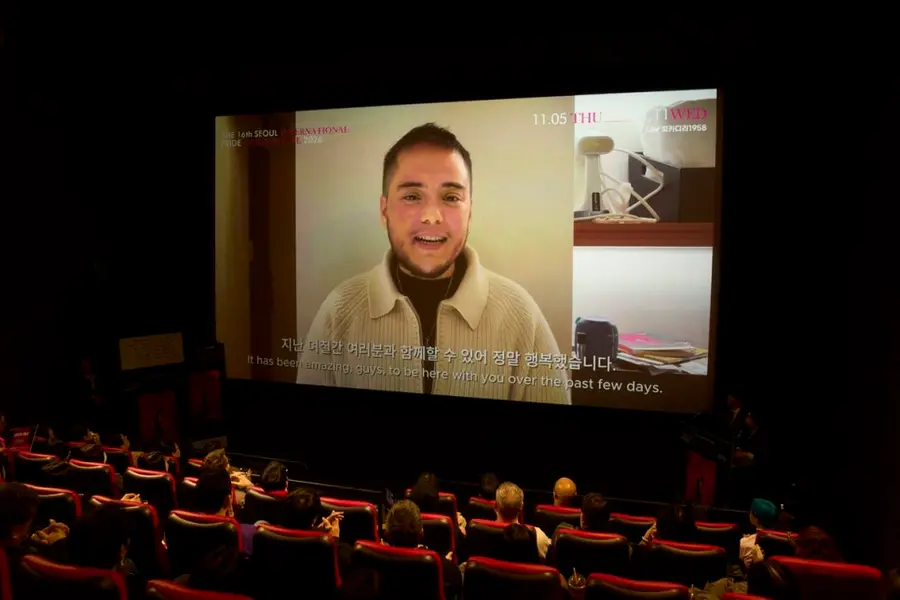
New Director Award: 〈Ivan and Hadum〉 (Director Ian de la Rosa) ©SIPFF
Presenter Ryu Ran said, “Films about transgender characters often center on coming out, discovering one’s identity, medical transition and family acceptance. In this film, however, the protagonist’s trans identity is already an important part of his life.” She added, “The film moves beyond the question ‘Who am I?’ to ask, ‘What kind of relationships will I build with others?’ Through the character’s conflicts and choices, it reveals the intersection of gender, class and labor. The director’s sensitive perspective and skillful direction stand out, as the film explores queer lives not only as a matter of identity, but also through the complexities of social relationships and responsibility.”
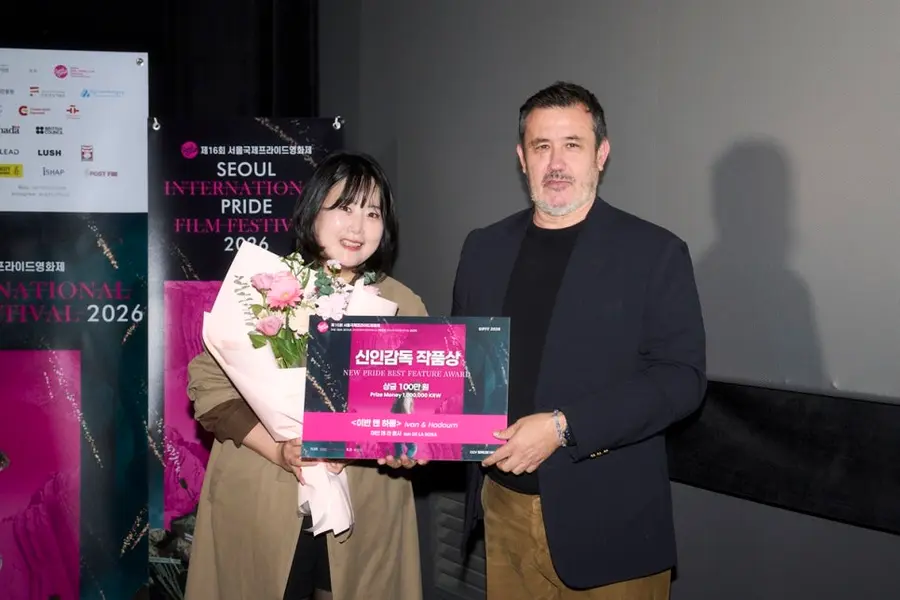
Acceptance of the New Director Award for 〈Ivan and Hadum〉: Rafael Bueno, director of the Cervantes Institute in Seoul, accepts on the filmmaker’s behalf (right) ©SIPFF
Rafael Bueno, director of the Cervantes Institute in Seoul, took the stage on behalf of Ian de la Rosa, who had left the country the day before. “I’m delighted to be part of the festival for the first time this year, and even more delighted that the director is receiving this award,” Bueno said. “It’s truly difficult to keep this kind of cultural work going for 16 years. I’m grateful to be involved, and I hope to continue working with the festival next year.” De la Rosa sent a video message of thanks.
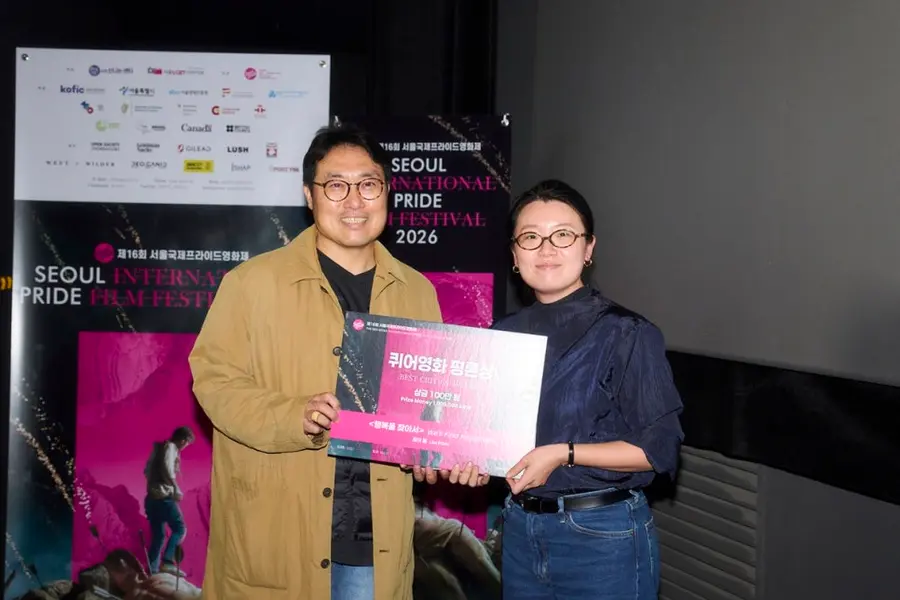
Queer Film Critics Award: 〈Looking for Happiness〉 (Director Léa Pool) ©SIPFF
The Queer Film Critics Award went to Looking for Happiness, directed by Léa Pool. The jury consisted of Kim Kwan-hee, a programmer at the Bucheon International Fantastic Film Festival; Oh Dong-jin, executive director of the DMZ International Documentary Film Festival; and film critic Heo Nam-woong. Presenter Kim Kwan-hee said, “The film is set against the reality that the oppression faced by sexual minorities and the challenges faced by immigrants are not separate issues, and it finds in love the possibility of overcoming that reality.” He added, “It’s a work that overcomes the power dynamics between romantic partners and nations, as well as the gap between ideals and reality, and opens a path to a better future.” Programmer Kim Young-woo, an adviser to the festival, accepted the award on the director’s behalf.
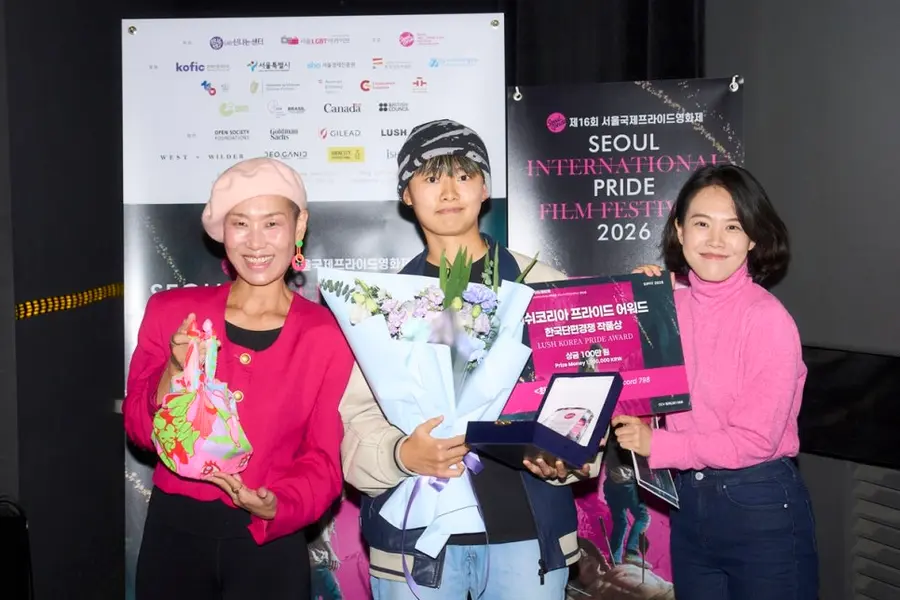
Lush Korea Pride Award (Best Film): 〈Record High: 798 Points〉 (Director Kim Nae-eun) ©SIPFF
Next came the awards for the Korean Short Film Competition, which continues to strengthen the competitiveness of Korean queer cinema and serve as a launching pad for new talent. The jury consisted of last year’s award recipient, actress Kim In-kyung; Song Chi-hwa, a writer for KBS Independent Film Theater; and Lee Won-jae, vice president of K-Movie Entertainment Co., Ltd. The Lush Korea Pride Award (Best Film) went to Record High: 798 Points, directed by Kim Nae-eun.
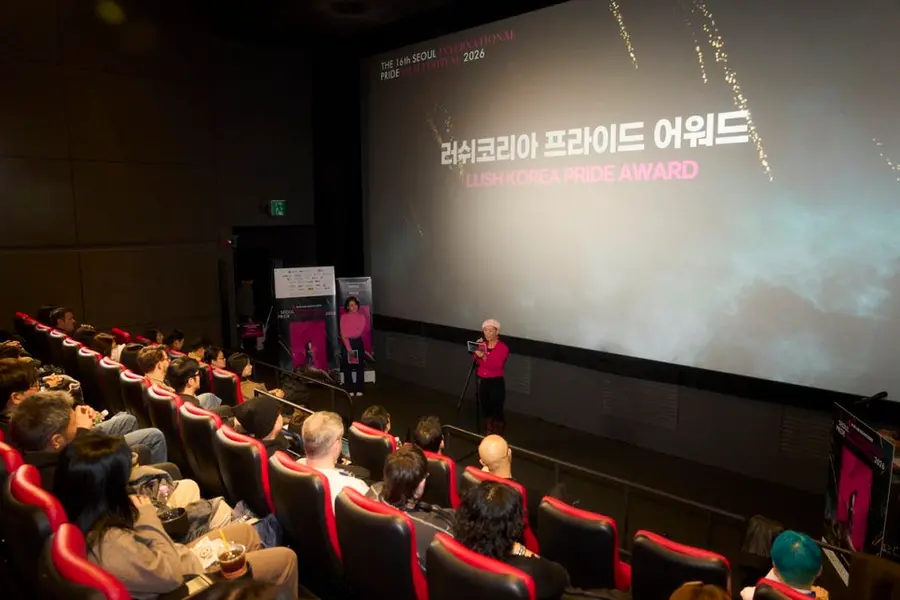
Lush Korea Pride Award (Best Film): 〈Record High: 798 Points〉 (Director Kim Nae-eun) ©SIPFF
Actress Kim In-kyung, who took the stage with Park Won-jung, a director at Lush Korea, said in her jury statement, “The film conveys naturally, through the characters’ everyday lives and emotions, without special explanation or declarations, that ‘love for someone is not limited by anything.’” She continued, “Rather than treating queerness as something special or unfamiliar, it expands it into a universal emotion anyone can experience. The director’s sensitive perspective creates a universal resonance from the characters’ small, seemingly trivial feelings, building anticipation for future work and, ultimately, a feature film.” Director Kim Nae-eun, who took the stage to accept the award, said, “I think this is the first time in my life I’ve made a film and won an award.” Kim added, “I’m grateful to the Seoul International PRIDE Film Festival, and to the crew and friends who helped me from the beginning of filming to the very end.”
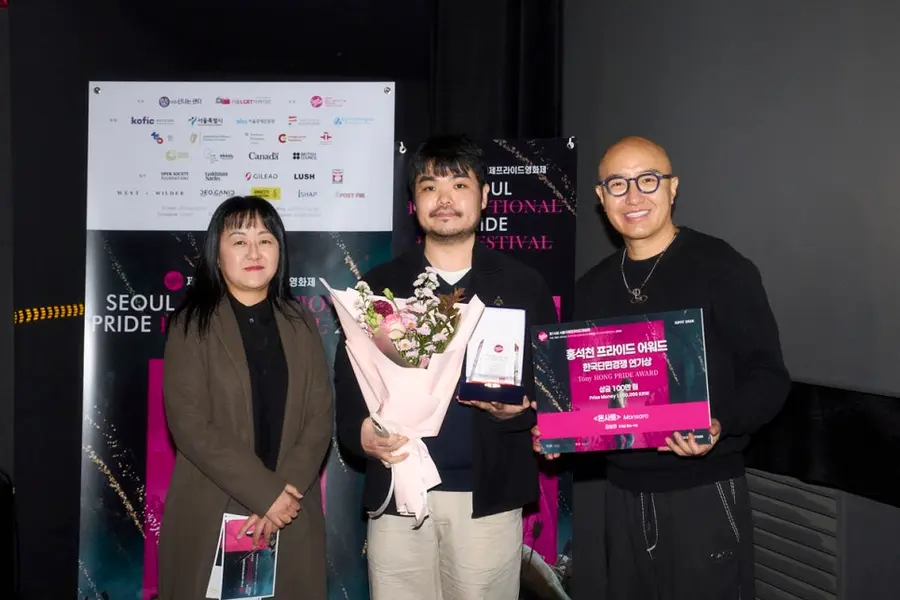
Hong Seok-cheon Pride Award (Acting): 〈Monsaro〉 (Actress Kim Bo-ra) ©SIPFF
Actor Hong Seok-cheon personally presented the Hong Seok-cheon Pride Award for Acting, which was established last year. This year’s award went to actress Kim Bo-ra for her performance in Monsaro, directed by Bae Jun-won. Writer Song Chi-hwa said in her jury statement, “With a distinctive presence and delicate emotional performance, she gives depth to memories of someone who has passed away and the pain of loss, conveying to the audience the grief left by the character’s absence.” She added, “We applaud her achievement in completing the work’s emotional arc with a singular resonance that only she could create.”
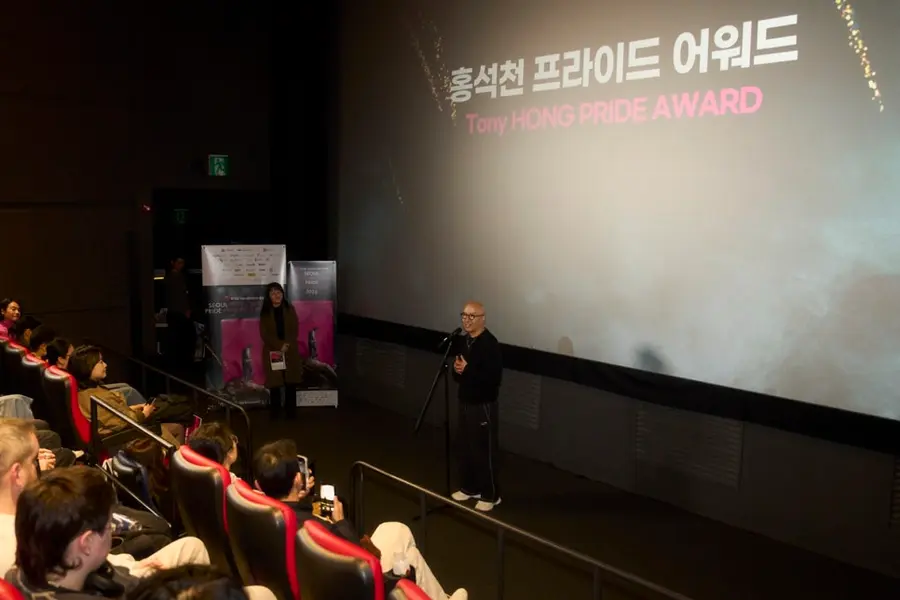
Hong Seok-cheon Pride Award (Acting): 〈Monsaro〉 (Actress Kim Bo-ra) ©SIPFF
The cast and crew of Monsaro took the stage and read a statement on behalf of Kim Bo-ra, who was unable to attend because of another commitment. “Thanks to the crew and cast who worked on the film with me, I was able to stay immersed in ‘Yujin’ until the very end,” Kim said. “Because I first encountered Monsaro three years ago, this award means even more to me. I’ll do my best in every role and keep learning so that I can become an actor worthy of this award.”
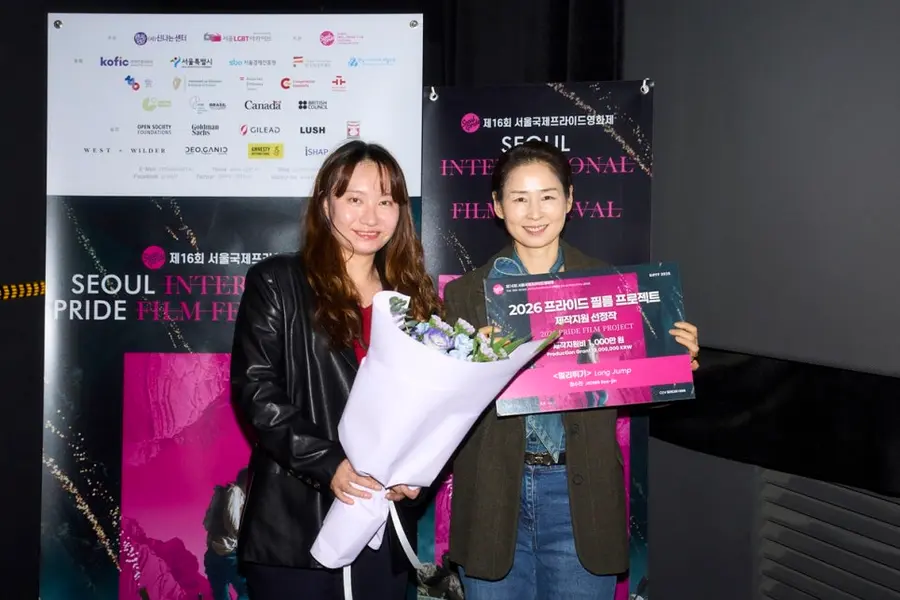
2026 Pride Film Project production grant recipient: 〈Long Jump〉 (Director Jung Su-jin) ©SIPFF
The final award of the ceremony went to the Pride Film Project, the Seoul International PRIDE Film Festival’s pre-production grant program. After being judged by Kang Ki-myung, CEO of Triple Pictures Co., Ltd.; director Lee Song-hee-il; and producer Jo Young-gak, Long Jump, directed by Jung Su-jin, was selected from the three projects presented in the public pitching session as this year’s production grant recipient. The selected project will receive support in various areas, from development and production to post-production, and will premiere at next year’s 17th festival. Kang Ki-myung said in his jury statement, “The project received high marks for its solid, well-crafted screenplay, the director’s deep understanding of the work and its systematic production preparations.” He added, “With enough days of filming and a safe, stable production environment, we expect it to become an even stronger work.”
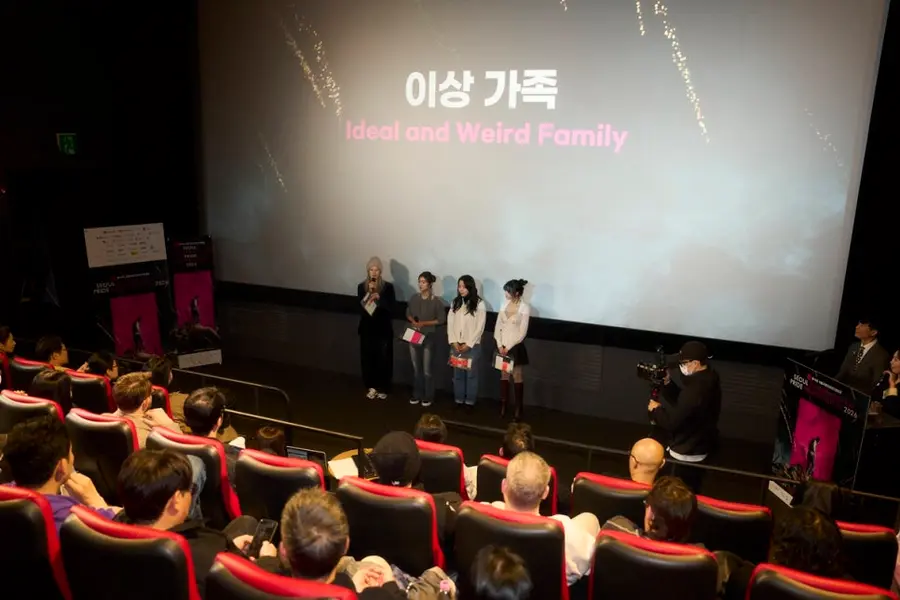
Stage greeting for closing film 〈An Unusual Family〉 (from left: actors Lee Young-jin and Jeon Chae-eun, director Kim Ji-hyun, and actor Kim Ray) ©SIPFF
The closing film, An Unusual Family, brought the ceremony to a close. After a stage greeting with director Kim Ji-hyun and actors Lee Young-jin, Jeon Chae-eun and Kim Ray, the film screened in Theaters 1 and 2 at CGV Piccadilly 1958. Kim’s feature debut tells the story of Dasun and Heesu, a lesbian couple who have decided to divorce, and their two daughters, Sol and Won. First unveiled at the 27th Jeonju International Film Festival, the film drew attention for directly addressing the breakup of a queer couple who have raised children together.
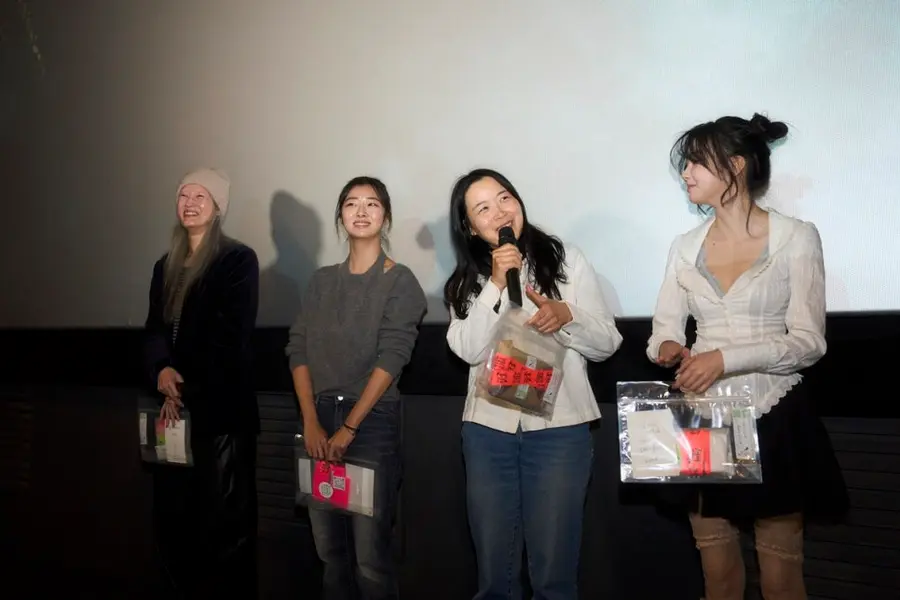
Stage greeting for closing film 〈An Unusual Family〉 (from left: actors Lee Young-jin and Jeon Chae-eun, director Kim Ji-hyun, and actor Kim Ray) ©SIPFF
Actress Lee Young-jin, who left her mark on the history of Korean queer cinema with the 1999 film Memento Mori, added further significance to the film by portraying the life of a middle-aged sexual minority for the first time in 27 years. Programmer Kim Seung-hwan had previously explained the choice of closing film, saying, “As a warm comedy-drama that doesn’t end in tragedy but instead rediscovers the meaning of family, it’s an ideal film to close the festival with the audience laughing together.” With a post-screening Q&A, the 16th Seoul International PRIDE Film Festival brought its seven-day program to a close. The festival offered audiences and film professionals the chance to enjoy a diverse range of queer films through its accomplished program and richer lineup of events. After safely wrapping up seven days of shared celebration for LGBTQ+ and non-LGBTQ+ people alike, the Seoul International PRIDE Film Festival looked ahead to an even more beautiful festival next year.









댓글 (0)
댓글 작성
댓글을 작성하려면 로그인이 필요합니다.
로그인하기