



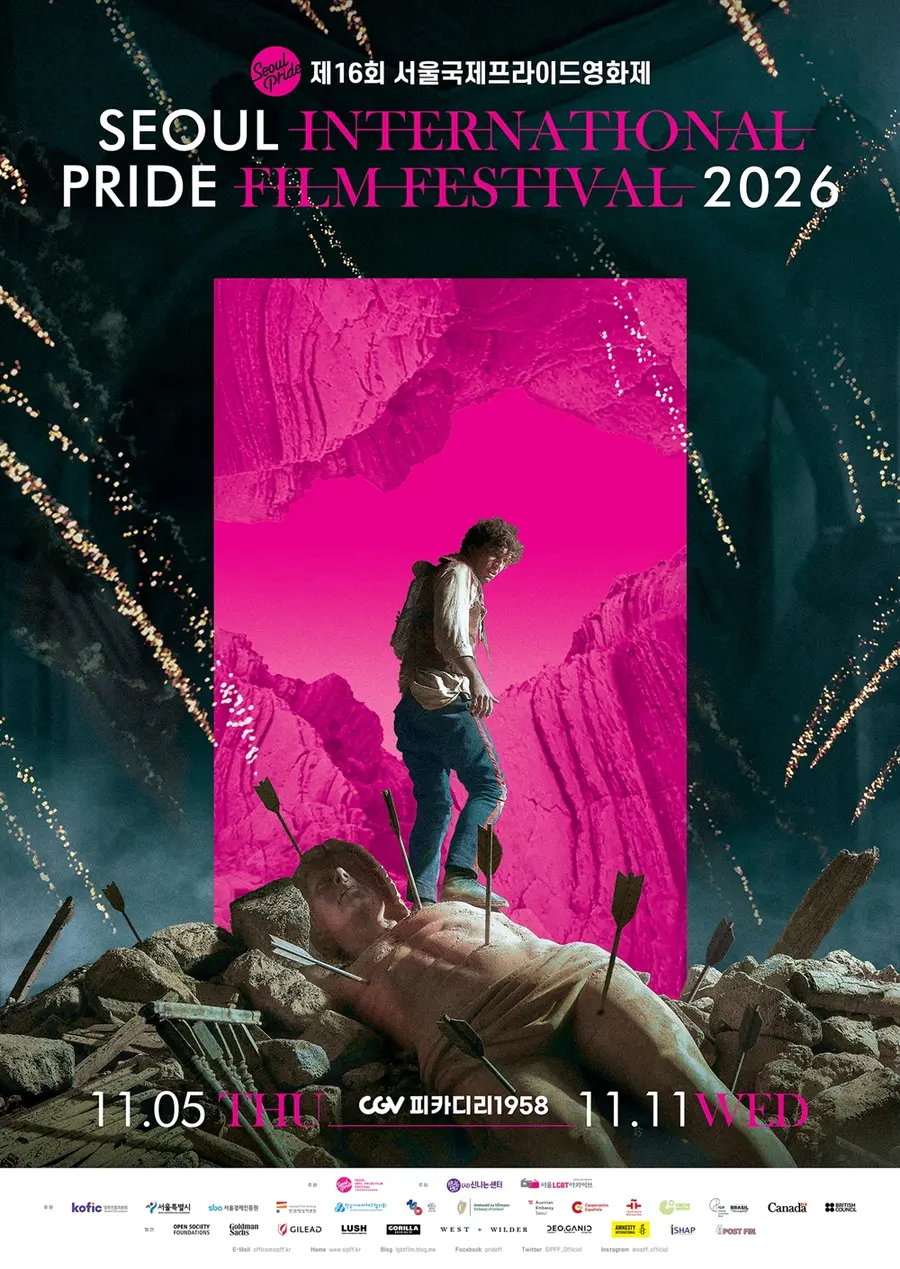
PRIDE is a symbolic word that expresses the self-esteem of sexual minorities and encompasses all LGBTQIA+ people. A showcase of solidarity that brings some of the world’s best queer films to Korean audiences, the 16th Seoul International PRIDE Film Festival begins ticket sales at 4 p.m. on Friday, Oct. 23. Tickets will be available through the CGV website and app and cost 10,000 won. This year’s official lineup features 116 films from 34 countries, including 30 world premieres, two international premieres, 18 Asian premieres and 17 Korean premieres—67 films making their debut in Korea. The full screening schedule is available on the festival’s official website (sipff.kr).

This year’s festival opens with 〈The Black Ball〉. Co-directed by Javier Calvo and Javier Ambrossi, the film follows the intertwined lives of three gay men across 1932, 1937 and 2017, drawing on an unfinished manuscript by Spain’s national poet, Federico García Lorca. It won the Best Director award in competition at the 79th Cannes Film Festival and is Spain’s submission for the Academy Award for Best International Feature Film. The closing film is director Kim Ji-hyun’s feature debut, 〈An Unusual Family〉. It tells the story of a lesbian couple, Da-seon (Lee Young-jin) and Hee-soo (Kang Jin-ah), who have decided to divorce, and their two daughters, Sol-i and Won-i. The film was warmly received when it premiered at the 27th Jeonju International Film Festival, with Lee and Kang playing the couple.
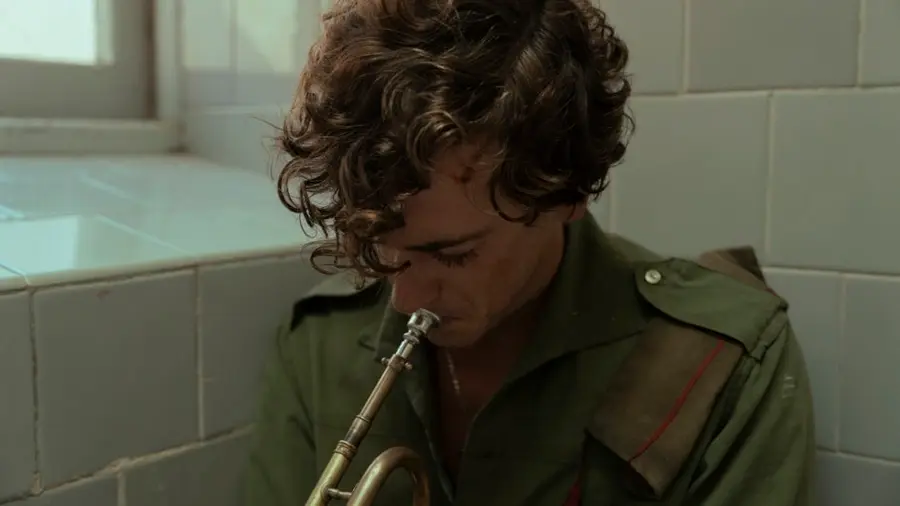
This year’s opener, 〈The Black Ball〉, won the Best Director award in competition at the 2026 Cannes Film Festival and was selected as Spain’s submission for the Academy Award for Best International Feature Film, establishing itself as both an artistic achievement and a major talking point. Co-directed by Javier Calvo and Javier Ambrossi, it follows the intertwined lives of three gay men across 1932, 1937 and 2017. Inspired by an unfinished manuscript left by Spanish national poet Federico García Lorca before he was executed by firing squad in 1936, 〈The Black Ball〉 premiered at this year’s Cannes Film Festival. Critics have widely praised its century-spanning ambition and finely wrought emotion, calling it “a heartbreaking work of astonishing genius” (IndieWire), “a dazzling combination of contemporary pop sensibilities and classical filmmaking” (The Hollywood Reporter) and “rich in exquisite and loving detail, and assured” (The Guardian).
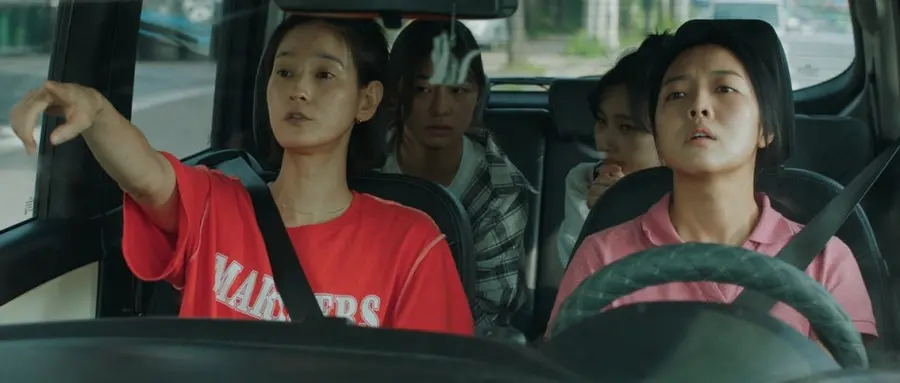
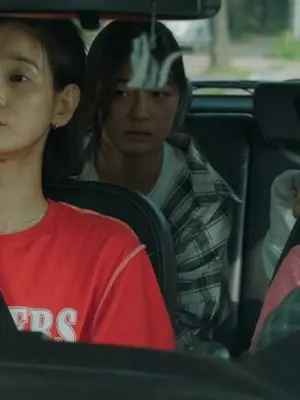
〈An Unusual Family〉 had its world premiere in the Korean Cinema section of the 2026 Jeonju International Film Festival. It tells the story of Da-seon and Hee-soo, a lesbian couple who have decided to divorce, and their daughters, Sol-i and Won-i. Da-seon, an essayist who wants to venture out into the world, and Hee-soo, a civil servant who wants to preserve an ordinary life, decide to split up, leaving their middle-school-aged daughters unsure which mother to live with. Then Hee-soo’s younger sibling’s wedding and an inheritance issue involving Da-seon coincide, and the four set off on a trip together. Along the way, the girls learn about their mothers’ past.
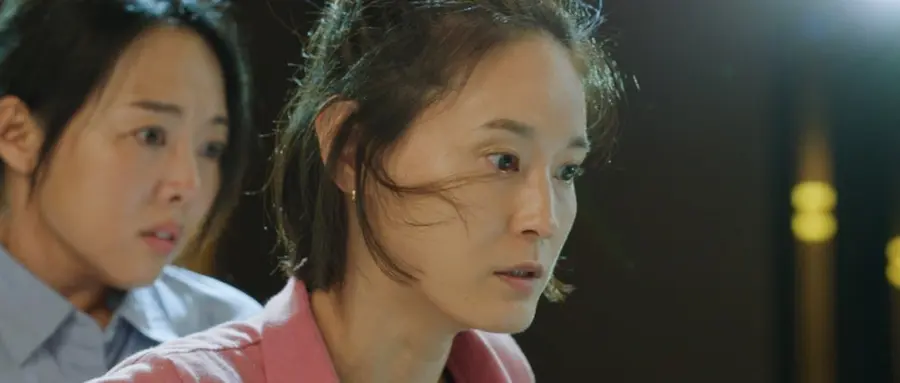
Same-sex couples cannot legally marry in South Korea, and even when they raise a child together, it can be difficult for both partners to be recognized as parents. 〈An Unusual Family〉 stands out for directly addressing the breakup of a queer couple who have raised a child in these circumstances. Divorce in a queer family with children is rarely explored in Korean feature-length queer cinema, and the film’s focus on a lesbian couple gives the subject added significance. Kim Seung-hwan, a programmer for the Seoul International PRIDE Film Festival, said, “The director herself said, ‘I wanted to talk about an unusual family and an ideal family,’ and that double meaning is at the heart of this film.” He added, “〈An Unusual Family〉 gives us an early glimpse of the future we are going to face.”
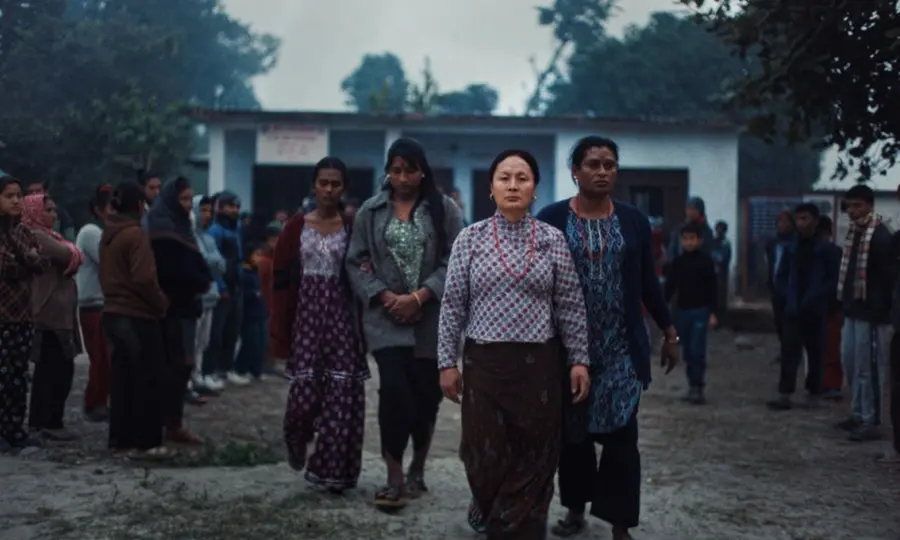
Meanwhile, audiences are also eagerly anticipating the programmers’ picks from each section. The “New Pride” section, which showcases debut and sophomore films by emerging directors, features 〈Elephant in the Fog〉, winner of the Un Certain Regard Jury Prize at the Cannes Film Festival, and 〈Ivan & Hadoum〉, winner of the Teddy Award for Best Feature Film at the Berlin International Film Festival. The “World Pride” section includes 〈Big Girls Don’t Cry〉, selected for the Sundance Film Festival, and 〈In Search of Happiness〉, winner of both the Jury Prize and Audience Award. In the “Asia Pride” section, 〈The Witch of Bihar Lake〉 tells the story of the hijra community in the form of a folk tale.
The Seoul International PRIDE Film Festival has long presented its “Open Pride” section to spotlight the rights of sexual minorities and other marginalized groups and explore the possibilities for coexistence and solidarity. The section introduces films about the diversity of human values and rights and puts the ideals of coexistence and solidarity into practice. This year’s theme is “Transgender People Take Center Stage.” Transgender rights are now being rolled back in parts of the world. In March this year, India saw a legal setback to the right of transgender people to self-determination, while debates over eligibility to compete in sports expanded into political disputes over gender and fairness. In South Korea, discussions over the requirements for legal gender recognition remain at a standstill. The three films selected for this year’s Open Pride section are set in different eras and continents, but ultimately ask the same question: Whose permission do I need to live as myself?
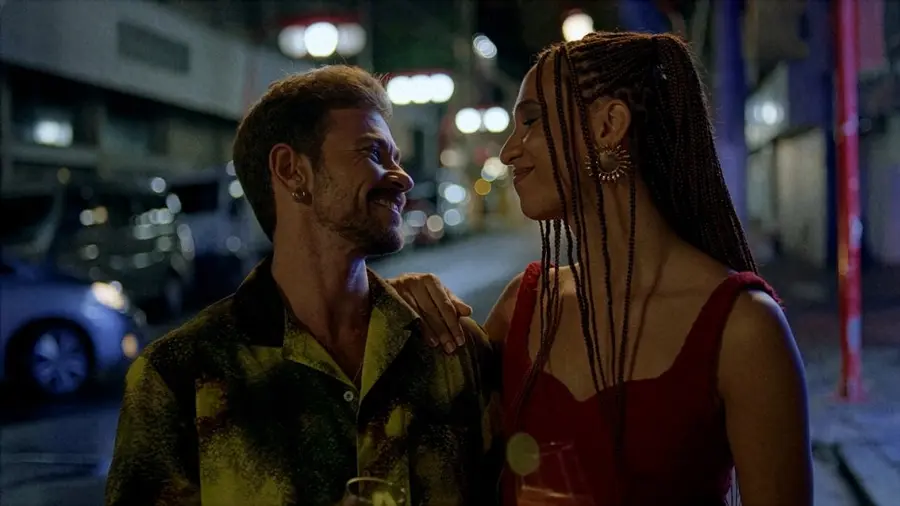
“Taking center stage” is the answer to that question. For a long time, transgender characters on screen were confined to tragic victims or supporting roles, and even those roles were often played by cisgender actors. For a transgender person to take center stage means that someone once explained through another person’s gaze can now drive the story through their own desires and choices. The film that most clearly embodies this idea is 〈I’ll Miss You〉. Amanda and Caio have been together for seven years and move in together, but love alone is not enough. Caio dreams of a future with Amanda, while Amanda wants something more. The cracks in their relationship become more visible when they have a child. Caio, a trans man, becomes pregnant, while the couple’s sexual positioning and everyday gender roles continue to clash and turn upside down. Two transgender actors bring to life the collision between reproductive rights and the experience of living as transgender. Some things can only be portrayed accurately when people with lived experience play people with that same experience, and this film is built on that accuracy.
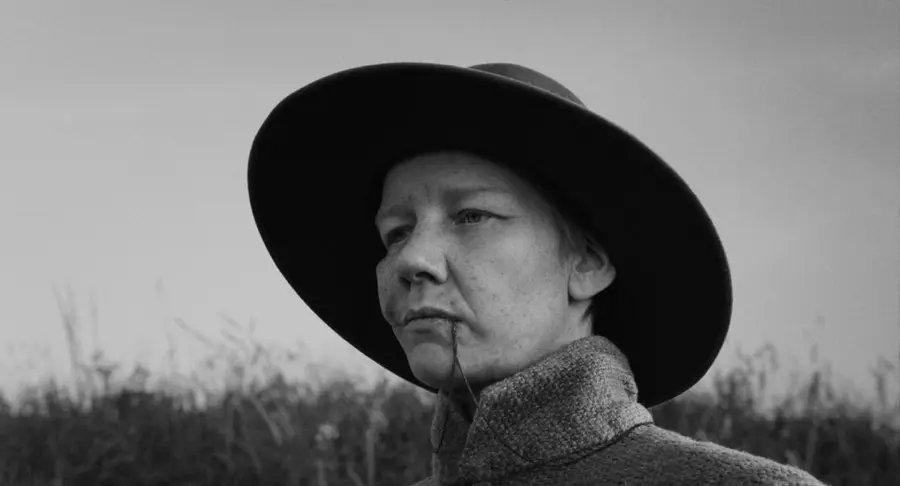
〈Rose〉 begins after the war, as a soldier named Rose arrives in a remote Protestant village. He presents documents claiming rights to an abandoned estate, but the villagers remain suspicious. He grows increasingly desperate to belong to the community, even courting a farmer’s daughter. His life is built on a borrowed name, forged documents and an identity that could collapse if exposed. There was a time when, in households without a male family member, someone had to live as a man; it was the only way to survive and protect the family’s property. This is why the film should be read as a transgender story. In many parts of the world, women still cannot go out alone, and someone in the family must live as a man. Sandra Hüller won the Silver Bear for Best Leading Performance at the 76th Berlin International Film Festival for building a person’s identity through voice, gait, posture and gaze.
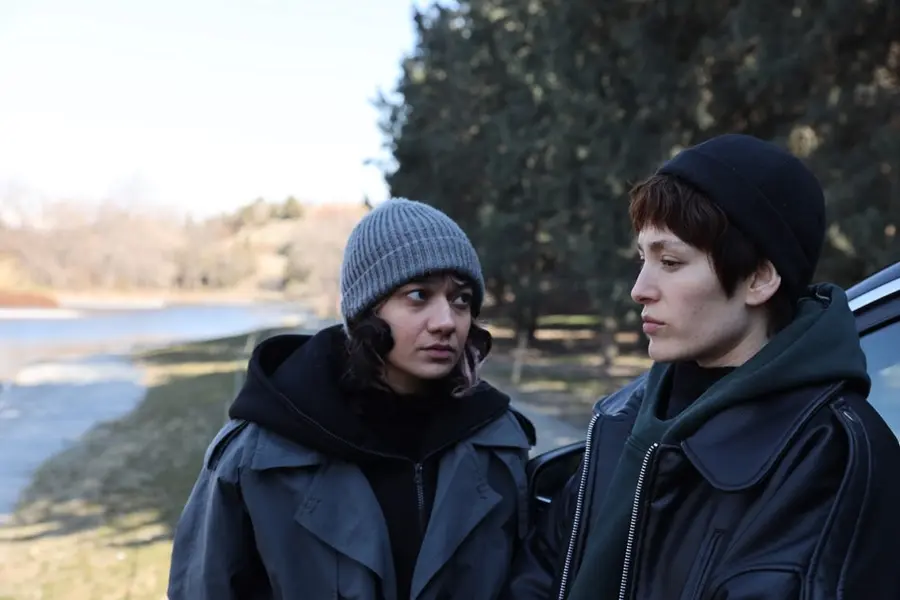
〈Between Dreams and Hope〉 tells the story of Azad, a trans man in present-day Tehran who dreams of marrying his partner, Nora. To marry legally, he needs gender-affirming treatment and the approval of his long-estranged father. Faced with that reality, the question “Whose permission do I need?” becomes immediate and concrete. The short film 〈Billy & Jessie〉 explores the moment a seemingly perfect lesbian couple is shaken by one partner’s transition. When Jessie realizes she is attracted to men, the two make an unexpected choice in search of clarity, and in the process confront deeper truths about their relationship. The screenplay stands out for retaining humor, tenderness and honesty without reducing identity to a single narrative.

In 2018, the Seoul International PRIDE Film Festival partnered with Amnesty International to present films on “conscientious objection to military service and the introduction of alternative service.” In 2019, it partnered with the animal rights group KARA on “animal rights”; in 2020, with Migration to Asia Peace (MAP) on “refugees”; in 2021, with 탈핵신문 on “phasing out nuclear power,” marking the 35th anniversary of the Chernobyl nuclear disaster and the 10th anniversary of the Fukushima nuclear disaster; in 2022, with the Seoul Human Rights Film Festival for People with Disabilities on “disability”; in 2023, with Amnesty International on “forbidden love”; in 2024, with Acting Group on “Proud to be PrEPped”; and in 2025, on “queerness in sports and politics.” These programs have showcased films that give voice to coexistence and solidarity.
Major screenings at the Seoul International PRIDE Film Festival sell out as soon as tickets go on sale each year, continuing a strong demand for tickets. This year, intense competition is expected for the festival’s most talked-about films, including the opening and closing features. Information on films and programs, along with schedules for special events, is available on the festival’s official website and social media accounts.
※ Continue to the second article featuring recommended films from the 16th Seoul International PRIDE Film Festival.



댓글 (0)
댓글 작성
댓글을 작성하려면 로그인이 필요합니다.
로그인하기