


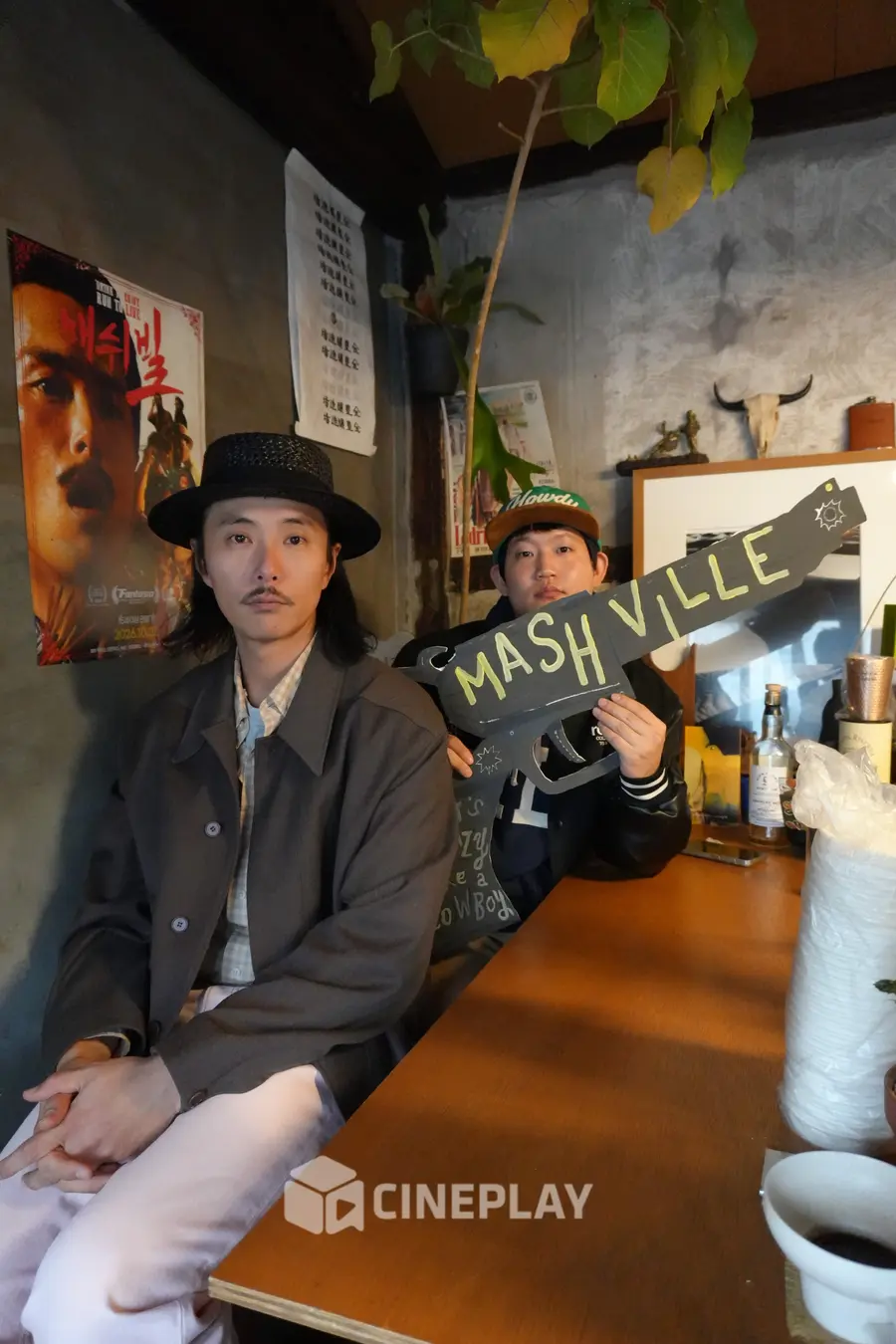
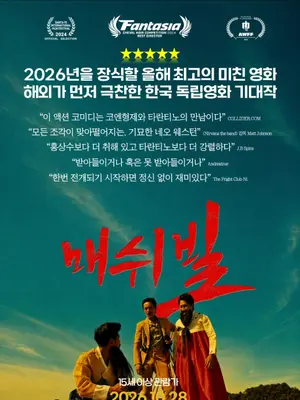
In a country where mountains cover most of the land, where did the idea come from to make a Western filled with endless horizons and blowing dust? But the story changes completely when you fill that barren desert with the parched reclaimed land of Hwaseong, Gyeonggi Province, and replace outlaws with three brothers illegally distilling high-proof traditional liquor and cult killers dressed to the nines in hanbok. This is an Oriental Western comedy-adventure about nine people with competing interests—and one corpse—who converge in a village thrown into lawlessness by cult members trying to gather 12 bodies for a ritual.
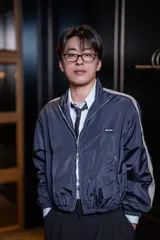
Rather than embracing the myths of the classic American Western, 〈Mash Ville〉 is closer to a Korean-style “revisionist Western,” armed with the bizarre yet endearing energy of a B movie and a comic-book imagination. Shot guerrilla-style in just one month amid the summer heat of 2022, the film found its footing after winning Best Director at the Fantasia International Film Festival, North America’s largest genre-film festival, followed by Best Picture at the Yellowstone International Film Festival. After a long drift and the hurdles of distribution, the director and actor finally met audiences after pounding the pavement themselves and opening theater doors. We met director Hwang Wook and actor Jeon Shin-hwan at Coffee Yangjang (WESTERN CLOTHES), the cafe Jeon runs in Changjeon-dong, Mapo-gu, and asked about the film’s rough, fiery four-year journey.
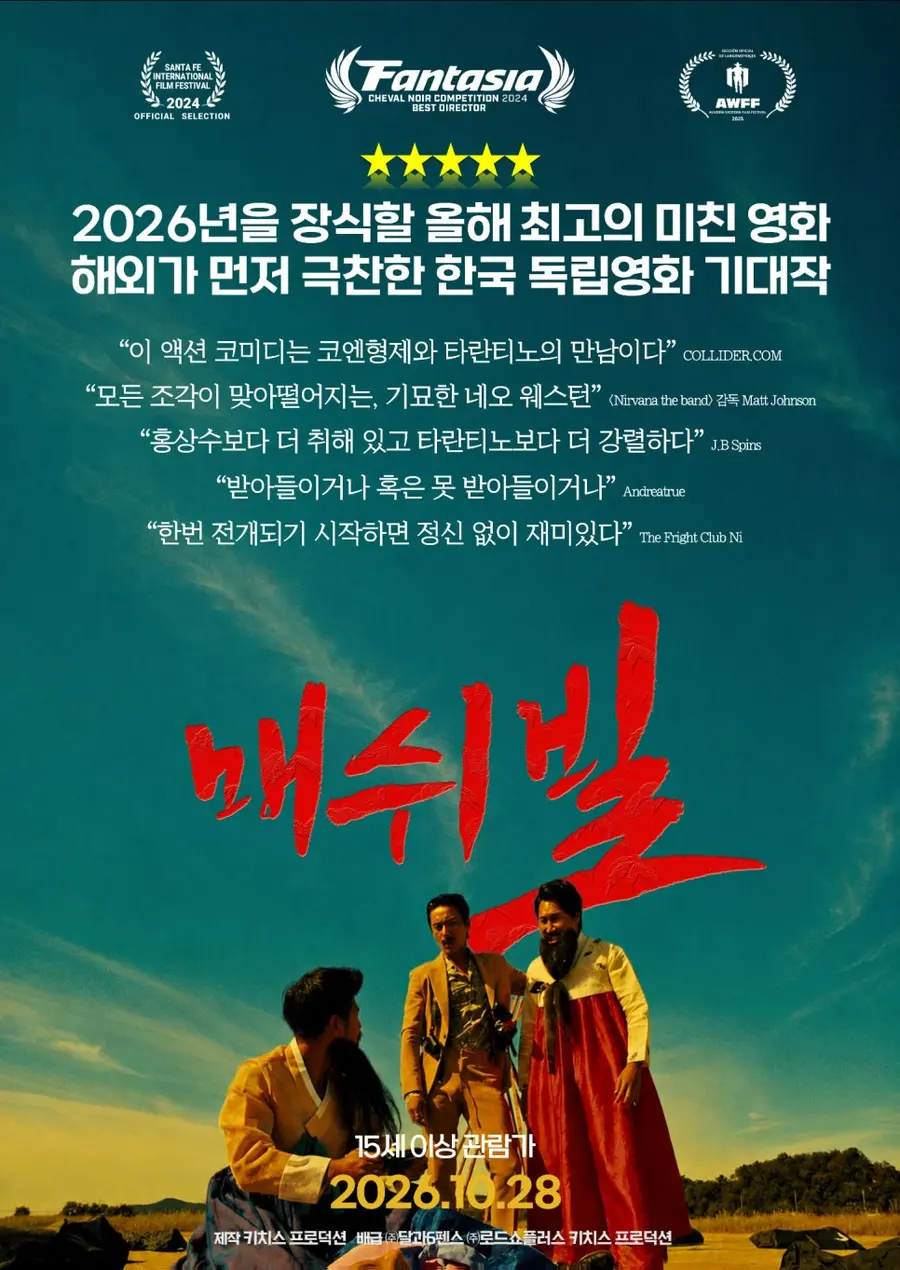
※ Spoilers ahead.
The film was made in 2022, went through the festival circuit starting in 2024, and finally opened in October 2026. It was quite a long road. What steps did you take along the way to get it to theaters?
Director Hwang Wook I had been developing a project with another production company since 2020, but the pandemic hit, and I spent two years waiting for funding. The funding pipeline had completely frozen up. After losing two years, I felt I couldn’t afford to waste any more time. So, with Lim Dong-min, my high school desk mate and longtime friend, I decided to make a debut feature using only our own money through the production company we’d started together. Since commercial investment was unlikely, we decided to come up with a story we could enjoy making ourselves. That’s how 〈Mash Ville〉 got its start in February 2022. We had a first draft by mid-April, wrapped casting and preproduction between April and July, and finished shooting in just one month, by the end of August. The crew all had other jobs lined up starting in September, so we had to finish within that month, no matter what. We had a first edit in 2023, but it was by no means easy for an independent film to secure commercial distribution in Korea. We had to find a new way forward for the film, so actor Jeon Shin-hwan, actor Kim Hee-sang and producer Lim Dong-min and I set up a large booth at the Busan International Film Festival’s film market and knocked on doors overseas first. At most markets, companies circulate catalogs for multiple films. We filled our entire booth with just one film and took the unusual approach of promoting it by having the actors pour bourbon for international buyers themselves. That’s where we signed with EST STUDIOS, an international sales company. We also responded to a request to shorten the runtime and locked the final cut in December 2023. Then the film was invited to the competition section at the Fantasia International Film Festival, North America’s largest genre-film festival, and we gained confidence that it could find its own audience.
Actor Jeon Shin-hwan I started taking on a role beyond acting when we went to the film market. It was my first time at one, but I’d worked a lot of trade-show jobs in the past, so Kim Hee-sang and I took care of setting up the booth and doing the grunt work. We had a student interpreter on hand to greet international buyers, but I still wondered, “Is this actually going to work?” When we landed an overseas sales deal and won Best Director and an award for excellence at international film festivals, it gave us a tremendous boost of confidence. But after the international festival run, getting back to Korea and preparing for a domestic release brought one obstacle after another. We couldn’t just wait as the release date kept growing uncertain, so I thought we should create an opportunity to meet audiences in person first. Thanks to a friend, we were able to rent Yeonnamjang, and since I couldn’t handle the design or administrative work, I hit the pavement myself and put together a film-promotion party. I scoured the vintage markets around Hongdae and handed out posters in person, bringing together people who love cowboys and Western vintage, Western-band musicians, and artist friends. Everyone was eager to join in, as if they’d been waiting for this. Seeing Korean audiences who were encountering the film for the first time respond so enthusiastically to the subculture party and the film’s mood gave us a lot of strength. The party helped build excitement ahead of the release, and then, as we handled distribution ourselves, we were able to see it through to the end thanks to the people who recognized the film’s value early on and opened their theaters to us, including Indie Space and Sangsang Madang.
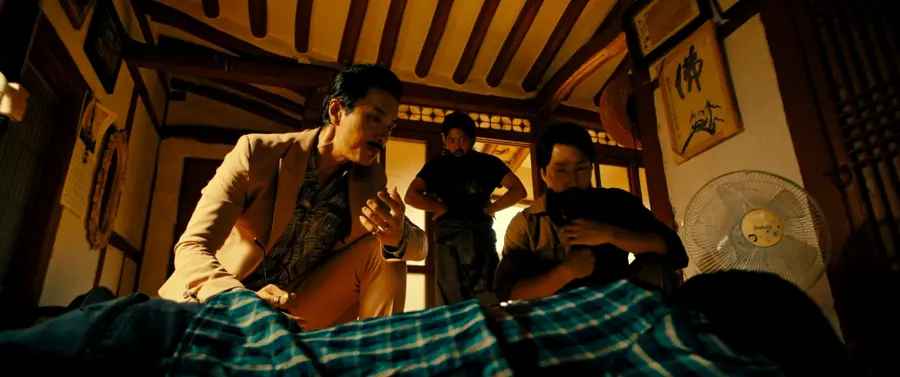
〈Mash Ville〉 is closer to a “revisionist Western” than a traditional Western: it doesn’t draw a clear line between good and evil, and its antipathy toward authoritarianism is unmistakable. It’s also striking that you found an exotic setting in the reclaimed land of Hwaseong, Gyeonggi Province, and adopted the outward trappings of the genre within Korea’s predominantly mountainous landscape.
Director Hwang Wook Mountain ranges stretch thickly across the center of Korea, and the mountains are so green that they didn’t fit the dry atmosphere of a Western. To find a sense of a horizon or a wide-open plain, we had to head south, to Jeolla or Gyeongsang, or west, to Gyeonggi or Chungcheong. But since most of the crew had to travel from Seoul, the south was simply too far away. So the production and assistant directing teams spent two months searching Google Street View and Naver Maps every day, checking alleys and satellite coordinates across the country. Whenever we identified a potential location, we’d race out there in the morning to scout it. That’s how we found Hwaseong, in Gyeonggi Province. The land was once under the sea and was brought above water through reclamation. Plants that had been underwater dried out and hardened, leaving behind an exotic landscape that looked like a mural in a desert. As it happened, when I was writing the script, I was mapping out a route for the three Joo brothers to travel from Seoul to Hwaseong, via Gapyeong, over two days and one night to deal with a major incident that had happened that morning. The geography and the actual location fit perfectly, giving us a plausible way to explain the distance to the audience.
There are a great many characters. In such a colorful ensemble, how did you give the story a center of gravity strong enough to drive it forward? And since you handled the editing yourself, were there any rules or rhythms you held onto most closely in the editing room?
Director Hwang Wook When working with a large cast of characters, the first principle I focused on was having a “clear, powerful ending.” If the ending has enough energy, then even if the characters are scattered and things feel a little confusing at first, the audience can become deeply immersed as the story progresses and they all converge on a single point. Westerns are a genre that often features many characters to establish the conflict between good and evil and the character of the group. I’d also naturally absorbed the way director Robert Altman handled characters so deftly in the films I loved growing up. Because of budget limitations, I had to edit the film myself, so I set clear rules for shot composition from the start of filming and made sure not to interrupt the rhythm of the actors’ performances. Instead of cutting scenes into lots of small pieces, I limited each sequence to three or four setups that could clearly convey it, giving the actors plenty of room to perform. In particular, I almost never used solo shots of the second Joo brother, Joo Se-hyung, or the third, Joo Se-jin. I insisted on keeping the two together in a two-shot, so they would move as if they were one person. By contrast, I used many solo shots of Oh Jae-won, the villainous police officer, to make him feel intimidating. I carefully calculated the scale and width of each shot according to the characters’ personalities and relationships, and shaped the editing rhythm accordingly.
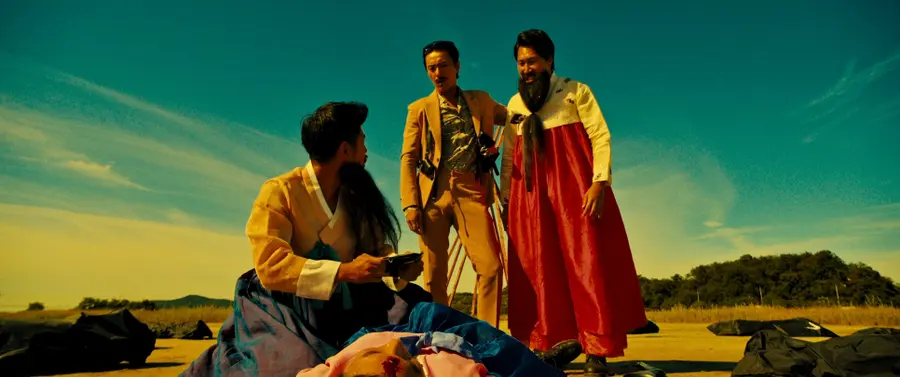
This connects to the previous question. In the latter part of the film, the story follows Joo Se-jong’s path. How did you build Se-jong as the leader of the three brothers, guiding two younger siblings who seem to be lacking in one way or another? What kind of “team” dynamic did you want him to have with Joo Se-hyung and Joo Se-jin? We’d also love to hear about the questions the three of you worked through on set.
Actor Jeon Shin-hwan After working with director Hwang on a short film, I was given films to study as references, including the Coen brothers’ 〈O Brother, Where Art Thou?〉 and 〈The Big Lebowski〉, as well as Howard Hawks’ 〈Rio Bravo〉. The question I considered most important while preparing to play Se-jong was, “How would this man have grown up if he hadn’t had his younger brothers? What kind of boy would he have been as the family’s breadwinner?” I interpreted him as someone who grew up cut off from the world, renting old videos and reading martial-arts comics, or clumsily copying the behavior of older people in the neighborhood and thinking it was the right way to act, then forcing it on his brothers. He doesn’t know much himself, but he has to act like an adult and pretend he knows everything in front of his younger brothers. Even when burying his grandfather’s body, he casually uses the word “good death,” which he must have picked up somewhere, as if nothing is wrong. But as he meets strangers and encounters new events, Se-jong’s foolishness and limitations keep coming to light. In some ways, his younger brothers, who quietly follow him, seem more mature. Rather than forcing an explanation of who Se-jong is, I wanted his journey—where he keeps going and somehow doesn’t die—to give the audience a quick sweep through one man’s wretched life. The most important thing in creating the character was to make the audience naturally wonder, “How will this man live from here on? What was he like growing up?”
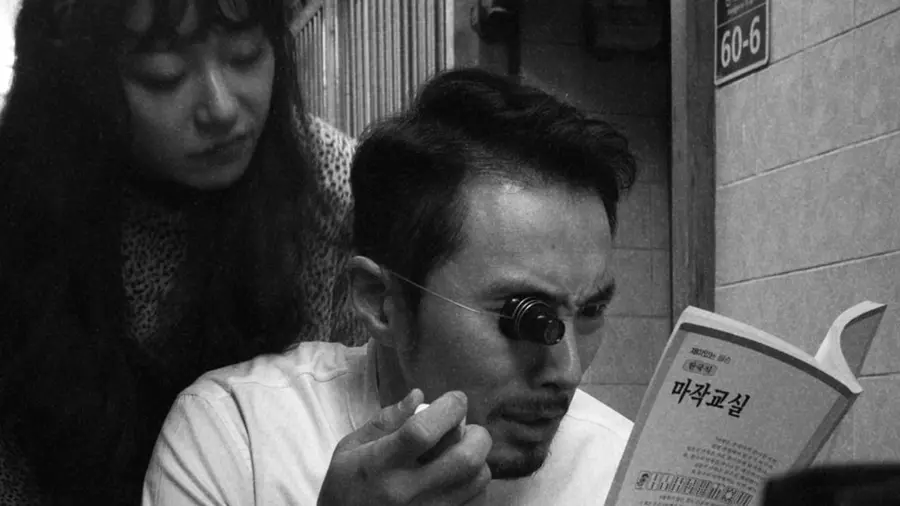
You two also worked together on the earlier short film 〈The Outlaws of Hwanghak〉 (2021). It’s an impressive short about a commotion among various characters, including someone trying to sell a wristwatch, a watch repairman and a watch dealer. The films share the same exaggerated expressions and comic-book-like physicality. Where did your long relationship begin, and how did it lead to 〈Mash Ville〉?
Director Hwang Wook 〈The Outlaws of Hwanghak〉 was made as part of the 5th Chungmuro Film Festival–Directors’ Week, a project jointly hosted during the pandemic by the Directors Guild of Korea (DGK) and the Jung-gu Cultural Foundation. We put a professional watch repairer in an unusual setting and experimented with exaggerated gestures and a distinctive comic-book tone. Both the director and the actors had a lot of fun with it. That experiment expanded directly into 〈Mash Ville〉. The only difference was that 〈The Outlaws of Hwanghak〉 used an extremely desaturated, monochrome approach to bring out Hwanghak-dong’s identity, while 〈Mash Ville〉 did the opposite, pushing the colors to excess to express its identity. The approach itself was very similar.
Actor Jeon Shin-hwan We first met through a mutual friend, director Hyung Seul-woo. I was drinking with him at a bar in Hongdae that felt like a little hideaway. I lived nearby and happened to pass by, so I joined them. We talked about travel and movies, hit it off quickly, and within a month of meeting, we all went to Gunsan for a two-night, three-day temporary job, which brought us even closer.
The two seemingly unrelated elements of bootlegging and cults come together, creating a strange collision between the Western and the occult. How did you come up with the daring concept of dressing a burly male killer in women’s hanbok? The hanbok and a character like Sheriff Oh Jae-won both seem to draw on familiar movie archetypes while still feeling inventive.
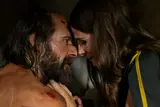
Director Hwang Wook Just as the Western expanded from mythmaking about white Americans and a simple good-versus-evil dichotomy into revisionist Westerns, I thought about what kind of villains to include if we were to make a new kind of Western in Korea. I focused on Korea’s characteristic closed-off regions and the history of heretical religions. I realized bootlegging, which slips into the shadows to evade the law, and cults share a common thread: both have an energy associated with darkness. That naturally brought them together in one world. To make this absurd setup believable to audiences, I borrowed from the “magical realism” of Latin American literature. I worked in an attitude that treats totems, shamanism and ridiculous curses as ordinary parts of everyday life, which led to the line, “Things like that happen sometimes.” Visually, I freely combined all kinds of subcultures. The bearded brothers were modeled on the shaggy look of the American rock band ZZ Top, while Joo Se-jong’s shirts and suits drew on the style of glam-rock star David Bowie. For Sheriff Oh Jae-won, I took inspiration from the distinctly American style of everyday acting associated with John Goodman and the look of legendary professional wrestler Big Boss Man. The male killers’ women’s hanbok was also based on the white clothing worn by cults. One audience member actually wrote in a review, “I never thought I’d see a ZZ Top fan-fiction movie in my lifetime.” I wanted to make a film where fans would discover all kinds of subcultural references the more they dug into it.
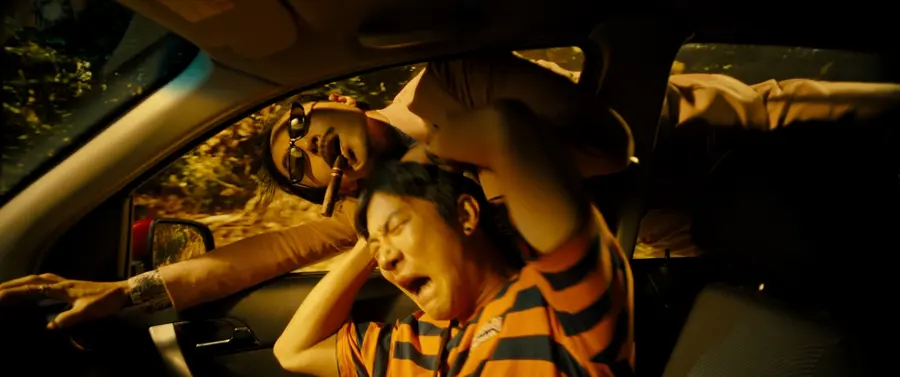
There’s a fascinating scene where Joo Se-jong rattles off the grain ratios that go into the whiskey mash bill—the meaning behind the title 〈Mash Ville〉. I’ve heard you’re a whiskey enthusiast and have also studied traditional liquor brewing firsthand. How did those personal experiences and tastes influence your character, Joo Se-jong?
Actor Jeon Shin-hwan Before preparing for the film, I was already taking distilling classes and learning to make samhae soju, a traditional Korean liquor. I wanted to get a feel for bootlegging by learning about the history of how bootlegging naturally flourished around Gwangheungchang in Mapo during the Joseon dynasty, when rice for the royal court was gathered there, and by experiencing the intensity of samhae soju, which can reach 71.2% alcohol. The director and screenwriter also came to the distillery and tasted the liquor to develop their ideas for the bootlegger character. During the pandemic, gathering restrictions meant we had to part by 10 p.m., so we often met at the director’s place to drink. I became deeply fascinated by the spicy, peppery kick of high-proof, cask-strength bourbon that hasn’t been watered down. I read reporter Cho Seung-won’s book 『All About Bourbon Whiskey』 cover to cover and hunted down rare whiskeys that can’t be imported under Korea’s liquor tax law through overseas online purchases. I looked into how whiskey was disguised as a legal medicine during Prohibition and drank whiskey every day, to the point where I felt my blood was soaked in bourbon. When acting in the scene where the characters taste starlight liquor and experience a fantasy, I recalled the thrilling, smoky moment when I first opened a bottle I’d been eagerly waiting for in the mail and let the liquor go down my throat.
I’d like to ask a little more about the title, 〈Mash Ville〉. What ultimately led you to settle on it?
Director Hwang Wook The working title of the first script was simply 〈Bootleg Liquor〉. But it felt too crude and didn’t capture the film’s varied tones, so I was mulling it over when actor Jeon Shin-hwan suggested “Mash bill.” It’s a term for the grain proportions that determine a whiskey’s flavor. And if you change “bill” to “ville,” meaning a town, it perfectly captures the film’s concept of all kinds of unusual characters being roughly mashed together in one place.
It was also decisive that two of my favorite Robert Altman films are 〈M*A*S*H〉 and 〈Nashville〉. For me, 〈Mash Ville〉 was both a tribute to a cinematic idol and the perfect title, intuitively encompassing the film’s story and themes in a single word.
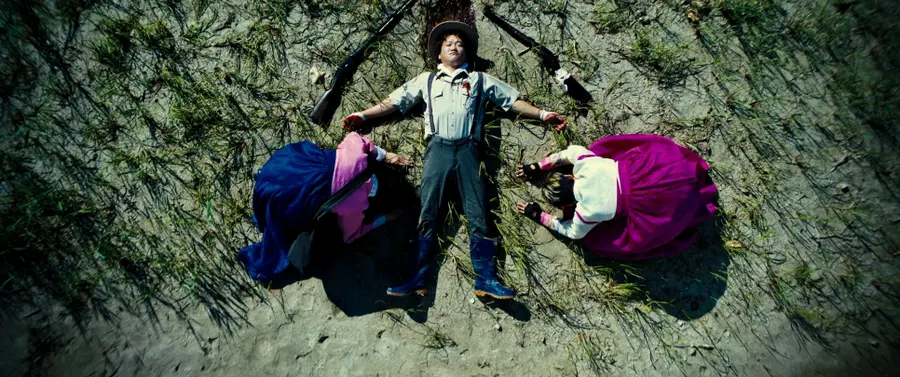
The cult’s ultimate goal in the film is the “resurrection of pure love,” and the film’s emotional resolution also turns toward maternal love and love more broadly. But the “pure love” that Nam Gi-hyeok and Yeo Gi-hyeok believed in so fervently is never fully realized. If the love they dreamed of had actually come true, what might it have looked like?
Director Hwang Wook From the time I started writing the script, I deliberately left the ending open so that it could be read completely differently depending on each viewer’s perspective. Some viewers may see the woman come back to life and interpret it as, “At last, the embodiment of the pure love the cult preached has been resurrected.” Others may take an entirely realistic view and think, “Wasn’t she just unconscious and asleep, then happened to wake up?” As the screenwriter, I directed the woman’s resurrection so it would look like the resurrection of pure love. But the cult members Nam Gi-hyeok and Yeo Gi-hyeok are mixed in among the 12 bodies, and they miss the very moment of resurrection they longed for so desperately. From that perspective, you could call it a failure for them. In a story where all kinds of characters are racing along, I needed an emotional bond to bring the scattered characters together, and the answer was “pure love.” Every character in the film suffers from a terrible lack of affection. Oh Jae-won doesn’t know how to play with his friends, so he plays by bullying them; the killers believe that pure love is the only way to purify a corrupted world. For Joo Se-jong, who has never felt love for another person in his life, the feeling of love he experiences for the first time through a character named Moon Seo-in could itself feel like a kind of “resurrection of love.”
The tent scene with Moon Seo-in is the only handheld sequence in the entire film. It’s the one moment when the film’s runaway momentum finally catches its breath. Many viewers may have felt that it connects to the absence of Se-jong’s mother, preserved in his memory. What did you want to capture in this scene?
Director Hwang Wook The film races forward without a break, but comes to a stop only in the tent scene, which we shot handheld. That’s because Se-jong’s backstory finally comes into view at that moment, and we capture his loneliness and inner anxiety as a man left on his own. The reason Se-jong can confide his feelings of loss about his mother to a woman he’s never met before is that I set the age of the mother in Se-jong’s last memory to be around the same age as Moon Seo-in. The shot of Moon Seo-in lifting Se-jong into her arms was inspired by Michelangelo’s sculpture 『Pietà』. Just as Jesus is fully revealed when the Pietà is viewed from above, from God’s perspective, I used the overhead shot to plant the idea of a mother’s arms, salvation and maternal love in the audience’s mind, almost unconsciously.
Actor Jeon Shin-hwan To express Se-jong’s sense of loss—having lost his mother at a young age and having to piece together his memories of her only from photographs—I imagined the character’s past and future, drawing on films such as director Justin Chon’s movie about a man who travels to a remote place in search of his mother. It’s the moment when the longing for his mother, suppressed in a corner of his heart, takes concrete shape through the hallucinations that come after drinking and his encounter with Moon Seo-in. In particular, after Se-jong has this mysterious experience in the tent, the director told me to treat it as a “reset,” a turning point where Se-jong gains inner courage, his eyes change completely, and he can face the feared Oh Jae-won head-on. I focused on that emotional progression in my performance.
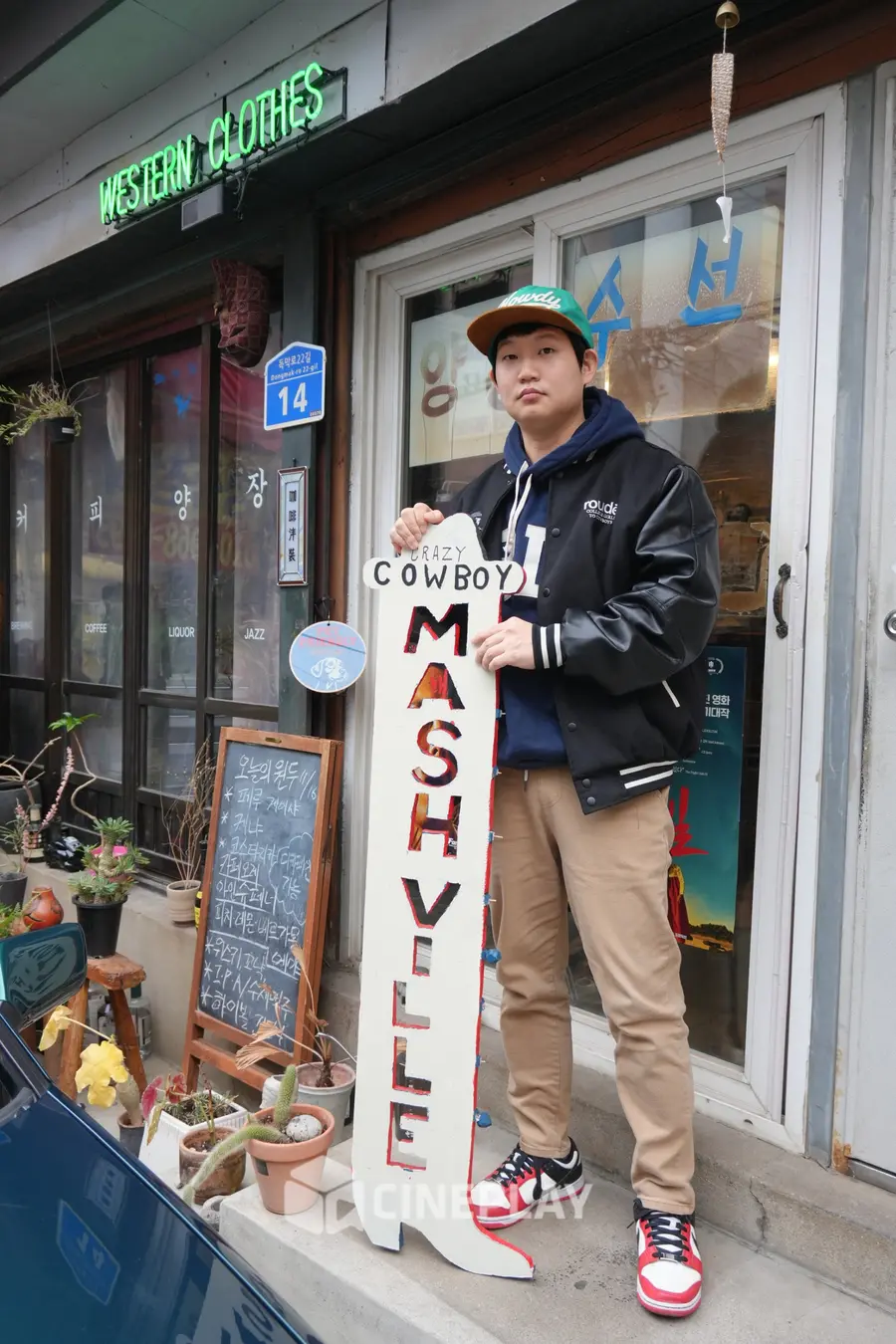
You’re now in the third week of the theatrical release and have met audiences in person at many Q&As. What were Korean audiences like, and how did they respond? I imagine their reactions were quite different from those of audiences at the international festivals you attended earlier.
Director Hwang Wook When we were writing the script and making the film, producer Lim Dong-min and I said, “Let’s make a movie that seven out of 10 people might curse at, but three will go absolutely wild for.” We wanted to embrace its cult character from the outset rather than follow the usual formula for a popular hit. So we went ahead without holding back. When the film finally opened and we met audiences, we were relieved to find that the proportion of people who went wild for it seemed much higher than three out of 10. It gave us a lot of courage, and we’ve continued to have a great time talking with audiences. Honestly, Korean audiences were the ones I was most worried about. Overseas, the Western is such an everyday, familiar genre that there’s no need to explain it. And because whiskey is actually part of the drinking culture there, the barrier to entry was very low—much as we immediately connect emotionally when we see characters drinking soju in a foreign film. Audiences understood the characters and laughed right away. Korean audiences, by contrast, aren’t familiar with the Western as a genre, and our film takes that already unusual genre and twists it once more. I was really afraid audiences wouldn’t buy into those two twists. Fortunately, even though they seemed a little unfamiliar with it at first, they soon responded well to and enjoyed the film’s original humor and energy. As a creator, I was truly grateful and proud of that.
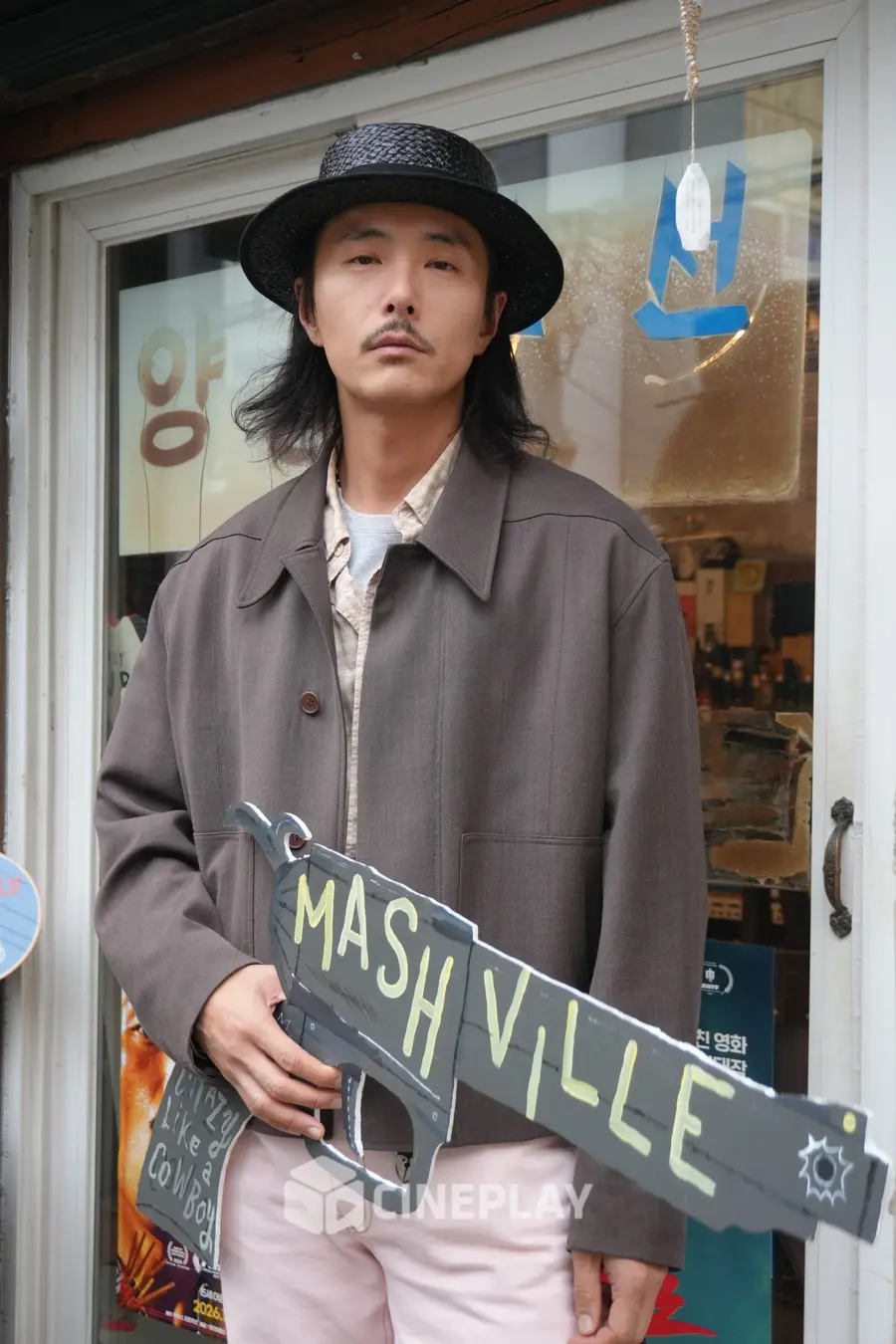
You’ve been working hard on distribution yourselves, after handling production. How far ahead are screenings planned? And what are your plans from here?
Director Hwang Wook We have Q&A events planned in Seoul and the surrounding area through mid-December, and if circumstances allow, we’d like to visit theaters outside the capital region at the end of the year to continue talking with audiences. It’s a difficult time, with far fewer people going to theaters, but 〈Mash Ville〉 was born with a cult sensibility. Our team hopes it will be talked about and reevaluated by fans, gaining the staying power to grow into another kind of cult cultural phenomenon down the road. After 〈Mash Ville〉, I plan to revisit the scripts I’ve already written, sort out my thoughts about what kind of films I want to make and how I want to make them, and prepare for my next project.
Actor Jeon Shin-hwan First, we want to keep going with 〈Mash Ville〉 for as long as it can go. Personally, I’m working on a new project that would make use of the cafe I run, Coffee Yangjang. I’d like to bring together fellow directors with great talent who aren’t currently working and try making an anthology of genre films connected by liquor—science fiction, action, horror and so on—as both a producer and an actor. I hope we can put the proceeds back into independent film production and make a meaningful effort to support creators.
Cineplay Yang Si-mo

댓글 (0)
댓글 작성
댓글을 작성하려면 로그인이 필요합니다.
로그인하기