


A gaze beyond the memory of Jeju 4·3, toward universal peace and solidarity
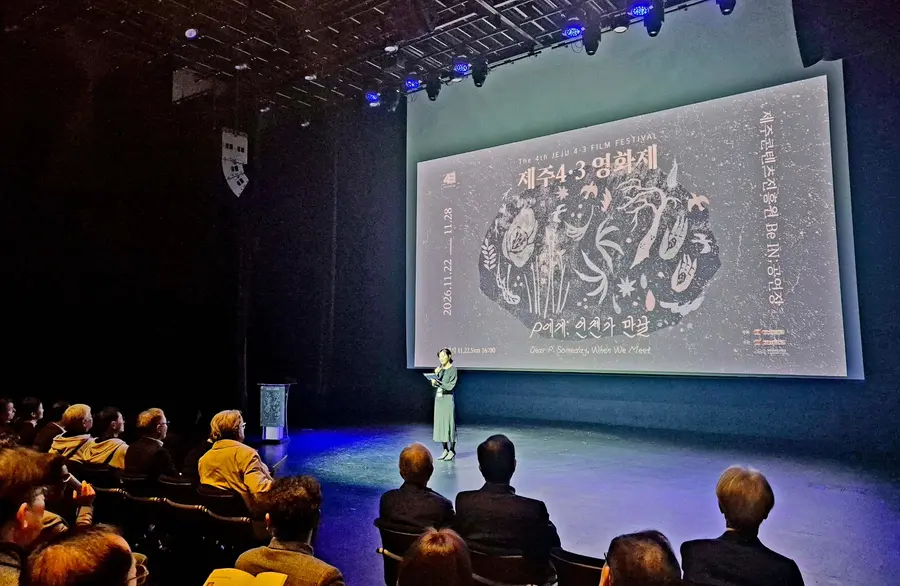
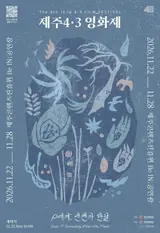
The 4th Jeju 4·3 Film Festival officially opened on Nov. 22, revisiting the wounds of Jeju 4·3 and extending its focus to state violence, war and discrimination around the world through the values of peace and human rights.
Co-hosted by the Jeju 4·3 Peace Foundation and the Jeju Content Agency, the festival runs for seven days through Nov. 28 at Be IN, the Jeju Content Agency venue in Jeju City. A total of 32 carefully selected films from Korea and abroad will be screened free of charge during the festival.
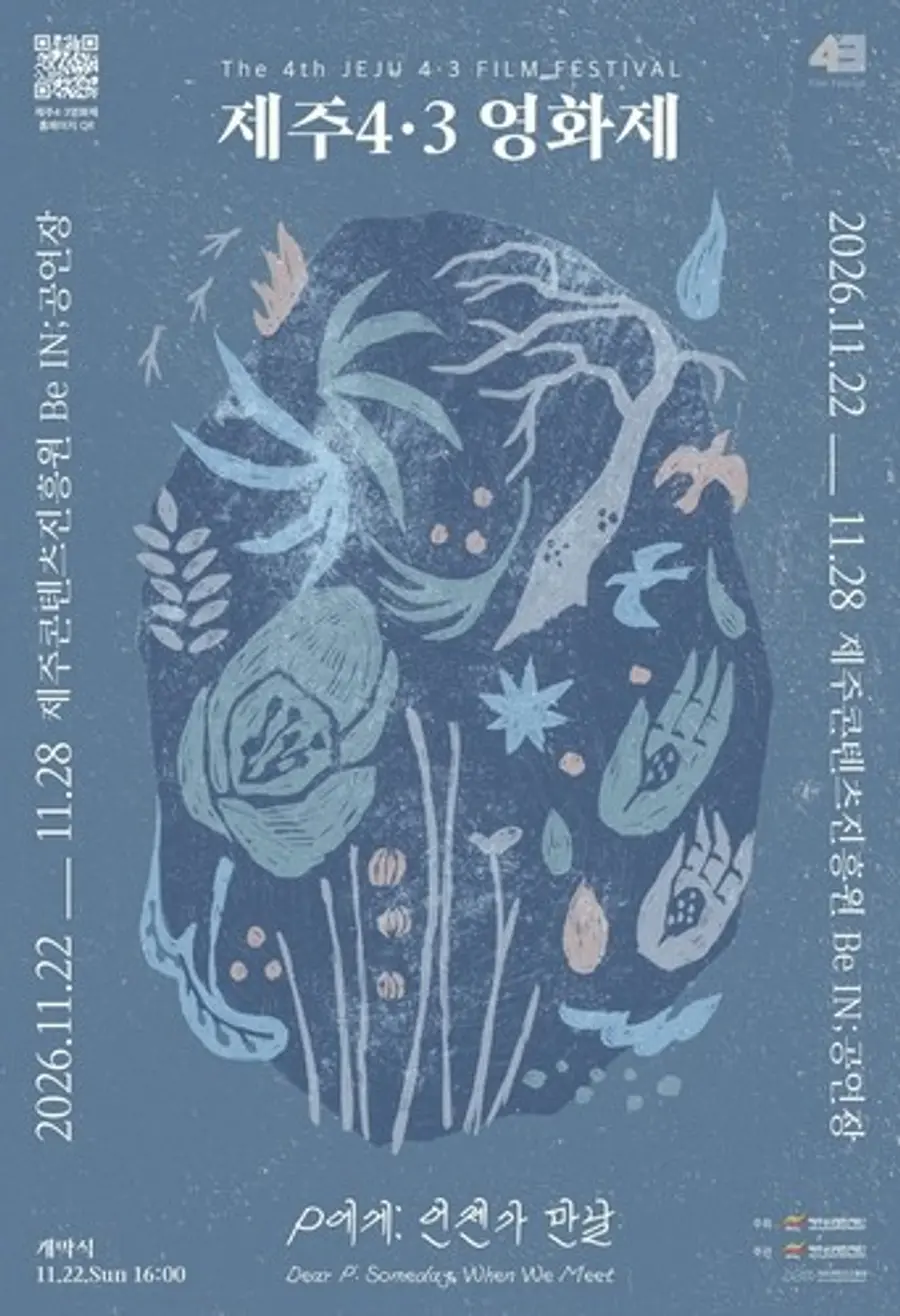
This year's festival slogan is “To P: Until We Meet Someday.” The letter “P” is the shared initial of Peace, People, Purple—a symbol of coexistence—and Presence, or staying by someone's side. The slogan expresses the hope that people will remember past suffering together and stand in solidarity, so they may meet in a peaceful future.
The screening program is organized into five sections: “Remembering the Past,” “Documenting the Present,” “Connecting the Future,” “4·3 and Journalism,” and “Bulanji,” the short-film competition. The opening film was Ash, a documentary tracing the true story of a father and son who, under Nazi rule during World War II, protected the remains and names of more than 2,200 victims with their own bodies. The camera's search for the victims of Nazi massacres resonates deeply with Jeju's efforts to recover the names of those lost through the excavation of 4·3 victims' remains and DNA testing.
Kang Eun-mi, executive director of the festival, said, “The Jeju 4·3 Film Festival is an effort to understand wars, massacres and discrimination around the world as structural violence, and to embrace the pain of others as our own.” She added, “I hope it will be a place to lend the strength of solidarity to voices that have borne witness to life and human rights across time and space.”
Lim Moon-cheol, chairman of the Jeju 4·3 Peace Foundation, added, “The experience of looking deeply at one person's life through the screen is a precious way to understand the essence of 4·3.” He said, “We have made every effort to ensure that future generations can fully inherit the anguished history that the generation who lived through it has kept in their hearts.”
The wounds of “state violence” extend to Chile, Greece and Palestine
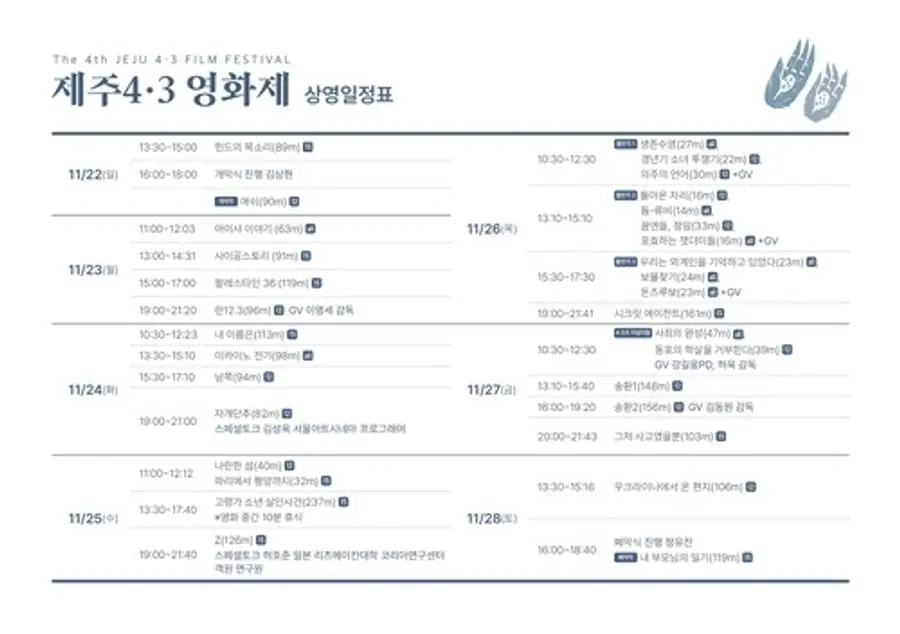
Beginning Nov. 23, the day after the opening, a slate of international works that echo the tragedy of Jeju 4·3 will come to the screen. They include The Pearl Button by director Patricio Guzmán, a tenacious search for traces of victims dumped at sea under Chile's Pinochet dictatorship; The South by director Víctor Erice, which captures the wounds of the Spanish Civil War through a family rift; and Z, a masterwork by director Costa-Gavras that investigates political assassination and cover-ups under Greece's military regime.
Immediately after the screening of Z on Nov. 25, Heo Ho-joon, a visiting researcher at the Center for Korean Studies at Ritsumeikan University in Japan, will take part in a special academic discussion examining historical parallels between the Greek Civil War and Jeju 4·3.
Films from the Middle East also draw attention for depicting civilians struggling to survive as war and military occupation deprive them of everyday life. Palestine 36, about the 1936 uprising against British rule, and Aisha's Story, which follows a woman preserving her identity by safeguarding traditional recipes in a Jordanian refugee camp, strongly evoke the harsh lives of 4·3 refugees and their communal bonds.
A cinematic archive of Korean modern history, bearing witness through the work of master filmmakers
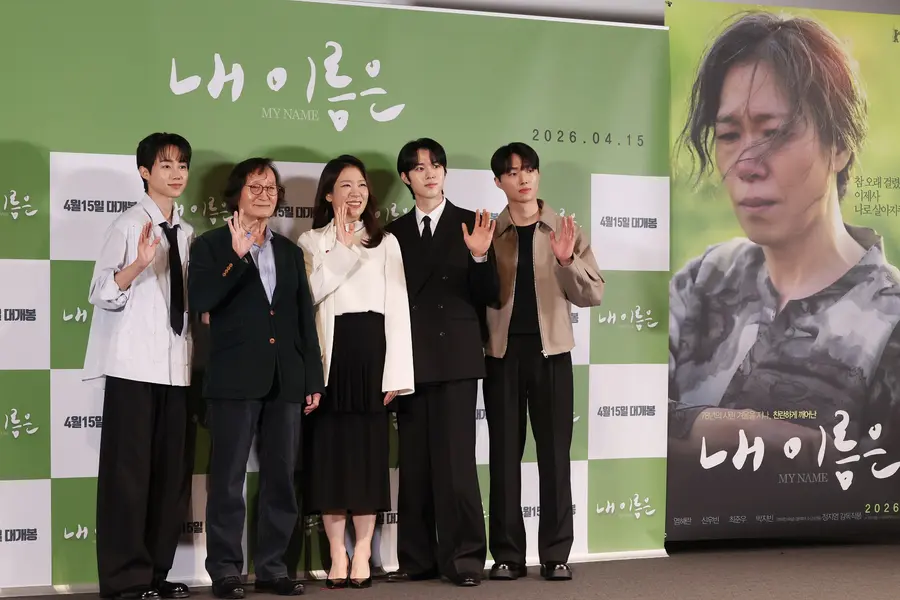
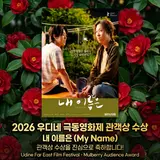
The Korean lineup also sharply reflects the ordeals of the country's modern history. In My Name Is, master director Chung Ji-young reveals the lingering effects of violence passed down through generations in the story of a mother and son living with the trauma of Jeju 4·3.
Also screening are director Lee Myung-se's Ran 12.3, which documents civil society's resistance to defend democracy against the declaration of martial law on Dec. 3, 2024; director Kim Dong-won's Repatriation and Second Repatriation, which examine the ideology of national division through the turbulent life of a long-term prisoner who refused to renounce his beliefs; and Parallel Islands, a standout film that juxtaposes anti-base peace movements in Jeju's Gangjeong village and Okinawa, Japan.
The program also examines journalism's social responsibility in the pursuit of truth. On Nov. 27, two films will receive special screenings: Jeju MBC's Completing the Apology, which traces the retrials that overturned the unlawful military-court convictions of 4·3 prisoners, and Refusing to Massacre Our Own People, about soldiers who refused orders to massacre civilians during the 1948 Yeosu-Suncheon Incident.
Record 526 entries compete in “Bulanji,” where audiences serve as judges
The audience-participation short-film competition Bulanji is a central feature symbolizing the energy of the 4·3 Film Festival. “Bulanji” is a Jeju word for firefly, symbolizing life and the will for peace that continue to shine even in pitch darkness.
A record 526 films competed this year, with 10 finalists selected. The finalists will be screened in three sessions on Nov. 26.
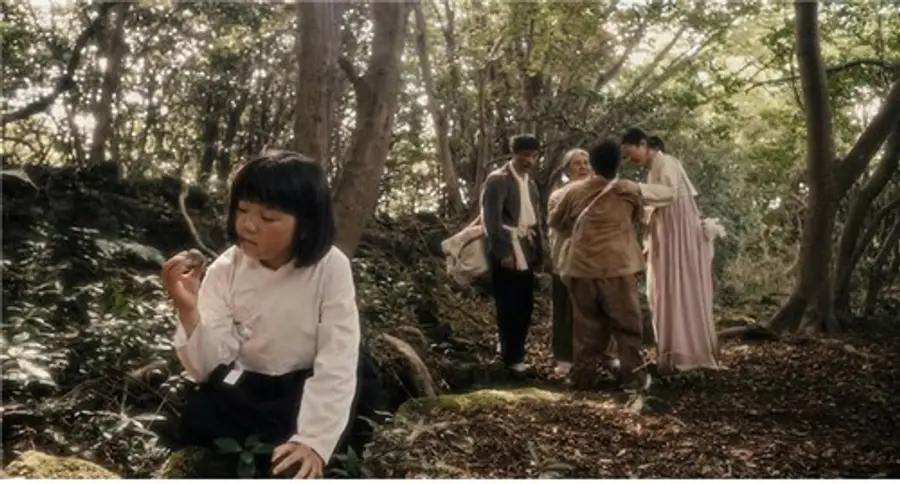
Featured films include Treasure Hunt, which views the memory of the massacre site at Mudeungiwat in Donggwang-ri, Jeju, through the eyes of a young girl; Donzurubo, which exposes the painful history of the forced mobilization of Koreans during Japanese colonial rule; and Dreams, Jeongam, which explores the diaspora of a Korean immigrant settlement in Manchuria. The lineup also features shorts addressing contemporary human rights issues, including Survival Swimming, about enduring institutional contradictions amid the trauma of a social disaster, and The Language of Uiju, which explores marginalization and linguistic identity in a multicultural society.
From a stamp tour to cafe partnerships, a cultural festival connected with the community
The audience award for Bulanji finalists will be selected based on a combination of evaluations by a professional jury and votes cast by audience members at the venue. Winners in major categories, including the grand prize, best narrative film and best documentary, will be announced at the closing ceremony on Nov. 28.
There will also be a range of audience-focused events. The first 30 people to watch at least seven films and collect stamps will receive an eco-friendly travel toothbrush and toothpaste set. Gift certificates and limited-edition merchandise will be awarded by lottery to people who complete the official satisfaction survey and verify a social media review. Holders of physical tickets can also get discounts on drinks at participating cafes nearby during the festival.

All films at the Jeju 4·3 Film Festival can be seen free of charge with tickets issued at the venue on the day of the screening; advance reservations are not required. Screening times and further details are available from the festival's organizing body, the Jeju 4·3 Peace Foundation.






댓글 (0)
댓글 작성
댓글을 작성하려면 로그인이 필요합니다.
로그인하기