


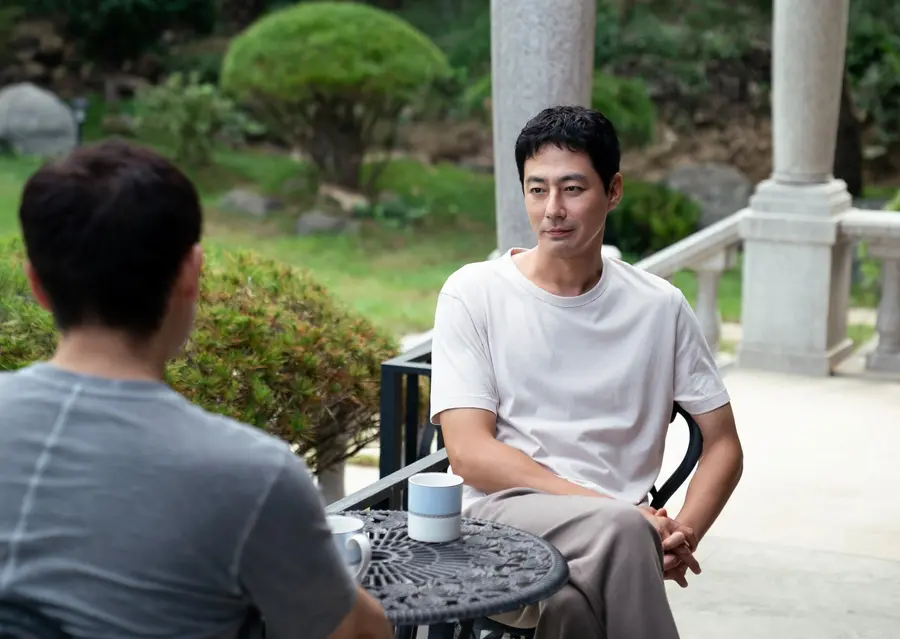
Someone who symbolizes capital, like Steve Jobs, yet was never entirely free from it. That is how Zo In-sung described Sang-woo, the character he plays. Sang-woo wears his inherited wealth and ingrained kindness with ease, but Zo said, “Perhaps this man, too, is a slave to capital.”
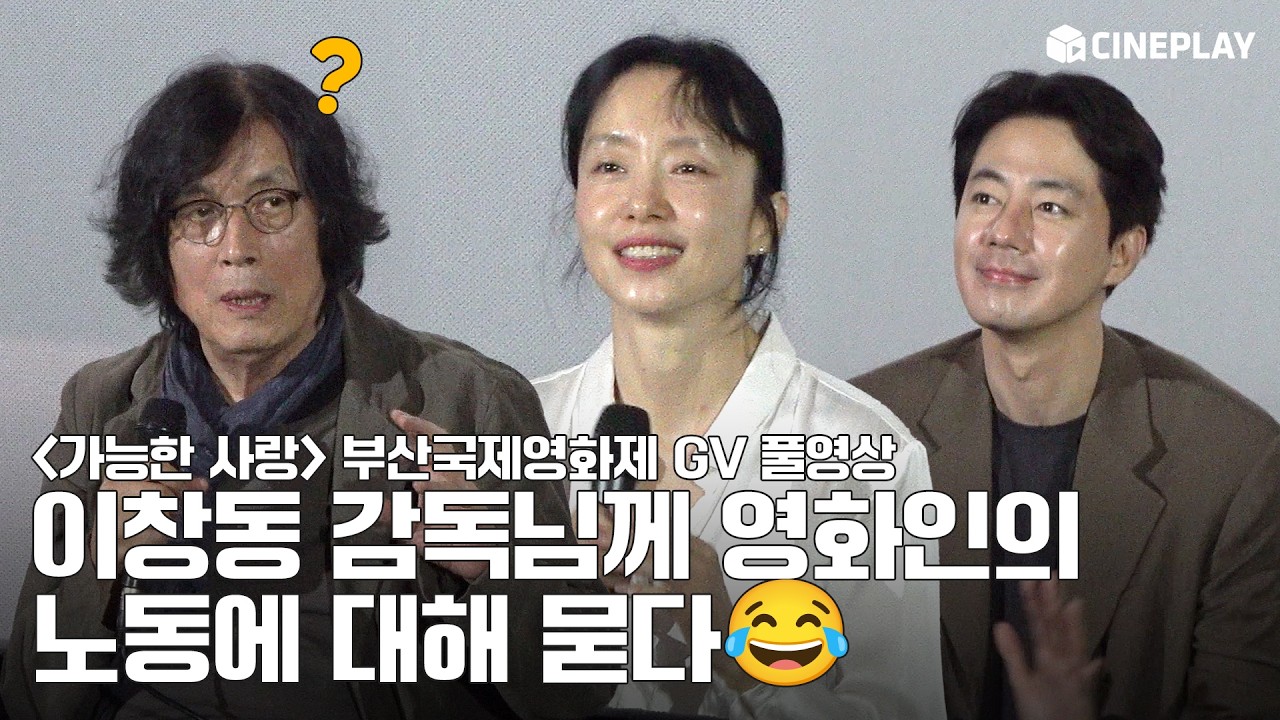
Director Lee Chang-dong’s 〈Possible Love〉, which opened in select South Korean theaters on September 23 before its worldwide Netflix release on November 6, follows two couples: laid-off worker Ho-seok (Sul Kyung-gu) and his wife Mi-ok (Jeon Do-yeon), who works at a mask factory, and Ye-ji (Cho Yeo-jeong), a documentary filmmaker who wants to capture them on camera, and her husband Sang-woo. When the two couples meet, they confront their different lives and hidden desires. The film marks Zo’s first collaboration with Lee and reunites him with Jeon for the first time in 23 years, since the drama 〈Shoot for the Stars〉.
Sang-woo is kind but inscrutable. He is everyone’s sweetheart, warm toward anyone he meets, yet that very kindness can make others uncomfortable and strike them as hypocrisy or mockery. Still, the film does not readily label him “evil.” Lee described Sang-woo as “a character who presents a new kind of masculinity,” while Zo interpreted him as “someone so intoxicated by his own narcissism that he ultimately lacks empathy.” Yet Zo also said, “Thinking of that as bad is itself a prejudice,” explaining that rather than looking far afield for Sang-woo, he tried to find him within himself. The following is Zo’s account from an interview held on November 10 at a location in Seoul’s Jongno District.
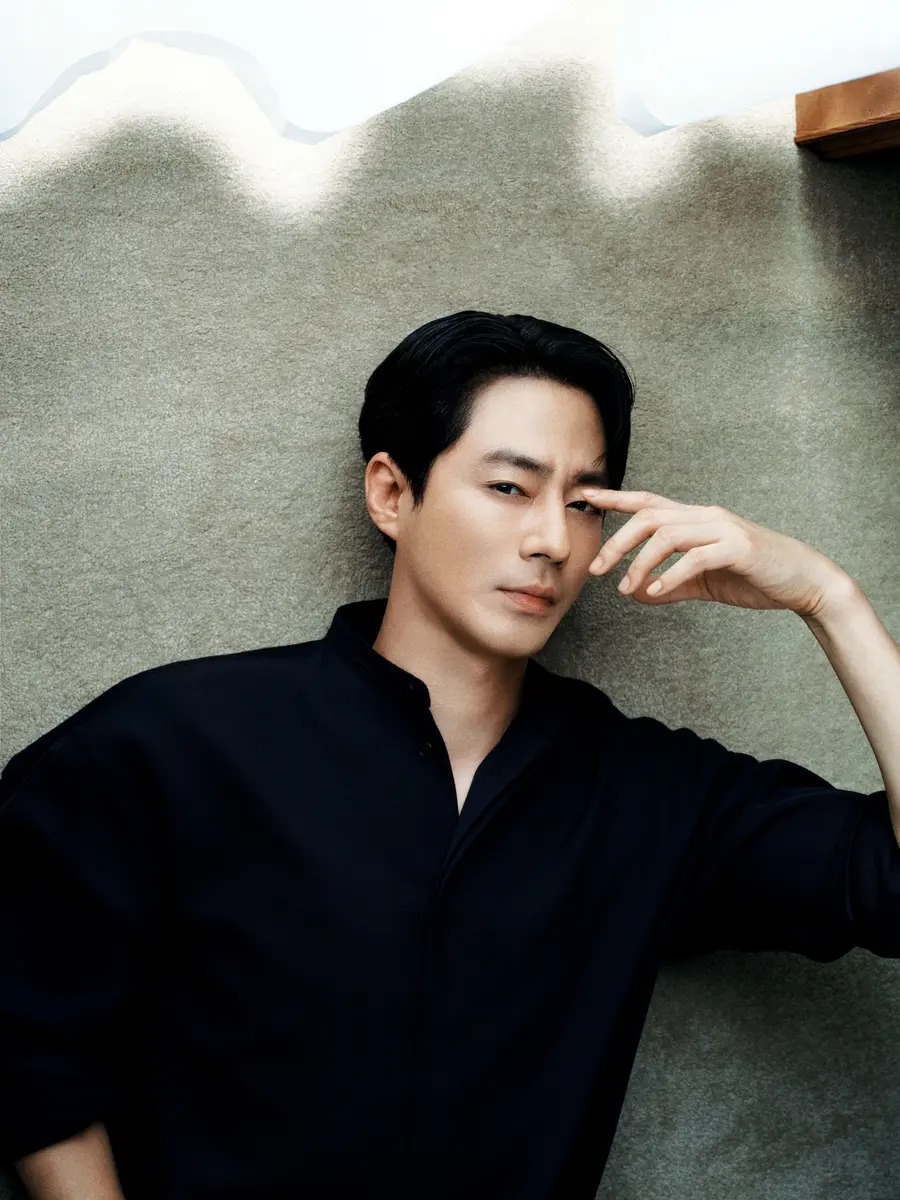
This is your first time appearing in a film directed by Lee Chang-dong. How did you come to join 〈Possible Love〉?
I was contacted while filming 〈HUMINT〉. Apparently, Director Lee called Director Ryoo Seung-wan and asked how I was doing lately. I think he was curious because he knew I’d done several demanding projects back-to-back. Director Ryoo gave me an early heads-up, saying, “Your name has come up, but don’t get your hopes up too much. Just wait and see.” Director Lee sometimes stops midway through preparing a project. Then I went to Thailand to shoot 〈HUMINT〉, and only then did I hear that he wanted to send me the screenplay. That was when I first read it.
I heard something similar happened with 〈Hope〉: Director Na Hong-jin asked Director Ryoo Seung-wan about you, and that led to the connection. Director Ryoo is always the link. (Laughs)
The directors know one another. When an edited cut is ready, they’ll watch it before anyone else and exchange feedback. They comment on the unfinished version rather than the finished film. That was how they saw my work first, and that led to the connection.
Then how did you feel when you first read the screenplay for 〈Possible Love〉?
It was so good that it stayed with me for quite a while, much like the feeling you have at the end of the film. But there are about two scenes that are important for Sang-woo. I had questions about those, so I met with the director and asked him, and he explained them in detail. I remember saying, “Understood,” right then and there.
What did you ask him about?
How much nudity there would be. Viewed through Sang-woo’s lens, the beach scene is important. I was curious about how he envisioned it and what he had in mind for the shoot. So I heard the specifics. He said, “We won’t know until we get to the location, but this is the feeling it will have.” I thought that if we followed that approach, we could capture it. There’s the director’s vision, the cinematographer’s vision and the setup on location, and a location doesn’t necessarily match the image we want exactly. He talked me through his ideas, including all of that.

You’ve played many righteous, admirable characters, but Sang-woo feels like the exact opposite. He never actually does anything bad, yet he can still leave the impression that he is a bad person. Director Lee Chang-dong described Sang-woo to reporters as “the personification of big capital.” What kind of person did you think Sang-woo was?
Well, there are no conspicuously bad people in the director’s films. If viewers felt he was bad, something about this character must have gotten under their skin. He hasn’t done anything bad to them. But he is narcissistic. This is also a film about social strata and class. He thinks he has to be different there, and different even within that exclusive league, so he wants to move to an entirely different level of the game. Even this person at the pinnacle of capital had to prove he was different within that league, and he even wanted independence from entrenched domestic capital. Rather than taking over the business his father handed down, he installed a professional CEO and stepped back, dreaming of freeing himself from that entrenched capital. That’s why he practiced taekwondo, which his parents disliked, and married against their wishes. Marrying against your parents’ wishes isn’t easy for anyone. In Sang-woo’s case in particular, you can infer from the film that his family represents entrenched domestic capital, having made money since the Japanese colonial period. If someone whose life had been governed by the logic of capital for so long announced that he was going to enter a marriage his family didn’t want, it would have caused an enormous fight. I imagined all sorts of battles: threatening to strike him from the family register, or trying to erase his very existence by taking away his money, since that money is who he is. Of course, none of this is explained in the screenplay. But that was what occurred to me. It isn’t easy, and that made me think he is also someone trying to prove himself. This character, too, symbolizes capital, but he was never free from it. For example, he constantly checks whether the project he’s developing is going well, and he cheers when it succeeds. There are only a few scenes where you see his emotions, but when you see him delighted like a little boy, you realize he wanted capital. That’s why perhaps this man, too, is a slave to capital.
Although Sang-woo never displays overt malice, he creates an elusive sense of unease from beginning to end. Were you conscious of that unease while performing?
I wasn’t conscious of it. Nor did I want to be. That is simply who he is, and there are people of that class out there. Personally, I think judging that as bad is itself a prejudice. They are living their own lives, and if the act of accumulating capital itself is morally problematic, then they can be criticized and condemned. That must certainly be judged by the law, too. The reason this character came across as somewhat bad is that he lacks empathy. I think he is someone so intoxicated by his own narcissism that he ultimately lacks empathy. When Ho-seok urinates like that, rather than blaming him, he takes the attitude of someone a step above him, trying to be accepting even of that. That sort of thing can actually make them even more uncomfortable.



댓글 (0)
댓글 작성
댓글을 작성하려면 로그인이 필요합니다.
로그인하기