


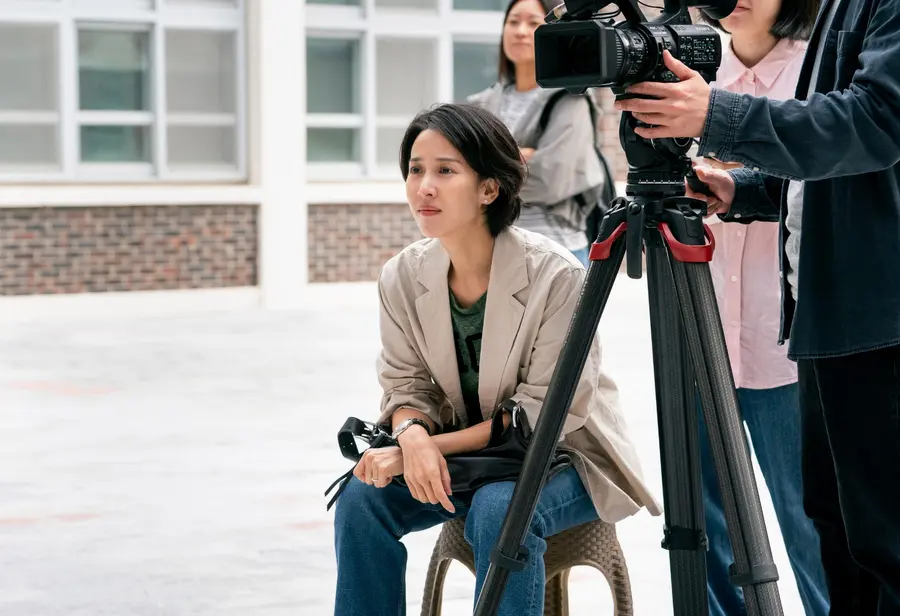
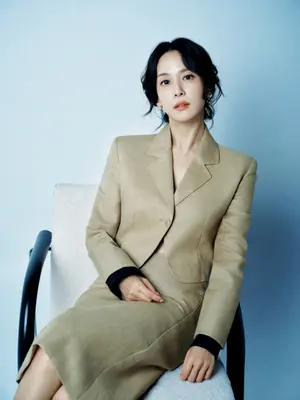
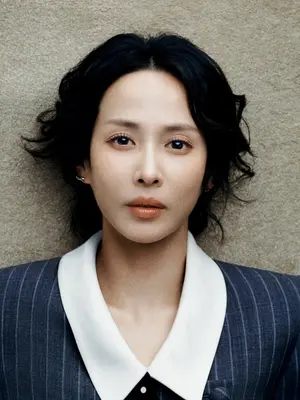
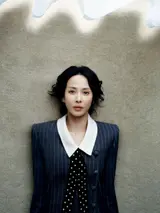
Perhaps she meant every word: “I'm trying to love those people.” Ye-ji (Cho Yeo-jeong) stands at the most ambiguous point in 〈Possible Love〉. Is her love a form of heartfelt solidarity, or merely a means to her own ends?
Ye-ji sharpens the questions at the heart of 〈Possible Love〉. Is love truly “possible”? Is love really something that can be divided into the possible and the impossible? Rather than offering a clear answer, Cho's Ye-ji turns the question back on the audience, her expression unreadable as either innocence or hypocrisy.
Released in select South Korean theaters on September 23 before arriving worldwide on Netflix on November 6, director Lee Chang-dong's 〈Possible Love〉 follows two married couples: laid-off worker Ho-seok (Sul Kyung-gu) and his wife, Mi-ok (Jeon Do-yeon), who works at a mask factory; and documentary filmmaker Ye-ji, who wants to capture their lives on camera, and her husband, Sang-woo (Zo In-sung). As the couples cross paths, they confront their different lives and hidden desires. Cho, who drew worldwide attention with Bong Joon-ho's 〈Parasite〉 (2019), is entering the Oscar race once again with 〈Possible Love〉.
“Loving someone, trying to love someone, and believing that what you're doing is love—aren't those things always intertwined?” Cho asked. Discussing Ye-ji's marriage, in which she belongs fully neither with her capitalist-class husband, Sang-woo, nor with the working-class couple, Cho borrowed the director's description: “a playing field that is already tilted.” She interpreted Ye-ji as envying Mi-ok and Ho-seok for the deep marital affection they share, something Ye-ji herself lacks.
Cho, who says, “I couldn't film that,” about picking up a camera in front of someone who is suffering, asked Lee before filming whether Ye-ji's actions were really right. His answer was, “That's how every director feels.” From that point on, Cho decided to stop asking questions and trust Ye-ji's “sincerity” and “love.” Here is what she shared in an interview held on November 10 at a location in Seoul's Jongno district.
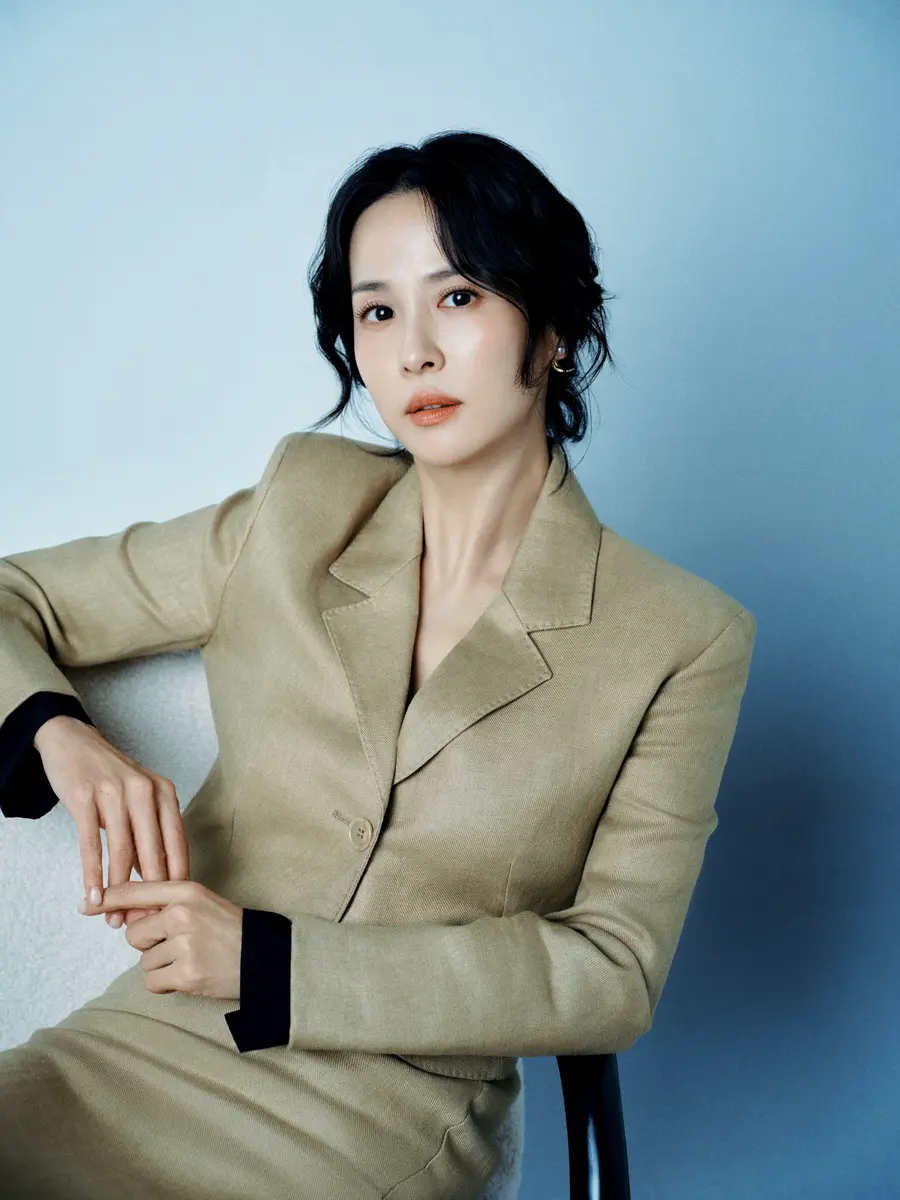
You worked with Bong Joon-ho on 〈Parasite〉 and have already become an internationally recognized actor. How did you feel when Lee Chang-dong contacted you about 〈Possible Love〉?
I'd been yearning for something for several years. So many projects these days are genre pieces, and ever since I was young, I'd wanted to try the kind of acting in his films that feels completely real. Not expressing something through acting, but simply existing as that person. To act that way, you have to find the right project. You need a story grounded in something entirely realistic to give that kind of performance. So I was thrilled to hear from him at that moment. I thought, “I get to try that in one of his films.” Personally, the timing felt amazing, and I was so happy.
Sul Kyung-gu said earlier that Lee Chang-dong's films have such a distinctive scent that he could identify one even without knowing who made it. As a viewer, what has drawn you to his films?
After watching one of his films, I feel as though the time that follows is much longer than the actual time spent watching it. His films give each viewer so much of that time. I think that's the biggest thing. Isn't that why not just I, but every actor, wants to work on one of his films? As I said earlier, I think it also comes from the power of those realistic, true-to-life characters who feel like people who really exist somewhere. And the events in his films aren't things that happen only in fiction; they're things that happen in our actual lives. That makes the acting feel more real, too, and I think that's why his films stay with you for so long afterward.
How did you prepare to play a documentary filmmaker? Were there any reference materials you used to portray someone in that profession?
I had so many conversations with the director and the cinematographer. You know Ye-ji's documentary crew in the film? They aren't actors, either. They're actual cinematographers and producers. I also studied how difficult and important interview shots are in documentaries. You don't just point the camera at someone—that chest-up shot when you're interviewing a subject. And of course, I watched documentaries about people in situations like Ho-seok's. I also met and interviewed the director who made that documentary, and looked up interviews with world-renowned documentary filmmakers such as Frederick Wiseman (〈Ex Libris: The New York Public Library〉), 〈City Hall〉, among others). But that's the kind of research you naturally have to do no matter what profession you're portraying. Then, at a certain point, I stop digging too deeply. That's just my style; my mind gets busy building my own story for the character. I discuss things with the director, starting with how many short films Ye-ji might have made, and we decide together. I build a history from questions like, “Where in the United States would Ye-ji have gone to college?” and then believe in it. As an aside, I asked him, “Director, why is the dog's name Blue?” There's a brief scene of Ye-ji looking at her computer in her room, and you can just glimpse a poster for 〈Three Colors: Blue〉 behind the monitor. Both the director and Ye-ji like Krzysztof Kieślowski, which is how the dog came to be named Blue. But audiences found all sorts of meanings even in Blue. To me, that's what his films are like. Rather than intending something specific, he lets audiences take away so much, each in a different way.
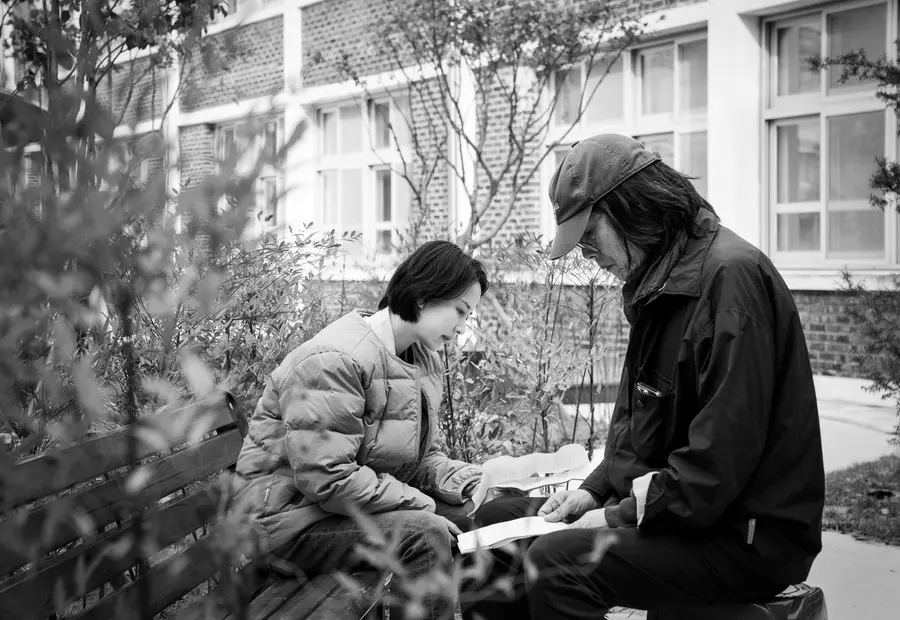
Ye-ji seems like a character Lee Chang-dong created as an alter ego. His own mother was a worker, he has continued to capture other people's suffering on camera, and he has attained the status of a master filmmaker. Did you keep those things in mind while acting? Did he give you any particular direction about Ye-ji?
He spoke to me about that separately before filming. He said, “You could say Ye-ji represents my identity in this film.” After that, I didn't ask any more questions, and he didn't say much else, either. Ye-ji's history was laid out there, and I had to believe in it and live it. That's what the film needs, isn't it? This woman's life story. I think I tried to imagine the rest and believe in it as I went.
As you said, documentary filmmakers and narrative filmmakers alike are said to face ethical dilemmas at every moment. But rather than visibly wrestling with an ethical dilemma, Ye-ji seems to have no qualms about picking up her camera and capturing the couple's story. What did you ultimately see as her driving force?
It's Ye-ji's pure effort. Sometimes someone's pure, sincere effort can be terribly rude to someone else. The person doing it doesn't realize that, because their intentions are pure and genuinely sincere. But someone watching Ye-ji's actions might think, “No, even so, that's...” Still, I felt I couldn't let my faith in her sincerity waver.

댓글 (0)
댓글 작성
댓글을 작성하려면 로그인이 필요합니다.
로그인하기