



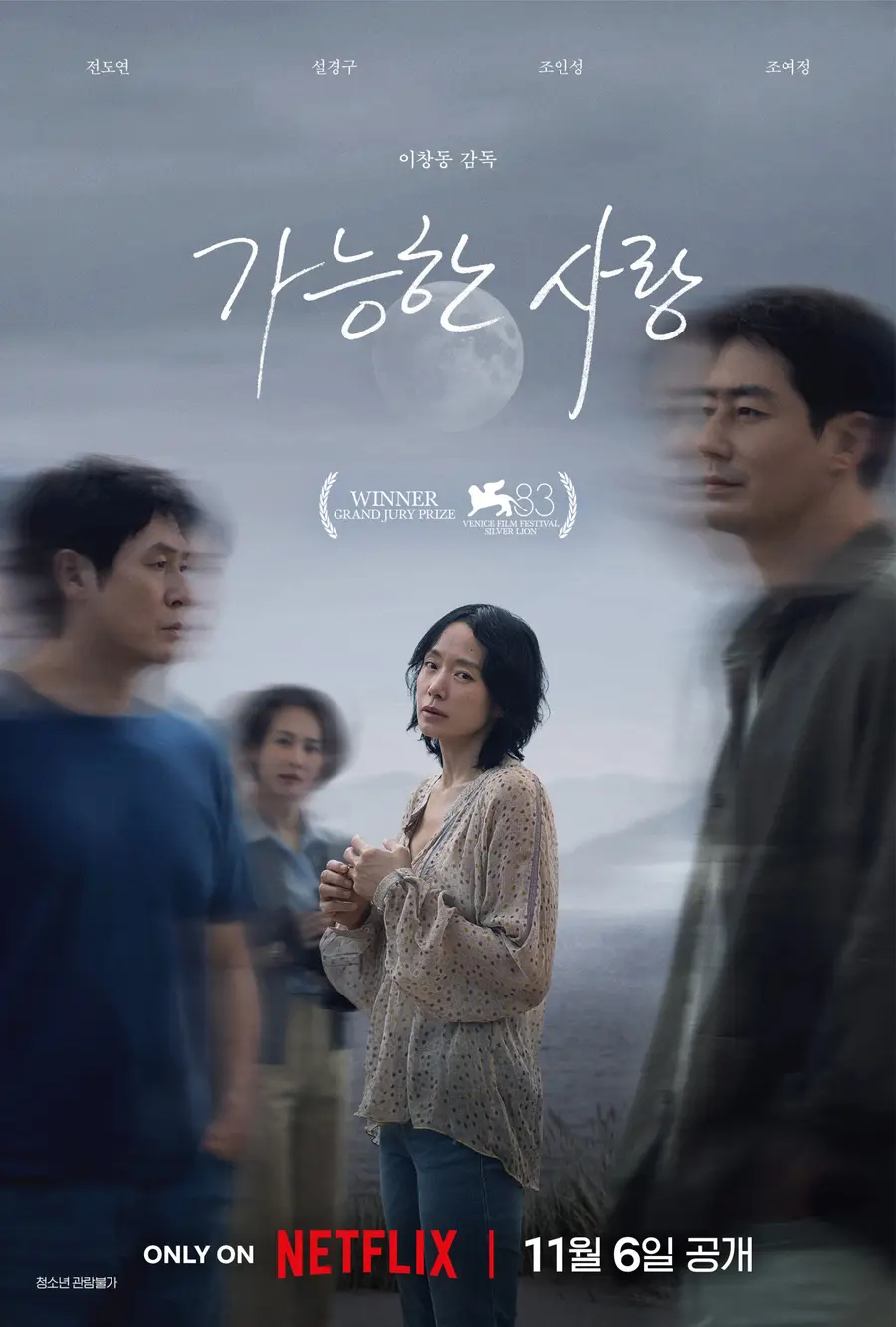
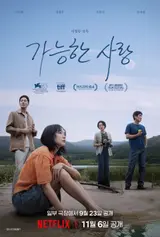
There were several setbacks before this film reached audiences. There was even a moment when he resolved to let it go. Fortunately, however, a global company stepped in, and director Lee Chang-dong's 〈Possible Love〉 finally made its way to viewers. Released to audiences worldwide on the streaming service Netflix on November 6, 〈Possible Love〉 follows four people: a worker laid off in a mass dismissal and his wife, and a documentary filmmaker who decides to tell their story and her husband. Returning with his first feature in eight years since 2018's 〈Burning〉, Lee laid the groundwork for his next film after witnessing “an event that would fundamentally change our lives.” After a production deal nearly materialized and then fell through, he almost abandoned the film, questioning whether he could tell this story, but ultimately completed it. 〈Possible Love〉 won the Silver Lion (Grand Jury Prize) at the 83rd Venice International Film Festival, bringing those long years to fruition.
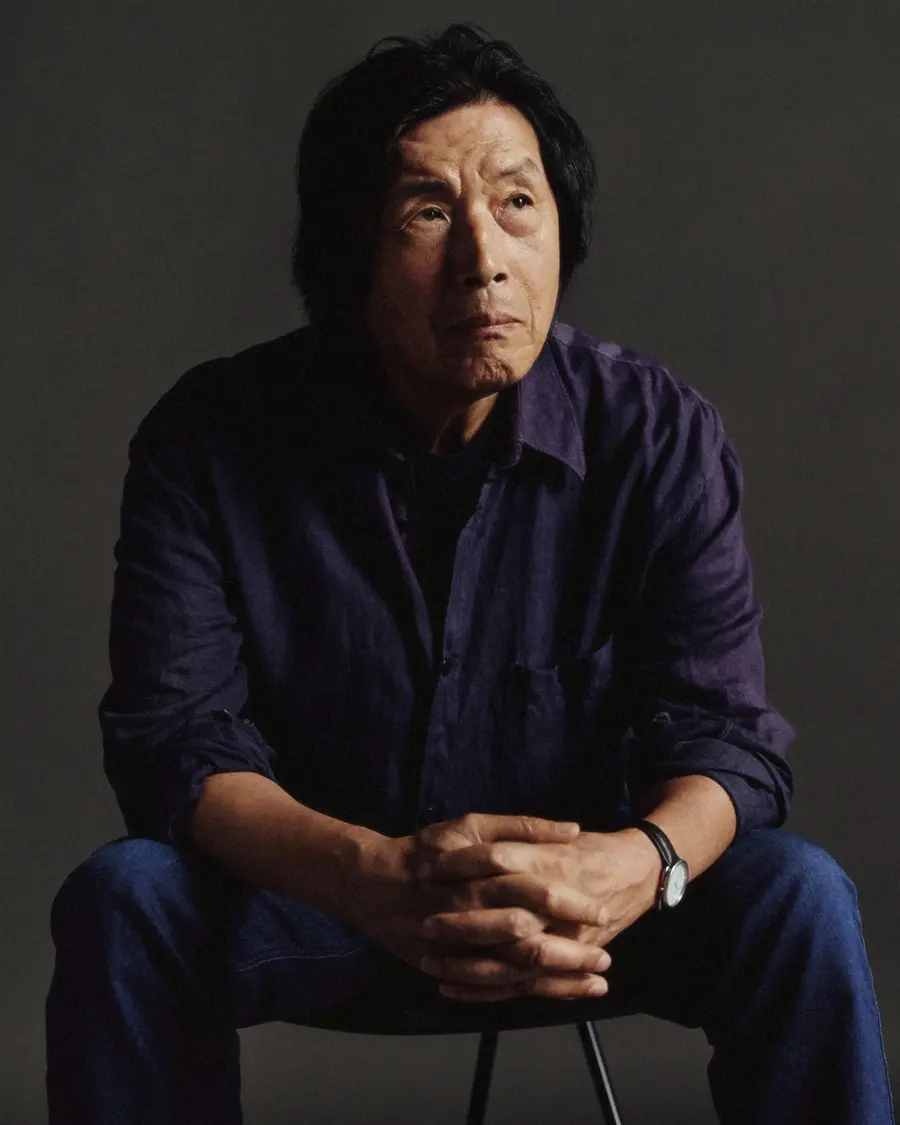
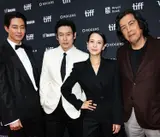
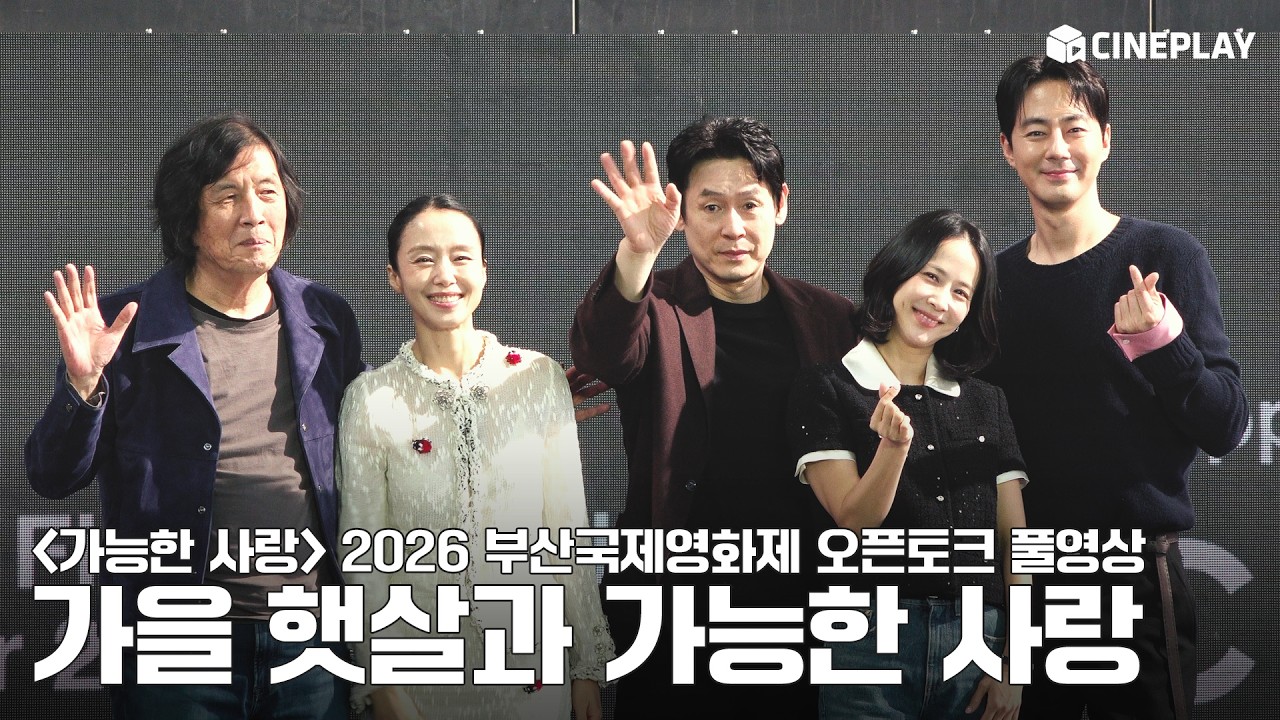
Alongside Lee's skill as a director, the film draws on his experiences and reflections. Some of South Korea's finest actors—Sul Kyung-gu, Jeon Do-yeon, Cho Yeo-jeong and Zo In-sung—come together to fill its heartbreaking narrative with a bittersweet blend of humor and sorrow. The synergy between director and cast is powerful enough to shake audiences to their core. On the afternoon of November 6, just before the film's release, we met Lee at a cafe in Seoul's Samcheong-dong neighborhood to hear directly from him about 〈Possible Love〉.
You made labor and strikes the subject of this film, but put the word “love” in the title. I imagined there was an intention behind that.
Labor, strikes, love. This film began with the story of a strike and laid-off workers. You probably all know what inspired it, but I don't want to talk about a specific company. That makes it difficult to convey, but watching that strike, the mass layoffs and the forcible crackdown, I thought this was a major issue. The incident itself was profoundly shocking, of course, but I thought this was no ordinary problem. The physical clashes were a problem, too, but what shocked me more was that it seemed like an event that formalized the idea that the value of labor, or workers' rights, would fundamentally change from then on—that these things would be disregarded, that people would come to think they didn't matter. And the public saw it that way, too. Such a brutal crackdown took place. So I thought things would increasingly move in that direction, and that this issue would change people's very lives. That's why I wanted to make it into a film. Everyone's criteria might be different, but for me, when deciding whether to make a film, it has to mean something to me. Then it has to mean something to the people living in this era alongside me—the audience. Not necessarily just Korean audiences. I have to be convinced that it means something to people and has meaning as a film in its own right before I can do it, and this really felt like a meaningful story. Because it was an event that would fundamentally change our lives.

Throughout human history, things like workers' rights and their value have always been taken for granted. But if those things no longer matter, then what matters more? Profitability. Market value. Not the market value of the company, but whether it makes a profit from capital's perspective. That's an utterly fundamental change. The story of those laid-off workers' lives would naturally be a story about labor and capital, but ultimately that changes relationships between people. Because it means all those relationships—with people you meet through work, with your family, your social relationships—will change. Then, as those relationships unravel and are destroyed, what holds them together? What allows those relationships to survive? I thought that would be love. It could be love between a married couple, or, as Ye-ji (Cho Yeo-jeong) says in the film, loving the subjects of her documentary—what she calls love, whether or not it's possible. That love might allow communication within those relationships and make them known. Or there could be other kinds of love, too. So rather than labor and love being two disparate things that happen to be connected, I thought that because labor is a fundamental issue in our lives, what sustains the relationships in those lives can only be love.
The title has also drawn praise for your choice, among so many words, to put “possible” before “love.”
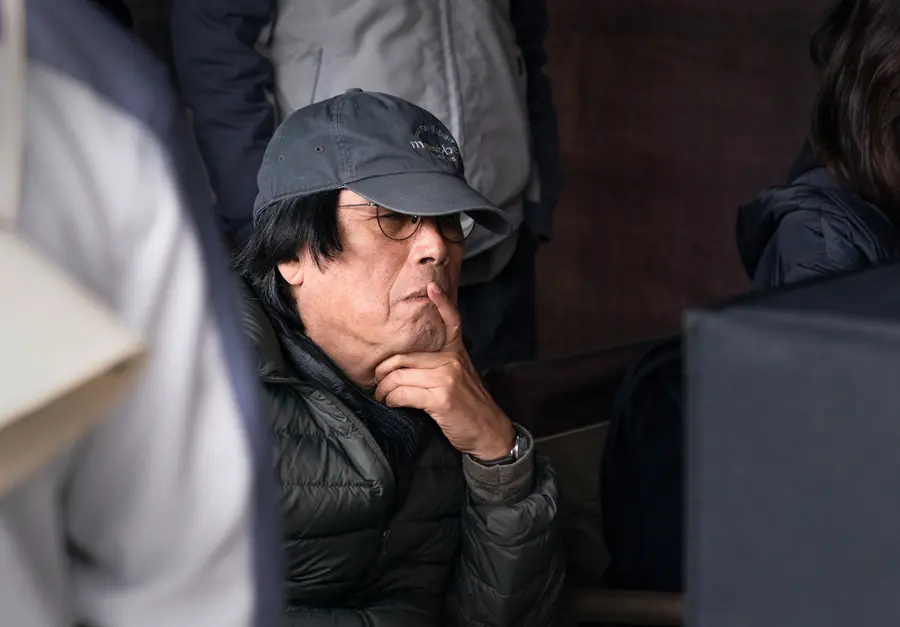
“Possible” and “love” are both very common, simple words. But when you put “possible” and “love” together, the phrase somehow feels unfamiliar, new. I thought it would come across as a question in itself. Even though it might seem obvious, attaching the modifier “possible” to love prompts the question, “What kind of love is possible?” I thought it would be a question that makes people think about the nature of love. Love stories actually have the words “that cannot be fulfilled” in parentheses before them. There's even a song with a title like that. So every love story is really a story that cannot be fulfilled, and whether it has a happy ending or ends tragically, we want to hear that love story because it is a love that cannot be fulfilled. But I thought that, by using the word “possible” instead, that paradox would make people think a little more about love. As for the love in our film, one example is Ye-ji, a documentary filmmaker, trying to love the lives of the people who become the subjects of her camera. She talks about it almost as a pledge to herself, an article of faith. Those words reveal Ye-ji's character, but I think they can actually apply to anyone who tells other people's stories—not just documentary filmmakers but narrative filmmakers like me, other creators, or even journalists like you. You have to love them. Whether that love is actually possible is another question. At the very least, the effort to love is important.
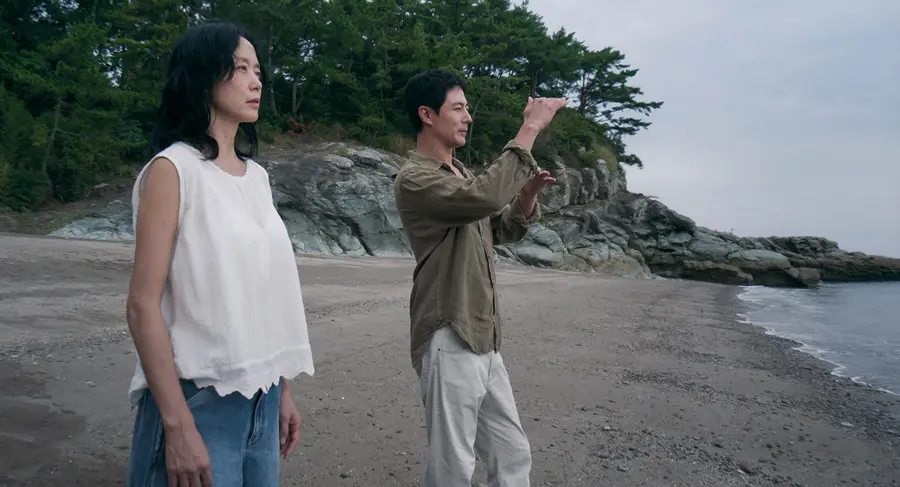
Another example is Mi-ok (Jeon Do-yeon) and Sang-woo (Zo In-sung), a woman and a man who lead completely different lives and meet. There, too, there can be feelings that seem like love. Shall we call it romance? Romance is really not a simple matter. I think that's especially true for women. It may not be my place as a man to say this, but romance for women can be something that confines them within a certain framework. There's that expression, “a man on a white horse.” That's really a reference to romance. It's a fantasy that holds women captive. The fantasy that something else will rescue a woman's life. A fantasy that places women in an extremely passive position. And Sang-woo could be that kind of man for Mi-ok. He's not a man on a white horse, but a man driving a white car. (Everyone laughs.) But Sang-woo stirs Mi-ok's heart. For no reason. He doesn't seem to have any particular purpose. Mi-ok might well suspect he has an ulterior motive—she probably did, right? But whatever it is, it's difficult for her. He seems to be doing it intentionally, then acts as though he knows nothing about it. And when he responds to birdsong like a little child, he also seems simply purehearted. That's part of Sang-woo's character, but I think it could also be a trait of someone who regards being handsome and charming as a form of power. He makes everyone like him, each individual person. I think that's similar to the nature of capital. Capital doesn't act to accomplish something. It has already made money, yet it keeps pursuing even the smallest profit. That's the very nature of capital. In any case, a woman like Mi-ok is someone who would never, in her entire life, be allowed even the opportunity to see such an attractive man right beside her. The presence of this man, and his deliberately stirring her heart, whether or not that is his intention, shakes up this woman's sense of romance. For a woman like Mi-ok, that can be a profoundly existential issue. If this, too, is love, then it is a feeling of love. But a woman resisting and rejecting that romance—that could be another matter.
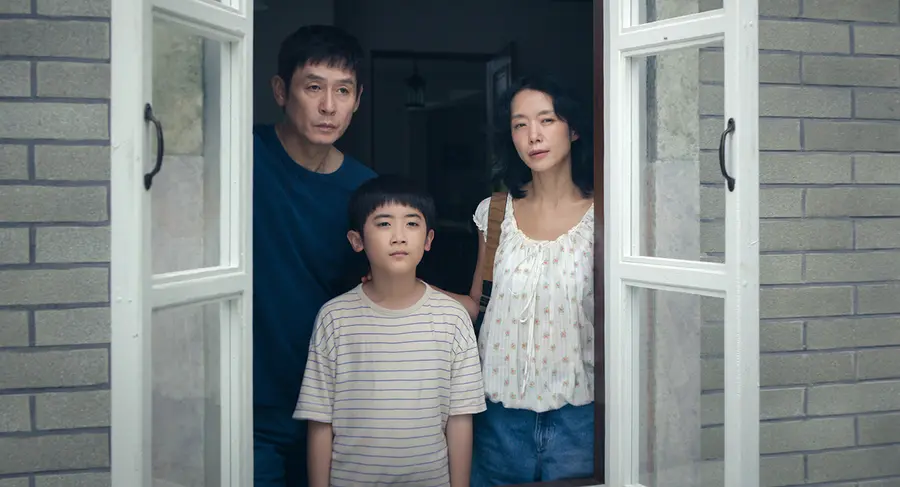
Then there is the love between Ho-seok (Sul Kyung-gu) and Mi-ok. These two actually met when they were so young that, even in the film, they wonder, “Did we ever really date?” They met in their hometown long ago and have lived side by side, going through hardships together. But at the end, the two sit on that wooden platform that was always sitting oddly in a corner of the yard, almost like evidence of Ho-seok's failure in life, used for little more than hanging out laundry. By being there beside each other, would you say they affirm the value of each other's existence? Accept it? Confirm their reasons for living? That is love, too. Perhaps you could even say they are people for whom it is certainly possible.
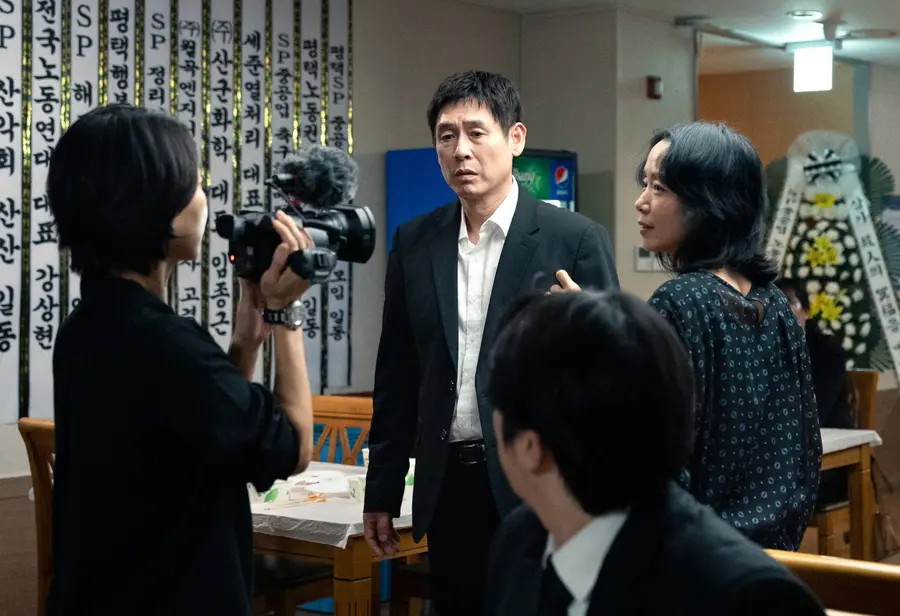
I'd like to hear more about the incident you mentioned earlier. You said it might not simply be a dispute between laid-off workers and a company.
The shock of the incident itself wasn't just in the physical clashes. I sensed what you might call a social consensus that workers' rights, or the value of labor, would no longer be recognized. I think that incident demonstrated it. It became official. There's a scene in the film where someone says, “The public wasn't on our side,” and that was what these people struggled with most. It became a collective trauma. Then workers and labor unions ended up fighting among themselves, and so many people took their own lives. I thought this would determine our lives going forward. In other words, it became official that workers' rights and the value of labor—things that had been maintained throughout human history—were already gradually disappearing, and that profitability, market logic and the logic of capital had become more important. That has only intensified, and now, with the technological revolution driven by AI, it has reached the point where the very concept of labor is becoming blurred. This is a problem that keeps growing more severe.
Note: The interview with 〈Possible Love〉 director Lee Chang-dong continues in Part 2.


댓글 (0)
댓글 작성
댓글을 작성하려면 로그인이 필요합니다.
로그인하기