


※This interview with 〈Possible Love〉 star Cho Yeo-jeong continues from Part 1.
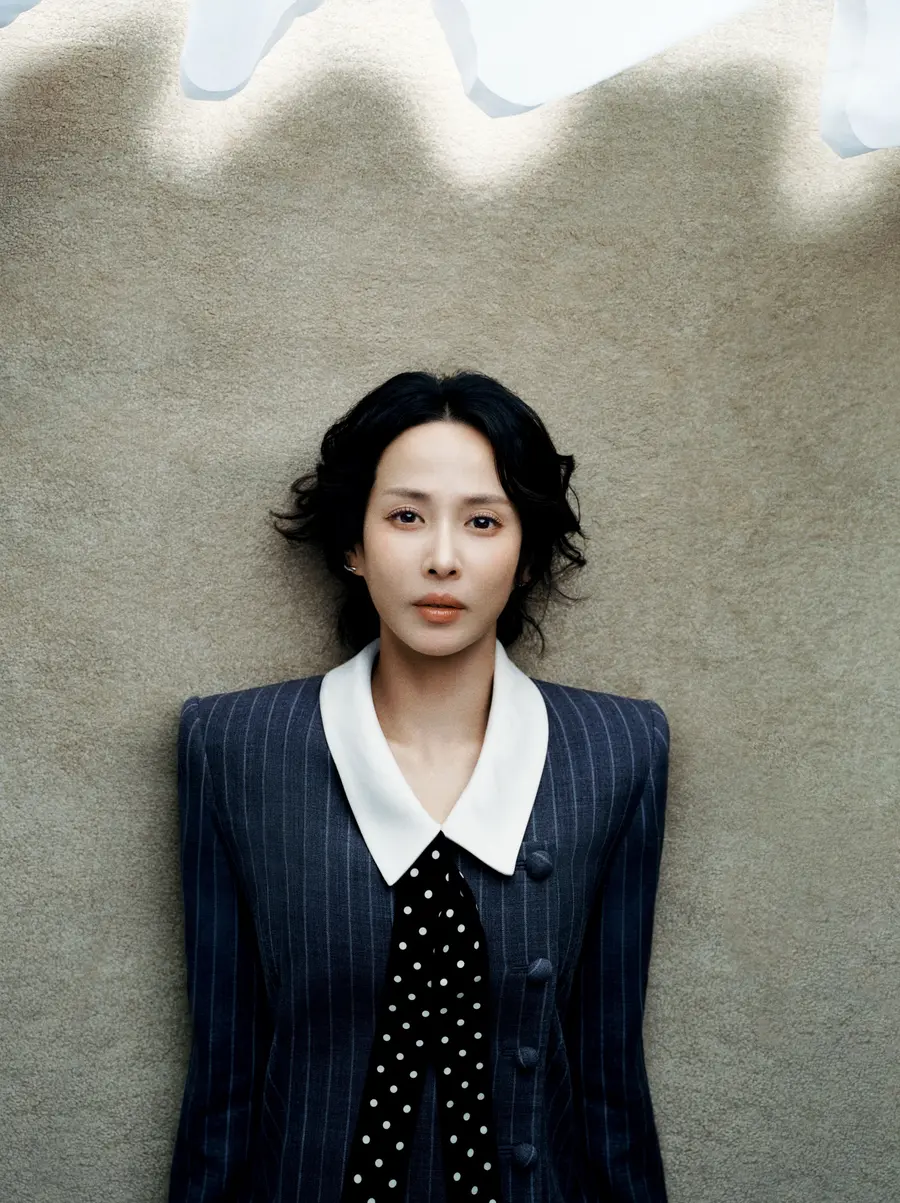
The film depicts many kinds of love. But I did wonder whether Sang-woo and Ye-ji really loved each other. Their sex scene also struck me as deeply marked by class. How did you see their relationship?
I think it's hard to sum up Ye-ji's feelings toward Sang-woo as either “love” or “not love.” That's how people's feelings really are, isn't it? Ye-ji herself believes it's love, but other people might look at it and wonder, “Is that love?” When they met again while studying abroad, far from home, I think she could absolutely have fallen in love with him as a woman. But when they returned to the reality of Korea after getting married, the director described their relationship as “an already uneven playing field.” I deeply agreed with that. In the reality of married life, finding your own fulfillment and identity feels more urgent than your husband's powerful background, doesn't it? Since she chose this marriage, Ye-ji simply accepts the uneven playing field and lives with it. Other people might find that bitter and heartbreaking, but Ye-ji herself accepts it and gets on with her work.
In some ways, Ye-ji almost seems like a master strategist. Some people see her approach to Ho-seok and Mi-ok as an act of condescending charity, but director Lee Chang-dong said that wasn't the case. What did you think motivated Ye-ji to approach Mi-ok's family?
I didn't approach it that way either. I thought Ye-ji wasn't working from some elaborate strategy, but simply doing her best in the circumstances she faced. I played her as someone who approached them sincerely and didn't think of herself as a person of privilege. Quite literally, I'm making a documentary, and you can make friends through work. If you like someone and find them appealing, that's what happens. I actually thought of it in very everyday terms. You can meet friends through work, those feelings are sincere, and you want to be like this person. When you look at Mi-ok and Ho-seok, there's an affection between them that Ye-ji doesn't have in her marriage. That was another thing that drew her in. These people have that affection as a married couple. My husband is nice, but he's nice and, shall we say, “cool.” (Laughs)
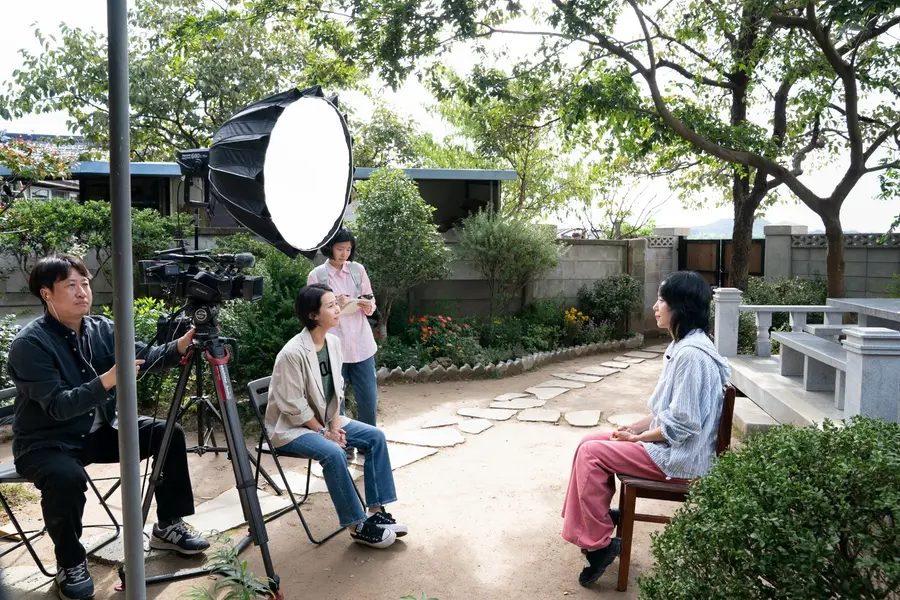
Ye-ji travels to various places to shoot her documentary. Lee Chang-dong is known for finding great locations, and the film is full of spaces that feel like places where people actually live. Was there a location that gave you a particular boost on set?
The yard at Mi-ok's house. You know that raised marble platform there? They dressed an actual house for the shoot, and Do-yeon explained to me how the art department had built the marble platform and planted the vegetable garden. That house has a comfort and affection that Ye-ji hasn't felt in her marriage. That smell of a home people actually live in, so to speak. So toward the end, after the couple returns from the vacation house, when their son comes in and says, “I'm home,” and “Our house is a dump,” I felt like I could smell that home, not a dump. You know that smell of a home people live in. The smell of a truly warm, lived-in home.
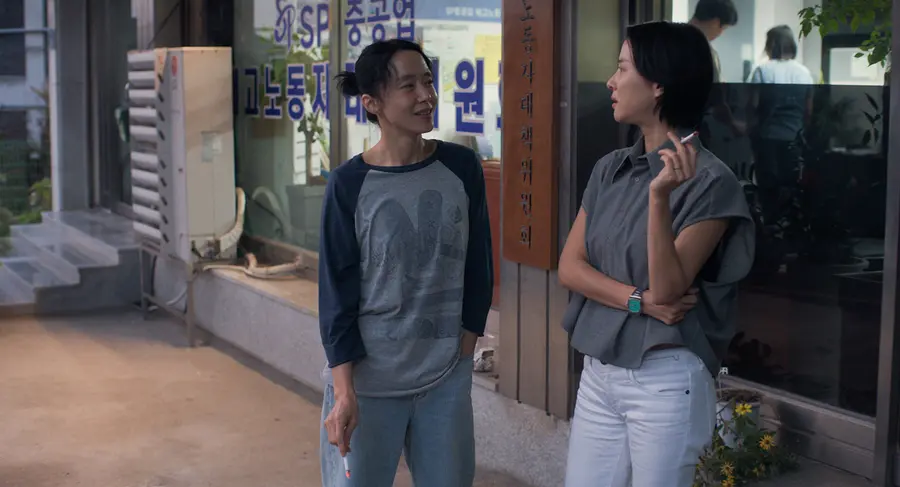
You also seem to have put a great deal of care into Ye-ji's wardrobe. From her bag to her accessories, I imagine you had many discussions with the costume team and the director. How did her wardrobe come together?
Thank you for noticing. You know Ye-ji's bag, the one Mi-ok photographs? Its price was written into the script. But from the time I read the screenplay, I wondered, “Would a documentary filmmaker carry a bag this expensive into the field?” At that price, it didn't seem suitable for taking on a shoot. So I did some searching and found a bag in the right price range that she could also plausibly carry into the field. I suggested it to the director, and the costume team and everyone else liked it, so we settled on that. That naturally led to a lot of my own clothes, things I'd actually worn and that showed some wear, making their way into the film. I found myself bringing in my clothes and even the smallest accessories, my watch, every pair of shoes—things that all looked used in daily life. The director, the costume team, me, and Do-yeon all contributed ideas, so I feel like we created the wardrobe together. For the scene where Mi-ok criticizes Ye-ji's clothes, finding the right outfit was so difficult. It had to invite criticism, but it also had to be something she could wear on a shoot. If she weren't going on a shoot, we could have picked something revealing, and it would have been fairly simple. But it had to be something she could wear in the field while still being conspicuous enough for someone to comment on, so we all agonized over it. Eventually, somehow, we chose something from my own clothes and asked the director about it. I think there was something fun about creating it together that way. All of it.
The scene where Mi-ok criticizes Ye-ji's clothes struck me as calling out the hypocrisy of a documentary filmmaker showing up to cover workers while seemingly flaunting expensive clothes. But rather than making excuses or doing anything else, Ye-ji just raises a hand, coolly says “OK,” and leaves. That scene really stayed with me. Was it written that way in the script?
I did it exactly as scripted. Even “She gestures OK and goes inside” was in the stage directions. It was all exactly as written. In a way, perhaps Ye-ji is someone who doesn't think to pay attention to those things. I don't think anything Ye-ji does is intentional. She just doesn't think of it. Of course, it could look that way to someone watching.
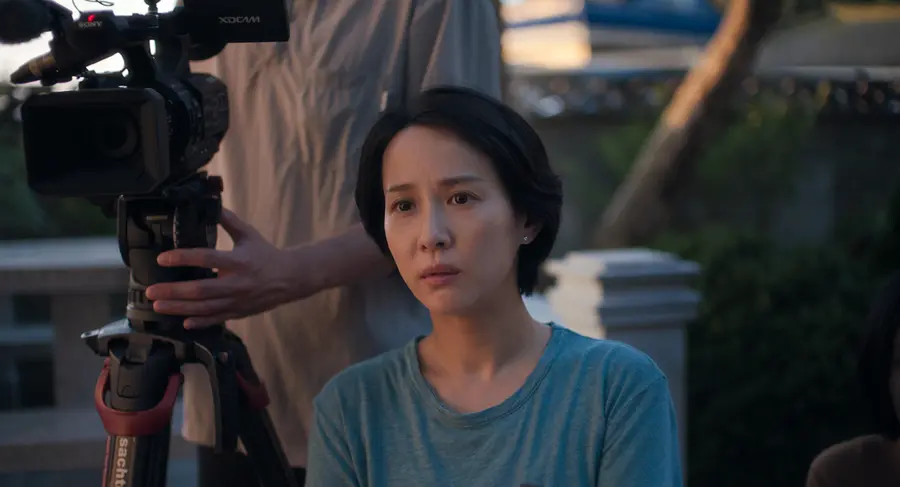
You also portrayed innocent characters so well in 〈Hidden Face〉 and 〈Parasite〉, and I felt that innocence suited you particularly well again here. How did you try to convey Ye-ji's innocence?
It's always difficult. Because I know everything. I know the story and everything beneath the surface of these characters. Knowing all that, it's difficult to believe innocently and move forward as though nothing is intentional, as you just said. But that's my job. I have to do it. I can't let everything I know show.
You're so good at that kind of acting that I think it makes audiences wonder even more about Ye-ji: “Does she know what she's doing, or is she really like that?”
Exactly. It can be confusing. But I played it thinking that perhaps that was how the director intended to portray her in the film. He could have written the character's position more explicitly. I thought, “He wrote this to get a lot of people thinking. I need to play Ye-ji with genuine innocence. If even the slightest intention creeps in here, the whole film could turn into something different from what the director envisioned.” If I don't strip away what I need to strip away, she becomes a completely different character.
Ho-seok stubbornly refuses to speak, but before we know it, he's standing in front of Ye-ji's camera, gradually expressing himself. What do you think was the turning point that made him open up?
I think that part is really important. Ho-seok makes several attempts. He recognizes it himself, goes to a group meeting, tries to talk once, and then can't do it again. As a viewer, that's the part that breaks my heart most. Mi-ok hasn't been on vacation in a long time, so when Ye-ji and her husband suggest going to the vacation house, she says, “I want to go somewhere like that. They say it's better than a resort abroad.” Looking at Ho-seok's face then is so heartbreaking. He feels sorry toward his wife and feels that things have turned out this way because of him. In fact, I think that's why Ho-seok agrees to go to the vacation house. Even though going there makes him deeply uncomfortable, I think he goes for Mi-ok. At the vacation house, he also makes the difficult decision to do the interview. All of that felt like Ho-seok making an effort. He makes up his mind there and struggles to start speaking, but I felt that once he starts, it all comes pouring out.
Late in the film, the beach scene between Sang-woo and Mi-ok has a tension almost like a bullfight. Did Ye-ji instinctively sense that Sang-woo was interested in Mi-ok? Or was she unaware?
He's everyone's sweetheart to begin with. (Laughs) He's just so nice. I wondered whether women could help being attracted to a man like that. She might also be “turning a blind eye.” From Ye-ji's perspective, realistically, the question becomes, “Then are you going to give up this marriage?” That's why the director's description of an “uneven playing field” resonated with me: I have to keep living on this uneven playing field. So the only way I can describe it is that she has accepted it. Because Sang-woo is simply Steve Jobs.
※This interview with 〈Possible Love〉 star Cho Yeo-jeong continues in Part 3.
Kim Ji-yeon, Cineplay reporter




댓글 (0)
댓글 작성
댓글을 작성하려면 로그인이 필요합니다.
로그인하기