


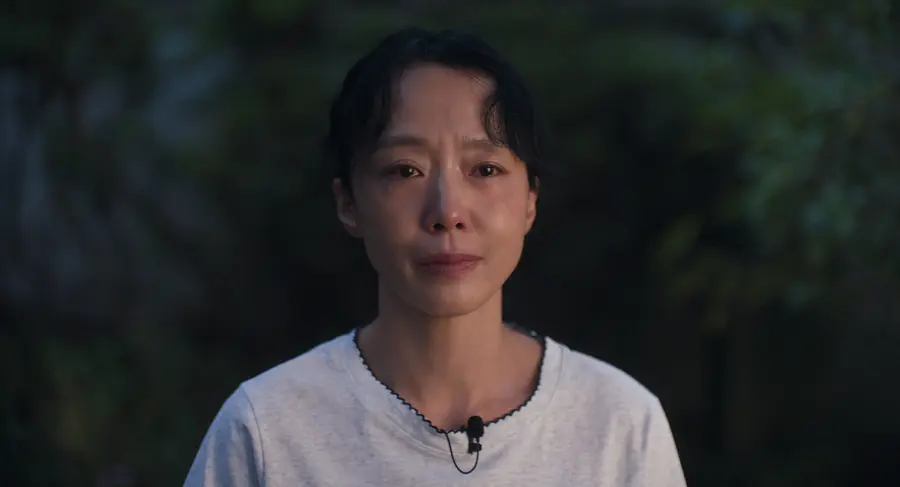
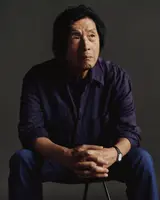
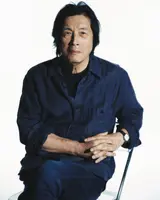
What does Jeon Do-yeon look like through Lee Chang-dong's lens, 19 years after 〈Secret Sunshine〉 (2007)? She says she doubted herself during 〈Secret Sunshine〉 when the director offered no answers. This time, she arrived on set with an open heart and a clear mind.
Lee Chang-dong's 〈Possible Love〉, which opened in select South Korean theaters on September 23 before its worldwide Netflix release on November 6, follows two married couples: laid-off worker Ho-seok (Sul Kyung-gu) and his wife, Mi-ok (Jeon Do-yeon), who works at a mask factory; and Ye-ji (Cho Yeo-jeong), a documentary filmmaker who wants to capture their lives on camera, and her husband, Sang-woo (Zo In-sung). As the couples meet, they confront their different lives and hidden desires.
Mi-ok willingly steps in front of Ye-ji's camera. The film asks about the “love” and “freedom” that might remain possible despite labor and capital, desire and fracture. Beside Ho-seok, whose spirit has been broken by his unfair dismissal, Mi-ok radiates an unceasing, primal vitality. She is a woman with the courage to peel away the layers of class, and someone who instinctively senses and responds to the power of the gaze concealed beneath Ye-ji's friendly offer of “Let's be friends.” As Lee explained, Mi-ok is “a character with a life force that cannot be fully captured simply by saying she is resourceful.” Even in a world where work defines lives and class divides relationships, Mi-ok moves toward “freedom.”
Puzzled by the flood of praise for her performance, Jeon said, “I only did what I always do.” She also suggested that even Mi-ok's bright, positive demeanor “might have been her way of expressing her anxiety and pain.” Here is what Jeon shared in an interview on November 9 at a location in Seoul's Jongno District.
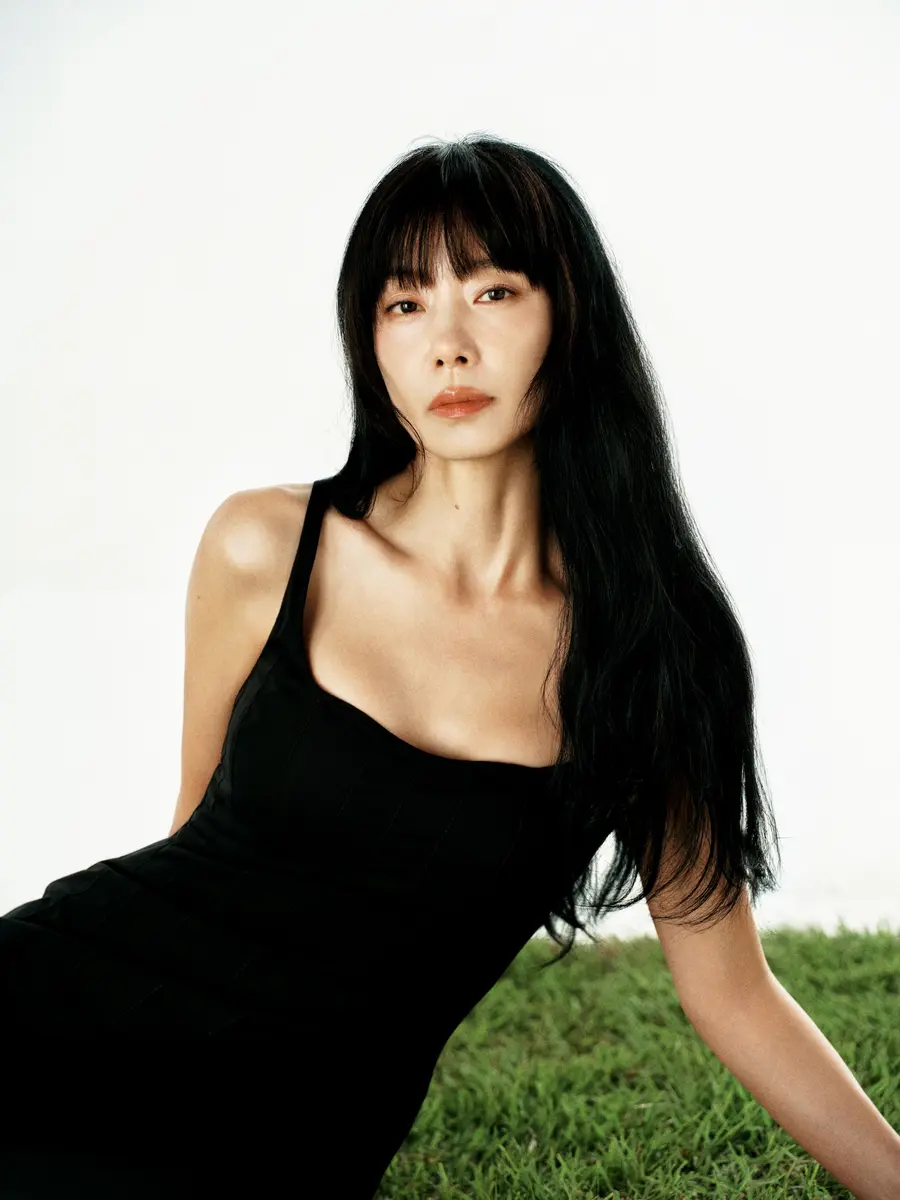
I understand you first heard the story that became the basis for this film about 10 years ago. How did you come to join the project after all that time, and what appealed to you?
Ten years ago, all I knew was that the director was planning, or thinking about, telling a story like this. Somewhere along the way, I think I heard about it once or twice with the same subject matter but a different title and a different story. As I remember it, sometimes the character of Mi-ok was in the story, and sometimes she wasn't, though I don't know whether her name was Mi-ok back then. So I thought, “He's still working on this project, and I might or might not be involved.” But I'm also a fan of Lee Chang-dong, and whether I was involved or not, I wanted to see his next film as soon as possible.
Then I made a special appearance when he shot a short film called 〈Heartbeat〉 (2022). At the time, both Sul Kyung-gu and I thought this story would be wrapped up with 〈Heartbeat〉. I think the director also said something like, “Maybe this is enough for this story.” So I thought that was the end of it. Even when, much later, he said he was starting a new project, I didn't know it was this story. He didn't tell me what it was about. He just said, “I'm going to start a film, and I'd like us to work together.” Then he said the title was 〈Possible Love〉, and I loved the title. The director was making a love story, a romance? (Laughs) But when he said, “It's about a laid-off worker and his wife,” I was even more curious. I really wanted to know how he had turned the story of a laid-off worker and his wife into a love story.
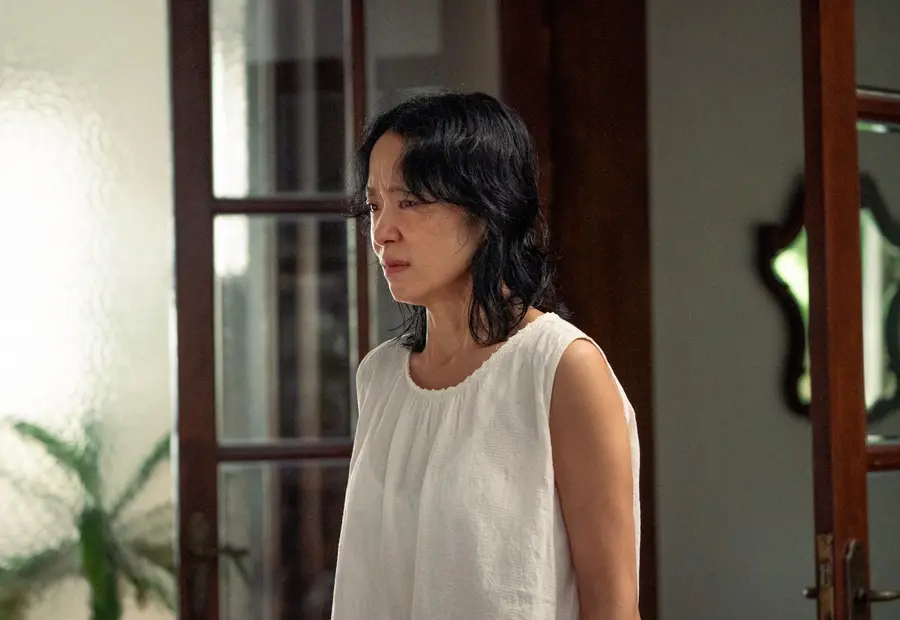
You first worked with Lee Chang-dong 19 years ago on 〈Secret Sunshine〉. You've said that, as you were trying to find Shin-ae in 〈Secret Sunshine〉, you expected him to guide you, but he left you to find her yourself. How did you find your way to Mi-ok this time?
When I hear questions like that in interviews, I want to say something that sounds impressive, but there really isn't much to tell. (Laughs) When I was making 〈Secret Sunshine〉, I wasn't married yet and didn't have a child, so when he kept telling me to “feel it,” I had enormous doubts about myself. Was what I was feeling right? I kept getting caught up in my own doubts, telling myself, “This is fake, it's fake,” and that was hard. Back then, I thought the director, as the person who wrote the script, was someone who had the right answers, someone who would always give you an answer: how I should express something as an actor, and whether that expression was right. So I depended heavily on directors and put a lot of faith in their saying a take was good. But working with Lee Chang-dong wasn't like that. When I was confused by my doubts about Shin-ae and about myself, I kept thinking, “Why isn't he guiding me? Why isn't he giving me answers?” Only afterward did I realize that directors, too, discover the story as they work. When I came to this project after so much time, it had been ages since we'd worked together. He doesn't make that many films, either, so I wanted to enjoy our time working together. I didn't want to be left regretting it and thinking, “Why couldn't I enjoy that time on 〈Secret Sunshine〉?” So whether it was painful or difficult, I wanted to fully embrace and enjoy that time. And I felt that whatever I felt or thought about the character after reading the script wasn't important. Instead, I joined the project thinking I should open my heart, clear my mind and take in as much as I could, whatever he said and however he guided me.
I heard that when Lee Chang-dong told you he had written a film for the first time in a long while, you were so delighted and teary-eyed that he said, “How could I not work with this actor?” What expectations and affection do you have for him that made those words so moving?
Having worked for so long, I've often felt the absence of great directors, even though films keep getting made. I felt that the only person in our country making films like Lee Chang-dong's was Lee Chang-dong himself. There are plenty of great directors telling great stories, but I wondered if there was another director whose view of human beings makes the characters feel so real. At some point, I wanted to see films like that, whether I was in them or not. Seeing a good movie makes you feel so good, doesn't it? I think I was hungry for that kind of film. So when he said he was making a film, I think I was genuinely so, so happy. I simply told him, very sincerely, that whether I was in it or not, I really wanted to see his film and had been waiting for it. But I was thrilled when he asked me to work with him. I wasn't thinking, “Well, if he's making a film, of course he has to cast me.”
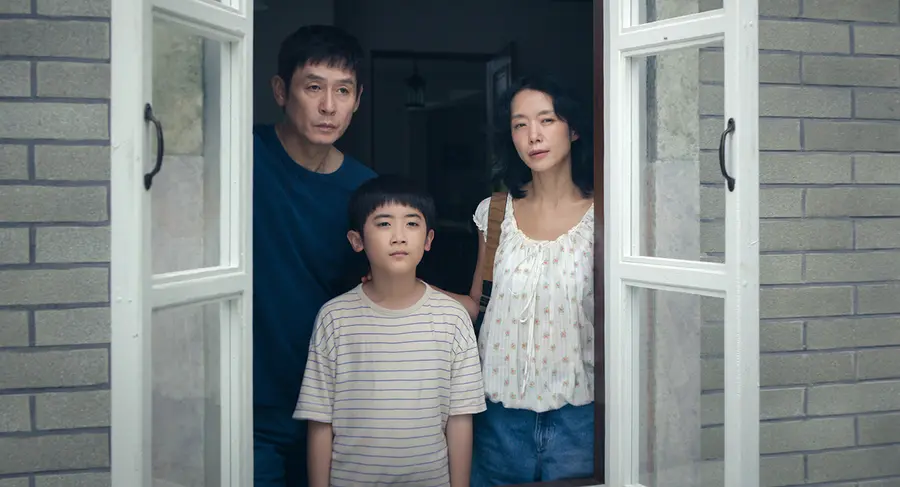
Watching Mi-ok, I thought of a “living organism.” She's hard to define but incredibly alive, someone who keeps moving toward the business of living, however difficult her circumstances, and whose well never runs dry. I've seen so many of your films, yet here was another entirely new character. How did you create her?
But I really didn't do anything in particular. (Laughs) I made this film without having to strain all that much. Everything on set went so smoothly, and, quite unlike a Lee Chang-dong set, there was so much laughter and such a joyful atmosphere. Even he said, “Is it all right to have this much laughter on my set? To have this much fun?” And the actors were filming while asking, “Is it okay to shoot like this?” The story itself doesn't have some huge incident, either. So I wondered, “Is it okay to shoot it this way?” And the director said, “It's turning out just as we're shooting it.” I hadn't seen the film yet, so I was worried, too. In fact, after the screening, when I was backstage, I asked him. There was so much praise, and I'd only done what I always do, so I said, “Was my acting really that good?” He held my hand tightly and said, “Of course it was. Watch the film again later.” It felt all the more surprising because this wasn't a project where I'd strained to create something in order to become Mi-ok or perform those emotions. I was a little taken aback, too. I think I was thinking, “I did what I always do, so why am I suddenly getting all this praise?”
Watching Mi-ok, I often felt she was very much like you. Even her tone seems similar to the way you're speaking in this interview. How did you establish that tone? And since Mi-ok goes through so many emotional shifts, were there moments that were difficult to play or that you couldn't understand?
When it comes to tone, I don't think I can ever escape “Jeon Do-yeon,” whatever the project or performance. I can't escape Jeon Do-yeon, but within her, I do seem to discover things, however small, that I didn't know about myself, things I hadn't felt or empathized with. 〈Possible Love〉 was actually my first encounter with the circumstances a laid-off worker and his wife had experienced, so I think it was a process of discovering Mi-ok by empathizing with her. What I worked hardest on was learning my lines. I didn't know under what circumstances the director would film, how he would shoot or where he would ask us to do an interview. He might simply set a chair down somewhere like this and say, “Let's start the interview.” So my biggest effort was to memorize Mi-ok's lines inside out, as if they were my own words. Wherever he said, “All right, give it a try,” I just wanted those words to come out as naturally as my own. I think that was really all I prepared before going to the set.
Note: The interview with 〈Possible Love〉 actor Jeon Do-yeon continues in Part 2.

댓글 (0)
댓글 작성
댓글을 작성하려면 로그인이 필요합니다.
로그인하기