



※ This interview with Lee Chang-dong, director of 〈Possible Love〉, continues from Part 2.
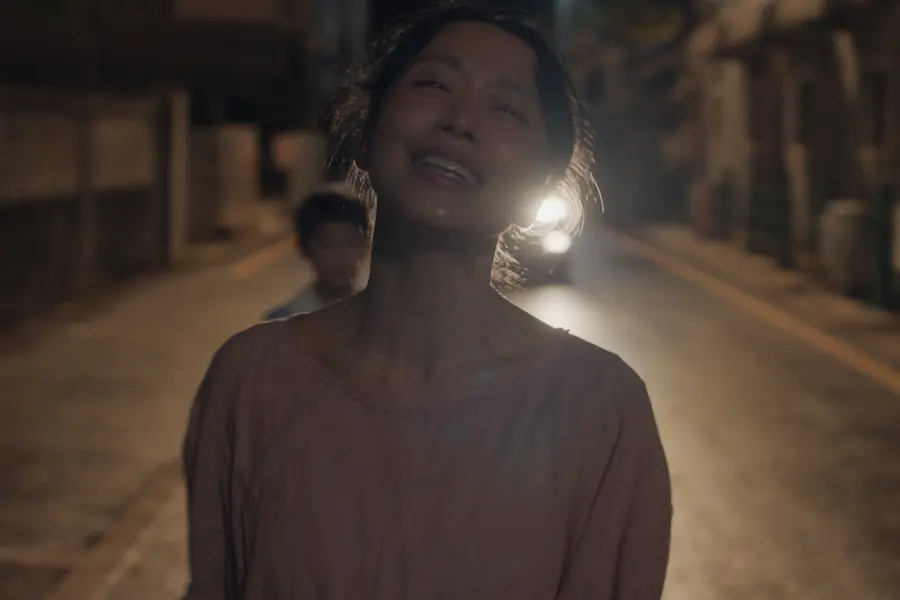
Despite her circumstances, Mi-ok is portrayed as someone brimming with life. Was there anything in particular you wanted to express through her character?
Mi-ok isn't anyone extraordinary. Among the families of the thousands of workers who were laid off en masse—not necessarily just their wives—most probably have those qualities. Mi-ok, in particular, met her husband when she was young, and they've lived through all of that together. He practically dragged her to Wolmido, where he looked up at the moon and said, “My heart is like that full moon.” That line alone led her to marry him, and then she went through every kind of hardship. She even sold their home to pay off the debts of her husband, a stereotypical Korean macho man, so she's not just an ordinary person. But is she particularly heroic? No, not that either. Still, I thought that precisely because she is that kind of person, she could be the protagonist of our film. Then she meets a man named Sang-woo and finds herself drawn to him, only to intuitively realize at that vacation home that this man, Sang-woo, is the invisible force who could completely transform and take away lives like hers and her husband's.
But standing up to that and resisting with nothing but her own body—saying, you may be able to take everything from us, but you cannot have my body—and exercising her freedom to demonstrate that isn't something just anyone can do. This has been true of my previous films, and it's fundamentally how I've always thought about the protagonist of a story. Especially in the times we live in, individuals are bound to be rendered powerless. But a single weak, powerless individual fighting to prove the meaning of their own life—that, to me, is a meaningful narrative for our times.
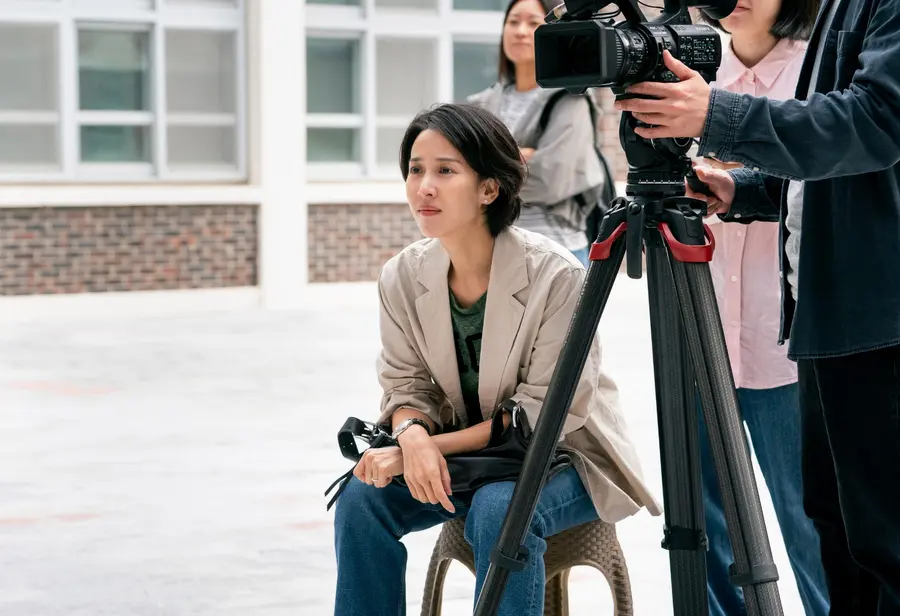
Ye-ji seemed to embody not only your perspective but also that of ordinary viewers watching the film.
Because a documentary filmmaker is holding a camera, and the camera itself is a gaze, this is also a film that shows someone filming someone else, someone looking at someone else. But as viewers watch the film and sense that camera's gaze, they also encounter Cheol's gaze. Cheol is watching these adults. We can't tell what he knows as he watches, or whether he's watching without knowing anything. His gaze somehow feels transcendent. By showing Cheol's gaze from the very beginning, I wanted viewers to sense that this was a film about looking, about points of view. I wanted them to feel that it might also be their own gaze. That's inherent to film as a medium: It makes us see through someone else's eyes. I wanted viewers to become conscious of their own gaze. On the most immediate level, Ye-ji is a documentary filmmaker with a camera, looking at someone and trying to capture them on film. But I wanted viewers to feel that they, too, could be doing that, that it connects to their own gaze. I think I touched on this earlier, but that was why I thought Cho Yeo-jeong was right for the role.
The film uses footage from a documentary by director Seo Se-jin. How did you come to use those scenes?
It wasn't because of any personal connection. If Ye-ji were making a film, she would have gathered as much archival footage as possible. We thought we needed to bring in footage from that time, too. And because the film combines documentary and narrative forms, our primary goal was to convey as much of that as possible to the audience. That's why we used those scenes.
A lot of people have been curious about how actor Jo Yu-ri was cast. The karaoke scene was also very memorable. Is there any behind-the-scenes story you can share?
Jo Yu-ri auditioned. We didn't specifically reach out to her. We held open auditions to find someone to play the younger Mi-ok. Yu-ri is a former idol and a very popular actor, but she had a very open attitude. We hadn't even disclosed what the role was, but she came in believing, naturally, that she needed to audition and be chosen. If you look closely, (Jeon Do-yeon and Jo Yu-ri) don't really look alike, but somehow they seemed to have a similar quality. I sensed in her something of Mi-ok before life's hardships wore her down, something of Mi-ok's essential nature. What mattered in the karaoke scene was conveying those subtle emotions as Mi-ok sings. But the technical challenge was Zo In-sung playing the clarinet. He didn't even know he would have to play it. So he practiced the clarinet a tremendous amount. It's not easy. As those who know will tell you, with wind instruments, just producing a sound seems difficult. In-sung worked really hard, and Sang-woo is a character who knows everything and has to be good at everything. Like Steve Jobs. (Everyone laughs.) He even has to be good at grilling meat and speaking English. In-sung worked hard to pull all of that off.
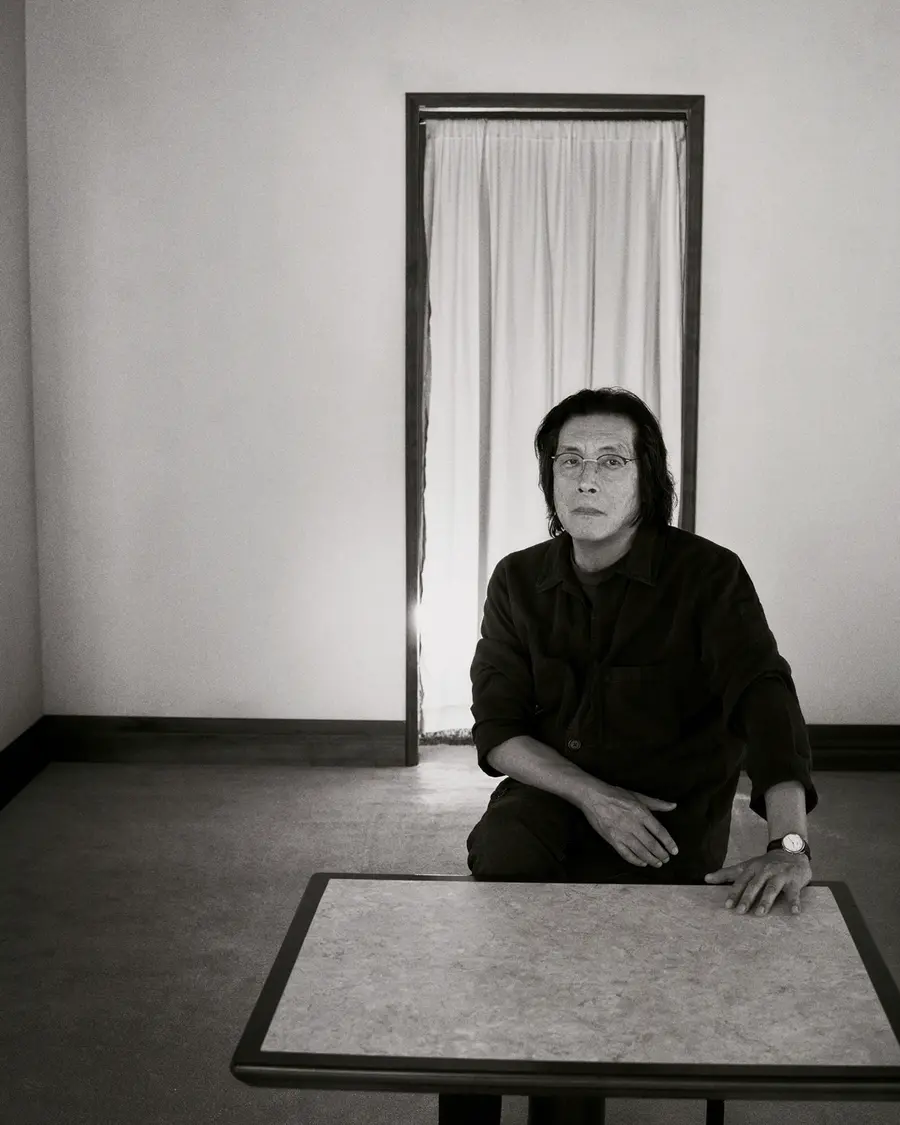
This was intended as a theatrical film, but after a long period in limbo, it was produced and released through Netflix. What was that struggle like for you?
There was no struggle. (Laughs.) Netflix read the screenplay and wanted to make it from the start. We wanted to make a theatrical film, so we looked for financing in Korea and abroad, as we always do, but it was difficult in Korea. This was early last year, when the situation for Korean films was very bad. Netflix was waiting, so when we couldn't secure financing, we went ahead with them. At the time, they verbally promised to release it in theaters. It wasn't a condition I imposed, so they could simply have chosen not to keep that promise. (Laughs.) But, although I don't know all the internal details, Netflix was trying something new, too. As Netflix has grown more powerful, there needs to be a structure in which streaming and theatrical films can coexist. They had tried it in the United States, but this was the first time in Korea, at least. So I imagine that was why they were making this kind of attempt. In that process, we couldn't, for instance, distribute it to a very large number of theaters. That would threaten the distribution of existing theatrical films. So we gave it a very limited theatrical release, and today it is finally being released.
Could the failure to secure financing in Korea have had anything to do with the film's portrayal of mass layoffs?
I believe that wasn't the reason. It's not a screenplay that makes you think, this will definitely be a huge hit if we make it. And we got almost to the final stage (before production was confirmed), but the situation at the time was terrible. Almost no Korean films were going (into production). Even so, if they'd thought, “This is definitely going to be a huge hit,” they would have gone ahead, wouldn't they? (Laughs.) It wasn't that kind of screenplay.
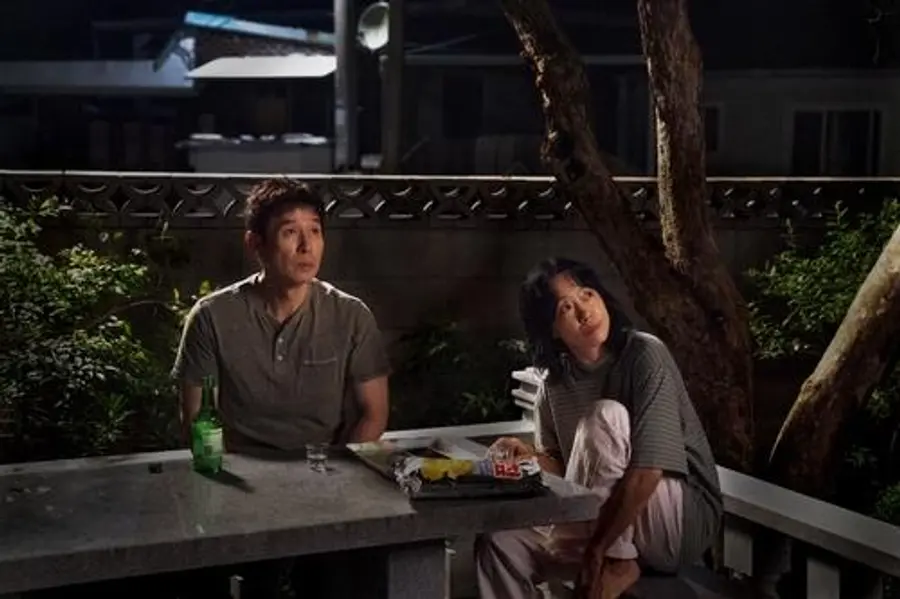
The shot of the moon at the end of the film was very beautiful. What does the moon mean in 〈Possible Love〉?
It was beautiful? We worked incredibly hard to keep it from looking beautiful. (Laughs.) Because almost any reasonably good shot of a full moon ends up looking beautiful and dramatic. So it was very difficult to capture it in a way that felt like the moon we always see in everyday life. On top of that, we needed a halo around the moon, so we needed clouds, too. I wanted it to be a very ordinary moon, but one that could make you feel something. I think viewers will each find their own meaning as they watch. Rather than my having hidden some meaning in it, remember what Ho-seok says? They go to Wolmido, and since there's nothing to see, he looks up at the moon and delivers that line: “Do you know what my heart is like? It's like that moon.” In one sense, it's a corny line; in another, it expresses a pure heart. But from Mi-ok's perspective, she married him because of that moon. In all the time since, though, would she ever have really looked at the moon? Just like all of us. It's hard even to see it clearly. But at the end, after going through all of that and coming home, they look at the moon together from that wooden platform. The moon was still there. And that moon is the same for the two of them as it is for that enormously wealthy couple. In a sense, the moon is fair. And everyone has to look at the moon. You have to look to know it's there. And what you feel in that moon is entirely up to each person. The people watching this film will probably each feel something different, too. Everyone must have at least one memory of the moon, whether large or small. It's each person's moon and also everyone's moon. Even if we have come to live in a world where our lives are fragmented like this, where labor is in such a state and our sense of self is lost, the moon will still be that same moon. So what we should feel, what we should think, before that still-unchanging moon is up to each of us.


댓글 (0)
댓글 작성
댓글을 작성하려면 로그인이 필요합니다.
로그인하기