



※ This interview with 〈Possible Love〉 director Lee Chang-dong continues from Part 1.
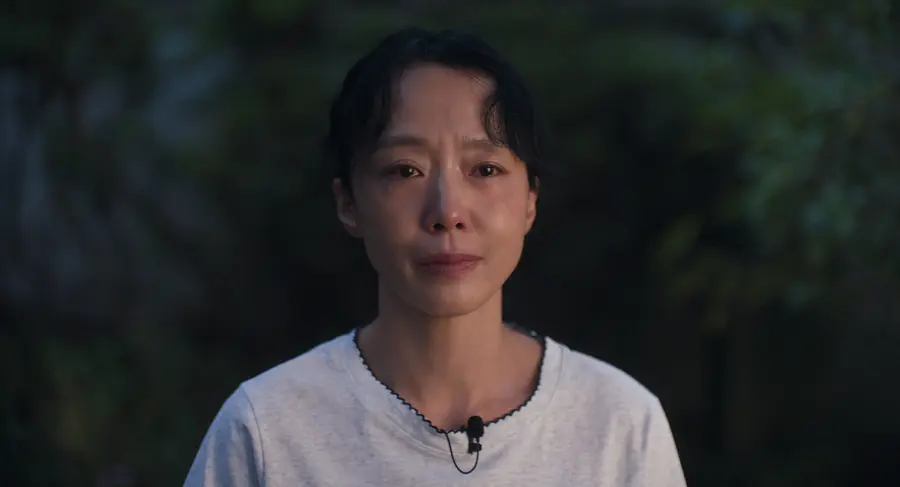
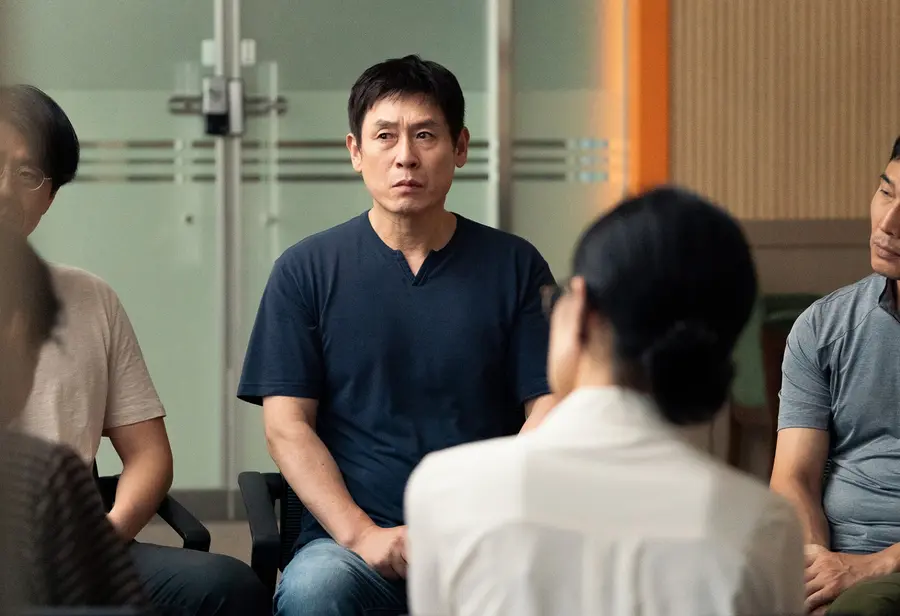
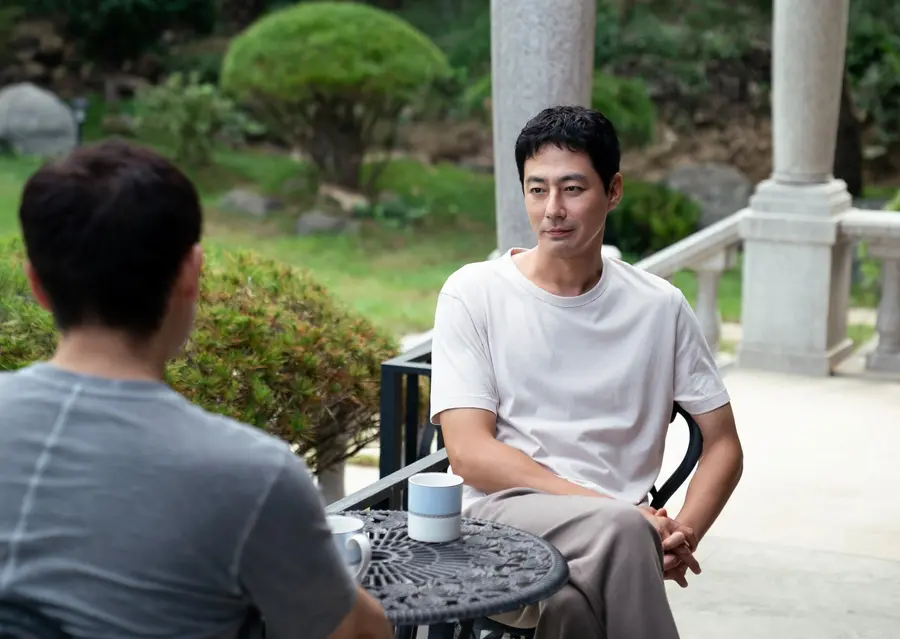
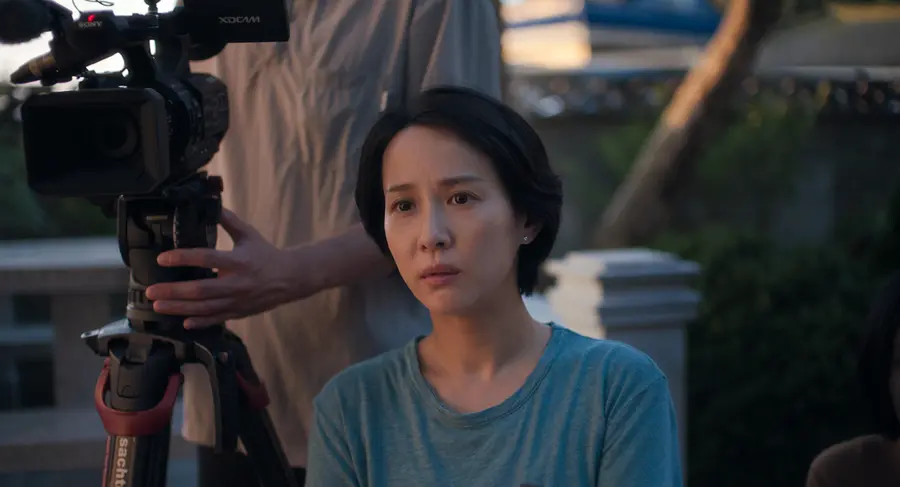
I imagine considerable effort went into casting the four actors: Sul Kyung-gu, Jeon Do-yeon, Cho Yeo-jeong and Zo In-sung. Are there any behind-the-scenes casting stories?
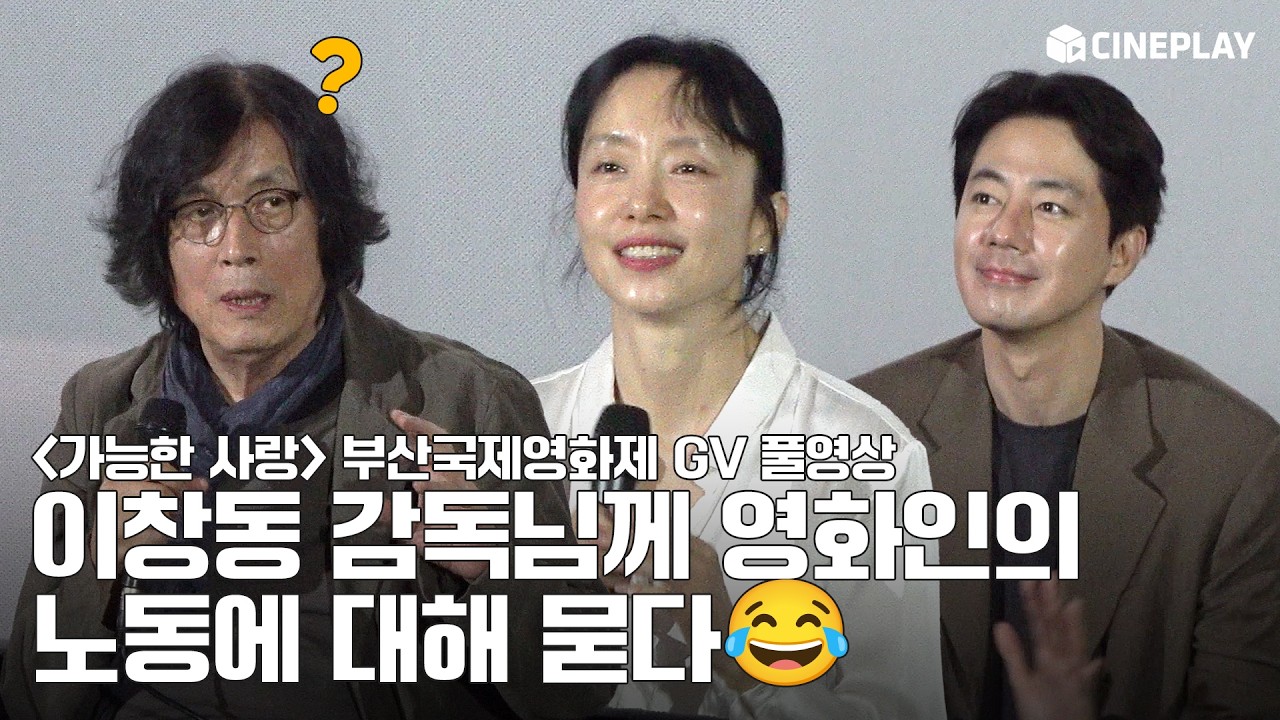
Sul Kyung-gu and Jeon Do-yeon were decided on from the beginning, from when I first wanted to tell this story 10 years ago. Of course I trusted them, and more importantly, at the time, the most important thing was to show the lives of that laid-off worker and his wife exactly as they were. So I couldn't be satisfied with “good acting.” That couldn't be the standard. Their story, their lives, had to feel real. Enough to look like a documentary. I thought Sul Kyung-gu and Jeon Do-yeon, the two people I trusted most, were the ones who could do that. Then the film fell through, and afterward I tried all kinds of other versions. Even then, it was still those two. They were quite disappointed when it looked as though I was going to make it, only for it to fall through or for me to shelve it. (Laughs) Then, in 2022, I decided to say goodbye to this story, that I couldn't do it, and made a short called 〈Heartbeat〉. Of course, I made it because WHO, the World Health Organization, asked me to make a short about depression, but the story about a laid-off worker was my choice. Then, in 2024, while I was considering another project, screenwriter Oh Jung-mi suggested, “Let's bring in the story of a married couple who are documentary filmmakers and try that,” and I thought, “Ah, I could do this.” I had shelved it because I couldn't find an answer to how I could honestly portray the lives of laid-off workers, and I couldn't feel confident about it. By introducing a documentary filmmaker as a character, I thought we could also talk about the ethics, honesty and attitude of the person trying to convey that story, and just how honest that person can be. And Sul Kyung-gu and Jeon Do-yeon, who had also given up on it, finally came aboard.
Ye-ji is a woman who works incredibly hard at life. And somehow she ended up marrying a wealthy man, but whether she wants it or not, that relationship is inevitably unequal. When that happens, the relationship itself becomes violent. Despite that, she struggles to make her own independent documentaries, to do something, to have a voice of her own. That diligence, that determination to hold on to what is hers. Yet because she has picked up a camera, there is also a desire she can't help being drawn toward. The camera itself has certain inherent tendencies. She's a character who inevitably finds herself constantly at odds with that tendency to follow what is more dramatic, more painful, engaged in an ongoing tug-of-war. I thought Cho Yeo-jeong could do that well. I didn't know her well personally, but my impression of her as an actor was that she was diligent, bright and hardworking, while also having her own inner ambitions, and that she could pull that off. Sang-woo is the invisible force governing the very lives of Ho-seok and Mi-ok as a couple. He's someone who moves the capital that creates mass layoffs of workers in the first place. But he's also everyone's favorite celebrity. (Laughs) Tall, handsome, good at sports, with that physicality as well. So it could only be Zo In-sung.
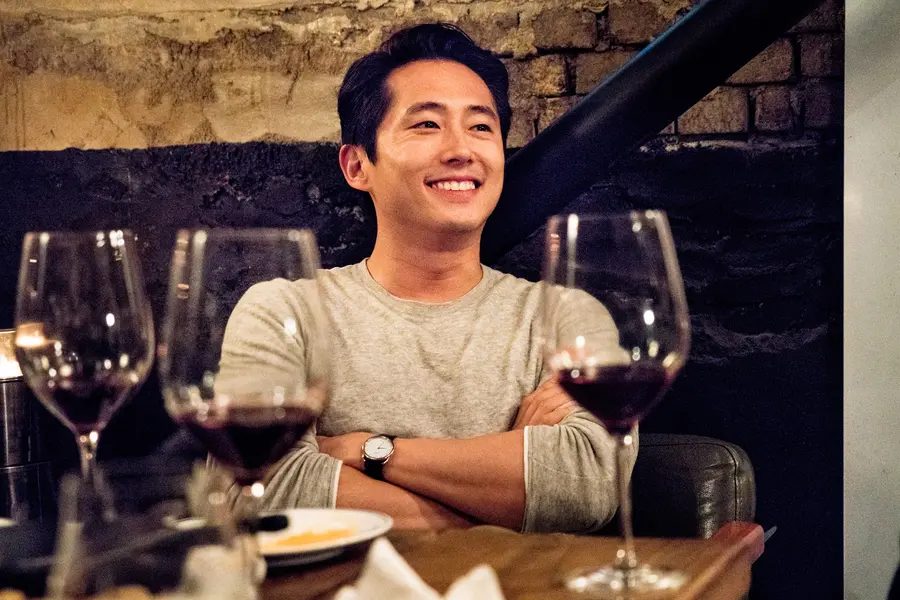
Watching Sang-woo reminded me of Ben (Steven Yeun) in your previous film, 〈Burning〉. I wondered whether Ben might have become someone like Sang-woo as he got older. Were you aware of a certain overlap with 〈Burning〉?
I thought that might be possible. But although Ben and Sang-woo might appear that way, they're different. The difference is that not knowing who Ben is constitutes his very character. It's not even clear whether he's a serial killer or a nice, friendly, wealthy man from Gangnam. That lack of clarity is the issue. Jong-su (Yoo Ah-in) is angry at Ben not because he's certain Ben is a serial killer, but because he doesn't know who this guy is. Ben as a character embodies the mystery of this world. But Sang-woo is different. Sang-woo is a living, breathing character, and he's fundamentally a good person. He's not just pretending to be good; he is good. I don't know what being good means, but he treats people kindly, he's gentle, he's good at joking around, and he's good at everything. He even plays the clarinet well. (Everyone laughs) And he has a certain awareness of his own. For example, as the film hints, you get the sense that Sang-woo's grandfather may have been a police officer during the Japanese colonial period. The capital Sang-woo inherited from his family, that homegrown capital, probably dates back to that era. But Sang-woo tries not to involve himself with that inherited capital. He says he's moving other capital, so he's engaging in his own kind of self-reflection. He may not be showing off the whistle, but speaking about it critically. And he married a woman like Ye-ji, defying his family's objections. He says he wanted to live in the United States running a taekwondo school. He decided to marry her even if it meant cutting ties with his family, and he actually followed through. When he comes to the vacation home, he listens to the birds with the innocent heart of a child. So he's fundamentally an innocent guy, to the point that later, when he wipes the mud off her knee, you're unsure whether he's making a move or acting with a child's innocent attitude. Of course, he can't be as innocent as a blank sheet of paper, because he knows everything there is to know. But he's someone who tries to live that way. Asking, “Isn't his very existence problematic when he has that much money? Isn't it a problem to manage funds while moving that kind of capital?” is a question of our times. It's a problem with this world, and although Sang-woo does that work, Sang-woo himself is fundamentally different from Ben. The end result may be the same. Because the logic of capital pursuing profits in what Sang-ho manages could lead to restructuring, even if he doesn't do it himself. Things like that can happen.
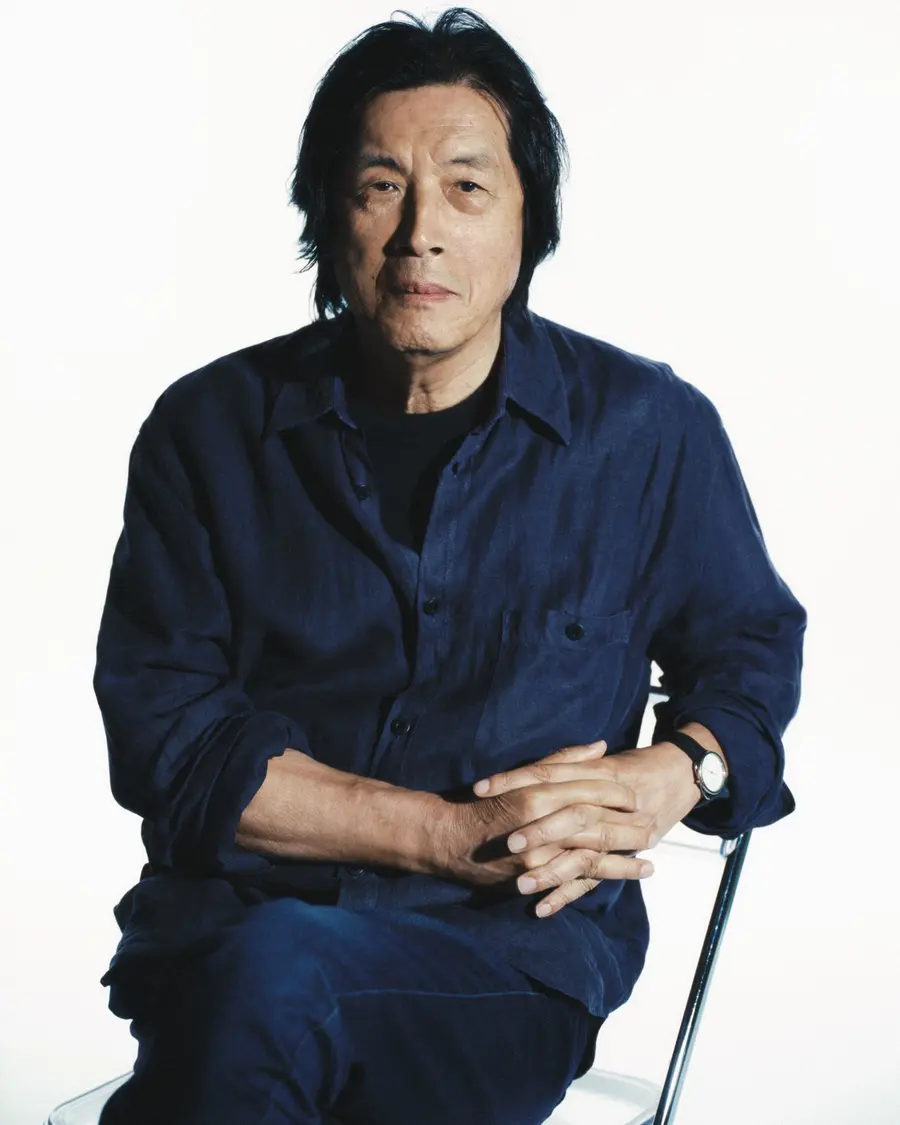
At the Venice International Film Festival, director Johnnie To called 〈Possible Love〉 “Lee Chang-dong's most mature work.” This is your seventh feature film. What does it mean to you?
I don't know whether it's a mature work. It's a work I made when I was old. (Laughs) Making a film as I've gotten older, I felt that something in me had changed, too. Wanting to tell a story, wanting to ask the audience questions, wanting to engage in some fundamental communication with the audience through film—that hasn't changed. But what you might call my approach to filmmaking seems to have changed a little. In particular, there's my relationship with the actors. It's been well over 20 years with Sul Kyung-gu (2002's 〈Oasis〉), and I worked with Jeon Do-yeon 19 years ago (2007's 〈Secret Sunshine〉). It was very difficult back then. It was hard for them, and it was hard for me. Because I didn't have any room to breathe, either. I felt I had to see it through to the end without letting anything slip, and they were young and fighting fiercely with themselves. So the process must have been difficult. But this time, coming back together to work—of course, over those 20 years, we had met often and become close, not as a director and actors. So perhaps that's why, when we came together again, there wasn't that kind of struggle we used to have. (Everyone laughs) You could say we accept one another. Working with me wasn't as hard for the two of them as it had been in the past, and they understood me well. And I understood them well, too, so things were different. That would be a fundamental change. You could say that's what has changed.
There's a scene where Mi-ok follows Ho-seok and encounters Ye-ji. You've said Ye-ji is a character who reflects you. What did you want to convey through that scene?
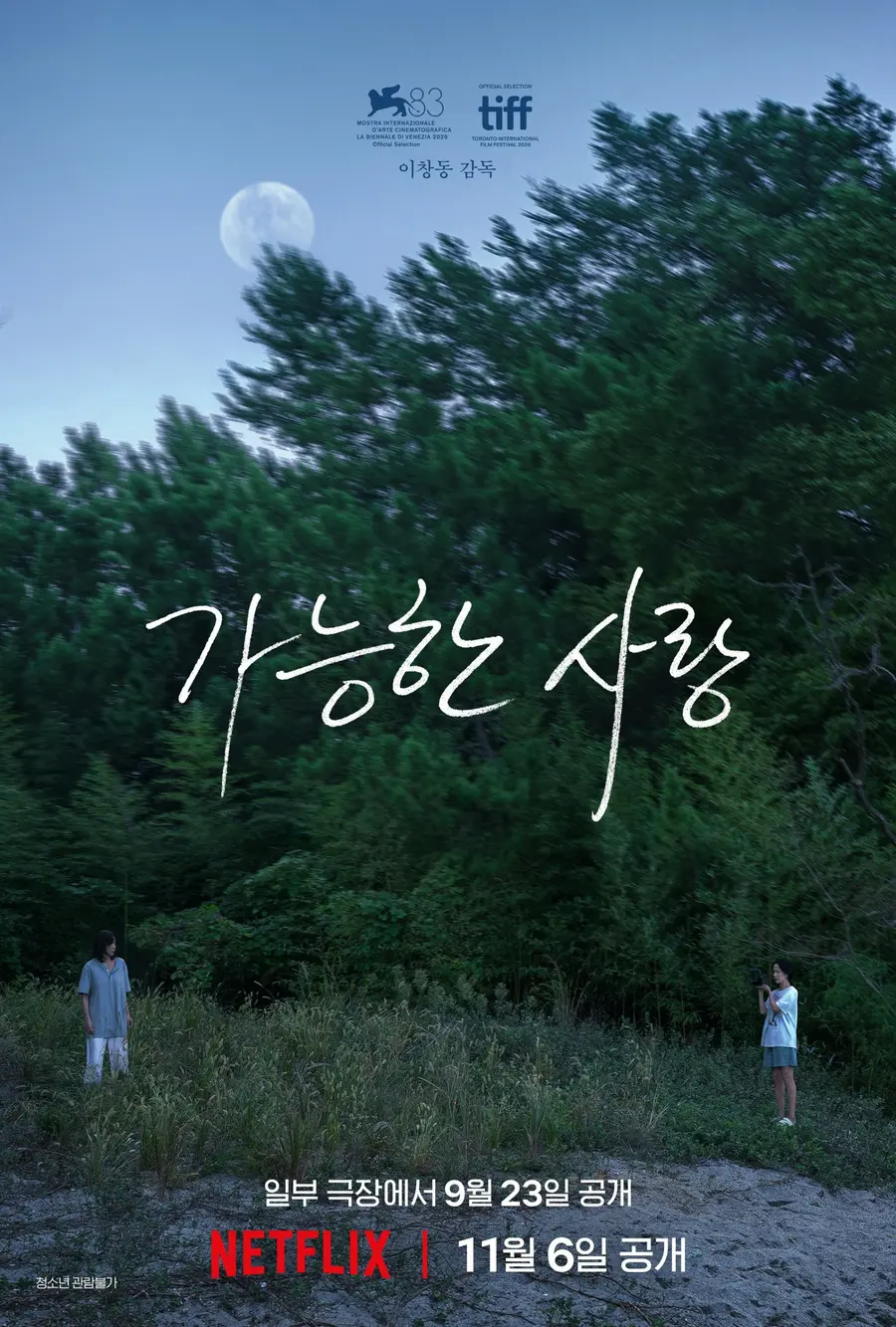
Even while living with such a wealthy man, Ye-ji is trying to tell her own story as a documentary filmmaker. And in doing so, she presumably thinks as much as she can about things like the ethics of the camera. But at the same time, the camera has that inherent tendency to pursue something more intense. If someone is suffering, it pursues greater suffering, even a situation in which, depending on how things unfold, the subject could die. You say you love them and try to love them, but the camera inevitably ends up following those things. I think that's an unavoidable desire. It may be a characteristic of Ye-ji, but it's a desire everyone has, including me. Would Ye-ji have followed Ho-seok with her camera at dawn knowing he would scream like that in the valley? She may have followed him out of curiosity because he was going out at dawn. But when the camera pursues something like that, how far do you follow, and at what point do you turn the camera away? That's an extremely important choice. Even if you're not a documentary filmmaker like Ye-ji, even if you make narrative films like me, there is always a line between when to point the camera and when to turn it away. An invisible line. This is something that happens on set all the time. Our film isn't a documentary, but when Ho-seok screams in the film, for example, we could film him up close. But between filming Ho-seok that closely and simply filming him from Mi-ok's point of view as she watches from a distance, there is an ethical choice. Apart from what would be more effective for the film. As a documentary filmmaker, Ye-ji had that unavoidable impulse to follow the camera's inherent tendencies. Of course, her own desires were part of it, too.
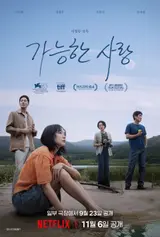
That scene was also used for the poster. Was that your decision?
Using that scene for the poster was something the marketing team and I agreed on together. First of all, I thought it was a pivotal scene in this film. Before considering whether it would work as a poster, it relates to an important question this film is trying to convey: how we look at other people's suffering. That's why I thought it was pivotal. Even if we're not specifically talking about Ho-seok and Mi-ok, whether it's a story about laid-off workers or anything else, and not necessarily just in Korean society, we constantly see other people's suffering in our society. It could be the refugee issue, issues facing minorities, victims of war, or Gaza. But how we look at other people's suffering is an important question. I thought this scene would show that in a decisive way. The scene might feel cruel, or people might perceive it as presenting an ethical question in itself. There could be various responses.
※ This interview with 〈Possible Love〉 director Lee Chang-dong continues in Part 3.


댓글 (0)
댓글 작성
댓글을 작성하려면 로그인이 필요합니다.
로그인하기