


※This interview with 〈Possible Love〉 actor Jeon Do-yeon continues from Part 1.
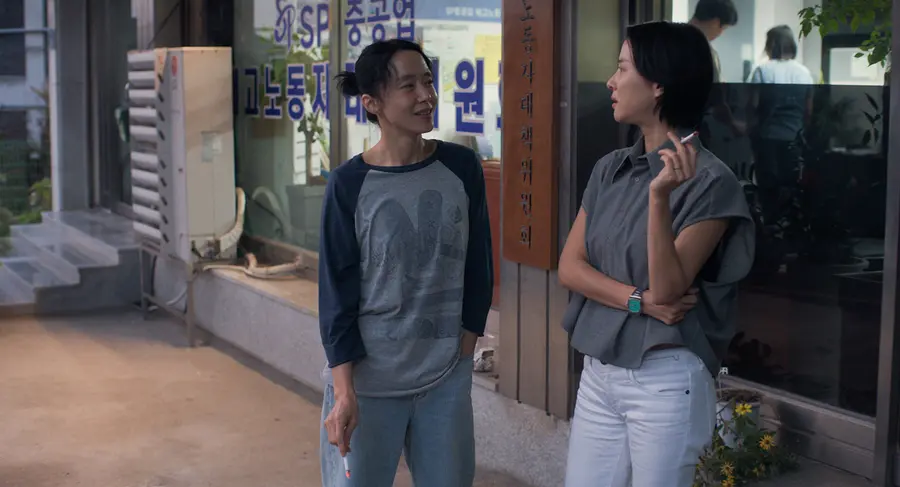
I’d also like to ask how you interpreted and portrayed her relationship with Ye-ji. Agreeing to appear in a documentary isn’t an easy decision, but Mi-ok cooperates with the filming from the start. Then she gradually seems to sense that Ye-ji’s intentions aren’t entirely sincere.
Actually, when I’m acting, I can’t really interpret a relationship or establish a framework for the character I’m playing, Mi-ok. It’s more a matter of, “How can I feel this? How can I express these emotions?” From Mi-ok’s perspective, I think Ye-ji might have been a kind of way out. Ho-seok is someone who retreats into silence because of his wounds and pain, and Mi-ok is always anxious and on edge because she never knows when those emotions might erupt. Other people might look at her son, Cheol, and say, “Isn’t he a little strange?” But she refuses to acknowledge that and says, “We’re fine.” I thought Mi-ok’s bright, positive, sunny disposition might also be her way of expressing her anxiety and pain. So I think Mi-ok hoped that Ye-ji, and the camera, might help her family move in a better direction, that they might be able to help. Anyone can find some relief by talking to someone about their pain or circumstances and sharing them. But Mi-ok’s family and the laid-off workers, who were comrades at one point, have now become adversaries, even enemies, unable to share one another’s pain. Their relationships have become worse than those between strangers. At a time like that, I thought Mi-ok might need some release through telling her story. So I think she agreed to the documentary interview and held on to that thread of hope that Ho-seok and her family could move toward something better, something more hopeful. I think she saw Ye-ji and the camera as a possible way forward.
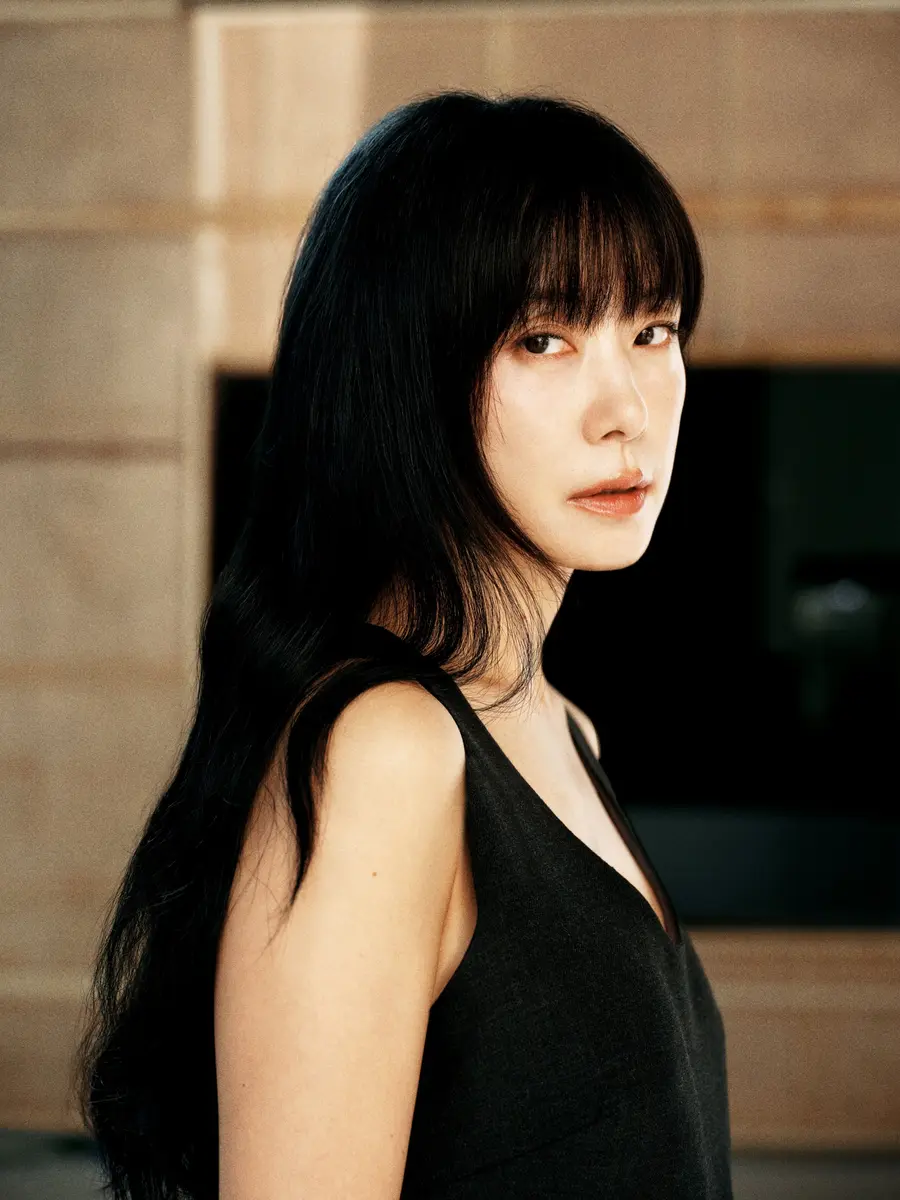
〈Possible Love〉 opens with the commandment “You shall not covet.” Mi-ok admires the food, clothing and homes of Sang-woo and Ye-ji, who seem to embody capital itself, and in a sense, you could say she covets them. She also seems to keep moving back and forth across the line between being subservient to capital and living a life true to her humanity. How did you try to convey that?
In that respect, I thought Mi-ok was very curious and also fairly honest about expressing herself. Rather than coveting what others have, I felt, “She really wants people to think she’s doing fine.” That’s also why she won’t let them film her son when they want to show him struggling with taekwondo. That’s not a side of her life she wants others to see. Her bright, positive demeanor also seems like a conscious attempt to communicate, “Nothing’s wrong with us. We’re fine.” Mi-ok also frequently takes pictures of food. She doesn’t actually use social media, and she doesn’t have anyone to send them to and show off to, but those things have become so widespread and so much a part of everyday life. We even live in a time when someone who doesn’t take pictures looks like the odd one out, with people asking, “You’re not taking a picture?” So I thought Mi-ok might be that kind of person, too. She has nowhere to show them off, doesn’t post them on social media, and no one sees them, but it’s as if she’s saying, “We’re fine.” I thought showing herself living like a very ordinary person might be her way of expressing her anxiety and wounds while trying to appear as though she’s fine.
You seem to have interpreted Mi-ok as someone who carries anxiety. Yet ultimately, her resilience, self-respect and efforts to live honestly seem to come across as the values we need to preserve in a society ruled by capital, as director Lee Chang-dong said.
If that’s what the director said, then he must be right. (Laughs) But she probably wouldn’t have been conscious of that or thought about it as she went through life. I think meeting Ye-ji and Sang-woo, a married couple whose lives are so different from her own, makes it much clearer to her what kind of person she is. And what she wants and what she needs to show become clearer to her, too.
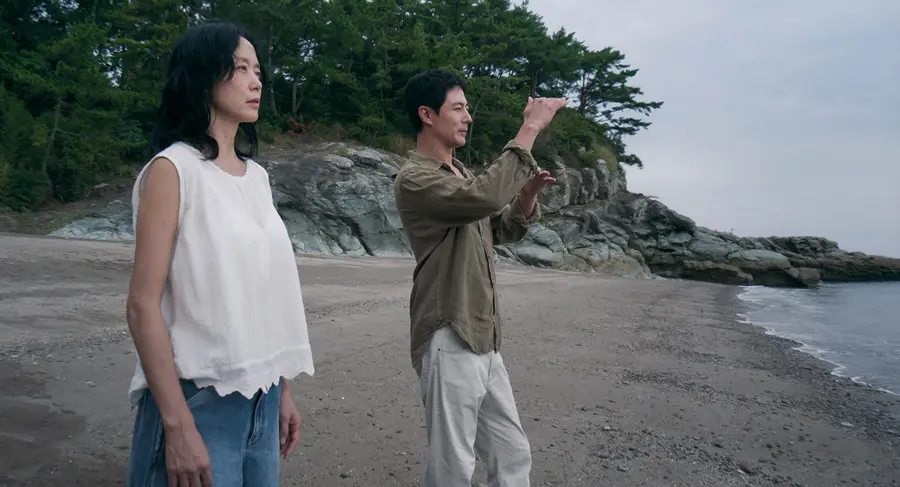
How did you understand the relationship between Mi-ok and Sang-woo? Since the film opens with “You shall not covet,” wondering where that relationship is headed is one of its major pleasures for viewers until they know the ending. At times, they seem to covet each other. What does Mi-ok feel when she looks at Sang-woo? Did the director explain from the beginning what their relationship was and where it would go, or did the two of you add anything as you performed?
The director didn’t give the actors separate explanations about the work or where things would go. Initially, he actually suggested doing a reading with each actor individually, but after a few scenes, he said, “I don’t think we need to do this.” If anything, he was wary of the actors preparing something. Just as he said, he wanted it to feel like we were doing it for the first time, saying the lines for the first time, hearing the lines for the first time. I think he wanted to capture more of those things that emerge spontaneously in such moments, things we hadn’t planned or thought of.
Wasn’t Sang-woo an object of curiosity for Mi-ok? Mi-ok liked Steve Jobs. She didn’t just like him; she liked and admired him so much that when he died, she cried from grief and couldn’t eat. Then someone like Steve Jobs actually appears right in front of her. I think she would have felt curiosity and admiration. And as she thought she was becoming friends with Ye-ji and growing closer to her, she thought, “Maybe we’re just like them.” But the closer she thought they were getting, the more she felt the gap between them. She thought they would protect and understand us, but in fact, our family is falling apart. So she must have felt an enormous sense of loss, as though her world were collapsing.
The scene in which she goes into the ocean with Sang-woo could be considered the film’s highlight. Viewers have offered a range of interpretations of it. I’m curious whether you approached that scene with a clear definition of what it meant.
I don’t think I knew at the time. I filmed it without knowing, and we ended up shooting that scene first because of things like the season. I think I was a little scared. Scared I might miss something, even though I didn’t know anything. But whenever I think about it, knowing doesn’t necessarily mean you do better. After making 〈Secret Sunshine〉, I once asked the director, “Director, if I filmed 〈Secret Sunshine〉 now, would I do a better job?” But emotions are things we feel from moment to moment, and those feelings make us act and speak. I think it’s the same for me in acting, and it was the same this time. I just filmed that scene in the moment, following what was in the script. I don’t think the director really knew what the emotions should be, either. They weren’t clear-cut, and I don’t think he could have said what to direct or how, or what emotions should come through there. That’s because neither the director nor we had built up the emotional arc by filming continuously from the beginning. We had to start with such climactic emotions, so it was a scene we all filmed under pressure. But even looking at it now, if I ask whether it would be different if I filmed it knowing all of this, knowing it had this meaning or that significance, I do wonder what would really have been so different.
※This interview with 〈Possible Love〉 actor Jeon Do-yeon continues in Part 3.


댓글 (0)
댓글 작성
댓글을 작성하려면 로그인이 필요합니다.
로그인하기