


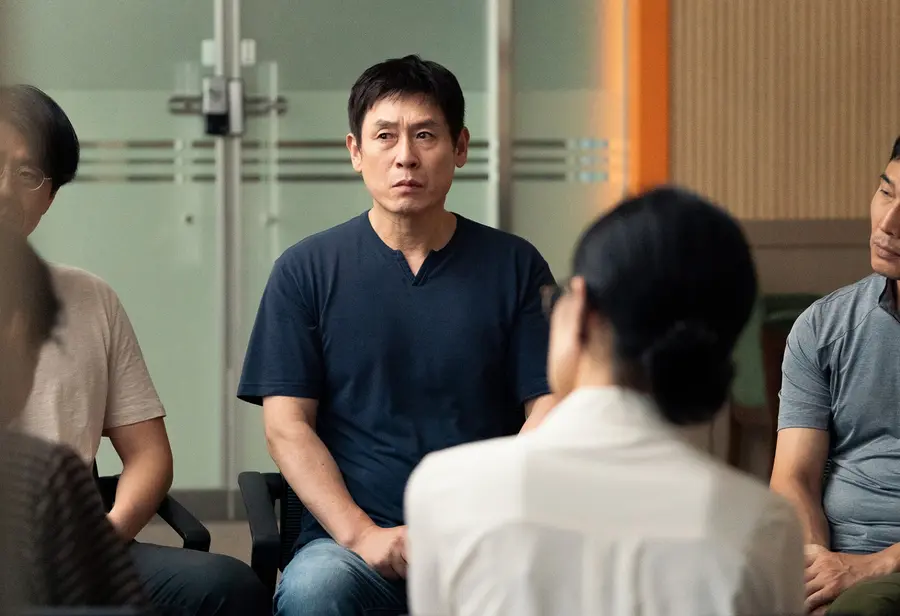
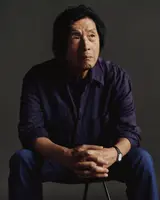
Someone who chooses to tell you what is in his heart rather than have it exposed. That is how Sul Kyung-gu defined the character he plays. Someone who does not want his feelings discovered, but who can open his heart if his sincerity ultimately gets through. For him, at least, love must have been “possible.”
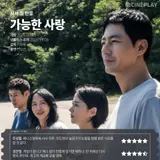
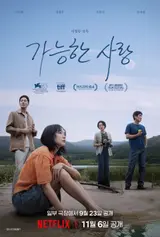
Director Lee Chang-dong's 〈Possible Love〉, which opened in select South Korean theaters on September 23 before its worldwide Netflix release on November 6, follows two married couples: laid-off worker Ho-seok (Sul Kyung-gu) and his wife, Mi-ok (Jeon Do-yeon), who works at a mask factory; and documentary filmmaker Ye-ji (Cho Yeo-jeong), who wants to capture them on camera, and her husband, Sang-woo (Zo In-sung). As the couples cross paths, they confront their different lives and hidden desires. Having worked with Lee on 〈Peppermint Candy〉 (2000) and 〈Oasis〉 (2002), Sul returns to one of the director's feature films for the first time in 24 years.
Long haunted by what he experienced during a general strike and its forcible suppression, Ho-seok cannot bring himself to speak even at a therapy session he has struggled to attend, and he refuses a documentary interview, too. Describing Ho-seok, who has been hollowed out inside, Sul called him “someone whose body has become his language.” It is only in front of Ye-ji's camera that Ho-seok finally pours out his pent-up anger. He knows he can survive only by letting it out himself.
Scheduling conflicts nearly prevented Sul from appearing in 〈Possible Love〉, but after sleepless nights agonizing over the problem, he resolved it himself and returned. By his own account, he did so because he “would have gone crazy” if another actor had taken the role offered to him. His reason was “simply Lee Chang-dong.” “I think I really missed that scent,” said Sul, who remembered this set as “so warm and lovely.” Here is what he shared in an interview held November 9 at a location in Seoul's Jongno District.
You and Zo In-sung were both crying quite a bit right after the premiere screening of 〈Possible Love〉 at the Venice Film Festival. What brought on those tears?
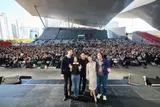
Before going to Venice, we had a technical screening in Korea, and afterward we talked about our impressions over drinks. Everyone seemed to have really taken it in. In particular, they said they still hadn't settled down when they were looking at the moon. So I thought, ‘Was I the only one who didn't see it? Was I the only one who missed something?’ Then we went to Venice, and since it was my second time watching, I think I really concentrated on the film. Seeing it a second time, how should I put it? Something seeped into my heart. The camera kept showing the moon, and I started crying. I don't even know why. That was the ending, so the credits rolled, people applauded, and the lights came on. I hurried to wipe away my tears, but I couldn't compose myself in that short time. As it happened, the film was unveiled in Venice on September 7, exactly one year after our first day of shooting in Goheung. The shoot started unfolding in my mind like a panorama, and I kept feeling strange. That's why I cried, but fortunately In-sung was crying beside me, which was comforting. All the while, I was thinking, ‘I'm in trouble. How much teasing am I going to get for this?’
What ultimately made you decide to join this film? And what was your first impression of Ho-seok when you read the script?
The reason was very simply director Lee Chang-dong. I almost couldn't do it because of scheduling conflicts, so all I could think about was that I had to do it. What was in the script didn't even matter. He briefly explained it to me, but none of it registered. I was thinking, how am I going to work this out? I was supposed to start shooting the Netflix series 〈Mousetrap〉 in a few weeks, so how was I going to bring this up? The director and producer Lee Joon-dong kept saying, ‘It looks like we won't be able to do it this time,’ and it was driving me crazy. So as I left, I said one thing: “I'll sort it out and come back.” I spent about three days agonizing over it and couldn't sleep. I asked 〈Mousetrap〉 director Kim Hong-sun for a favor. He thought it over and said, “I'll try. I'll find a way to make it work.” That's how I ended up doing it, and I didn't even ask Lee Chang-dong for the script. Then he said, ‘Aren't you interested in the story? All the other actors have read the script and shared their thoughts. Are you really this uninterested?’ (Laughs.) So I finally got it later. Reading his script, as always, felt like reading a novel that stays with you for a long time. Lee Joon-dong called to ask what I thought, and just as I was about to answer, he told me I was on speakerphone and the director was beside him. “Well, it's a film by you, director,” was what I said. “It felt like a novel.” That's how I express myself. I just toss things out plainly, without any grand, flowery language. I didn't think all that deeply about Ho-seok. At first, just on the surface, I saw him as a worker who had been laid off and hurt by a colleague. That was about as much as I thought while reading it, and as filming approached, I thought a little more about the character.
You said you felt so much pressure during 〈Peppermint Candy〉 that you even ran away. Now, you want to work with the director so much that not being able to would actually upset you. What do you find most compelling about Lee Chang-dong?
He has a distinctive scent. If someone showed me a film without his name on it, I think I would know it was a Lee Chang-dong film. His scent, and the atmosphere on his set. I think I missed and loved that scent.
You spent three days worrying that you might not be able to make 〈Possible Love〉 and resolved the problem yourself, so being in a Lee Chang-dong film seems to hold special meaning for you. What does working on one of his films mean to you?
This really might sound childish, but if it were a role that hadn't been offered to me, it wouldn't matter. If he were making a film, I would have thought, ‘He's finally making one,’ and been genuinely delighted and happy. But if a casting announcement came out with another actor's name in a role that had been offered to me, I felt like I would go crazy. That's why I tried to sort it out somehow. The reason was simply Lee Chang-dong. I think I really missed that scent. Lee Chang-dong's scent, the scent of his films, that particular atmosphere on set. That uncomfortable atmosphere. But this time, it wasn't uncomfortable. Personally, of course there was discomfort in playing Ho-seok. But the atmosphere on set was so warm and lovely. For the first time. I don't know what it was. (Jeon) Do-yeon says it was thanks to Zo In-sung and Cho Yeo-jeong, and there was definitely something to that. Those two have an energy, but I couldn't take the lead in it. I enjoyed myself because the set was fun, but I couldn't be the one driving that. In the past, even up through 〈Oasis〉, Lee Chang-dong couldn't sleep while making a film. Back then, we lived near each other, so we rode in my car, and I never once heard him say he'd slept. But this time, he slept before the first day of shooting. He said, ‘Hey, I slept.’ He said he didn't know why he'd slept, but somehow he felt a little more at ease. He didn't know why. I guess we'll have to get his next film made soon and see whether this is a big change in him. Whether he sleeps well then, too.
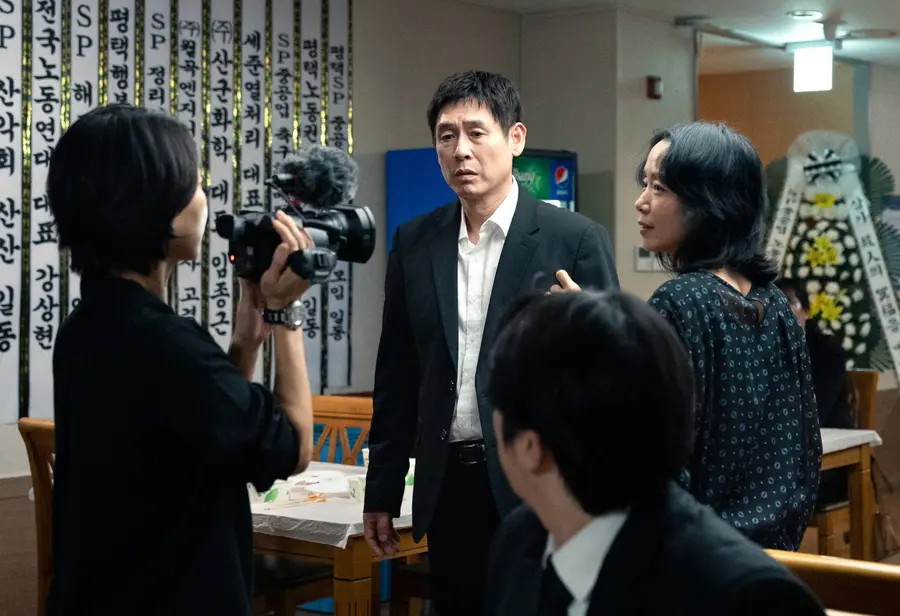
Ho-seok has very little dialogue. You must have had to convey his emotions through your face and gestures rather than words.
Ultimately, Ho-seok seemed like someone who speaks through his body. The director told me to ‘feel,’ not to ‘express,’ so I thought all I needed to do was feel it. If he doesn't speak, his body has to do the talking. Whether that was visible or not, whether I was off in a corner or out in front, I think I approached it with the idea that my body was speaking. Ho-seok's emotions are so complex and tangled and jumbled together that I don't think words could handle what was in his heart. That's why he's someone whose body has become his language.
You said that when you first received the script, you saw Ho-seok simply as a worker who had been laid off and hurt by a colleague. How did your thoughts about him and your interpretation change during filming?
It's not how the director usually works, but because of the weather, we shot in reverse order. Jeon Do-yeon and Zo In-sung had to go into the sea. With 〈Oasis〉, we really shot everything in order, starting with the very first scene. He tries to follow the story's sequence whenever possible, but he said we couldn't do that this time, and I was really shocked. ‘How am I supposed to handle the emotions of the ending without having shot anything leading up to it?’ I was really worried, but once we shot it, I think that was actually when the actors came together as a team. Shooting those big emotions first actually helped me see Ho-seok much more clearly. Having done the intense emotions first, I built up the earlier emotions to fit them. In my case, he suddenly said we should start with the scene in the mountain stream, which hadn't been in the plan or on the schedule. I hadn't done anything yet, and suddenly I was running through a mountain stream. That scene really is all about physically thrashing and struggling. I knew it wouldn't work, and sure enough, it didn't go well. But I told him I was really glad we'd tried it. Because we'd done that, when we shot the scene again a few weeks later, I think that was when he finally gave it the OK. That was because I'd tried it before. Even if we'd shot it later, if that had been my first time, I probably wouldn't have known what to do and wouldn't have been able to handle it. So later, when we were shooting a scene where I get hit, I even said to the director, ‘What if I express it as though I'm imagining hitting someone?’ I also said, ‘What if, instead, I play being hit violently, as though I'm inflicting violence on someone else?’ Shooting the later part first actually helped me establish the character much more, working backward. Because we'd already shot the intense stuff.
※The 〈Possible Love〉 interview with Sul Kyung-gu continues in Part 2.

댓글 (0)
댓글 작성
댓글을 작성하려면 로그인이 필요합니다.
로그인하기