


※This interview with 〈Possible Love〉 actor Sul Kyung-gu continues from Part 1.
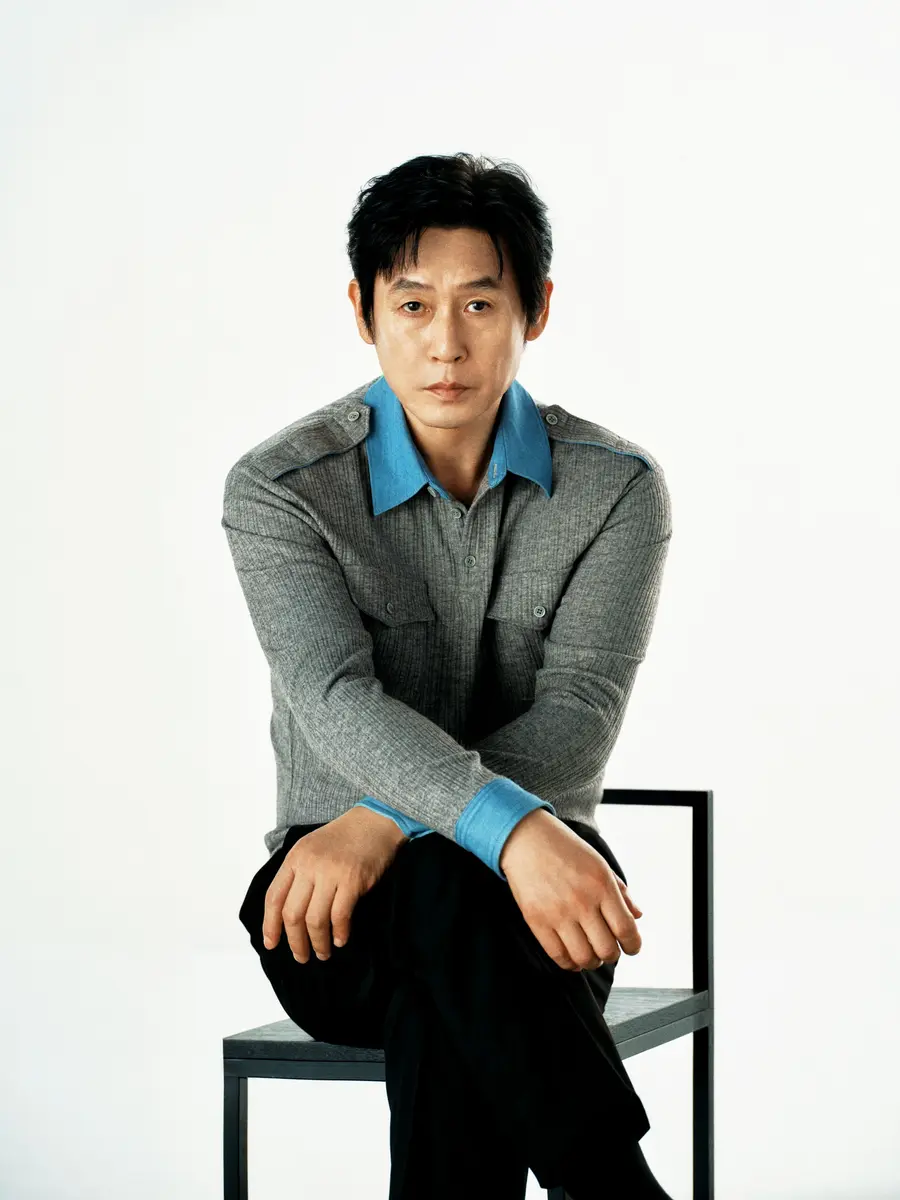
Ho-seok seems like a ticking time bomb. He struggles to bring himself to attend therapy, only to leave without saying a word, yet he unleashes his anger in front of Ye-ji's camera. What brought about that change?
After going to the birthday party for one of “the living,” he says, “I think I'm sick,” and decides to get therapy. But once he actually sits down there, he has to lay bare everything in his heart and all his problems. I think there was a conflict between what his head was telling him and what his heart was telling him. He probably also feared that once it all came pouring out, things he couldn't handle would come out with it. To put it simply, I think having your heart exposed is different from having someone listen to what's in your heart. Counseling can feel a bit like being exposed, like someone is discovering what you've kept inside. I think he was afraid that being exposed wouldn't be the end of it, that something else would follow. When he actually tries to get it out, he's afraid he won't be able to handle it once he does. With Ye-ji, I think he felt he was telling her his story. Ye-ji was a third party, and the important thing, I think, was that her feeling of “I'm trying to love these people” got through to him. Even if this person was offering him love with some purpose in mind, I think her sincerity came through, and I believe Ye-ji is sincere. I think directors genuinely love the actors they work with, too. They try to embrace them even when they have flaws. That must be even more true for documentary filmmakers. They have to film that person, and I don't think they can capture someone on camera without loving them. I think that reached Ho-seok's heart. In his head, Ho-seok knows he has to let it out to survive. But getting to the point where he can let it out is hard, and I think Ye-ji drew it out of him.
Ho-seok feels like more than just a wounded individual; he seems to embody everything about that era. You repeatedly portray people whose hearts bear the hardships of modern history. I wonder whether that has left you with any trauma.
Even now, thinking about Ho-seok makes me very sad. With 〈Peppermint Candy〉, I couldn't shake those feelings and struggled for quite a long time. But as the years have passed, maybe I've gotten a little better, or maybe I've developed some calluses inside. It hasn't stayed with me as the kind of severe trauma I experienced back then. Actually, his thrashing around in the valley or the woods is physical movement, but it's also the suffocation of being trapped inside all that. The frustration of wanting to speak but simply being unable to open your mouth. Some of that frustration might still remain inside me, too.
You filmed the flashback scenes of being beaten and subdued at protests yourself. That must have been a difficult shoot, both physically and emotionally.
I think we shot for about four days, so it was basically four days of just getting beaten. We filmed it near the end of the shoot, and I remember it being tough and intense. The cinematographer had to run along with us, too. I wore protective gear, but with several people hitting me, everyone was being careful, and if even one person hesitated, the take was ruined. We built a set in Saemangeum, Gunsan, and filmed there. They recreated the rooftop surface exactly, and they also recreated the water cannons firing from the shipping containers. In any case, I wasn't in great physical shape when we filmed it. The director couldn't easily call a take good, either. I felt like I was dying, but if he said it didn't look painful on screen, we'd shoot it again and again. (Laughs)
The film's logline describes it as “a story of four people confronting their different lives and hidden desires.” The other characters' desires seem fairly clear, but I found myself wondering what Ho-seok's hidden desire really is.
Ho-seok really has nothing, and he sees Sang-woo apparently living without a care in the world. I've lost everything and am living like this, while that man has financial comfort, along with kindness and consideration that make it seem as though he'd do anything for you. He's envious, but I think that also made him uncomfortable. He has an inferiority complex. But I've heard that an inferiority complex is itself a form of desire, because it's a feeling of inferiority about what someone else has. Going to the birthday party for one of “the living” and seeing someone living the everyday life he lost, he may have desired that, too. He's someone who has lost every bit of ease in his daily life.
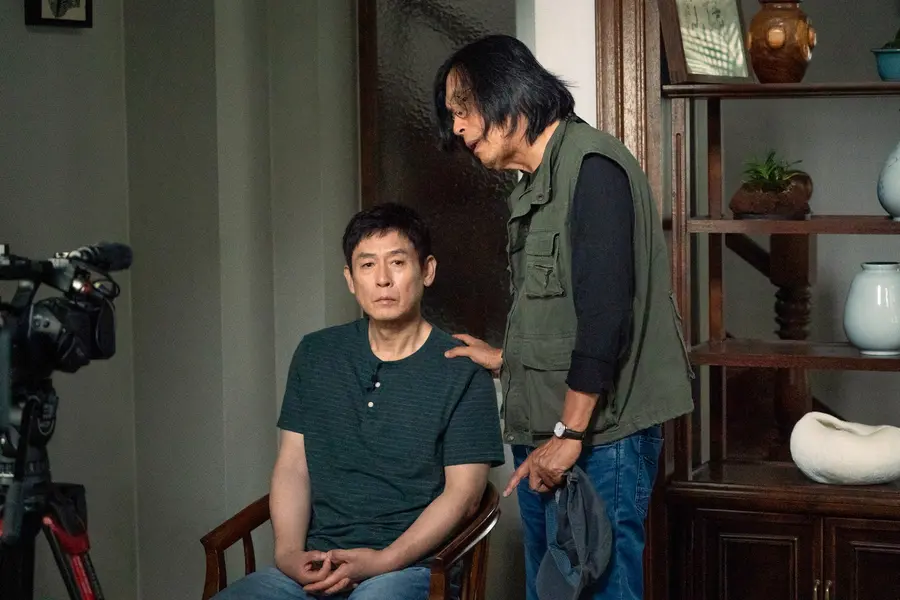
This film seemed to have more moments of humor than any of director Lee Chang-dong's other works. The moment when Mi-ok says it took seven attempts at digging to build the outdoor platform, and Ho-seok corrects her with “Nine,” also drew laughs. Was that improvised on set?
I didn't think of it as humor. Simply correcting a factual error seemed consistent with Ho-seok's blunt personality. I thought he was the sort of character who would casually toss out, “No, it was nine,” so I did it exactly as written, but everyone laughed. That line was in the script.
The scene on the way to the funeral, when the neighbors clap and greet him by saying, “Looks like you're going somewhere nice,” also gets an ironic laugh.
On set, I wasn't in a frame of mind to find anything funny. I'm on my way to a funeral, so hearing something like that makes me angry. (Laughs) They say, “Looks like you're going somewhere nice,” and of course they mean well and have no ill intent, but from Ho-seok's perspective, hearing it makes him angry. He was being dragged somewhere he really didn't want to go.
The scene where Ho-seok and Sang-woo do taekwondo was also funny, yet oddly tense. How did you film it?
I can't do taekwondo at all. The script had just one line: “They fight.” But the action director came to the set, too. (Laughs) I don't know what he was expecting, but it looks funny when I clumsily imitate taekwondo. The director said, “Just do it as you are,” so we went at it, and I guess In-sung extended his leg about 10 centimeters too high. By chance, it ended up caught in my arm, and I panicked and said, “Let go, let go, let go.” The director said we should go with that, and that's how the scene came together. There wasn't much to it. We just did it as we were.

The karaoke scene was funny yet strange, too. Ho-seok's gaze as he drunkenly holds the microphone and watches Mi-ok and Sang-woo was striking.
I couldn't sing or dance, so I was just holding it, drunk. My eyes are on Mi-ok and Sang-woo. There's shame, and there's jealousy. Rather than there being something between Ho-seok and Ye-ji, she felt more like a guardian to him. She was trying to keep this drunk man from doing anything he shouldn't. But in the end, he does just that in the bathroom. (Laughs)
In that very bathroom scene, there was something odd about Sang-woo standing beside Ho-seok and urinating alongside him. It could look as though Sang-woo was subtly looking down on Ho-seok or trying to assert his superiority.
From Ho-seok's perspective, it probably felt like he was being mocked. From Sang-woo's perspective, I think he probably peed alongside him out of his ingrained kindness and consideration, to spare him embarrassment. Ho-seok initially takes it that way, too, thinking, “Maybe he's joining in because I'm doing it,” and laughs along. But at some point, he thinks, “He's mocking me. This man can pee like this and suffer no damage. It doesn't hurt him at all.” So he thinks, “This man is mocking me,” even if Sang-woo wasn't behaving that way.
What direction did the director give you for that bathroom scene?
Surprisingly, he gives you free rein. He doesn't dictate that you do this and then that. He says, “Just try it first.” About all I remember is, “Move away from the toilet, slowly move away.” While peeing, he slowly moves away as if nothing is wrong, getting it into every corner and contaminating the place.
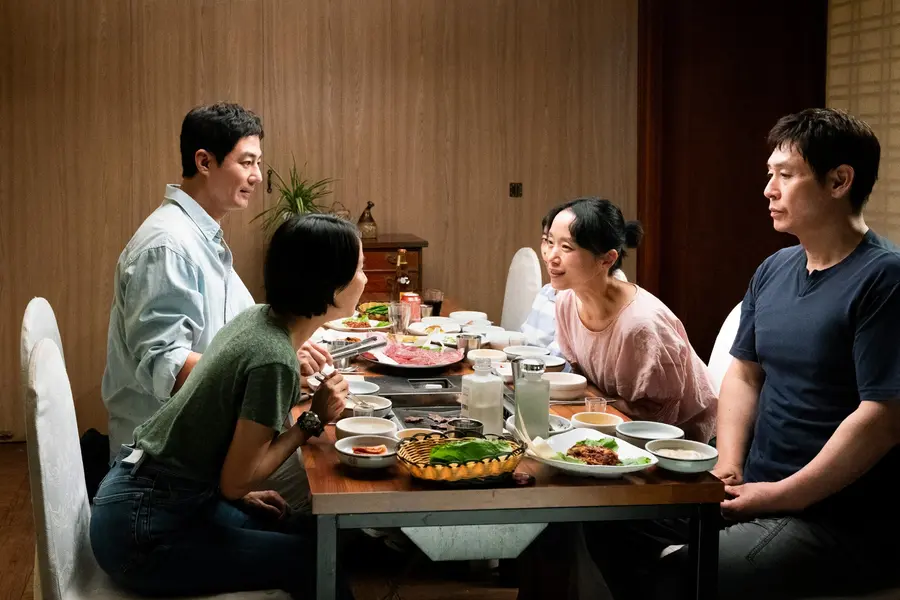
There are moments in the film when Sang-woo seems to treat Mi-ok like prey. Do you think there were points when Ho-seok instinctively felt shamed or humiliated as a man? If so, when?
I think it started with their very first meeting. At the barbecue restaurant, he asks Sang-woo to toast and have a drink with him, but Sang-woo turns him down, saying, “I'm taking medication.” Well, I'm taking medication, too. After that, Ho-seok probably did nothing but drink. I think he must have really disliked him right then. He doesn't like how Sang-woo is kind to everyone, either. Honestly, I think he has an instinctive aversion to that sort of thing.
Did Ho-seok also instinctively realize that Sang-woo had his eye on his wife?
He probably didn't like Mi-ok talking about Steve Jobs at that gathering, either. So for a moment, Ho-seok probably felt like he was invisible. I think being there really wounded his pride. Ho-seok was like an island at that table.
※This interview with 〈Possible Love〉 actor Sul Kyung-gu continues in Part 3.





댓글 (0)
댓글 작성
댓글을 작성하려면 로그인이 필요합니다.
로그인하기