


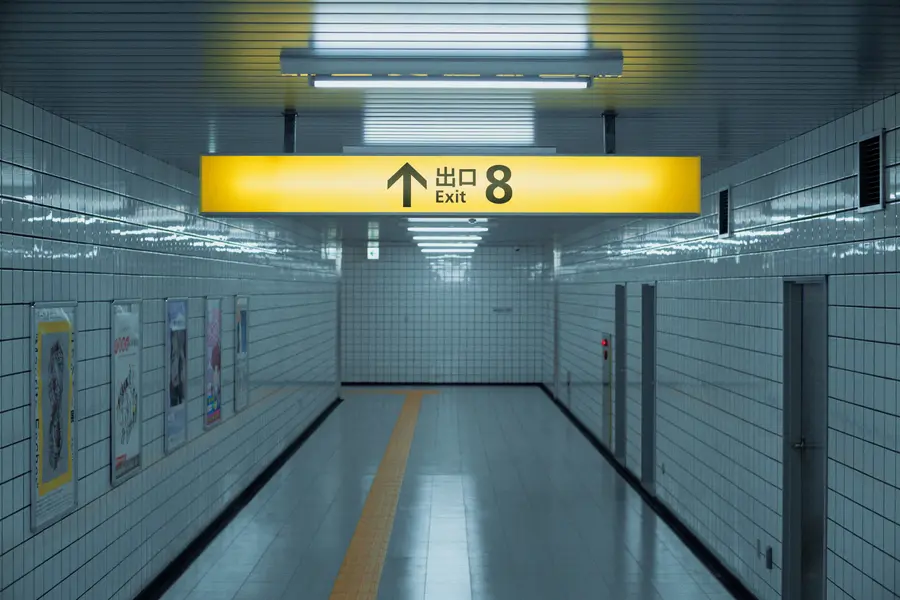
The bewilderment I felt when I first watched the movie 〈Exit 8〉 comes to mind. As a Digimon fan, I went to the theater that day, as I usually do, listening to Maurice Ravel's timeless masterpiece 'Boléro' (Boléro), which was used in 〈Digimon Adventure〉 (1999-2000). And when the movie started, I was surprised by the coincidence of encountering 'Boléro' again. When the powerful sound of the snare drum played in a steady rhythm filled my ears, I doubted my hearing, but when the flute solo flowed out, I was amazed. In the original piece, instruments such as clarinet, bassoon, oboe, trumpet, and saxophone sequentially repeat the two melodies introduced by the flute solo, but the movie immediately bursts into the midsection of the orchestrated Boléro with various instruments, pulling me into the film in an instant.
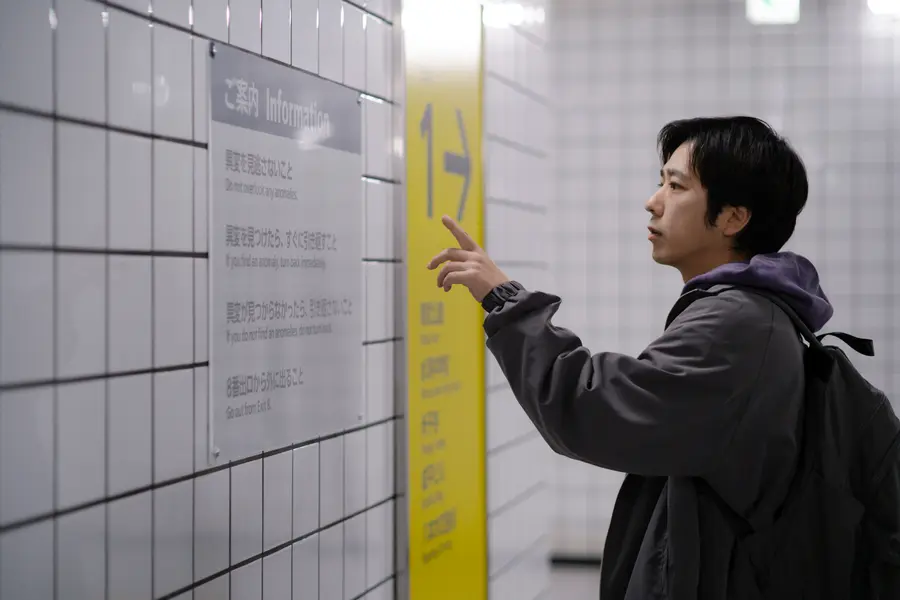
The film begins with a scene that seems to have plucked a slice of life. The 'Lost Man' (Ninomiya Kazunari), traveling by subway, listens to music while scrolling through the SNS on his smartphone screen. He merely observes the news from the world he belongs to, such as war, infectious diseases, genetically modified mutant rats, and damage from tsunamis, with a dry gaze. At that moment, the sharp sound of a baby's cry pierces through, and a man hurls insulting words at the child's mother, shouting at her. The Lost Man turns his head towards the commotion and sees the mother of the child looking flustered. He also notices others who are turning away from the scene. He too remains uninvolved, putting his earphones back in and blocking out the world with music. But this moment is short-lived, as he receives a call from his ex-lover (Komatsu Nana) and hears unexpected news. The news that she is pregnant with their child. And the woman asks, "What are you going to do now?" The man cannot answer her question as the call disconnects, becoming trapped in an endless loop of the underpass.
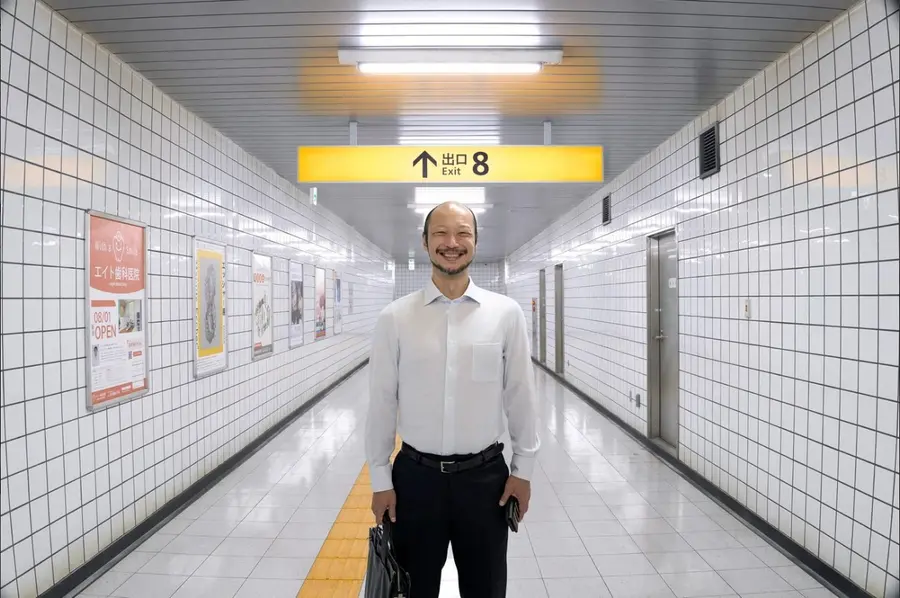
The infinite loop underpass where the Lost Man is trapped follows a simple rule: if he discovers an anomaly, he must turn back, and if there is no anomaly, he can move forward to escape through Exit 8. Starting from a sign marked '0', he must safely pass through the same space eight times to get out. The film, based on a game of the same name, boldly pushes this setting, which is identical to the game. The underpass, a space we commonly encounter in modern life, evokes a sense of confinement, and the repetitive stages drive the audience into paranoid fear. Thus, the film unfolds through repetition and variation.
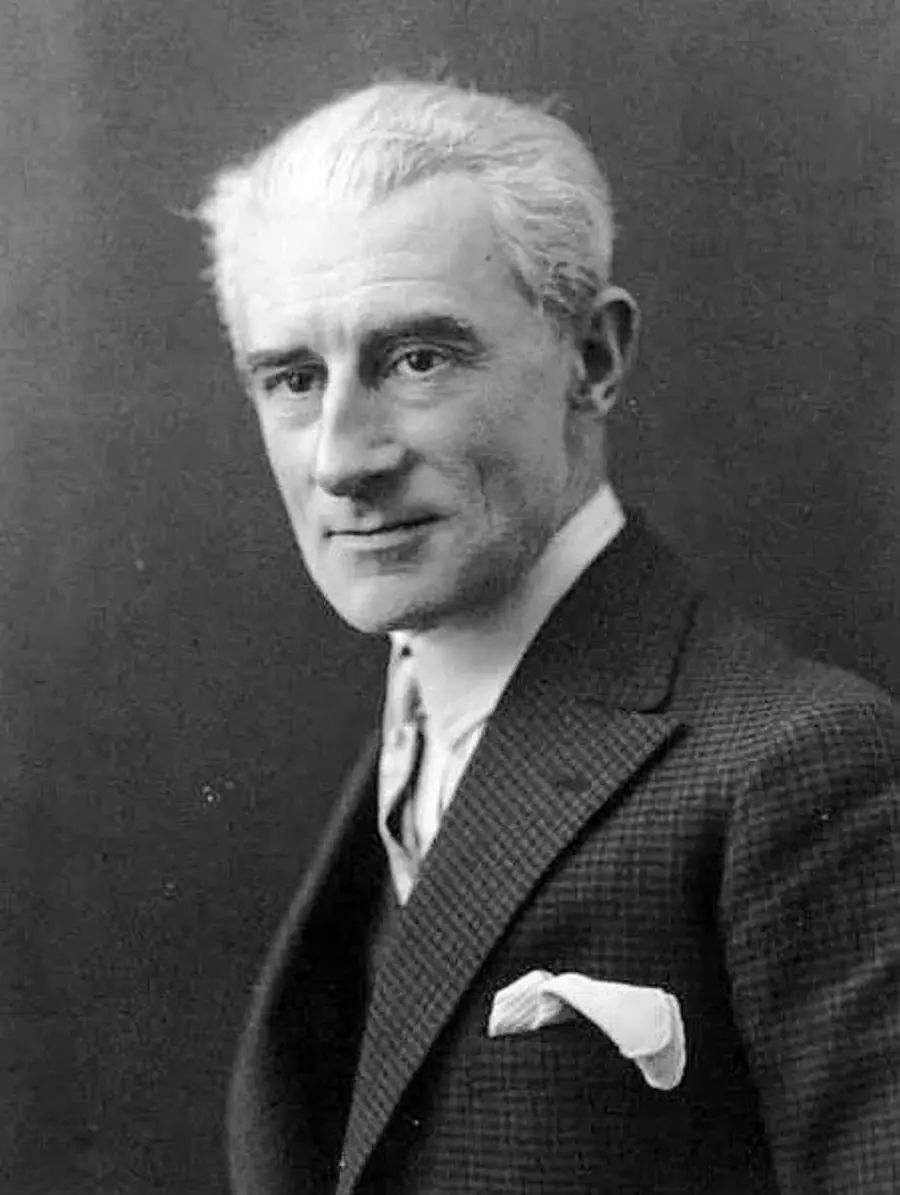
The repetition and variation in 〈Exit 8〉 resemble the structure of the music 'Boléro'. 'Boléro' repeats only two melodies for 17 minutes, flowing at the same tempo from beginning to end. (When played at the tempo originally intended by Ravel, it lasts 17 minutes, but in modern times, it is usually played a bit faster, around 16 minutes. The 'Boléro' we are familiar with is the latter.) 'Boléro' has a unique structure that repeats two themes (the core melodies that are repeated or varied throughout the piece) a total of 17 times over a duration of just over a minute. The ability to draw gradual changes from the repeating rhythms and melodies is famous for Ravel's exceptional orchestration. The first melody is played by the flute, followed by the clarinet, bassoon, oboe, and others. As more instruments are added, they create gradual changes within the piece. This aligns with the film's structure, where anomalies occur on the same stage. Additionally, the setting where a tsunami engulfs the underpass, drawing out emotional catharsis, connects to the composition in 'Boléro' where all instruments are mobilized to evoke catharsis in the latter half of the piece. 'Boléro' and 〈Exit 8〉 are cleverly linked, much like the optical illusions of Escher (Maurits Cornelis Escher) that appeared in the film.

The gradual structure of 'Boléro' resonates with the thematic consciousness of 〈Exit 8〉. The film gradually presents the reason why the Lost Man is trapped in the underpass through anomalies. The man receives contact from his ex-lover again on the repetitive stage and confronts himself, who turned a blind eye to the plight of others through a door that opened in the underpass. He witnesses the mutant rats and tsunami he saw on SNS again in the underpass and finds himself in a situation where he must choose whether to go save a child in the flooded underpass. This all connects to the man's sense of responsibility, which is the reason he is trapped in the underpass. The responsibility tied to the man's child does not end on a personal level but extends to social responsibility and responsibility for global issues. The man's dry observation of the world's affairs through SNS reflects the modern individual's inability to look beyond the boundaries of their own locality and nation. The underpass in the film is a 'purgatory' projected with the man's guilt and anxiety, which he has been avoiding and unable to confront directly, and it is a miniature of the world where various modern issues such as war, climate crisis, and ecological crisis lurk.

Within that miniature, the characters of the boy, the young man (the Lost Man), and the middle-aged man (the Walking Man) represent humanity, and the Lost Man and the Walking Man (Coach Yamato) can be said to symbolize the uncertainty of modernity and the forward-looking nature of modernity, respectively. The blind development of modernity has failed to save the world and future generations, and this responsibility has been passed on to the present. And at the end of the film, 'Boléro' plays again. The man faces the plight of others once more in the subway. What choice will this man make now? What choices should we make today? If the repetition of 'Boléro' represents the liberation achieved by art from the constraints of reality, then 〈Exit 8〉 is an intensely powerful fable dedicated to the modern person lost in the global issues of today. Embracing the overwhelming emotion, I must now leave. To Exit 8.
***** Starting with 'Joo Seong-cheol's Locker' which excessively attributes meaning to objects in the film, the actor's user manual 'Kim Ji-yeon's Jewelry Box' expecting a rise, the film music appreciation room 'Chua-young's Music Box' that moved my heart, and the subculture merchant's purchase log 'Seong Chan-eol's Comic Books', Cineplay reporters will begin bi-weekly serialization with their own tastes and perspectives. *****




![[Interview] 'The Owner of the World' Seo Soo-bin:](https://cdn.www.cineplay.co.kr/w160/q75/article-images/2025-10-24/ba385c06-e75d-45dd-b255-32ee52da3c76.jpg)

![[Interview] Director Yoon Ga-eun of 'The World of Love' Says,](https://cdn.www.cineplay.co.kr/w160/q75/article-images/2025-10-28/73879b20-9a79-43be-9b45-330eadf4fd6f.jpg)
![[Interview] Kang Ha-neul Reveals the Secret to His Flavorful Comedy Acting in 'The First Ride'](https://cdn.www.cineplay.co.kr/w160/q75/article-images/2025-10-30/84106dd6-5284-44f5-9aab-78deab573bd4.jpg)
![[Joo Seong-cheol's Locker] What Beer Did Sergio (Benicio Del Toro) Always Carry in 'One Battle After Another'?](https://cdn.www.cineplay.co.kr/w160/q75/article-images/2025-11-04/6d9cb964-9fff-4470-bcab-992724f73d82.jpg)
![[Kim Ji-yeon's Treasure Box] Best Practices for Using Actor Images, 'Ms. Incognito' Joo Hyun-young](https://cdn.www.cineplay.co.kr/w160/q75/article-images/2025-11-04/cc859504-46fd-40a4-933f-ae7df6766462.jpg)
댓글 (0)
댓글 작성
댓글을 작성하려면 로그인이 필요합니다.
로그인하기