


Cineplay Reporter Lee Hwa-jung
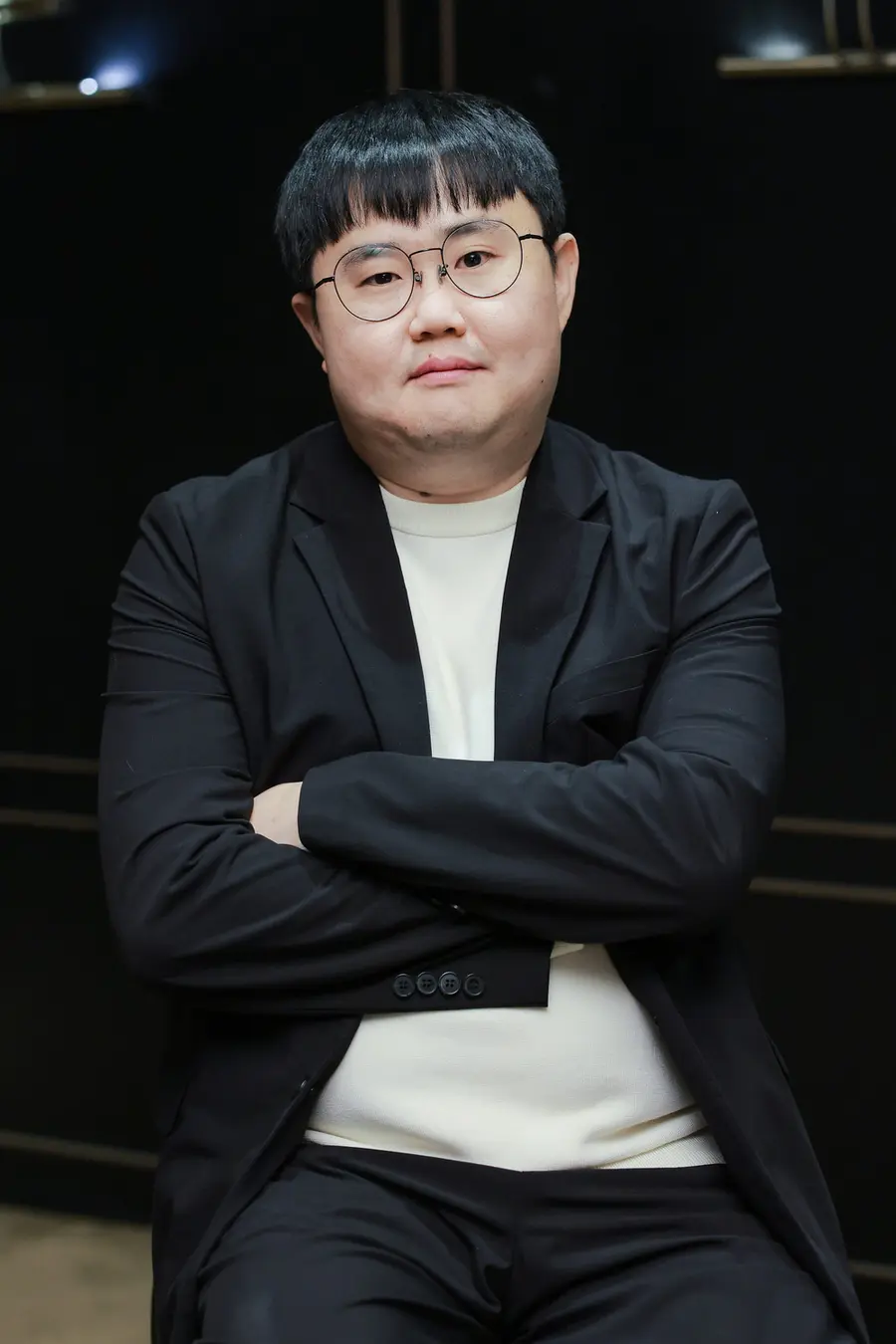
Sometimes, certain moments are preserved for eternity. 〈404 Still Remain, Our 5 Minutes〉 is a skillfully crafted feature that captures that 'moment' created by the subtle emotional changes between two adolescent high school boys. Director Um Ha-neul, who has already gained attention in the independent film scene with short films like 〈Can't Find It〉 (2018) and 〈Peter Pan's Dream〉 (2020), proves his unique sensibility with his first feature without disappointing expectations.
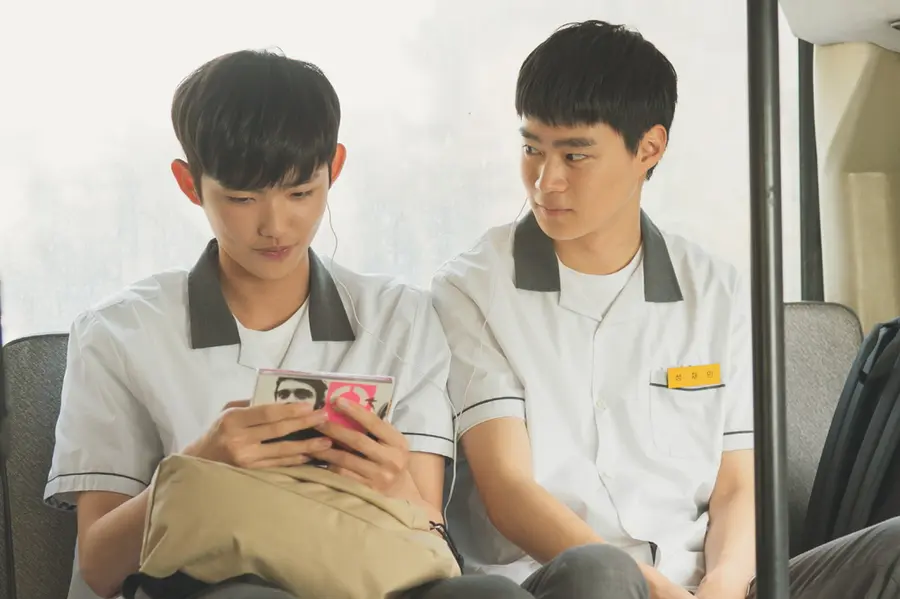
〈404 Still Remain, Our 5 Minutes〉 is a journey of self-discovery for high school student Kyung-hwan (Shim Hyun-seo), who transfers from the rural Yeongcheon to the big city of Daegu in 2001. The sensitive boy, who listens to Japanese music alone among kids who are crazy about the group Shinhwa, meets his lively classmate Jae-min (Hyun Woo-seok), and they become best friends who exchange music, tastes, and emotions.
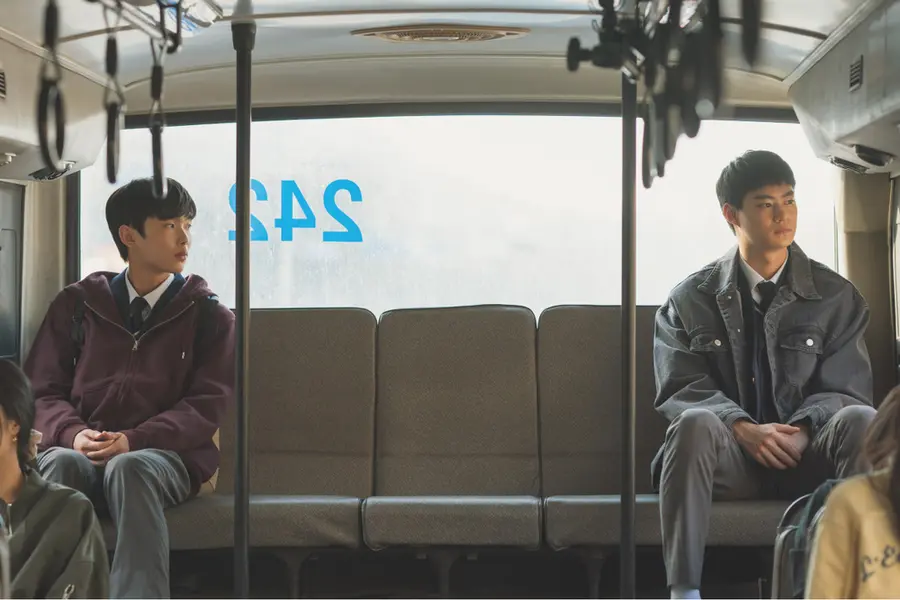
On the back seat of bus number 242 on the way home from school, the song by the J-POP group 'Globe' connects them through shared earphones. It evokes the early 2000s, reminding us of tools like Warez and MP3. Using these as main ingredients, the director meticulously depicts the teenager establishing his sexual identity and the environment surrounding him.
When viewed as a queer film, the reality established by the original work of writer Park Sang-young, 「The Love Law of Big Cities」, which has already been explored in both film and drama, serves as a foundation, yet 〈404 Still Remain, Our 5 Minutes〉 is a film that holds more shares of pure melodrama. The seasonal feel of winter, the scenery outside the car window, and gestures towards each other fill every scene, exciting the audience. It feels like an invitation to a world of melodrama that was often enjoyed in the early 2000s, now lost. In an interview with director Um Ha-neul, a rookie director in 2025 who grew up watching films by directors Kwak Ji-kyun and Kwak Jae-yong, we can see how he interprets the clichés of the genre with a contemporary sensibility.
This work has been a hot topic at film festivals such as the Seoul International Pride Film Festival and the Seoul Independent Film Festival. How do you feel now that the release is approaching?
As I received feedback from the film festival screenings, I thought it could be a work that has genre preferences and aversions typical of queer films. Of course, I believe that such reactions are something to be expected to some extent. Having made the short film 〈Peter Pan's Dream〉, I didn't feel a helpless fear of 'what should I do'. Rather, I was surprised to think, "I directed boldly. I expressed everything I like. The kids are just showing it openly in the film?" That thought made me a bit amazed.
I believe that the short film 〈Peter Pan's Dream〉, which depicts the story of high school students facing separation through the lens of sexual minorities, is like a seed for your first feature, 〈404 Still Remain, Our 5 Minutes〉.
Before 〈Peter Pan's Dream〉, I was already trying to make a feature that included elements like J-POP and the regional background, which are the main themes of 〈404 Still Remain, Our 5 Minutes〉, but during the development of the work, I received feedback that it was 'too minor'. So I changed the setting from K-POP to Korean music and altered the story from coming from the countryside to the city to going from the city to the countryside, and made it into a short film. Although it won many awards at film festivals, I felt like something was unresolved. So the work I created with determination was 〈Peter Pan's Dream〉. At that time, I definitely felt that I was stagnant, and eventually, I ended up making 〈404 Still Remain, Our 5 Minutes〉.
Set in 2001, at the beginning of the new millennium, with Daegu as the backdrop, what is the significance of the chosen time and place?
In 2001, I learned how to watch Japanese content on the internet. That was the starting point. I chose Daegu because I lived there. I didn't know how a high school student in 2001 would speak in Seoul dialect. I could only naturally write dialogue in Daegu dialect, so I started with words I could use naturally. Looking back at that time, "Listening to J-Pop wasn't a huge deal," but I had to endure some teasing. It wasn't discrimination, but I often saw dismissive or mocking behavior.
Kyung-hwan and Jae-min experience feelings of alienation in the school environment, albeit at different times. I felt they were ultimately characters who share the same pain.
Jae-min is a kid who couldn't muster the courage to face what he knows. Kyung-hwan is set up as a kid who keeps finding courage. So the story naturally centered around Kyung-hwan. The timing of their suffering is a bit different. Jae-min was bullied before transferring, in middle school, while Kyung-hwan faced his challenges later. Jae-min was hurt first and thought, "I can't find courage anymore," while Kyung-hwan is still a kid who hasn't reached that point yet. The family atmosphere is also important in showing the characters. Kyung-hwan lives in a warm environment with his mother. Even though she seems gruff on the outside, love is felt. However, I set it up that Jae-min's conflicts with his stepmother made him more twisted.
If introverted Kyung-hwan confronts injustice every time, extroverted and confident Jae-min is quite the opposite. As you mentioned, Jae-min may have closed his heart quickly due to the wounds he experienced earlier. It could be a significant expression of self-defense.
That's right. I think so too. Sometimes, audience members ask about Jae-min's feelings. "Is Jae-min heterosexual? Or is he into that side?" I believe the film has already conveyed everything, so I don't want to define it strictly. The melodramatic device of this film was largely intended to resonate with Kyung-hwan's feelings as we watch the two people grow closer.
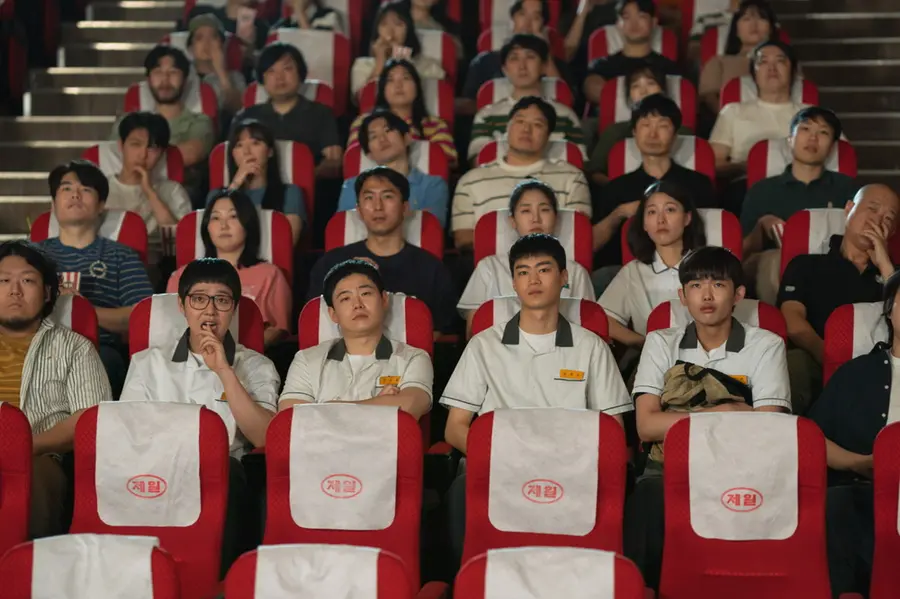
Nevertheless, Jae-min's gestures that excite Kyung-hwan, such as suddenly holding hands and running through the market or leaning in close, are clearly intentional devices to evoke excitement and clichés of melodrama. References to director Kwak Jae-yong's 〈The Classic〉 (2003) and the inclusion of 〈My Sassy Girl〉 in this work show an exploration and utilization of Korean popular melodrama.
Yes, that was intentional. The first film I ever saw in a theater with my family was 〈My Sassy Girl〉 (2001). Director Kwak Jae-yong has been making melodramas since 〈A Watercolor on a Rainy Day〉 (1989). Moreover, if we go further back, there is director Kwak Ji-kyun of 〈Winter Wanderer〉 (1986). I also love Korean melodramas from the 1990s to the early 2000s. So it feels like a flag saying, "This is something I love and included." (laughs) I boldly included it.

![[Chuseok Holiday Box Office] Yoo Hae-jin and Park Hae-il's 'Assassins' and 'Tazza 4' knock out 'The Odyssey,' draw 130,000 on opening day for No. 1](https://cdn.www.cineplay.co.kr/w300/q75/article-images/2026-09-26/9f21ef55-2288-4c72-b030-b8b00587e464.jpg)
![[Interview] Director Eom Ha-neul of '404 Still Remain, Our 5 Minutes',](https://cdn.www.cineplay.co.kr/w160/q75/article-images/2025-11-11/a6a29a06-bbb9-4763-8501-f96265134cab.jpg)
댓글 (0)
댓글 작성
댓글을 작성하려면 로그인이 필요합니다.
로그인하기