
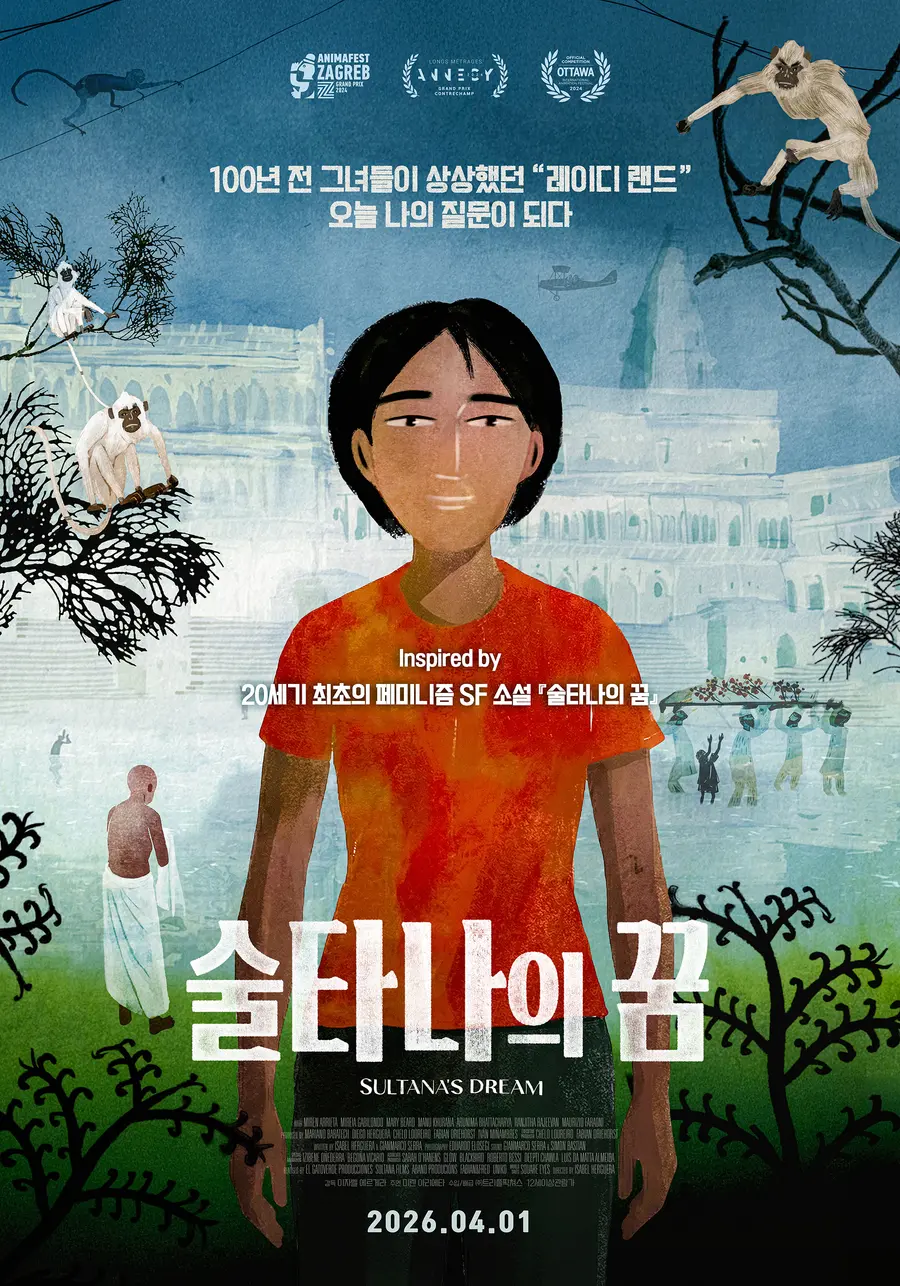
Feminist Utopia 'Sultana's Dream' Releases on April 1! Analysis of 3 Animation Techniques!

Spanish woman 'Ines' becomes captivated by the feminist utopia 'Ladyland' in the novel 『Sultana's Dream』 discovered during her travels in India.


The film 〈Sultana's Dream〉 has confirmed its domestic theater release on April 1, having won and been nominated for awards at the world’s top three international animation film festivals: Annecy, Zagreb, and Ottawa, and has released press stills showcasing its craftsmanship and rich visuals created using three different animation techniques.

Recognized for its artistic merit, 〈Sultana's Dream〉 announced its domestic release on April 1 after winning and being nominated in the feature competition section at the prestigious Annecy, Zagreb, and Ottawa festivals. 〈Sultana's Dream〉 is a multi-layered colorful animation where Spanish woman 'Ines' becomes captivated by the feminist utopia 'Ladyland' in the novel 『Sultana's Dream』 that she discovers during her travels in India, freely navigating between dreams and reality to find her own path.

As the first feature film by world-renowned Spanish animator Isabel Herguera, 〈Sultana's Dream〉 has garnered even more attention. The film presents a remarkably rich and ambitious visual experience by employing different animation techniques to distinguish the historical and cultural contexts of the three different layers of stories within the film.

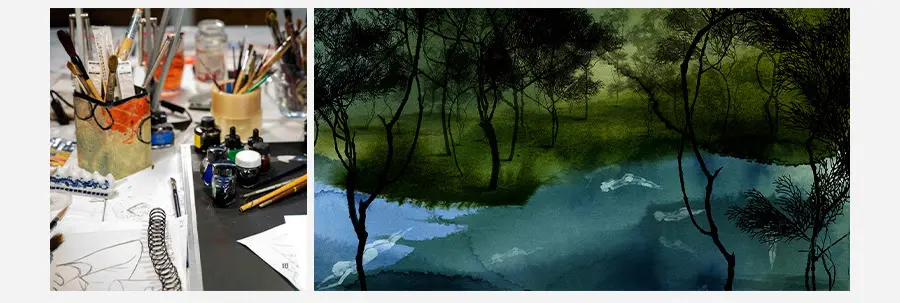
#1 Watercolor - 'Ines's Journey -
To emphasize that the protagonist 'Ines' is an artist who records her journey and paints while traveling, a watercolor style was applied. The backgrounds were all hand-painted in analog watercolor, while the characters were created digitally.

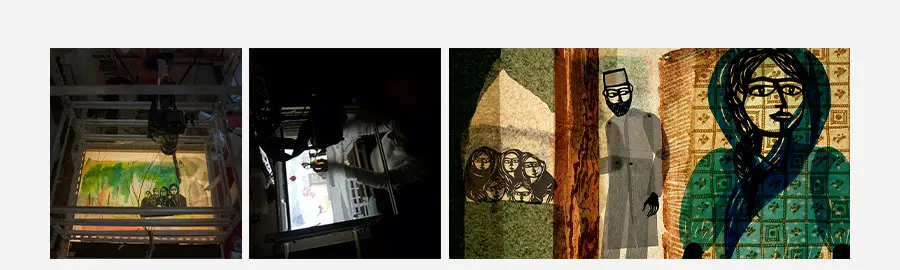
#2 Cutout Technique - The Life of the Author of the Novel 『Sultana's Dream』 Begum Rokeya -
Sequences depicting the life of Begum Rokeya, set in early 20th century India, were filmed using a cutout technique reminiscent of shadow puppetry. The production consulted artisans specializing in shadow puppet making from the Bengal region of India, layering multiple thin sheets to create transparency and light texture, characteristic of traditional theater, by shining light from behind the paper.

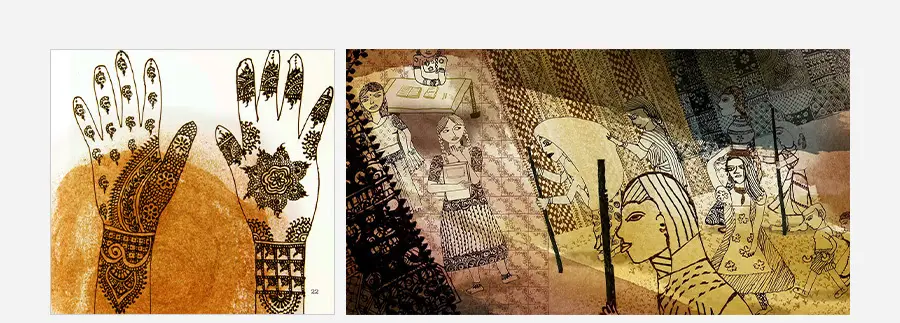
#3 Mehndi (Henna Tattoo) Style - Utopia 'Ladyland' -
The depiction of the utopia 'Ladyland', where women dominate the world, is expressed in the traditionally female domain of Mehndi style. Collaborating with the Indian Women Workers' Cooperative (SEWA) and various real Mehndi artists, all backgrounds and characters within 'Ladyland' were designed from the fingertips of women, which director Herguera stated is a tribute to the author of the novel 『Sultana's Dream』 Begum Rokeya.

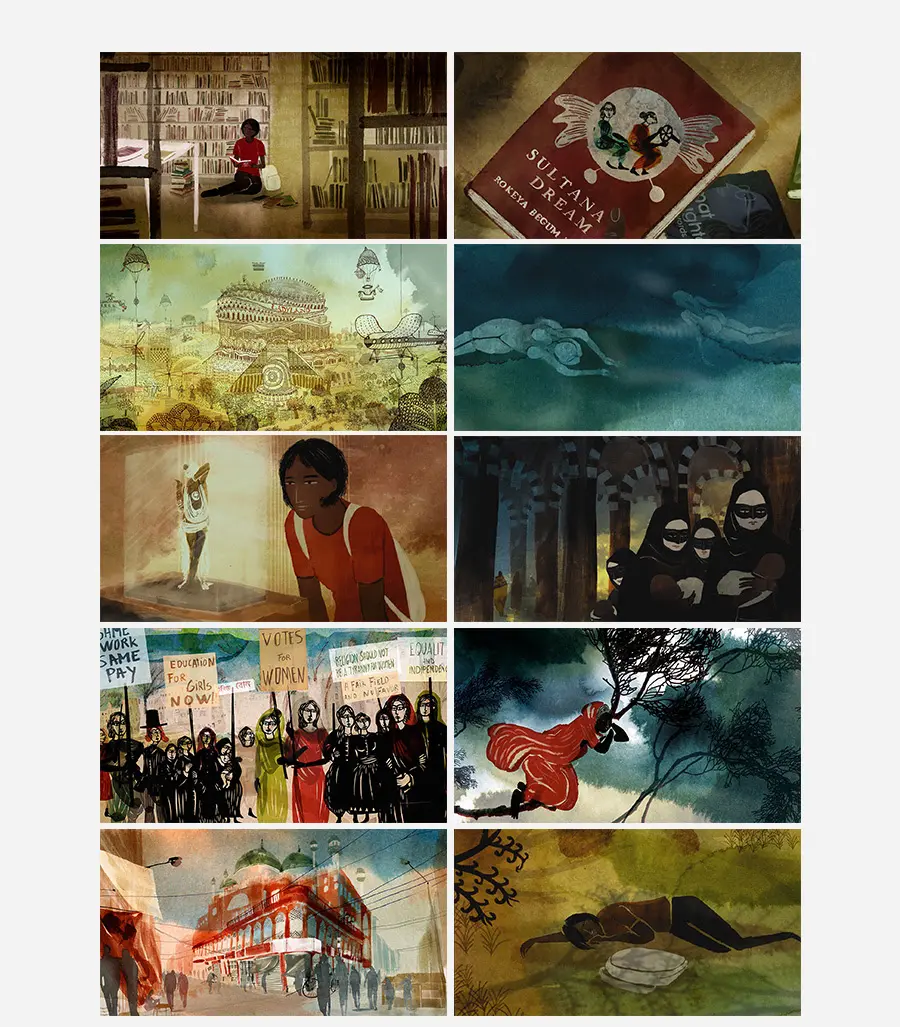
Despite the risky strategy of using various animation techniques that could potentially disrupt visual flow, 〈Sultana's Dream〉 weaves different techniques into a single world, showcasing the highest level of craftsmanship and guiding the audience through 'Ines's' journey filled with visual ecstasy. The feast of beautiful images contained in 〈Sultana's Dream〉 can be experienced in advance through 10 press stills.

As the first solo import work of Triple Pictures, which has distributed numerous outstanding independent Korean art films, 〈Sultana's Dream〉 has already been screened at the Jeonju International Film Festival, Seoul Indie Animation Festival, and Seoul International Women's Film Festival, garnering great interest and acclaim from domestic audiences ahead of its release on April 1.

이 배너는 쿠팡 파트너스 활동의 일환으로, 이에 따른 일정액의 수수료를 제공받습니다.

댓글 (0)

아직 댓글이 없습니다. 첫 댓글을 작성해보세요!

댓글 작성

×