


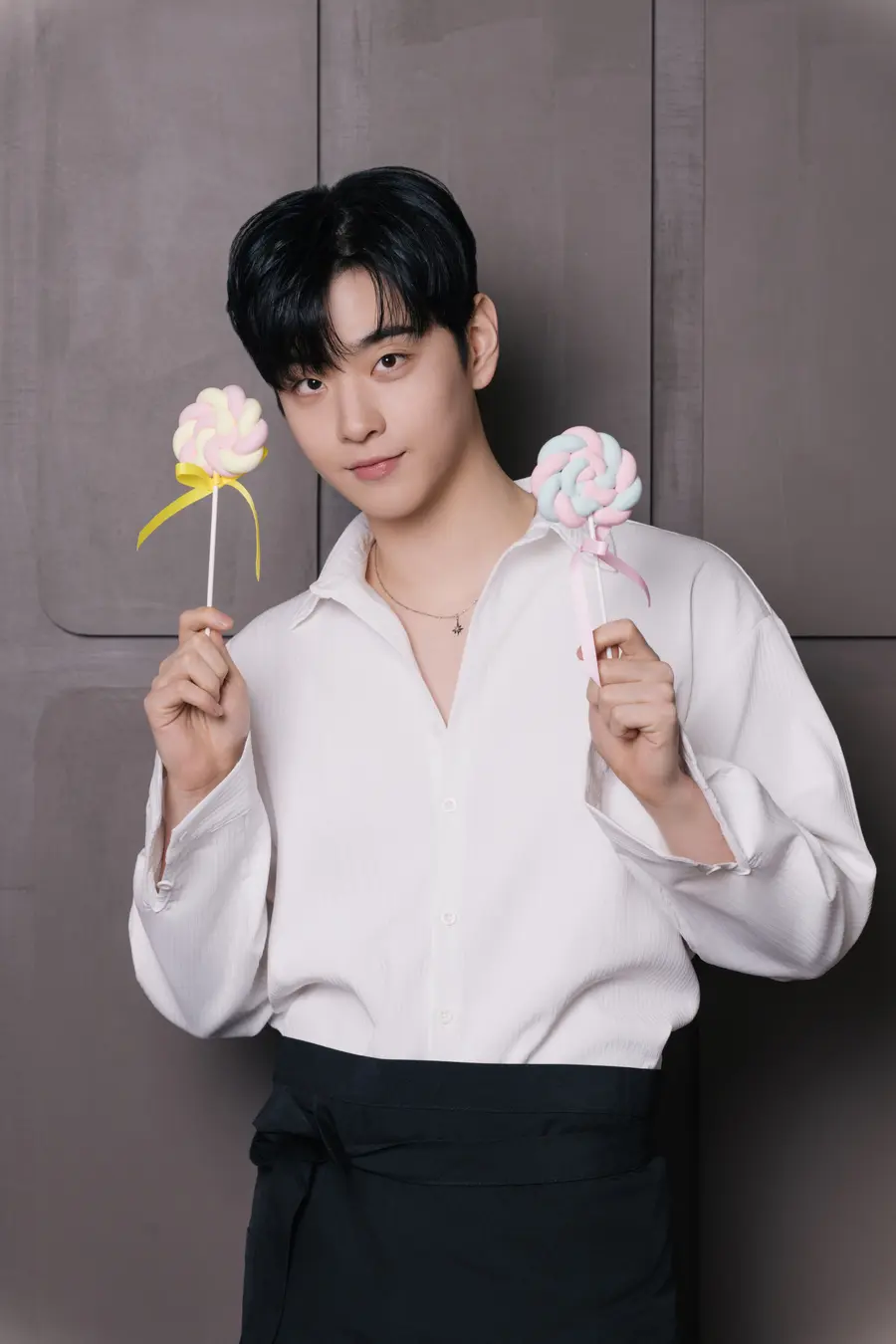
“Momentum.” Actor Cha Ju-won summed up his strengths in one word like this. Cha Ju-won, as he put it, was an actor whose charm—completely “filter-free”—stood out. Even after becoming a global star through 〈Zone of Love, Unrivaled〉, he kept a cool head and diagnosed where he stood. Still, there was no sign that Cha Ju-won was about to lose his strong suit—“momentum.”
Born in 1999, actor Cha Ju-won was a soccer player from elementary school through college. Then he began working as a model and taking up acting. Debuting with KBS2 〈School 2021〉, he gained recognition through aespa’s music video for “Thirsty,” and built a global fanbase with 〈Zone of Love, Unrivaled〉. In the film 〈Victory〉, he made a strong impression as a high school student who plays soccer while wearing a mask. Now, he’s a rising star drawing an upward curve—waiting for the Disney+ 〈The Reborn Empress〉 release.
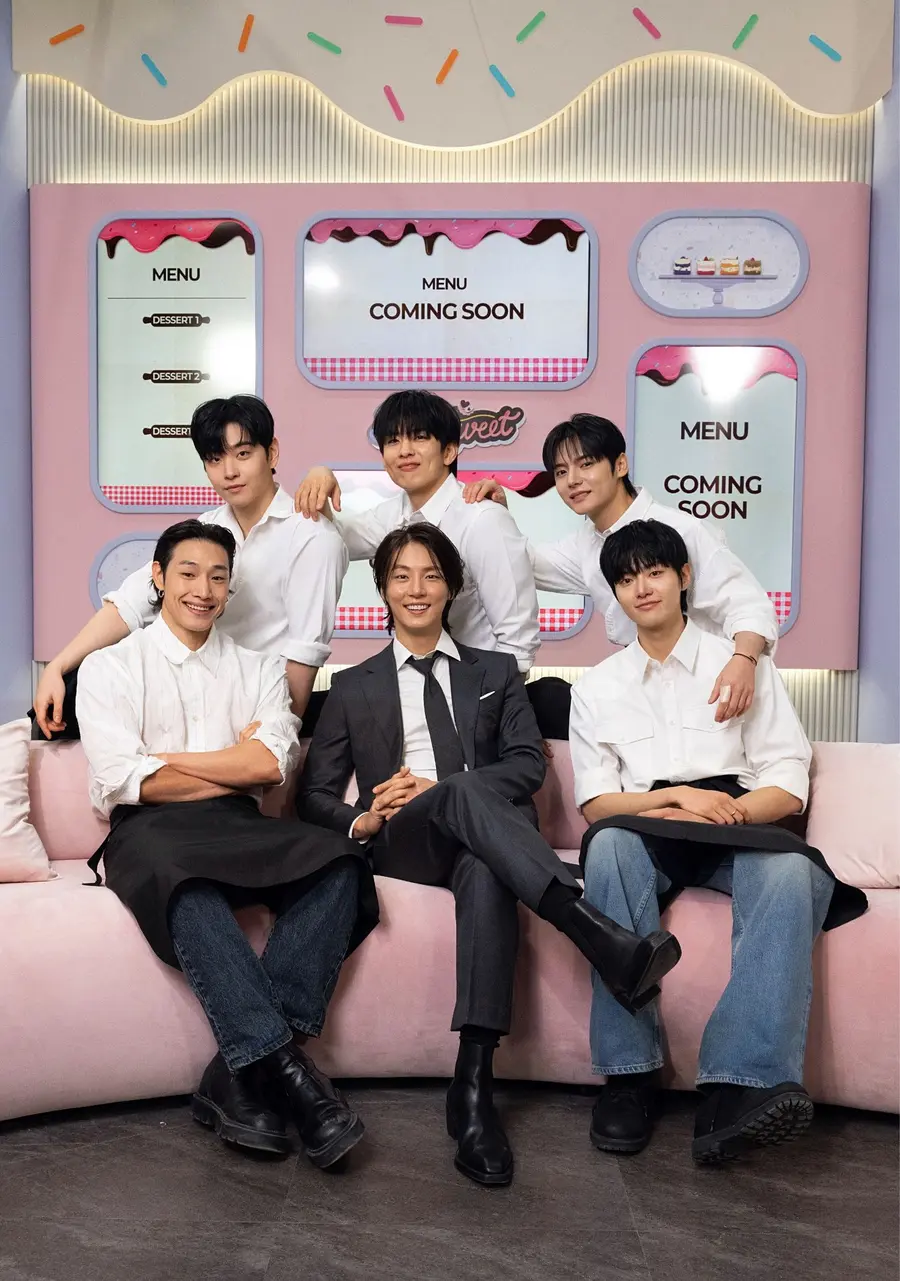
Cha Ju-won’s “momentum” comes from doing what makes him happy. It’s more fun than soccer. More fun than modeling. An actor who says that this job is a thousand times more enjoyable. On March 18, at a Cineplay meet-and-greet celebrating the release of the variety show 〈Bite me Sweet〉 (hereafter 〈Bamis〉), Cha Ju-won shared, without any filters, what his life is like—right at the start of his acting career. Below, we bring you the full conversation.
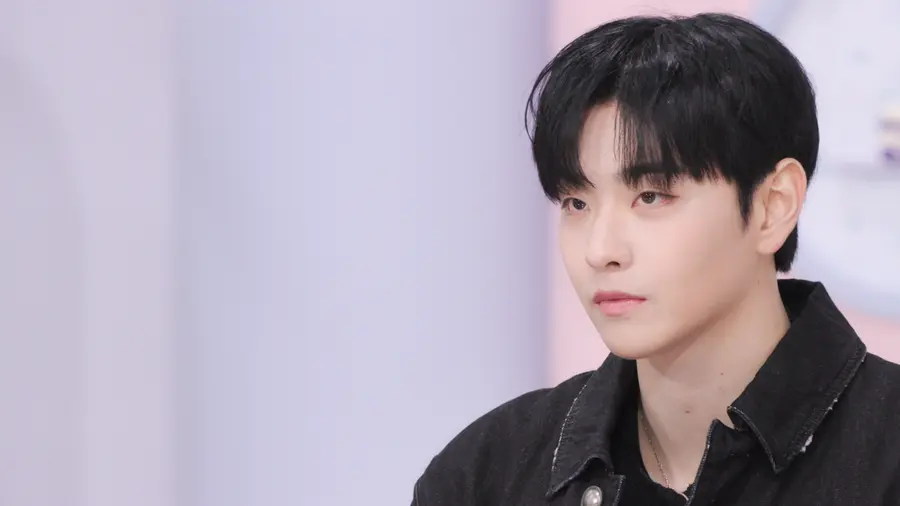
I’m curious—what made you decide to join 〈Bamis〉?
I like making things. Even if it isn’t baking, I also enjoy making ceramics as a hobby. Since elementary school—when I started making ceramics—I’ve always been number one. I did exhibitions, and even when I took ceramics classes in college, I won awards. So when I thought about how this show and I would come together, I felt there would be a great synergy. Also, 〈Bamis〉 was first released on the Asian representative platform Viu. I really like Southeast Asia. My very first trip abroad was also to Southeast Asia, so it pulled me in even more.
Someone told me you said on 〈Juk-seon Hong’s Treasure Box〉 that you worked a restaurant part-time job in Itaewon.
I did restaurant part-time work, and I also worked at a barbecue place. I worked at Chinese restaurants for a long time too. My daily routine was frying and serving food. I needed money in my early twenties. Since “acting” isn’t a job where newcomers can earn well, I got by working part-time.
〈Bamis〉 is a survival competition where famous pastry chefs from across Southeast Asia team up with Korean celebrities in pairs to create brand-new desserts using K-style ingredients. What was the most fun—or most memorable—part of 〈Bamis〉?
I was really curious about the five participants—the ones called the muses, including me. The day I confirmed everyone’s presence, I felt a real jolt of energy. I also had a small worry: “What if we start messing with each other’s heads?” But it ended up being completely unnecessary. We ended up getting really close—so close that we were laughing and talking constantly, and it felt like we were tightly bonded. I was also impressed by the pastry chefs who came from each Southeast Asian country to film together in Korea. They were all true professionals, and every dessert they made was fantastic. They weren’t just good-looking to look at—they were unbelievably tasty, which is another reason I kept looking forward to each day of filming.
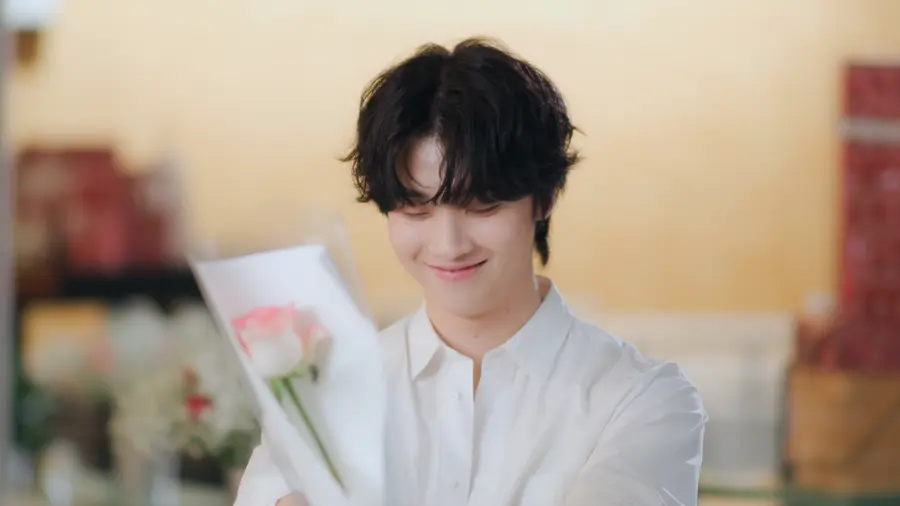
Let’s go back to when you first started acting. You changed your path from soccer player to model to actor. When was the first moment you felt the appeal of acting?
I played soccer for a long time, and I started acting at the end of 2020. During the early period after I began acting, I went to five auditions and landed the roles. It wasn’t because I was “great” and got picked. My director and writer told me I was really funny, and I was lucky enough to be cast. Since I enjoy making the other person happy and having fun, even during auditions, I’d think more about “How can I make them laugh? How can I make them feel good?” than just what I’d prepared. On set, it felt amazing when I could make the people around me laugh with what I’d prepared in advance—and even better when I received compliments. I even caught myself thinking, “Maybe I should’ve been a comedian.”
You must have seen countless auditions by now. If you have an “audition secret weapon” that’s uniquely yours, what would it be?
After I showed the “laughing side” that fans call my secret weapon, it seems like when I suddenly get serious, people can feel the shift in my charm. The gap is so big that I really try hard to show a wide range—switching between a gentle impression and something more intense. After that, I always think, “How can I be funny?” That’s why I want people to respond with, “Cha Ju-won is kind of special—he’s interesting; I’m curious.”
I like making people have fun, but in the drama 〈Zone of Love, Unrivaled〉—a show that received a lot of love—Chae Yeo-woon was a role that’s basically the opposite of my personality.
That’s right. He’s so different from my bright personality that I thought, “If I play a quiet, lonely character, viewers probably won’t like it.” But surprisingly, that was the one people liked the most. That’s when I realized, “Oh—people are also appreciating this side of me.”
〈Zone of Love, Unrivaled〉 ranked No. 1 in real time on Watcha immediately after it was released, and on global OTT platforms, it also drew strong reactions from viewers. Since chemistry with your co-star is important in this kind of work, I’m sure you worked hard beyond just acting.
For one thing, I worked really hard to lose weight. Chae Yeo-woon doesn’t have a mom, and both his grandmother and his father are gone—plus his father is an alcohol addict—so he’s a character who has been through a lot. So I thought I had to look really hollow and drained. While doing this project, I cut my weight down to 68 kg. I met with everyone a lot—not just the director and the production company CEO, but also my co-star (Lee Tae-bin). The four of us met really often. Starting a couple months before the project began, we got together and had very detailed conversations about how to handle each scene. At that time, I was younger than I am now, and I wasn’t an actor with perfectly refined fundamentals. That’s why I think I was able to grow a lot through that intense process.
Actor Cha Ju-won, you likely had your first commercial film set with 〈Victory〉. It was your first film role, and you left a big impression in a scene where Hye-ri and actress Park Se-wan grab your head like that.
For 〈Victory〉, I went through four auditions. Originally, the character I ended up playing didn’t even have a name, and I wasn’t even scheduled to appear in that role. But somehow things changed quickly—and thankfully, the character’s name came together as well. The very first scene I met was that action sequence. I was so excited and wanted to do it well, so during rehearsal, I threw myself into it on my own. Then the director came over and said, “Ju-won, you’re doing great, but let’s take it down a little.” I had put out too much energy—like I was saying, “I’ll show you the villain side.” The director must have realized my enthusiasm was too high. Originally, I was supposed to be the one whose head got grabbed, but it got switched—so instead, the director said, “Would you rather do the one who does the grabbing?” That made me feel much more at ease. That’s when I learned you have to know how to dial some of that intensity down.
How did the casting for 〈Victory〉 happen? Did your experience as a soccer player have a big impact?
The assistant director for the production watched footage of me playing soccer and sent me a DM. I’m a former goalkeeper, and originally my role in 〈Victory〉 was as a goalkeeper. But the director said my look was distinctive, and they even gave me the name Cheon Jin-tak. Once I started wearing the mask, the character became even more standout. The director also let me take the final penalty kick.
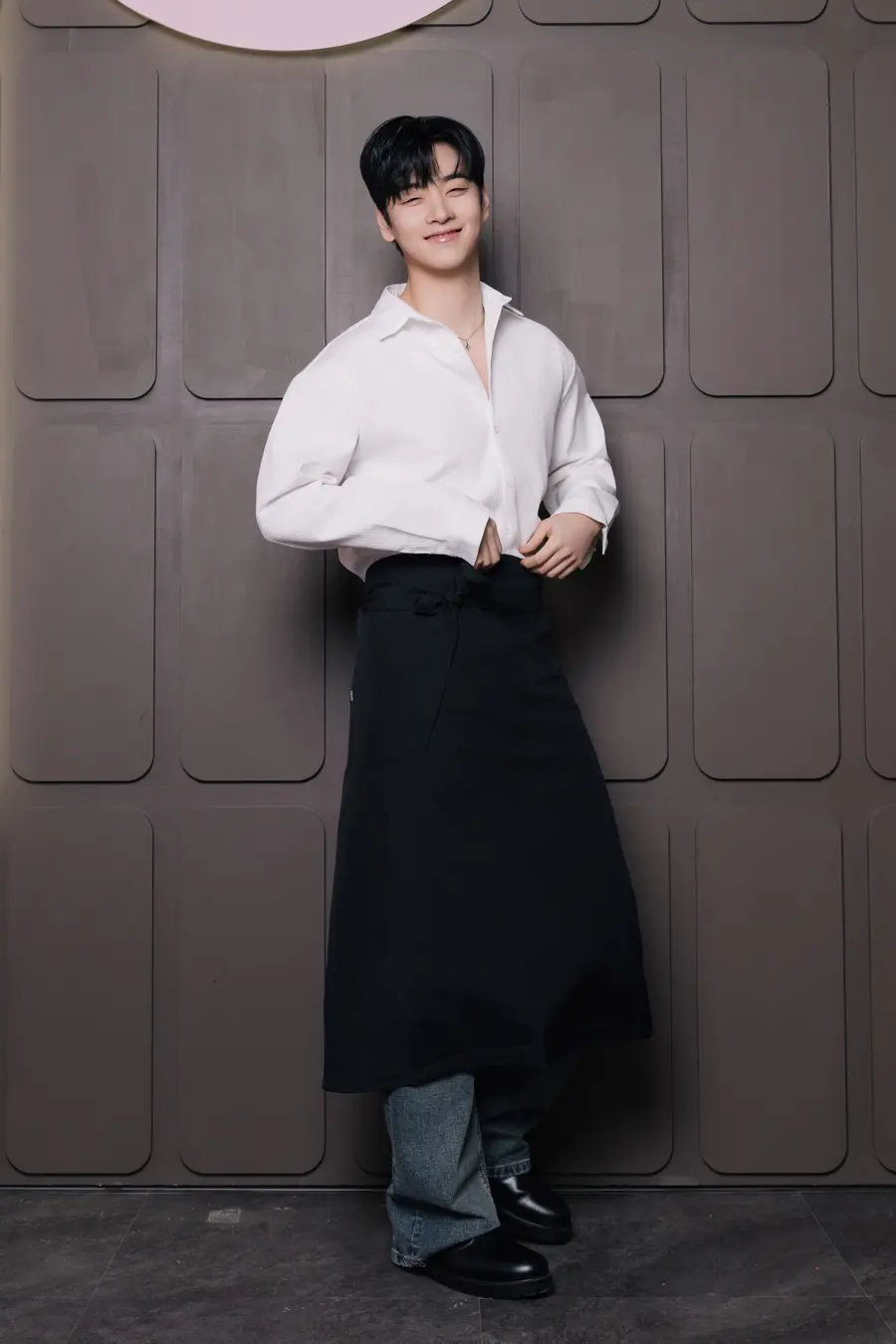
I also want to hear what made you switch from soccer to modeling.
The senior actors I watched when I was young—Lee Jong-seok, Kim Woo-bin, and Lee Soo-hyeok—moved from modeling into acting. I thought, “Maybe I could do the same.” My parents wanted me to become a soccer coach. There aren’t many goalkeepers in Korea, so a goalkeeper coach is rare. They said, “You can make a living as a coach for the rest of your life.” When I told them I wanted to do modeling, they said they would only support it if I could show them I could find work at a model agency—or prove I could do that job. So on weekends, I secretly sent my profile photos from the pocket money I’d saved to the agency. Luckily, I got a call back. I showed them the contract and quit right away. I wanted to leave soccer fast because my shins got broken twice and I had a lot of surgeries. While I was working as a freelancer after leaving the modeling agency, an acting company contacted me. That’s how I naturally started acting.
How was your time as a model?
It was unbearable. I really love eating. But in modeling, the job is to lose weight. Even though I was 65 kg, I had to control my weight extremely carefully, so I cried every day. People who look back on that time now say I seem confident, but back then, it was genuinely very hard. That’s why I’m even happier now, filming as an actor, meeting people on set, and experiencing things like this. This job.
Then, what are you like when you’re waiting on set at filming locations?
I have good memorization skills. But when I’m on location, I get really nervous in front of senior actors. The moment I make eye contact with them, I suddenly go pale. Ironically, I don’t get as nervous during auditions, but on set, it’s different. So while I’m waiting, I think it’s more important to take a deep breath to relax than to just memorize and recite lines from the script. That’s what I’m practicing these days.
What kind of roles do you want to take on in the future?
It’s a little obvious, but if I’m given the chance, I want to do everything well. If I get the opportunity, I want to play a role like that of senior actor Lee Dong-hwi in 〈Reply 1988〉. I’m aiming to be a comedy actor. I’m really confident. But because of my outward image, those kinds of suggestions don’t really come my way. I’m always the one making the hits. (Laughs) Whether it’s comedy or a villain role, I don’t worry about, “Can I really do that?” Instead, I tend to think, “What more can I do to get better?” So I want the chance. (Laughs)
If you had to name your strengths as an actor, what would they be?
“Momentum.” There’s no “Could I do it?” Never. For example, you can see it even in this variety show 〈Bamis〉. When we filmed in Singapore, even though my English wasn’t great, I spoke up in English to the foreign guests a lot, relying on momentum. And then I heard, “Your English is very good”—so I was fully recognized. (Laughs)
Do you have a role model—an actor you want to be like?
It’s senior actor Joo Ji-hoon. I first met him in the work 〈Good Friends〉, and from that moment on, I liked him so much. I also really enjoyed 〈Insider Murder〉 and 〈Along with the Gods〉. It’s so surprising that, by chance, I ended up being in the same agency like this. It’s the real deal! In 2022, I wrote down three favorite actors in my phone memo app, and I added senior Joo Ji-hoon to the list. I meet him all the time, and he says, “It looks like you achieved your dreams.”
Then long-term, what kind of actor do you want to become?
I really want to keep acting for a long time. Even when I become an old man, I want to keep acting. It doesn’t have to be a leading role. I want to meet my fellow actors at set, talk, joke around, argue, reconcile—and keep doing it for a long time. This job is just too much fun. It feels a thousand times more fun than playing soccer. It’s not about, “I’ll be a superstar.” I just want to be an actor for a long time.
▶ The interview with the third muse, Seong Seung-ha, in 〈Bamis〉 continues here.

![[Exclusive Interview] This Time, It’s a K-Dessert Variety Show! A Meet-Up with the Five Muses of “Bite Me Sweet” ③ Seong Seung-ha](https://cdn.www.cineplay.co.kr/w160/q75/article-images/2026-04-16/6e8b8eb6-109d-4402-869d-a3e0fcfb6911.jpg)
댓글 (0)
댓글 작성
댓글을 작성하려면 로그인이 필요합니다.
로그인하기