


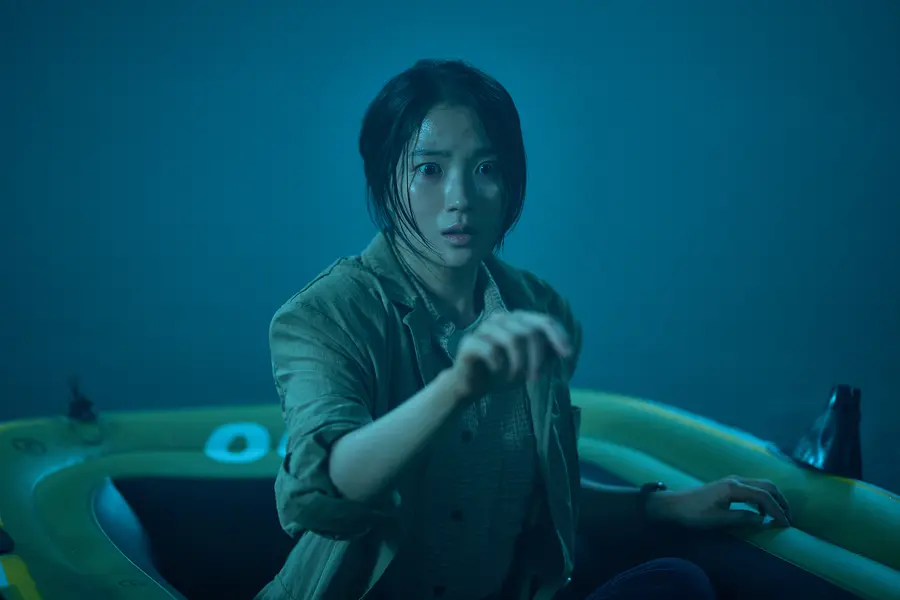
The chilling folktale “Salmokji,” which had audiences fired up across broadcasts including the MBC horror talk show 〈Midnight Spook Talk〉 and various horror channels, has been reborn as a movie. Director Lee Sang-min, who has steadily immersed himself in the horror genre—through shorts such as 〈Hamjinabi〉 and 〈Dolrimchong〉—created the film 〈Salmokji〉 by adding his own imagination to the original story. In the legend, “Salmokji” was simply a psychic spot where ghosts appeared frequently, but in the film, its meaning expands into a space that sits at the crossroads between life and death. Here’s a breakdown of the parts that changed and were added during the process of adapting the legendary ghost story “Salmokji” into a film.
The Legendary Ghost Story “Salmokji”
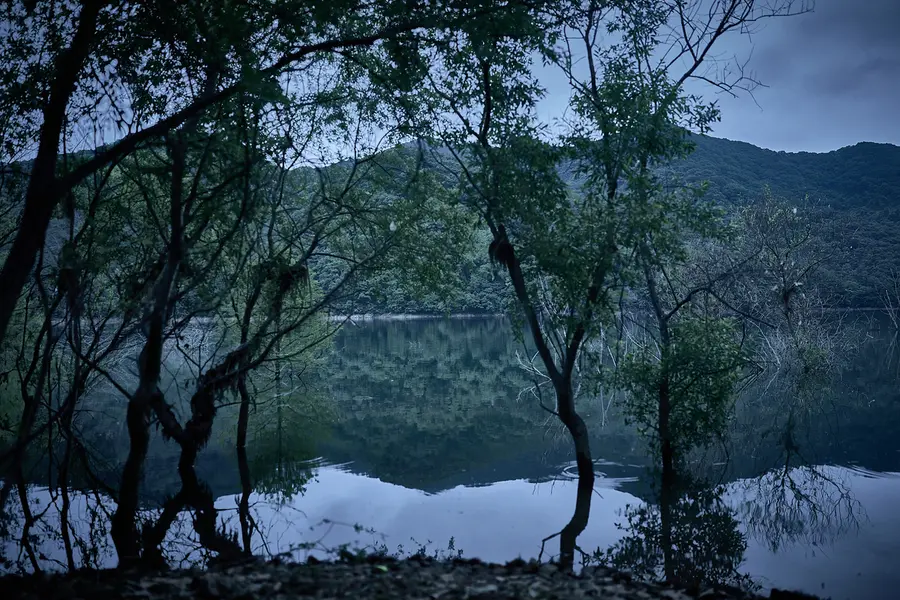
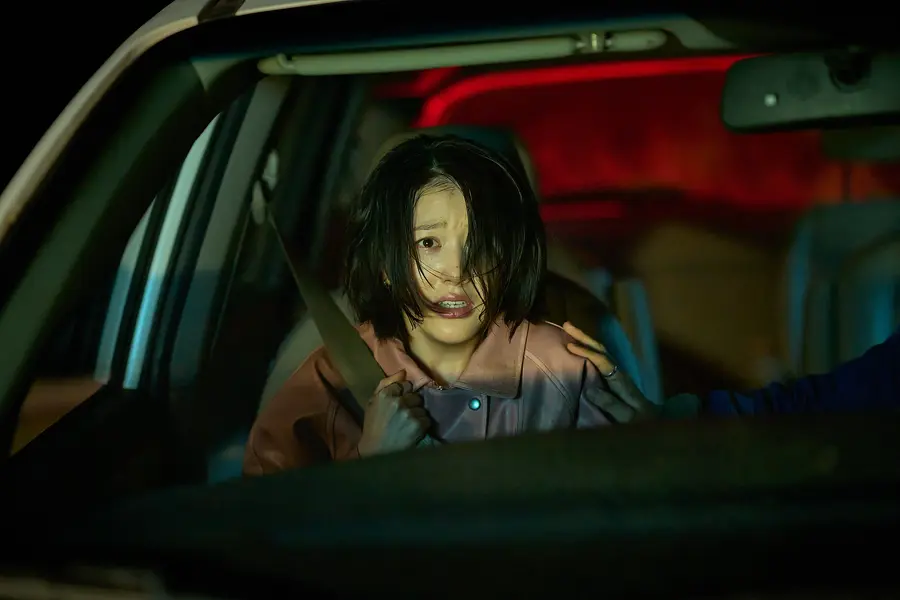
The reservoir of Salmokji, located in Yesan County, South Chungcheong Province, was originally a famous fishing spot among anglers. However, once reports of ghost sightings began to circulate between fishermen and local residents, it hardened into a famed haunted location. After that, Salmokji became the place that gave birth to the legend, as the MBC horror talk show 〈Midnight Spook Talk〉 repeatedly introduced the real experiences of a tipster over several episodes. The Salmokji ghost story begins in an ordinary day of a person who commutes home from work late at night. Guided by the navigation system, the tipster heads toward home, but suddenly turns onto an unpaved road they can’t get out of. After that, the navigation keeps repeating instructions to make a left turn, and following its directions, the tipster is suddenly overwhelmed by an unexpected sight. Right in front of the tipster’s car lies a deep, pitch-black reservoir with water churning—directly at the point where they made the left turn. After ending the navigation, which kept leading them down the wrong path, the frightened tipster calls their mother. Reassured, they try to find the way again, only for their spine to go cold once more—because the mother apparently says she has just met a deceased acquaintance, and even emits eerie laughter. Then a woman’s voice follows: “Why didn’t you go by the navigation?” Terrified by the creeping horror, the tipster soon gets into a traffic accident.
“Road View Ghost” Setup
Director Lee Sang-min kept the existing legend as the film’s foundation, but reshaped it by adding his own imagination. He deconstructed a complete single story and made use of various episodes that make up the ghost tale at exactly the right moments in the film. In the original legend, the navigation malfunction—one that can’t be explained—intensifies the tension again in the latter half of the movie, forming an escape sequence from Salmokji. In fact, in the original legend, the tipster repeats the moment they wake up after the traffic accident. This is revealed to be a dream from the time he’s in a coma. The confusion between dreams and reality that exists in the original legend leads, in the film, to a clash between what’s real and what’s hallucination. The characters in the movie walk into the reservoir, guided by the hallucinations they see, but once they have already plunged into the deep water, they face a moment that is simply too late to turn back.

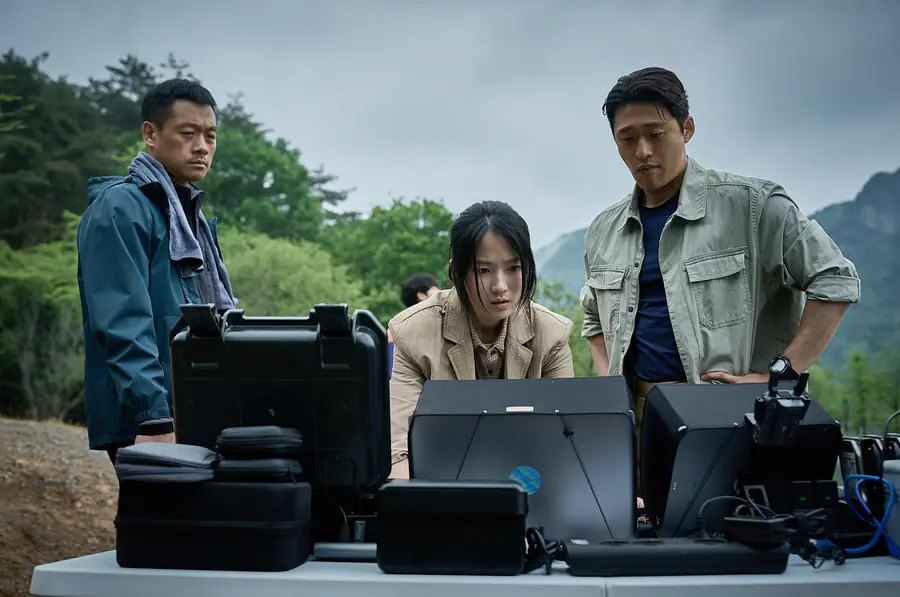
Above all, the biggest change from the existing story is that a “Road View Ghost” setup was added. Han Soo-in (Kim Hye-yoon), a producer at the road view service company, puts together a team to modify the road view showing the ghost’s form and then heads to Salmokji. This setup began with a small question from director Lee Sang-min. While looking at the road view, he found a path where the recording stopped at the entrance and didn’t continue further. From there, he wondered, “Why was it recorded only up to here?”—and that doubt naturally turned into an imagination of why it could only be captured to that point. At the point where the director’s horror imagination kicked in, the setup was added in which the team goes to Salmokji to shoot the road view. After deciding on the main framework, the director selected a 360-degree panorama camera as the right piece of equipment—based on the concepts of road view filming and a horror exploration. By using the 360-degree panorama camera to reveal a view expanded in every direction, he creates a tense atmosphere where it’s impossible to predict what will appear—or where it will appear.
“Salmokji,” a Space You Can’t Escape
![Scenes from the film 'Salmokji' [Provided by Showbox. Redistribution and database use prohibited]](https://cdn.www.cineplay.co.kr/w900/q75/article-images/2026-03-31/96e53471-55ca-416e-afcf-ddd75ea61569.jpg)
Through on-site field scouting of Salmokji, director Lee Sang-min actively incorporated the sensations he gained into the movie’s horror design. Remaining at the site alone until nighttime, he walked around the reservoir and said, “I couldn’t clearly tell where the water ends and where the ground begins.” The blurred boundary becomes imprinted as more than just a simple reservoir—it’s a space that even dismantles your sense of direction and your sense of reality. The reservoir’s topographical characteristics, where water and land mix and shapes lose their clarity, gradually spread through the script as an increasingly ominous aura, forming the foundation of the terror that the characters can’t break free from.
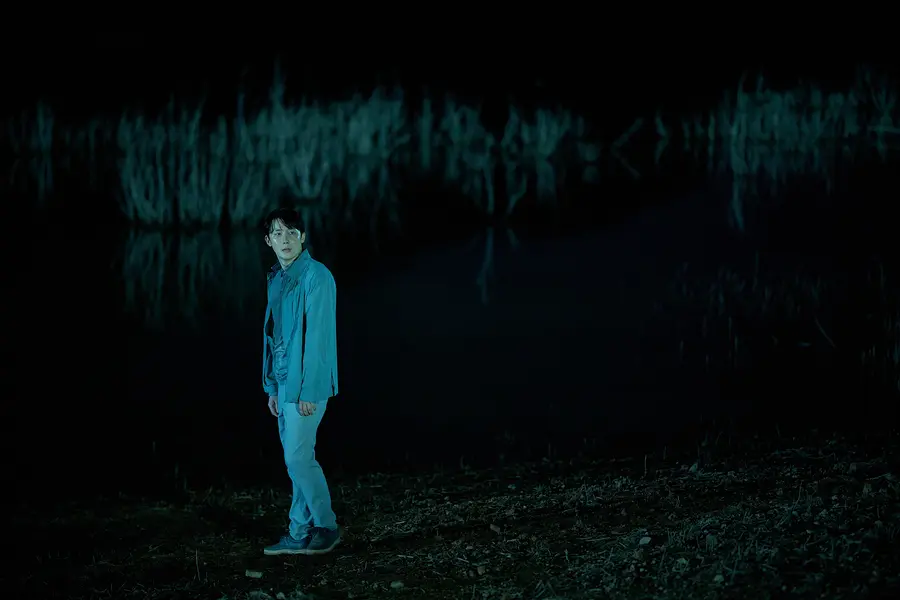
The director also said in an interview that he wanted Salmokji to feel like “a space that makes you lose your way when you enter—like you can’t get out.” To achieve this, the film makes both the characters and the audience lose their sense of direction through the camera’s rapid movement and clever editing that disrupts spatial perception. The movie’s high-frequency jump scares are also placed within that same sensation. The director said, “I wanted it to feel like the entire space is toying with the characters.”




![[First Reactions to the Press Screening] Cineplay Journalists’ Star Ratings for “Salmokji”](https://cdn.www.cineplay.co.kr/w160/q75/article-images/2026-03-24/28c596a4-6de5-4a4e-b1e5-5b98b1e111f8.jpg)
![[Photo&] Film “SalMokJi” casts Kim Hye-yoon, Lee Jong-won, Jang Da-ah, and more—Stars who lit up the press preview site “Press Preview Site”](https://cdn.www.cineplay.co.kr/w160/q75/article-images/2026-03-25/f2b181e0-ab58-40b7-a4a7-b348e924aa1c.jpg)

![[Interview] What Does Kim Hye-yoon’s Genre Side Look Like? “Salmokji” Kim Hye-yoon ①](https://cdn.www.cineplay.co.kr/w160/q75/article-images/2026-04-06/4e0878f6-4485-4acb-bf81-fa8edbe69452.jpg)
![[Interview] What’s It Like to Step Into Kim Hye-yoon’s Genre Roles? Kim Hye-yoon on ‘Salmokji’ ②](https://cdn.www.cineplay.co.kr/w160/q75/article-images/2026-04-06/1cfa7999-9e30-42d2-882d-4350ac320b55.jpg)
댓글 (0)
댓글 작성
댓글을 작성하려면 로그인이 필요합니다.
로그인하기