



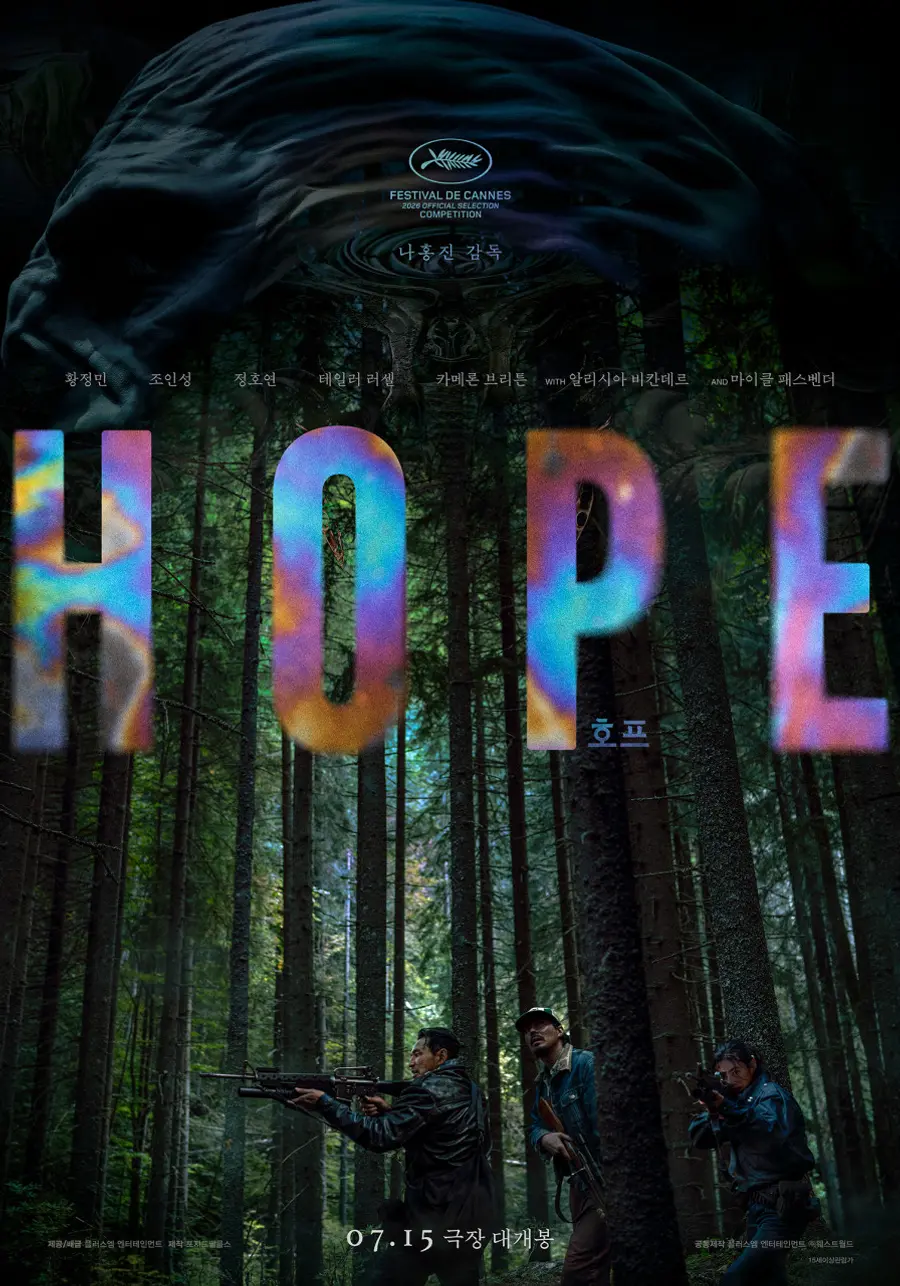
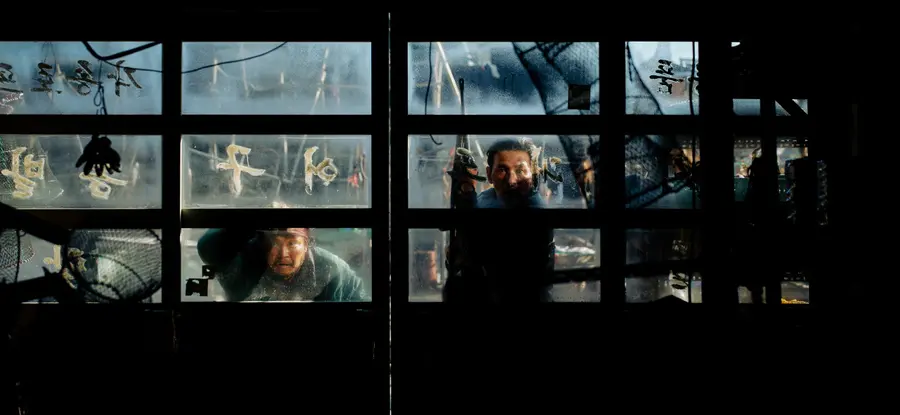
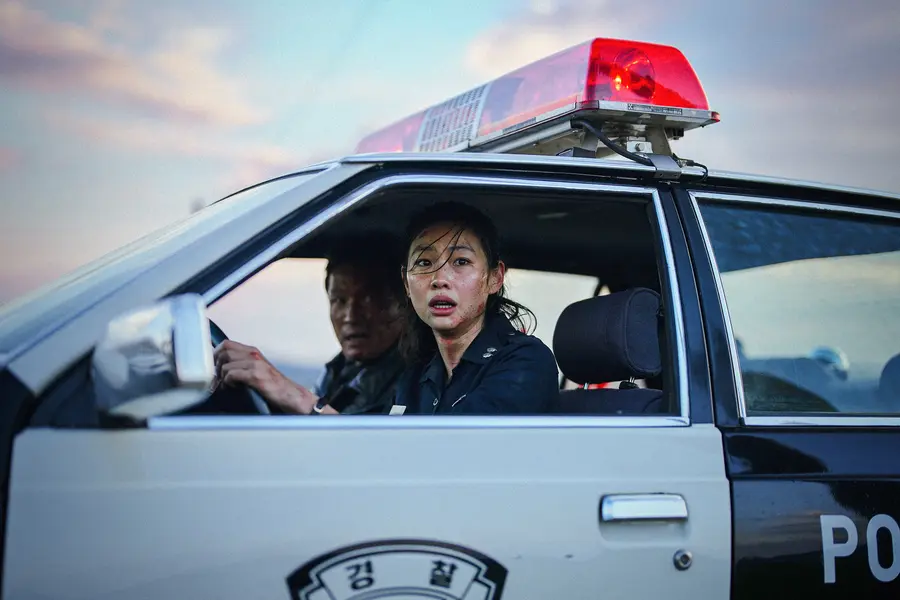
Advance bookings alone topped 600,000. That opening-day figure shows that 〈Hope〉 has become a national talking point, not just a movie-industry event. 〈Hope〉 is the new film from director Na Hong-jin, known for the tense, audacious intensity of 〈The Chaser〉, 〈The Yellow Sea〉 and 〈The Wailing〉. With a star-studded cast including Hwang Jung-min, Jo In-sung, Jung Ho-yeon, Michael Fassbender and Alicia Vikander, 〈Hope〉 opened in theaters on July 15. The film follows what happens to police station chief Beom-seok (Hwang Jung-min), patrol officer Seong-ae (Jung Ho-yeon) and local youth Seong-gi (Jo In-sung) after the fictional village of Hopo Port is devastated. Cineplay previously published critics' ratings and one-line impressions after an earlier press screening. Now that 〈Hope〉 has reached theaters, we’re revisiting those assessments in fuller form. There are no spoilers for the ending, but the piece contains a few descriptions of scenes; if you are sensitive to spoilers, we recommend reading after you've seen the film.
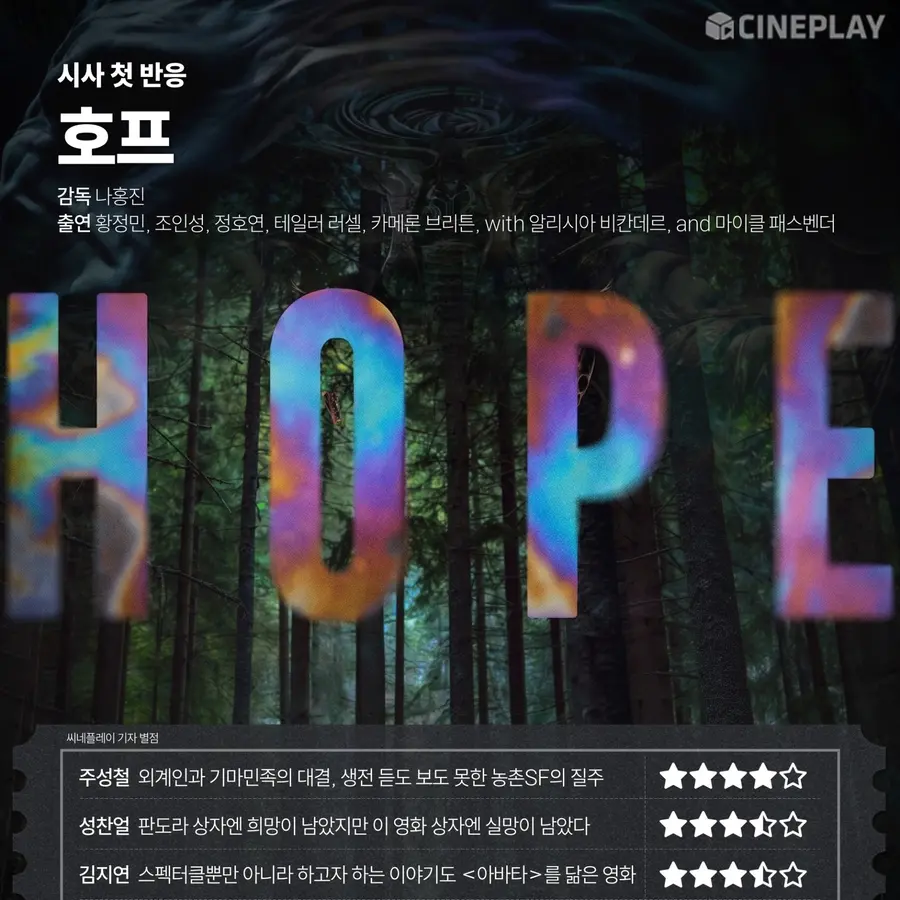
Ju Seong-cheol _ A New High-Water Mark for Big-Budget Non-English Cinema
〈Hope〉 marks the apex of the globalization of Korean cinema that began with Park Chan-wook's 〈Oldboy〉 (2003) winning the Grand Prix at Cannes. Over the more than 20 years since, Bong Joon-ho's 〈Parasite〉 (2019) accomplished the extraordinary: it won Cannes's Palme d'Or and then took home Best Picture at the Academy Awards, and both directors have become venerated figures on the world stage. Hwang Dong-hyuk's Netflix original series 〈Squid Game〉 (2021) added to that momentum by winning six Emmy Awards, including Lead Actor (Lee Jung-jae) and Directing (Hwang Dong-hyuk). Directors like Lee Chang-dong and Hong Sang-soo have also remained regular presences in the Cannes competition. I detail this history because 〈Hope〉—like 〈Oldboy〉 before it—is the first Korean film in 23 years to enter Cannes competition on the strength of the aesthetic and achievements of genre itself. In that sense, 〈Oldboy〉 and 〈Hope〉 reflect one another like mirrors. But 〈Hope〉 hits a peak in the harmony of storytelling, aesthetics and special effects that a big-budget production made outside Hollywood can reach. There is scarcely anything lacking. After 〈The Chaser〉, 〈The Yellow Sea〉 and 〈The Wailing〉, the film strips away preconceptions about Na Hong-jin's sparse output and stages, on Korea's DMZ, the idea that he is a 'Hollywood kid' raised on Saturday Movie, Weekend Movie, AFKN and VCRs. The giant sequence that builds to the aliens' first appearance and the moment the film confirms their tears — indeed, the film's first half, which transcends conventional units of 'cuts,' 'scenes' and 'sequences' and asks for a new definition — is simply marvelous. When was the last time a film awakened the senses of the screen so comprehensively? The main regret is the inevitable runtime limits for theatrical features. While many viewers who have seen 〈Hope〉 complained about differences in density between the first and second halves, I did not particularly feel that divide; still, unless you can get inside Na Hong-jin's head, the film's finish — which seems to assume a sequel — can be disconcerting. There is only one answer: as with some Hollywood franchise trilogies, I can only hope for an 'Endgame'-style miracle in which Parts 2 and 3 are shot at the same time.
PS. Im Hyun-sik's (almost) monologue that links the first and second halves — delivered as if telling a folktale — is genuinely astonishing. With the breathing and tone that recall the golden age of television drama, it maintains immersion across the divide. So I very much hope to someday see on screen the scenes reportedly cut from the domestic release that featured actor Park Young-gyu.
Seong Chan-eol _ It Might Have Been Nearly Perfect if It Had Let Go a Little More
It is rare to encounter a film as impressive as 〈Hope〉, and just as rare to encounter one as ultimately frustrating. The film translates a clear visual concept to the screen with top-tier technical skill and know-how. From the opening, it follows police chief Beom-seok (Hwang Jung-min) and pushes the audience straight into the scene. That technical approach produces an immersion few films can match. The CG is convincing enough, given the film's scope and the financial limits of Korean cinema. Visually, the film is hard to fault. The village-wide search sequence and the horseback charge sequence that approaches a Korean-style Western are indisputably achievements that will remain in Korean film history.
The problem is that visuals are not everything. Over roughly 160 minutes, 〈Hope〉 depicts a surreal disaster that befalls the village. Up to that point, fine. But the film then adds extraneous elements. The scenes in which the aliens suddenly engage in conversation are excessive. Without them, we could have savored our own impressions and imaginations about the aliens. From their transcendental terror to their surprisingly tearful humanity, the film could have delivered both cosmic horror and a (non)human drama. Instead, in an effort to somehow embody the title 'Hope,' the film indirectly explains the aliens' situation, and in doing so flips the narrative from the villagers' human struggle to the aliens' story. That shift dissipates the hard-won struggle of Hopo Port's residents. Perhaps some of this was intended with a sequel in mind. But if a direct sequel is not practically guaranteed, those additions are mere redundancies that undermine the film's core—its human fight for survival. I understand the reluctance to cut the initial intention (“All tragedies arise from differences in perspective”) or to trim the screen time of willingly participating Hollywood actors. Yet if you aim to present a film as a finished work, pruning unnecessary elements is a virtue. 〈Hope〉 fails at that. A film that cannot let go of its obsession with its vision grows scattered and starts to come apart at the end. That is the film's most disappointing aspect.
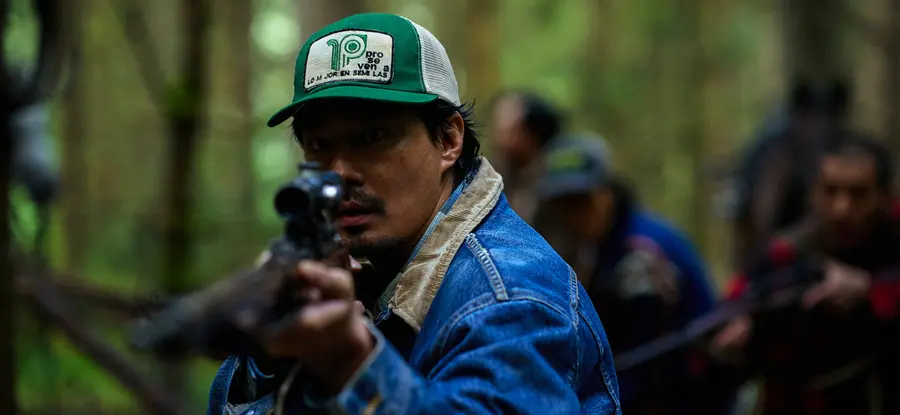
Kim Ji-yeon _ Why Did the Aliens Need Human Faces?
The human face is a fascinating thing. There's a saying that actors act with their eyes; a face can explain much without words or action. 〈Hope〉 smartly leverages the power of the 'face.' The aliens in 〈Hope〉 wear human faces. By contrast, the life form 'Rocky' in 〈Project Hail Mary〉 resembles a rock, and the 'creeper'—the cockroach-like alien in Bong Joon-ho's 〈Mickey 17〉—is strictly nonhuman in appearance; those films end with once-alien unknown beings coming into harmony with humans, while 〈Hope〉 takes the opposite path. 〈Hope〉 takes the opposite route: humans and humanlike beings constantly collide and rampage against one another.
Because the human face carries such force, when an alien in 〈Hope〉 briefly shows a human or even an infant's face, audiences instinctively empathize with that emotion without dialogue or exposition. Ironically, viewers' love-or-hate reactions emerge precisely at that point. For a film that minimizes dialogue and explanation and constructs its narrative purely through action, the choice is both the most straightforward and the most efficient. At the same time, it binds the film somewhat dogmatically. Aliens with human and infant faces make them appear as 'good' characters, which ultimately leads to a didactic later act suggesting humans must atone. After seeing an alien cry, Beom-seok's (Hwang Jung-min) rebuke of Yangbae (Eum Moon-seok), who hunted a baby alien, comes across as contrived.
Even if the director did not intend it, 〈Hope〉 ultimately presents a contemplative, perhaps pessimistic, view of humanity. The mud-slinging brawl between humans and humanlike beings—who fight without fully understanding why they fight—reads as a cynical black comedy and satire. At the same time, because the film deals with catastrophe caused by humans, it can be read as a warning about man-made disaster similar to what films like 〈Avatar〉 have repeatedly addressed, and as a fable dedicated to those who fight for the sake of fighting. Because the film first builds tension around an unseen threat, it is inevitable that audience reactions will split sharply once that threat is revealed. Nevertheless, the choice to reveal that 'entity' and the stubborn insistence on structuring the narrative through action alone even after the revelation are the film's greatest virtues.




![[Photos] ‘Killing Time’: Fake hidden-camera pranks turn into real murders in the final act of a staged broadcast that goes too far — opens on the 21st](https://cdn.www.cineplay.co.kr/w300/q75/article-images/2026-10-14/aab8743f-47e5-4339-80bd-32de95ec7ec0.jpg)






댓글 (0)
댓글 작성
댓글을 작성하려면 로그인이 필요합니다.
로그인하기